

 Travel Essentials
 Travel Essentials

Explore Boston's most significant historical sites, world-class museums, waterfront attractions, and neighborhood experiences that define America's revolutionary heritage city.
 Travel Essentials
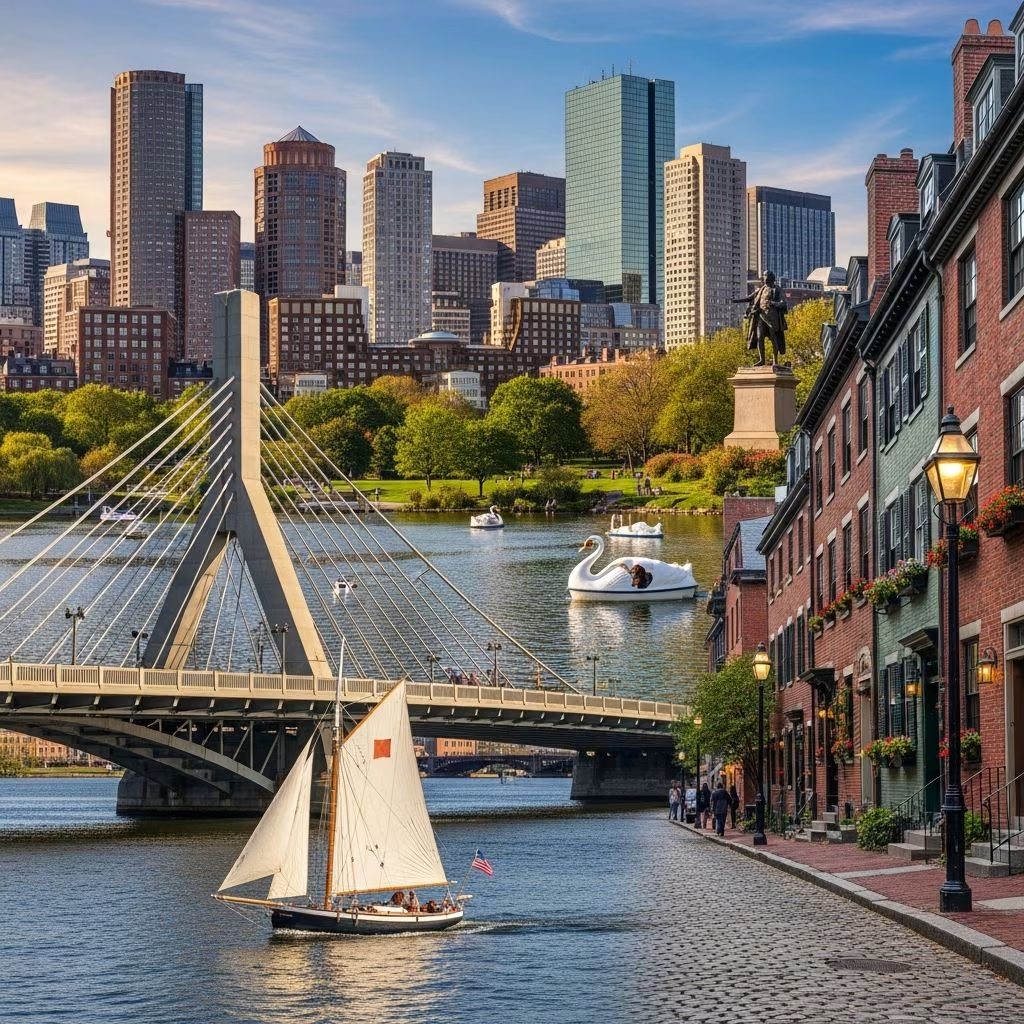
Boston stands as one of America’s most historically significant and culturally vibrant cities, offering visitors a compelling blend of revolutionary-era landmarks, world-class institutions, and distinctive neighborhood experiences. Whether you’re a first-time visitor or returning explorer, the city provides countless opportunities to engage with American history, enjoy outdoor recreation, and discover local culinary traditions. Understanding the city’s layout and primary attractions enables visitors to craft meaningful itineraries that capture the essence of this distinctive metropolis.
At the heart of Boston’s historical identity lies the Freedom Trail, a 2.5-mile pedestrian pathway marked by red bricks that connects sixteen historically significant locations spanning from the founding era through the American Revolution. This self-guided route represents the optimal introduction to Boston’s role in shaping American independence, requiring no advance booking or guided group participation. Visitors can traverse the trail independently at their own pace, allowing for flexible exploration and personal reflection at each landmark.
The trail commences at Boston Common, the nation’s oldest public park, and proceeds through several essential historical sites. Notable stops include Park Street Church, recognized for its prominent anti-slavery advocacy; King’s Chapel, an important colonial-era religious institution; and the Old South Meeting House, where pivotal events leading to the Boston Tea Party were discussed in 1773. The journey concludes at the USS Constitution in the Charlestown Navy Yard, offering visitors a tangible connection to America’s maritime military heritage.
For those preferring structured exploration, professional tour guides provide contextual narratives and detailed historical explanations not always apparent from signage alone. Regardless of approach, the Freedom Trail represents an essential Boston experience that provides comprehensive understanding of the city’s foundational role in American independence.
Boston’s park system offers visitors multiple opportunities for relaxation, recreation, and seasonal engagement with natural environments. These spaces serve as gathering places for locals and destinations for tourists seeking respite from urban exploration.
Boston Common and Public Garden comprise adjacent but distinct parks offering complementary experiences. Boston Common, established in 1634, functions as America’s oldest continuously maintained public park, featuring open green spaces ideal for picnicking, people-watching, and seasonal activities. During winter months, the Frog Pond transforms into an ice skating venue, while summer offers concerts, theatrical performances, and casual recreation. The adjacent Boston Public Garden, developed as America’s first public botanical garden, spans 24 acres and showcases rotating seasonal plantings, exotic trees, and colorful flower displays.
A defining Public Garden experience involves riding the Swan Boats, iconic watercraft that operate seasonally from late spring through early fall. These charming lagoon excursions provide a distinctly Boston tradition combining leisure with aesthetic appreciation of the garden’s carefully designed landscape.
Beyond these central parks, visitors can explore additional green spaces reflecting Boston’s commitment to accessible outdoor recreation:
Fenway Park represents not merely a sports venue but a pilgrimage site for baseball enthusiasts and architectural history appreciators alike. As the oldest continuously operating Major League Baseball stadium, Fenway functions as living museum of American sporting culture. Even visitors uninterested in attending games benefit from guided walking tours exploring the facility’s historic dimensions, architectural features, and the legendary left field wall popularly known as the Green Monster—a distinctive 37-foot structure that fundamentally shapes gameplay and captures the imagination of baseball fans worldwide.
Boston’s museum sector provides extraordinary depth across diverse disciplines, offering intellectual engagement and aesthetic enrichment for varied interests and expertise levels.
The Museum of Fine Arts ranks among America’s largest art institutions, presenting collections spanning ancient civilizations through contemporary artistic movements. Its extensive holdings provide comprehensive survey of human creative achievement across cultures and historical periods. The adjacent Isabella Stewart Gardner Museum occupies a stunning Venetian-style palazzo and combines artwork appreciation with architectural intrigue, as the building’s unique layout and central courtyard prove as compelling as the curated collection itself.
The Boston Tea Party Ships & Museum offers interactive, experiential learning about one of history’s most significant protest actions. Rather than passive observation, visitors participate in historical reenactments and interactive exhibits, including opportunities to throw tea overboard simulating the original 1773 event. This hands-on approach particularly appeals to families and educational groups seeking dynamic historical engagement.
Additional cultural attractions include:
Beyond the Freedom Trail, additional sites provide deeper engagement with Boston’s military historical significance. Bunker Hill Monument, located in Charlestown, consists of a 221-foot granite obelisk commemorating the first major Revolutionary War engagement. Visitors climbing the 294 interior steps reach an observation level providing panoramic views encompassing Boston, Cambridge, and Charlestown. Despite the physical exertion required, the combination of historical significance and expansive vistas justifies the effort for those interested in American Revolution sites.
Castle Island and Fort Independence, located on a South Boston peninsula, offers scenic harbor views particularly striking at sunset. The site enables visitors to explore a historic fortification while enjoying waterfront recreation. Adjacent Sullivan’s, a local establishment known for hot dogs and fried seafood, provides casual dining options.
Exploring specific neighborhoods provides insight into Boston’s diverse character and local culture. Beacon Hill showcases Federal-period architecture with narrow gas-lit streets and brownstone rowhouses exemplifying nineteenth-century urban design. Acorn Street particularly captures picturesque character with its cobblestone surface and historic structures.
The North End reflects Italian-American heritage through its restaurants, specialty food shops, and cultural institutions. Back Bay presents Victorian-era architecture alongside contemporary shopping and dining on Newbury Street, one of Boston’s most iconic commercial corridors offering retail experiences ranging from luxury boutiques to casual cafes.
Boston’s waterfront location enables aquatic recreation extending beyond passive observation. Kayaking and canoeing on the Charles River provide active engagement with the waterway that defines Boston’s geography, offering panoramic city views while delivering physical recreation. Multiple rental facilities throughout the greater Boston area accommodate varying skill levels and preferences.
Waterfront dining presents additional experiences, with establishments like James Hook’s specializing in lobster rolls and fresh seafood preparations reflecting New England’s maritime culinary tradition.
Boston’s food culture encompasses both historic establishments and contemporary dining innovations. Union Oyster House represents America’s oldest continuously operating restaurant, providing both historical ambiance and regional seafood preparations. Exploring Boston’s food halls and taking Chinatown-focused food tours enable visitors to discover diverse cuisines and local culinary traditions reflecting the city’s immigrant communities and evolving gastronomic scene.
| Attraction Type | Best Season | Duration | Access Notes |
|---|---|---|---|
| Freedom Trail | Spring-Fall | 2-4 hours | Self-guided or tours available |
| Swan Boats | Late May-Early September | 15-20 minutes | Seasonal operation only |
| Fenway Park Tours | Year-round | 1 hour | Check game schedules |
| Museums | Year-round | 2-4 hours each | Variable admission fees |
| Outdoor Parks | Spring-Fall preferred | Variable | Winter ice skating available |
| Waterfront Recreation | May-September | Variable | Weather dependent |
Seasonal variations significantly impact visitor experiences. Summer months bring crowds and pleasant weather but present higher accommodation costs and peak tourism periods. Spring and fall offer moderate temperatures and fewer visitors. Winter enables ice skating and holiday programming but reduces outdoor accessibility and operational hours for certain attractions.
Yes, the 2.5-mile path typically requires 2-4 hours depending on pace and time spent at individual sites. Self-guided exploration allows flexible timing, while organized tours typically run approximately one hour with focused historical narratives.
Spring (May-June) and fall (September-October) offer moderate weather and natural beauty without extreme summer crowds or winter weather limitations. Summer enables access to Swan Boats and outdoor concerts, while winter provides ice skating and holiday festivities despite cold temperatures.
Most museums and indoor attractions operate year-round, though some outdoor experiences like Swan Boat rides close seasonally. Winter weather may impact outdoor exploration, though ice skating and snow-covered parks provide alternative seasonal activities.
Walking the Freedom Trail, exploring public parks, and observing neighborhoods require no admission fees. Many museums offer reduced-price or free admission hours during specific times, and waterfront areas provide free access to scenic views and walking opportunities.
First-time visitors benefit from 3-4 days allowing comprehensive exploration of major attractions, neighborhood discovery, and cultural institution visits without rushed scheduling. Longer stays enable deeper engagement with specific interests or less-visited areas.
Boston’s combination of historical significance, cultural institutions, outdoor recreation, and neighborhood character provides visitors with multifaceted experiences reflecting the city’s role in American development and contemporary vitality. Whether prioritizing revolutionary heritage exploration, museum appreciation, or casual neighborhood wandering, Boston offers meaningful engagement with American history and contemporary urban culture. Strategic planning considering seasonal factors, personal interests, and available time enables visitors to craft rewarding itineraries capturing the essence of this distinctive metropolitan destination.
