

 Travel Essentials
 Travel Essentials

Explore Catalonia's best-kept secrets: hike Pyrenean trails, wander Costa Brava villages, savor volcanic cuisine, and visit Dalí's surreal world. Uncover natural wonders and cultural treasures outside Barcelona.
 Travel Essentials
Catalonia offers far more than its bustling capital. This northeastern Spanish region captivates with dramatic coastlines, towering mountains, ancient villages, and innovative cuisine. Venture beyond Barcelona to experience pristine beaches along the Costa Brava, hike through glacial lakes in the Pyrenees, explore volcanic landscapes, and immerse in surreal art legacies. These destinations reveal Catalonia’s rich tapestry of nature, history, and culture.
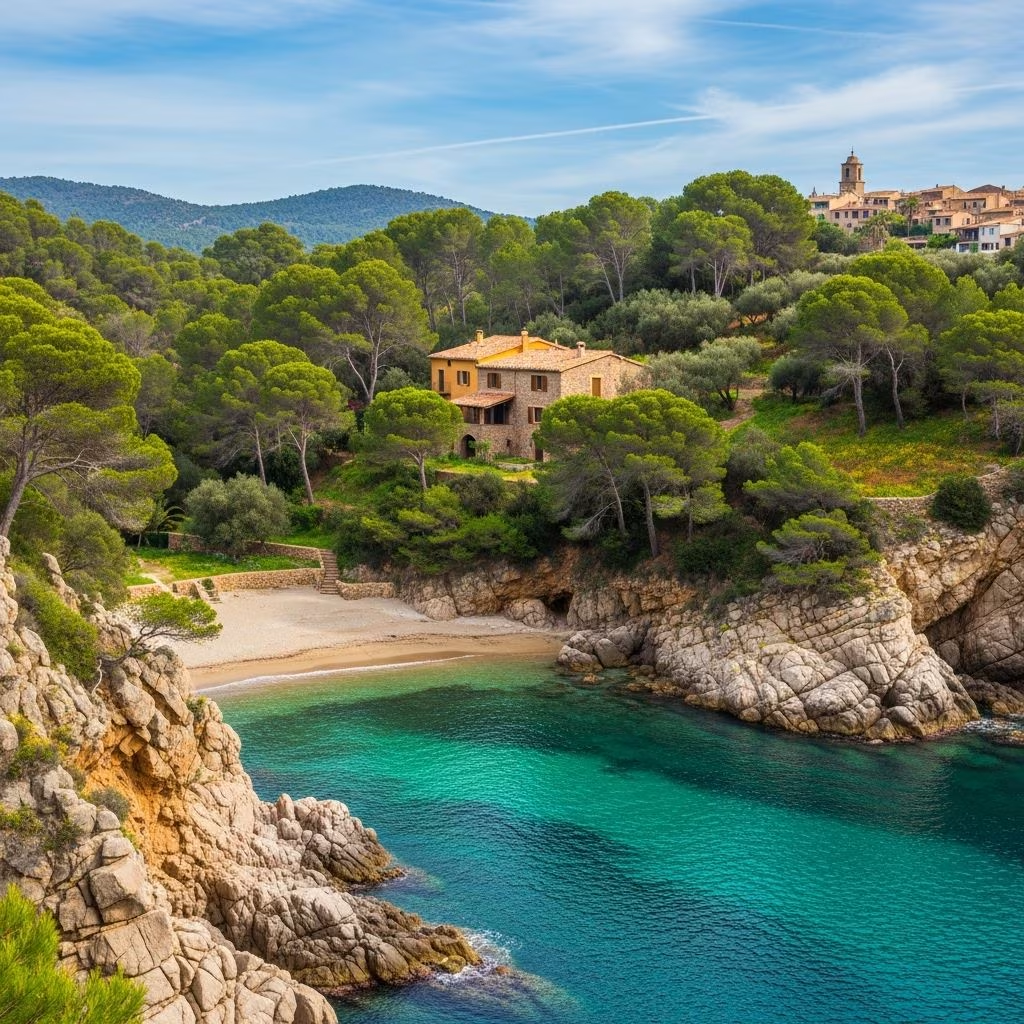
The Costa Brava stretches 200 kilometers of jagged cliffs, hidden coves, and charming fishing villages. This rugged shoreline, from Blanes to the French border, draws adventurers seeking unspoiled beauty. Whitewashed houses cascade down hillsides, bougainvillea blooms vibrant against azure seas, and clear waters invite swimming or kayaking.
Start in Cadaqués, a picturesque gem nestled near Cap de Creus Natural Park. Its narrow cobblestone streets and rocky beaches evoke timeless Mediterranean allure. Artists like Salvador Dalí once summered here, inspired by the stark, wind-sculpted landscapes. Hike Cap de Creus’ trails to witness bizarre rock formations that influenced Dalí’s dreamlike paintings. The park’s lighthouse offers panoramic views, especially at sunset when the Tramuntana winds whip the sea into froth.
Further south, Tossa de Mar boasts a medieval fortress overlooking golden sands. Climb the Vila Vella walls for sweeping vistas, then relax on Platja Gran. Pals, an inland medieval village, features flower-lined streets and Gothic churches, perfect for photography enthusiasts.
Girona’s old town is a labyrinth of sandstone alleys, towering cathedral spires, and Arab baths. The Jewish Quarter, or El Call, preserves Europe’s best-preserved medieval Jewish heritage with narrow passages and ancient synagogues. Stroll along the Onyar River, admiring colorful casas colgadas (hanging houses) reflected in the water. The Game of Thrones fame adds modern allure, but its 12th-century cathedral and Roman walls stand on their own.
Nearby, Besalú enchants with its 12th-century bridge arching over the Fluvià River, ideal for reflections and photos. Wander its Romanesque mikveh (ritual bath) and fortified gates, evoking a step back in time. These sites highlight Catalonia’s layered history from Roman roots to medieval splendor.
Catalonia’s sole national park, Parc Nacional d’Aigüestortes i Estany de Sant Maurici, spans glacier-carved valleys, over 200 alpine lakes, and peaks soaring above 3,000 meters. Known as ‘Park of Twisting Waters,’ it features cascading streams and dense pine forests.
Well-marked trails suit all levels. The epic Espot-to-Bóí traverse covers 30km in 9-10 hours, with 4WD options shortening it. For multi-day immersion, tackle Carros de Foc—a 55km loop linking nine mountain refugis (huts) over 5-7 days at 1,885-2,395m altitudes. Expect cinematic scenery: turquoise estany lakes mirroring granite cirques.
| Trail | Distance | Duration | Highlights |
|---|---|---|---|
| Espot-Bóí Traverse | 30km | 9.5 hours | Lakes, waterfalls, peaks |
| Carros de Foc | 55km | 5-7 days | Refugis, panoramic vistas |
| Estany Llong Circuit | 10km | 4 hours | Easy lakeside walk |
Pack layers for variable weather; refugis provide meals and bunks. Wildlife includes chamois, marmots, and golden eagles.
Figueres houses the Teatre-Museu Dalí, the surrealist’s theatrical masterpiece. Topped with giant eggs and crowned by a geodesic dome, this former theater showcases his life’s work: melting clocks, elongated figures, and optical illusions. Rainy taxi cabs hang from the ceiling; a golden mannequin dives into a Cadillac.
Cadaqués and Port Lligat connect personally—Dalí’s whitewashed home-museum overlooks the bay where he painted. Cap de Creus’ eroded rocks mirror his canvases. In Pubol, his castle for Gala features whimsical decor like giraffe girandoles. These sites immerse visitors in Dalí’s absurd genius.
La Garrotxa Volcanic Zone Natural Park encircles Olot with 40 dormant cones, beech forests, and lava flows. Croscat volcano, the Iberian Peninsula’s youngest (erupted 14,000 years ago), reveals a horseshoe crater sliced by a path.
Hike Fageda d’en Jordà’s enchanted beech grove or ascend Santa Margarida for views. Olot serves cuina volcànica: hearty stews, truffle-infused dishes from mineral-rich soils. Hot air balloon rides over craters offer breathtaking perspectives.
Sitges blends sun-soaked beaches with modernist architecture. Beyond LGBTQ+ nightlife, explore Cau Ferrat Museum, Santiago Rusiñol’s home of artworks and ceramics. Palau Maricel dazzles with ornate interiors.
Carnival explodes in February with floats and satirical parades; Corpus Christi carpets streets in flowers.
Europe’s largest delta hosts 300 bird species, including flamingos and herons. Cycle levees, kayak channels, or spot wildlife from hides. Rice fields yield renowned varieties; sample paella and fresh seafood.
Aiguamolls de l’Empordà wetlands offer accessible boardwalks for birdwatching. Mont-Rebei Gorge thrills with kayaking and sheer cliffs. Tarragona’s Roman amphitheater overlooks the sea.
Rent a car for flexibility; trains connect Girona and Figueres. Best time: spring/fall. Budget 3-7 days for a loop: Girona-Costa Brava-Pyrenees-La Garrotxa-Dalí sites.
Spring (April-June) and fall (September-October) offer mild weather and fewer tourists.
Yes, shorter trails like Estany Llong are easy; multi-day treks require fitness.
Hike 2-3 hours on marked paths; shuttles available seasonally.
Cadaqués beaches and Tossa de Mar fortress are ideal.
Its accessible volcanoes and volcanic cuisine set it apart.
