

 Travel Essentials
 Travel Essentials

Comprehensive guide to attractions and activities across Cumbria and the Lake District, from water sports to heritage sites and fell walking.
 Travel Essentials
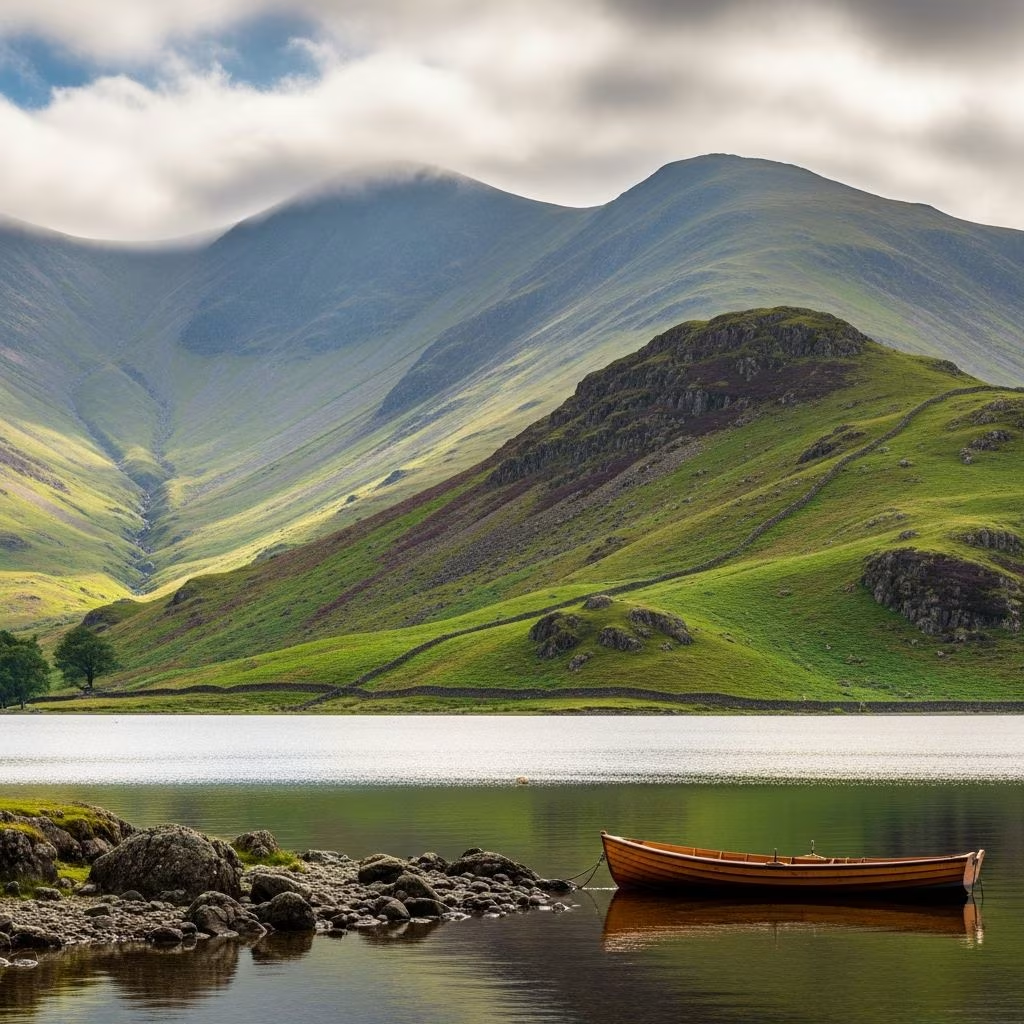
Nestled in northwest England, Cumbria stands as one of the country’s most captivating regions, renowned for its dramatic landscapes, rich cultural heritage, and world-class outdoor experiences. The Lake District National Park forms the heart of this destination, drawing millions of visitors annually who seek everything from challenging mountain expeditions to peaceful lakeside strolls. Whether you’re an adrenaline enthusiast, history buff, nature lover, or simply seeking respite from urban life, Cumbria offers an extraordinary array of experiences that cater to diverse interests and fitness levels.
The region encompasses not only the famous lakes and fells but also charming market towns, Roman historical sites, literary landmarks, and innovative attractions that blend heritage with modern entertainment. What makes Cumbria particularly special is its designation as England’s adventure playground, where visitors can transition seamlessly from climbing England’s highest mountain to exploring medieval villages, all within the span of a few hours.
Cumbria’s lakes represent some of England’s most spectacular natural features, each offering distinct character and recreational opportunities. The region’s aquatic attractions extend far beyond mere sightseeing, providing active and passive experiences for all age groups.
As England’s largest natural lake, stretching over ten miles in length, Lake Windermere dominates the region’s recreational landscape. The lake serves as a hub for numerous water-based activities, including traditional boating, modern sailing, scuba diving opportunities, and leisurely cruises that showcase surrounding mountain vistas. Summer months bring particular vitality to Windermere, with fishing expeditions drawing enthusiasts keen to test their skills against the lake’s resident fish populations. The shoreline communities surrounding Windermere offer excellent access points, with facilities ranging from casual launching areas to professional watersports centers.
Beyond Windermere, Ullswater offers a more secluded experience, famous for its dramatic mountain backdrop and the historic Ullswater ‘Steamers’ service. These heritage vessels provide comfortable cruises that reveal the lake’s beauty from unique vantage points, allowing visitors to appreciate the surrounding fells without demanding physical exertion. The scenic cruise experience has become iconic, offering both romantic getaways and family-friendly exploration options. Visitors often combine steamer rides with lakeside walks, creating full-day itineraries that balance activity with relaxation.
Buttermere presents a more intimate water experience, ringed by towering peaks that create dramatic photography opportunities and inspire hiking expeditions. The lake’s relatively small size compared to Windermere encourages circumnavigation walks that combine water views with fell exploration, making it ideal for visitors seeking moderate outdoor engagement.
Cumbria’s mountainous terrain established the foundation for modern fell walking and rock climbing sports. The region’s distinctive fells—relatively smaller mountains with distinctive characteristics—attracted early adventure pioneers who transformed these landscapes into recreational destinations. Today, the mountains continue to define the visitor experience, offering challenges ranging from gentle valley strolls to serious alpine expeditions.
Scafell Pike stands as England’s highest mountain at 3,209 feet, attracting thousands of ambitious hikers annually. The mountain’s accessibility combined with genuine mountaineering challenge makes it uniquely appealing to both experienced mountaineers and determined amateurs. Multiple climbing routes offer varying difficulty levels, allowing visitors to select experiences matching their abilities. The summit rewards climbers with panoramic views extending across England on clear days, encompassing both the Lakes district and distant horizons.
Helvellyn, another major peak in the region, provides alternative mountaineering opportunities with its own character and distinct vistas. The mountain’s varied approach routes accommodate different skill levels and preferences, from ridge walks offering dramatic exposures to more sheltered valley-based ascents. Mountain weather conditions in Cumbria change rapidly, making proper preparation and understanding of local conditions essential for safe mountaineering experiences.
For visitors seeking mountain experiences without extreme technical demands, Catbells offers an attractive alternative. Located above Derwentwater, the fell provides panoramic views of surrounding lakes and mountains, achievable through a moderate hiking effort. The walk has become popular among families and less-experienced hikers seeking genuine mountain scenery without overwhelming physical demands.
Beyond its natural wonders, Cumbria preserves centuries of human history, from prehistoric monuments to medieval fortifications and Roman engineering.
Castlerigg Stone Circle ranks among Britain’s earliest stone circles, believed to date from approximately 3000 BC during the Neolithic period. The circle’s elevated position provides spectacular mountain views, particularly of Helvellyn and High Seat, creating a landscape that combines archaeological significance with natural drama. Visiting this ancient monument allows contemplation of prehistoric societies while experiencing the same mountain vistas that likely held spiritual significance for its builders.
Cumbria’s role in Roman Britain becomes evident through sites like Birdoswald Roman Fort, located along Hadrian’s Wall. These historical sites preserve informative trails and ancient remains that illuminate Roman military life and engineering capabilities. The Senhouse Roman Museum displays internationally significant collections of Romano-British altars and other artifacts that contextualize the Roman occupation. Walking these historical sites provides tangible connections to nearly two thousand years of history.
Penrith Castle, Muncaster Castle, and Wray Castle represent the region’s medieval heritage, each offering distinct historical narratives and architectural interest. These fortifications served strategic and residential purposes throughout their histories, and many remain accessible for visitor exploration, providing insights into feudal society and architectural evolution.
Cumbria’s cultural significance extends into literature and artistic endeavor, with specific sites celebrating authors and creative figures who found inspiration in the region’s landscapes.
Hill Top, located in Near Sawrey, served as the artistic retreat for renowned children’s author Beatrix Potter. The 17th-century house where Potter created her enchanting illustrated tales now welcomes visitors interested in her creative process and the specific Lake District landscapes that inspired characters like Peter Rabbit. Nearby Hawkshead, a medieval village preserved within the Lake District landscape, exemplifies the charming settlements that captivated Potter’s imagination.
Grasmere holds particular significance in English literary history as the home of William Wordsworth, central figure of the Romantic movement. The historic village remains a pilgrimage site for literature enthusiasts, offering museums, monuments, and the natural beauty that inspired Romantic poets to celebrate nature and emotion. Half-day tours frequently include Grasmere as a concluding stop, allowing visitors to experience the precise landscapes that influenced major literary works.
For visitors preferring vehicular exploration to hiking, Cumbria’s mountain passes provide thrilling drives through dramatic terrain, combining engineering achievement with natural spectacle.
Kirkstone Pass, reaching 1,489 feet, holds the distinction of being England’s highest mountain pass. The dramatic winding route challenges driving skills while providing breathtaking views and opportunities to stop at scenic overlooks. The pass connects major valleys, making it an essential component of circular touring routes through the region.
Honister Pass offers alternative mountain driving experiences, with equally steep gradients and panoramic views. The pass has gained additional visitor interest through the Honister Slate Mine, which offers underground tours and adventure activities combining industrial heritage with modern recreation.
Hartside Pass connects Cumbria with surrounding regions, providing driving experiences that demonstrate how mountain roads function as essential transportation infrastructure while simultaneously serving recreational purposes.
Beyond traditional hiking and water sports, Cumbria increasingly offers diverse adventure activities that appeal to adrenaline-seekers and those seeking novel experiences in remarkable settings.
The region now offers immersive experiences that allow visitors to engage with traditional and contemporary practices. Opportunities to take hawks for supervised walks, experience dog sledding, learn bushcraft skills, or work as a farmer for a day blend education with entertainment, appealing particularly to families and curious travelers seeking unusual memories.
Beyond major natural attractions, Cumbria supports numerous specialized venues catering to specific interests.
The Wensleydale Creamery Visitor Centre offers insights into traditional cheese production, combining food heritage with hands-on experiences. Visitors can observe production processes, sample products, and purchase artisanal items from the on-site shop, supporting local food traditions while enriching their culinary understanding.
Cumbria supports top-class museums and heritage centers showcasing regional history, natural history, and contemporary culture. These institutions provide comprehensive contexts for understanding the region’s past and present, particularly valuable during inclement weather when outdoor activities become impractical.
The region hosts numerous galleries and exhibition spaces featuring artworks positioned throughout mountains and forests, combining natural landscape appreciation with contemporary and traditional art experiences. This integration of art within natural settings creates unique viewing contexts that enhance both aesthetic appreciation and environmental awareness.
| Season | Characteristics | Best Activities |
|---|---|---|
| Spring (March-May) | Improving weather, longer days, vegetation renewal | Hiking, fell walking, water sports |
| Summer (June-August) | Warm weather, busy period, excellent visibility | All outdoor activities, lake cruises, mountain passes |
| Autumn (September-November) | Changing vegetation, cooler temperatures, fewer visitors | Scenic hiking, photography, heritage sites |
| Winter (December-February) | Cold weather, potential snow, atmospheric conditions | Indoor attractions, gentle walks, cultural venues |
For visitors with limited time, half-day tours present efficient options for experiencing major attractions. These tours typically combine scenic drives over mountain passes with brief stops at significant landmarks, allowing comprehensive overviews of the region’s character without demanding full-day commitments. Standard itineraries might traverse Kirkstone Pass, include Castlerigg Stone Circle visits, and conclude with Grasmere village exploration.
Visitors with extended timeframes can develop comprehensive journeys incorporating diverse experiences. A typical four-day itinerary might dedicate days to water-based recreation, mountain mountaineering, heritage site exploration, and cultural venue visitation, creating well-rounded regional understanding.
The region’s geography facilitates circular touring routes that connect major attractions while minimizing backtracking. Routes often incorporate mountain passes, major lakes, historic villages, and strategic viewpoints into logical sequences that guide visitors through complementary experiences.
Summer provides optimal weather and daylight hours for outdoor activities, though spring and autumn offer excellent conditions with fewer crowds. Winter works for indoor attractions and atmospheric landscape experiences.
While Scafell Pike doesn’t require technical climbing skills, it demands reasonable fitness and proper preparation. Multiple routes accommodate varying ability levels, though all require adequate footwear, weather-appropriate clothing, and understanding of mountain safety principles.
Absolutely. The region offers extensive family-friendly options including lake cruises, gentle woodland walks, heritage sites, and specialized attractions like the Wensleydale Creamery. Not all experiences demand strenuous physical activity.
Mountain weather changes rapidly, sometimes creating challenging conditions for outdoor activities. Proper preparation with weather-appropriate clothing and understanding of forecasts remains essential for safe enjoyment of outdoor experiences.
Yes, extensive public transportation connects major towns and attractions. The Ravenglass and Eskdale Railway provides historic narrow-gauge experiences. However, personal transportation provides greater flexibility for exploring remote attractions.
Cumbria represents far more than a collection of attractions; it embodies a landscape where natural grandeur, historical significance, and recreational opportunities combine to create transformative visitor experiences. Whether pursuing mountain summits, sailing pristine waters, exploring literary landmarks, or simply absorbing atmospheric landscapes, the region accommodates diverse aspirations and interests. The carefully preserved natural environment, combined with thoughtful heritage conservation and contemporary recreational innovation, ensures that each visitor discovers personal meaning within Cumbria’s varied offerings. Planning appropriate visits requires only matching individual interests with the region’s extensive possibilities, guaranteeing that time spent in this remarkable corner of England produces lasting memories and deepened appreciation for British landscapes and culture.
