

 Travel Essentials
 Travel Essentials

Explore Florence's world-renowned museums, Renaissance architecture, and historic landmarks. Your complete guide to the city's must-see attractions and cultural experiences.
 Travel Essentials
Florence stands as one of Europe’s most captivating destinations, drawing millions of visitors annually who come to witness the birthplace of the Renaissance. This Tuscan capital seamlessly blends centuries of artistic achievement with vibrant contemporary culture, creating an environment where history feels tangibly present at every turn. Whether you’re an art enthusiast, architecture lover, or casual explorer, Florence offers an extraordinary array of experiences that cater to diverse interests and travel styles.
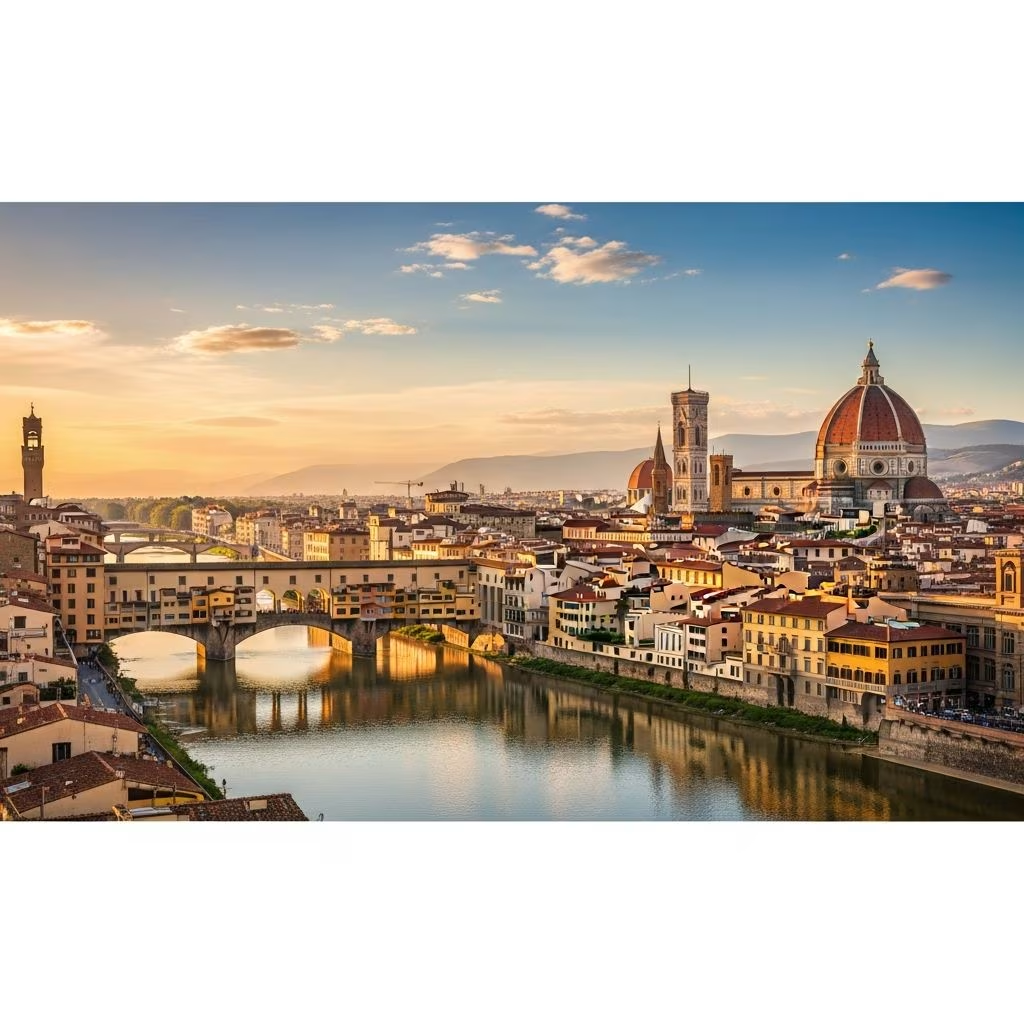
At the heart of Florence lies the Cathedral of Santa Maria del Fiore, commonly known as the Duomo, which represents one of the most significant architectural achievements of the medieval period. The structure encompasses far more than a single building; it comprises an interconnected complex of five distinct components that together create a comprehensive artistic and architectural statement. Understanding how to navigate and experience this complex requires strategic planning and advance preparation.
The centerpiece of this architectural ensemble is Brunelleschi’s Dome, technically known as the Cupola del Brunelleschi. Completed in the 15th century, this engineering marvel showcases Renaissance innovation and artistic vision. Climbing the dome requires ascending 463 steps through a spiraling interior pathway, offering visitors an intimate perspective of the dome’s construction while rewarding their effort with panoramic views of Florence from the observation platform. The climb presents a physically demanding but ultimately transformative experience that connects visitors directly to the city’s most iconic structure.
Complementing the dome is Giotto’s Bell Tower, locally called the Campanile, which rises adjacent to the cathedral with distinctive geometric marble patterns adorning its facade. The Opera del Duomo Museum houses remarkable artworks and architectural fragments, including original bronze doors from the Baptistery. The Baptistery of San Giovanni, with its stunning geometric marble exterior, stands as another essential component of this religious complex.
Planning Tip: Advance booking for dome access is essential, as time slots typically sell out months in advance. The Brunelleschi Pass provides coordinated access to multiple components, though visitors should note that the dome climb involves significant physical exertion in confined spaces, making it unsuitable for individuals with acrophobia or claustrophobia.
The Accademia Gallery commands a place among Florence’s most visited cultural institutions, drawing art lovers from across the globe to witness Michelangelo’s David in person. This monumental marble sculpture, carved when the artist was merely 26 years old, stands over 5 meters in height and represents the pinnacle of Renaissance sculptural achievement. The work embodies idealized youth and beauty while simultaneously serving as a symbol of Florentine civic identity and Renaissance artistic mastery.
Beyond the legendary David, the Accademia houses a significant collection of Florentine paintings and sculptures spanning multiple centuries. The museum’s architecture and layout create intimate viewing spaces that encourage sustained contemplation of individual artworks. Many visitors find that dedicating substantial time to the Accademia enriches their appreciation for Renaissance aesthetics and technical innovation.
The Accademia experience benefits from strategic timing; arriving early in the morning or booking timed entries in advance helps visitors navigate crowds while maximizing their engagement with the collection. Photography restrictions within the gallery preserve the museum’s contemplative atmosphere and protect the artworks from light damage.
Often overshadowed by more famous institutions, the Bargello represents a hidden gem for visitors seeking exceptional sculptural works and Renaissance masterpieces. Originally constructed as a fortress palace and later serving as a jail, the building itself embodies Florence’s complex historical evolution. The conversion of this imposing structure into a museum created remarkably atmospheric galleries where medieval and Renaissance sculptures gain heightened dramatic impact through architectural context.
The museum’s collection includes significant works by Donatello, Michelangelo, and other Renaissance masters. The interior spaces feature beautifully decorated halls and chambers that transform the viewing experience; decorative ceilings and architectural details complement rather than distract from the artworks on display. The Bargello demonstrates that exceptional cultural institutions need not rely on fame alone to deliver profound artistic encounters.
The museum’s relative accessibility compared to overcrowded alternatives makes it an ideal destination for visitors seeking meaningful engagement with Renaissance sculpture without experiencing excessive crowd pressure. The quality of its collection rivals that of more famous galleries while providing more intimate viewing opportunities.
Piazza della Signoria functions as the pulsing center of Florence’s urban and cultural identity, serving as the city’s political and social heart for centuries. This expansive public square embodies the democratic ideals and artistic ambitions that characterized Florence during its most influential periods. The plaza maintains its status as a gathering space where locals and visitors intermingle, creating a vibrant atmosphere of continuous human activity and social exchange.
The square’s most prominent structure is the Palazzo Vecchio, originally built as a fortress palace and now functioning as Florence’s municipal government seat while simultaneously operating as a museum. Visitors can explore the building’s interior, discovering secret passageways, Renaissance apartments adorned with period artwork, and the Hall of the Five Hundred with its remarkable frescoes. The Arnolfo Tower offers additional opportunities for observing Florence from elevated vantage points.
The Loggia dei Lanzi forms an open-air sculpture museum within the plaza, displaying Renaissance sculptural works including Benvenuto Cellini’s Perseus with the Head of Medusa. This covered loggia provides a transitional space between the plaza’s open expanse and the surrounding streets, creating an ideal location for observations and rest breaks. The Neptune Fountain, despite its historical significance and artistic merit, has weathered repeated acts of vandalism since its 16th-century construction, yet it remains an iconic plaza feature.
A copy of Michelangelo’s David occupies the plaza’s most prominent location, marking the spot where the original sculpture stood from 1504 to 1873. This replica allows visitors to appreciate the work’s scale and artistic impact within its original spatial context, providing perspective that differs from viewing the original within the Accademia’s interior setting.
The historic Rivoire café offers an opportunity to experience Florentine café culture while enjoying exceptional hot chocolate served in the traditional manner—thick, dark, and crowned with generous cream. The café’s ornate interior, densely decorated with paintings and period furnishings, provides a window into Florence’s Belle Époque aesthetic sensibilities. Enjoying a beverage at an outdoor table allows continuous observation of the plaza’s ever-changing human panorama.
The Ponte Vecchio stands as Florence’s oldest bridge and among the world’s most recognizable spans, representing medieval engineering and commercial ingenuity. Constructed in 1345, this structure has maintained its essential form and function across nearly seven centuries of Florentine history. Unlike contemporary bridges that prioritize vehicular traffic, the Ponte Vecchio developed as a mercantile center, with commercial structures integrated into the bridge’s design.
The bridge’s distinctive architecture features tightly packed shops cascading down both sides, creating a linear marketplace suspended above the Arno River. These retail spaces have historically specialized in jewelry and precious goods, a tradition maintained to the present day. The intimate scale of these shops and the bridge’s crowded pedestrian environment create an immersive commercial experience reminiscent of medieval trade routes.
The Ponte Vecchio functions as both a practical transportation route and a primary tourist destination in its own right. Walking across during evening hours, when the day’s crowds diminish, reveals the bridge’s architectural character and offers unobstructed views of the Arno’s flow and the city’s illuminated facades reflected in the water. This crossing experience represents an essential Florence moment for nearly all visitors.
The Uffizi Gallery stands as one of the world’s most significant repositories of Renaissance painting, housing masterworks that fundamentally shaped European artistic tradition. This museum demands careful planning and advance reservation, as visitor capacity remains perpetually constrained by the collections’ international significance and the building’s architectural limitations. The gallery’s chronological arrangement allows visitors to trace artistic development and stylistic evolution across Renaissance centuries.
The Uffizi experience benefits substantially from advance research and strategic prioritization. Attempting to examine every work exhaustively risks overwhelming visitors while diminishing appreciation for individual masterpieces. Many cultural authorities recommend focusing on selected galleries and accepting that a complete examination requires multiple visits across different trips.
Located near Florence’s principal train station, the Basilica di Santa Maria Novella represents significant Dominican architectural and artistic accomplishment. Construction began in 1279 and continued through subsequent centuries, culminating in Leon Battista Alberti’s elegant marble facade that defines the basilica’s exterior character. The interior houses an exceptional collection of Renaissance artworks, including Masaccio’s Holy Trinity and elaborate frescoes commissioned by the Tornabuoni family.
The adjoining cloisters and chapel spaces create a museum complex that extends beyond the main basilica, offering layered artistic and architectural experiences. The arrangement of these spaces encourages visitors to transition gradually through different periods and artistic approaches, creating a comprehensive survey of religious artistic production across Renaissance centuries.
Successfully experiencing Florence’s major attractions requires thoughtful itinerary construction that balances must-see destinations with consideration for crowd dynamics and visitor fatigue. The following table outlines a suggested day structure for visitors prioritizing Florence’s most significant cultural institutions:
| Time Period | Recommended Activity | Planning Notes |
|---|---|---|
| 8:15 AM – 11:00 AM | Uffizi Gallery (Renaissance painting collection) | Requires advance reservation; arrive early to maximize viewing time before mid-day crowds intensify |
| 11:00 AM – 1:00 PM | Bargello Museum or alternative retail exploration | Provides contrast to Uffizi focus; shopping districts offer temporary break from museum fatigue |
| 1:00 PM – 2:00 PM | Lunch break with exploration of local neighborhoods | Escape tourist-focused areas; sample authentic trattoria cuisine in residential districts |
| 2:00 PM – 4:00 PM | Renaissance Walk through historic center | Walking tour format allows flexibility and spontaneous discoveries; covers Piazza della Signoria and adjacent streets |
| 4:00 PM – 5:30 PM | Duomo Museum or dome climb experience | Timing allows completion before evening closing; dome climb requires physical stamina and advance booking |
Beyond Florence’s most famous attractions, the city rewards extended exploration through its neighborhoods, artisan workshops, and smaller cultural institutions. The Renaissance Walk through historic districts provides structured yet flexible pathways through centuries of urban development, allowing visitors to encounter lesser-known architectural details and contemporary Florentine life alongside famous landmarks.
Appropriate dress codes warrant consideration when visiting religious spaces; modest clothing that covers shoulders and knees demonstrates respect for sacred environments. Many churches impose these requirements through formal dress codes while others maintain them through cultural convention.
The Arno River pathway offers opportunities for extended walking that connects major attractions while providing respite from densely crowded streets. These walking routes particularly reward visits during late afternoon or early evening hours when day-trippers depart and local residents reclaim plaza spaces.
Florence’s culinary traditions reflect Tuscan agricultural abundance and Renaissance prosperity. Beyond museum visits, food-focused activities including cooking classes, wine tastings, and market explorations provide entry points into Florentine culture distinct from architectural tourism. Traditional trattoria experiences in residential neighborhoods often deliver more authentic culinary encounters than tourist-focused restaurant districts.
Selecting accommodation location significantly impacts the Florence experience. Proximity to major attractions determines daily walking distances and fatigue levels, while neighborhood character influences interaction with local residents and discovery of authentic commercial establishments. Boutique hotels in residential neighborhoods often provide more intimate experiences than large chain properties concentrated in tourist districts.
Florence’s compact urban geography allows most attractions to be accessed through walking, though the city’s hilly topography and cobblestone streets require appropriate footwear and physical conditioning. Public transportation systems efficiently connect peripheral neighborhoods with the historic center, though navigating the system requires advance research and fare purchase.
The most memorable Florence experiences often emerge from unplanned encounters and unhurried observation rather than rushed visits to famous sites. Dedicating time to aimless neighborhood wandering, café sitting, and spontaneous discoveries creates space for authentic engagement with the city’s character. While museum visits and landmark observation remain essential components of the Florence itinerary, balancing structured activities with unstructured exploration creates more comprehensive and personally resonant travel experiences.
