

 Travel Essentials
 Travel Essentials

Explore Germany's top destinations including castles, mountains, historic cities, and cultural landmarks. Your comprehensive guide to unforgettable German experiences.
 Travel Essentials
Germany stands as one of Europe’s most diverse travel destinations, offering visitors an extraordinary range of experiences across its varied landscapes and rich cultural heritage. From the soaring peaks of the Bavarian Alps to the historic heart of Berlin, Germany combines natural beauty, architectural splendor, and vibrant urban culture in ways that captivate millions of international travelers annually. This guide explores the country’s most compelling attractions and experiences that define a truly memorable German adventure.
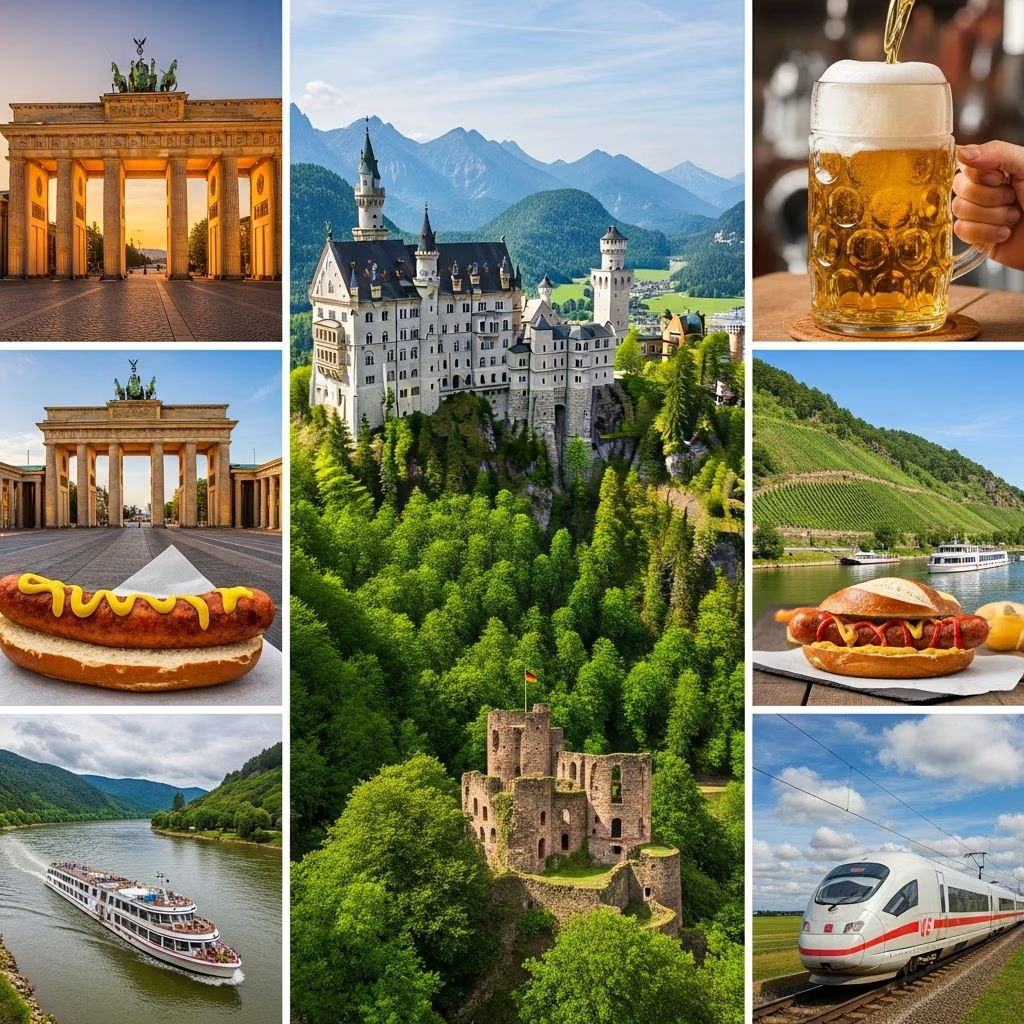
Berlin represents the pulsing cultural center of modern Germany, where visitors encounter tangible connections to the nation’s complex recent history alongside cutting-edge contemporary culture. The Brandenburg Gate, constructed during the 18th century under King Frederick William II, stands as a neoclassical monument symbolizing peace and German unity. This iconic structure has transcended its historical role to become one of the world’s most recognizable architectural achievements.
The East Side Gallery transforms remnants of the Berlin Wall into an open-air artistic canvas, where approximately 105 colorful murals commemorate the wall’s fall in 1989 and Germany’s reunification. Artists from across the globe have contributed to this 1,300-meter stretch, making it far more than a historical artifact—it represents a powerful statement about transformation and human creativity. Visitors walking through neighborhoods like Kreuzberg and Friedrichshain discover how communities have channeled creativity and diversity into their urban landscape, revealing the city’s evolution beyond its divided past.
Berlin offers additional cultural depth through Museum Island and Spree River cruises, providing different perspectives on the city’s artistic treasures and architectural heritage. The city’s numerous parks, including the expansive Tiergarten, offer respite from urban exploration and opportunities for outdoor recreation.
Munich pulses as Bavaria’s cultural heartbeat, celebrated worldwide for its beer gardens, traditional markets, and festive celebrations. The city boasts the highest concentration of beer gardens anywhere globally, where locals and visitors gather to enjoy traditional Maß—the local name for their distinctive beer servings. This beer-centric culture intertwines so thoroughly with Munich’s identity that casual afternoon gatherings become cultural experiences in themselves.
The Viktualienmarkt, originally a simple farmers’ market, has evolved into a sprawling 240,000-square-foot marketplace featuring 140 vendors offering everything from fresh produce to artisanal cheeses, flowers, and specialty drinks. Operating six days weekly, this market serves as both a practical shopping destination and a vibrant social gathering place where spontaneous culinary discoveries await.
Oktoberfest, held annually beginning in late September, attracts approximately six million visitors to experience what many consider the world’s premier beer festival. Beyond beer consumption, the celebration showcases Bavarian culture through traditional food, elaborate parades, live music, and costumed performances, creating an immersive cultural experience that extends far beyond casual drinking.
Zugspitze claims distinction as Germany’s highest mountain, rising majestically within the Bavarian Alps and offering some of Europe’s most spectacular alpine experiences. The mountain features a state-of-the-art cable car system that commenced operations in 2017, incorporating engineering innovations including the world’s longest unsupported rope span. This technological achievement transports visitors to the summit’s dramatic rocky perch while providing unobstructed views of the surrounding alpine landscape.
While the cable car journey represents a premium experience financially, the vistas justify the investment for many travelers. The journey becomes even more worthwhile when visitors allocate additional time to explore the Eibsee lake at the mountain’s base, where warmer months permit swimming in the strikingly blue alpine waters. The Bavarian Alps surrounding Zugspitze offer excellent hiking and climbing routes for various skill levels, ensuring accessibility for different athletic abilities.
Eastern Germany’s Sächsische Schweiz National Park presents an entirely different alpine character from its western counterparts. Spectacular sandstone pinnacles and distinctive tabletop mountains create unusual geological formations found nowhere else in German alpine regions. As Germany’s only non-alpine rock national park, it attracts outdoor enthusiasts seeking challenging rock climbing and hiking opportunities.
The Basteibrücke, a magnificent stone bridge connecting two rock towers, represents the park’s most celebrated landmark and offers dramatic photographic opportunities. The adjacent city of Dresden provides convenient cultural contrast with landmarks including the Zwinger Palace and the recently reconstructed Frauenkirche, accessible via short car or public transport journeys.
Schloss Neuschwanstein represents 19th-century architectural fantasy brought to three-dimensional reality, built by Bavaria’s enigmatic King Ludwig II as a personal retreat. The castle’s ethereal silhouette against breathtaking mountain backdrops reportedly inspired Walt Disney’s iconic castle imagery, transforming it into one of the world’s most recognizable structures. Its fairy-tale appearance belies its relatively recent construction, with Ludwig’s vision creating what many consider Germany’s most striking architectural achievement.
Munich’s Schloss Nymphenburg originally functioned as the summer residence of Bavarian rulers, showcasing the opulent lifestyle of European aristocracy. The palace’s luxurious interior chambers, vast ornamental gardens, and carriage museum provide intimate glimpses into historical court life. Forty of the palace’s majestic rooms have undergone restoration to their original grandeur and now welcome public visitors.
The Würzburg Residenz, an 18th-century palace of dazzling proportions, attracts architecture enthusiasts with its renowned grand staircase and Tiepolo ceiling fresco—masterworks of baroque design. These palaces collectively document the aesthetic values and power structures that defined European royal culture during their construction periods.
Cologne Cathedral represents one of Germany’s most famous religious structures and a UNESCO World Heritage Site of immense significance. The giant Gothic cathedral underwent continuous construction for over 500 years before reaching completion in 1880. Its twin massive towers dominate Cologne’s skyline and serve as instantly recognizable symbols of German cultural heritage. The cathedral’s architectural complexity and historical longevity make it essential viewing for those interested in medieval religious architecture.
Western Germany’s Ruhrgebiet region, once a global center for coal mining and metal production, demonstrates how former industrial landscapes can undergo meaningful cultural regeneration. The Zeche Zollverein, a decommissioned coal-mining complex, now hosts museums, cultural spaces, and recreational facilities including an outdoor swimming pool. This transformation exemplifies adaptive reuse architecture on an impressive scale.
Landschaftspark Duisburg-Nord preserves the region’s industrial character while introducing recreational opportunities, featuring a diving center within a converted gasometer and climbing walls constructed in former ore storage bunkers. These installations blend historical preservation with contemporary leisure activities, creating unique experiences unavailable in traditional tourist destinations.
The UNESCO-listed Rhine River Valley showcases one of Germany’s most spectacular natural and cultural landscapes, dotted with historic castles and charming riverfront villages. The Middle Rhine Valley between towns like Bacharach and St. Goar offers scenic boat journeys revealing vineyards cascading down hillsides, medieval fortifications, and small communities that seem suspended in time. These cruises appeal particularly to travelers seeking natural beauty without demanding intensive physical exertion, complementing leisurely lunches in historic towns.
Southern Germany’s Romantic Road connects picturesque medieval towns, each featuring distinctive architectural character and historical significance. Rothenburg ob der Tauber exemplifies the fairy-tale medieval town aesthetic with its perfectly preserved walls, cobblestone streets, and historical townscape. These destinations attract travelers seeking to experience authentic German regional culture relatively undisturbed by mass tourism.
Germany’s Black Forest region combines dense forests, charming small villages, and outdoor recreation opportunities. The area offers excellent hiking possibilities for various skill levels while maintaining significant cultural character through traditional villages and regional specialties. The region provides peaceful contrast to Germany’s major urban centers while maintaining excellent accessibility via modern transportation networks.
Hamburg’s Miniatur Wunderland holds the distinction of being the world’s largest model train exhibit and continues expanding its ambitious scope. The exhibition features trains navigating detailed recreations of Hamburg and its coastline, Austria, the Grand Canyon, and Scandinavian landscapes, creating an immersive miniature world that appeals to visitors of all ages. The precision craftsmanship and sheer ambition of the display make it a remarkable example of dedicated hobbyist achievement scaled to museum proportions.
Germany excels at providing well-maintained hiking infrastructure connecting castles, valleys, and historical sites. The Neckarsteig and Castle Road routes offer hikers the option of castle-to-castle trekking or leisurely town-to-town cycling, with train connections linking various communities within short travel times. This combination of hiking, cycling, and accessible rail transport creates flexible options for visitors with different athletic capabilities and preferences.
Beyond structured hiking trails, Germany’s forests and alpine regions offer informal recreation opportunities. Berlin’s Tiergarten provides accessible urban green space, while nearby Grunewald offers more substantial forest experiences. Alpine regions near Zugspitze combine hiking with cable car access, allowing visitors to customize their adventure intensity.
Germany experiences distinct seasonal character. Summer months offer optimal hiking and outdoor conditions with extended daylight. Winter transforms alpine regions into snow-covered landscapes suitable for winter sports. Spring and autumn provide mild weather with fewer crowds and pleasant scenery. Oktoberfest timing (late September) creates specific travel windows for those wanting to experience this major cultural event.
Germany’s extensive rail system connects major cities and smaller towns efficiently, making independent travel accessible even without personal vehicles. Most attractions remain within reasonable distances via public transportation, though car rentals provide flexibility for exploring rural regions and castle routes at individual pace. Bicycle-friendly infrastructure in many areas offers alternative transportation for local exploration.
Germany’s attractions span extraordinary range—from technological marvels like Zugspitze’s cable car to medieval authenticity preserved in riverside towns, from cutting-edge urban culture in Berlin to fairy-tale castles nestled in mountain valleys. The country’s ability to blend historical preservation with contemporary innovation, natural beauty with urban sophistication, and mainstream attractions with distinctive regional character creates travel experiences suited to remarkably diverse interests and travel styles. Whether seeking cultural immersion, outdoor adventure, historical understanding, or casual relaxation, Germany delivers memorable experiences that justify its position among Europe’s premier travel destinations.
