

 Travel Essentials
 Travel Essentials

Explore Guyana's top attractions from Kaieteur Falls to Rupununi savannahs, blending adventure, nature, and history for unforgettable travels.
 Travel Essentials
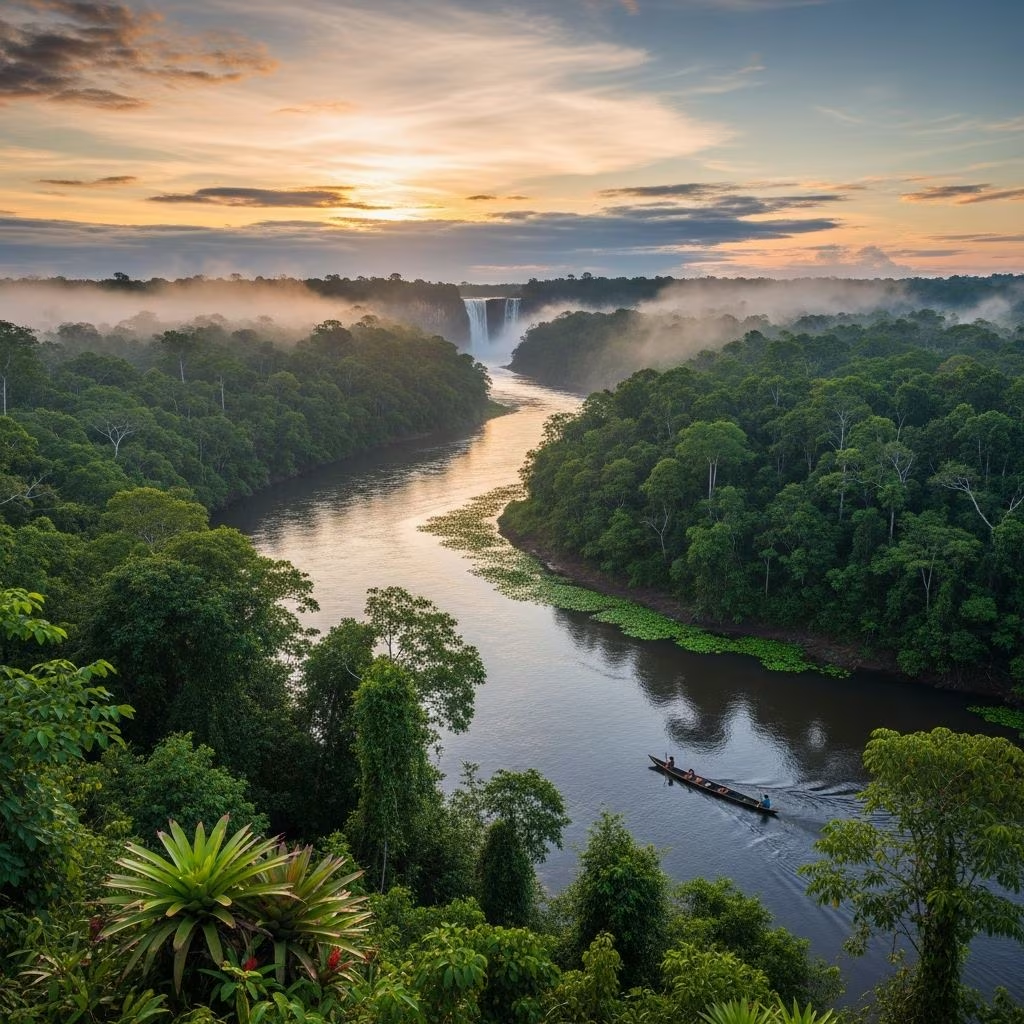
Guyana, often called the ‘Land of Many Waters,’ offers a raw, untamed escape where pristine rainforests meet expansive savannahs and powerful waterfalls thunder into gorges. This South American gem remains one of the continent’s least-visited destinations, preserving its biodiversity and cultural authenticity for intrepid explorers. From soaring aerial views over untouched jungle to immersive encounters with indigenous communities, Guyana delivers experiences that feel worlds away from mainstream tourism.
The crown jewel of Guyana’s natural wonders is **Kaieteur Falls**, the world’s largest single-drop waterfall by volume, plunging 825 feet—nearly five times the height of Niagara. Accessible only by small bush plane from Georgetown, the flight alone is mesmerizing, revealing endless broccoli-like forest canopies unbroken by roads or settlements. Upon landing, short hikes lead to panoramic viewpoints like Rainbow View, where mist-fed rainbows arch over the thundering cascade amid a verdant gorge.
Pair Kaieteur with **Orinduik Falls** on the same day trip near the Brazilian border. These gentler falls invite swimming in natural pools, perfect for cooling off after the morning’s adrenaline. Grippy sandals are essential on the slippery rocks. These waterfalls exemplify Guyana’s hydrological riches, fed by the Potaro River system.
In southwestern Guyana, the **Rupununi Savannah** stretches like an African plain, dotted with termite mounds and grazing herds. This region, home to giant anteaters, jaguars, harpy eagles, and black caimans, offers 4×4 drives, horseback rides, and treks for wildlife spotting. Locals proudly claim a distinct Rupununi identity, blending Amerindian traditions with conservation efforts.
Stay at eco-lodges like Wichabai Ranch, an off-grid haven where guests hike bush trails, sip rum under stars, and swim with domesticated capybaras—a rare thrill unique to this area. Nearby, villages like Katoonarib provide hands-on lessons in cassava bread-making, archery, and basket weaving, fostering deep cultural connections.
For a bird’s-eye forest perspective, the **Iwokrama Canopy Walkway** in the heart of Guyana’s rainforest suspends visitors 30 meters above the ground across 154 meters of bridges and platforms. Dawn visits maximize sightings of toucans, monkeys, and the vibrant Guianan cock-of-the-rock, a fiery orange bird with silky plumes. This reserve protects vast tracts of pristine habitat, emphasizing sustainable ecotourism.
Guyana’s capital, **Georgetown**, buzzes with wooden colonial architecture painted in pastel hues. **St. George’s Cathedral**, a towering Gothic structure from 1842 reaching 43 meters, stands as one of the world’s tallest wooden buildings. Nearby, the **Botanical Gardens** and **Guyana National Park** host manatees in lily-pad ponds—visitors can even feed and pet them, a gentle interaction illegal elsewhere.
Dive into local life at **Stabroek Market**, a chaotic iron-framed icon resembling a Victorian railway station, brimming with fresh produce, spices, and crafts. The **National Museum** chronicles Guyana’s history from indigenous roots to independence, while the **Demerara Harbour Bridge** offers scenic riverside walks.
Engage with Guyana’s nine indigenous nations through stays at remote eco-lodges like Rewa, Surama, or ATTA. These community-run spots immerse travelers in daily life: fishing the Essequibo River, spotting giant river otters, or hiking to Awarmie Mountain viewpoints. Conservation is key—lodges support anti-poaching and reforestation, allowing guests to contribute meaningfully.
For a sobering contrast, tour the **Jonestown** site in Port Kaituma, reopened for guided visits led by experts like Chris Persaud. Jungle-reclaimed remnants evoke the 1978 tragedy, providing historical context amid Guyana’s complex past. Balance this with lighter pursuits like wine tasting at Pandama Retreat & Winery, Guyana’s only vineyard.
| Duration | Focus | Key Activities |
|---|---|---|
| 3-4 Days | Georgetown Base | City tours, manatees, markets, cathedral |
| 5-7 Days | Waterfalls + Savannah | Kaieteur flight, Rupununi safari, village stays |
| 10+ Days | Full Immersion | Iwokrama walkway, eco-lodges, Essequibo cruises |
Travel best in dry season (May-Sep) for savannah access; rainy months enhance waterfall drama. Small planes and 4x4s are essential—no roads link remote sites. Budget for eco-fees and guides; permits required for falls. Health prep includes yellow fever vaccine.
| Location | Star Animals | Best Activity |
|---|---|---|
| Rupununi | Capybaras, jaguars, eagles | Safari drives/swims |
| Iwokrama | Toucans, monkeys, cock-of-the-rock | Canopy walkway |
| Essequibo River | Giant otters, manatees, dolphins | Boat tours |
| Kaieteur Park | Macaws, golden poison frogs | Hiking viewpoints |
Fly in a chartered bush plane from Georgetown’s Ogle Airstrip; trips cost $300-500 USD per person, often combined with Orinduik.
Yes, with guided tours; petty crime in Georgetown is low, but remote areas require experienced operators.
Light layers, rain gear, binoculars, insect repellent, sturdy boots for savannah treks.
Eco-luxury at lodges like Wichabai offers solar power and gourmet meals amid wilderness.
Dry season for savannahs; year-round in rainforests, dawn/rain for cock-of-the-rock.
Guyana’s allure lies in its authenticity—no crowds, just nature’s raw power and welcoming communities. Whether scaling canopy bridges or witnessing golden macaws at dawn, every moment redefines adventure.
