

 Travel Essentials
 Travel Essentials

A comprehensive guide to Hanoi's top attractions, from ancient temples and colonial architecture to water puppet performances and culinary experiences.
 Travel Essentials
Hanoi, the capital of Vietnam, stands as one of Southeast Asia’s most captivating destinations, blending centuries of history with the energy of modern urban life. The city’s winding streets, hidden temples, and bustling markets reveal a destination rich with cultural significance and natural beauty. Whether you’re a first-time visitor or returning explorer, Hanoi offers countless opportunities to immerse yourself in Vietnamese traditions, architecture, and cuisine.
Hanoi’s structure reflects its complex history, with different districts representing various periods of development and cultural influence. The city’s layout creates natural neighborhoods, each with distinct characteristics and attractions. Understanding these geographical divisions helps visitors navigate the capital more effectively and appreciate how different areas contribute to the city’s overall character.
The city’s numerous lakes, parks, and green spaces provide tranquility amid urban development. These natural features serve as gathering places for locals and tourists alike, offering respite from the energetic pace of city streets. Water features have played significant roles in Vietnamese culture for centuries, and Hanoi’s lakes continue this tradition as important social and spiritual centers.
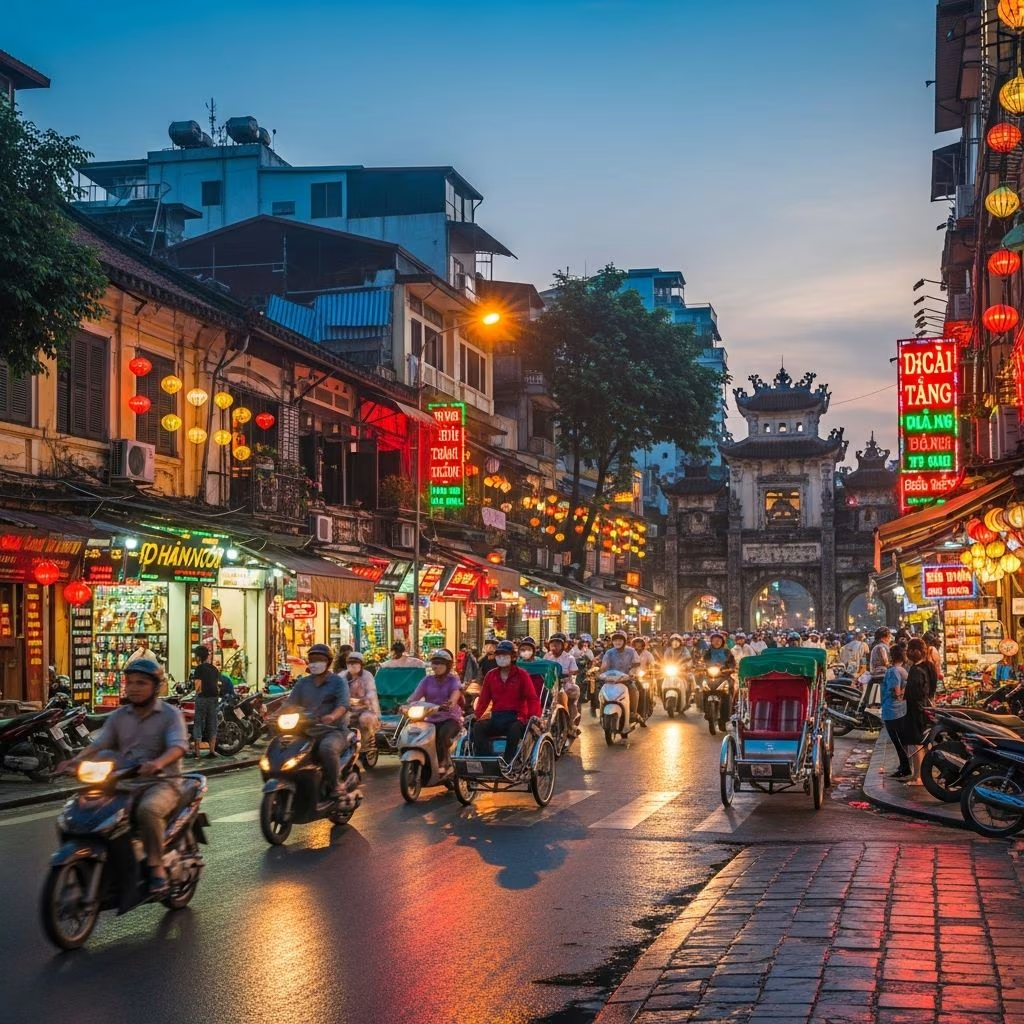
The Old Quarter represents Hanoi’s most historically significant neighborhood, housing structures and street layouts that have remained largely unchanged for centuries. This area encapsulates the essence of traditional Vietnamese urban life, with narrow alleyways, family-run shops, and centuries-old architecture creating an immersive historical experience. The district organized itself historically by trade, with entire streets dedicated to specific goods and crafts.
Walking through the Old Quarter provides sensory overload in the best possible way—the aroma of street food vendors, the sounds of motorcycle traffic, and the visual spectacle of colorful storefronts combine to create an authentically Vietnamese atmosphere. Visitors encounter everything from silk merchants to traditional medicine shops, temples nestled between modern establishments, and countless cafes offering both traditional and contemporary Vietnamese fare.
The neighborhood hosts several important landmarks within walking distance, including museums dedicated to Vietnamese history and cultural artifacts. The concentration of attractions in this relatively compact area makes it ideal for extended exploration on foot.
This iconic body of water sits at the geographical and spiritual center of Hanoi, offering one of the city’s most peaceful experiences. The lake’s name translates to “returned sword,” referencing a legendary Vietnamese folktale about a magical sword returned to the lake after helping defeat invaders. This mythological connection adds layers of significance to a location already rich with cultural meaning.
The lake provides an ideal location for experiencing how locals spend their leisure time. During weekend evenings, traffic restrictions near the water create an extended pedestrian zone where families stroll, couples relax on benches, and exercisers perform tai chi on the waterfront. The atmosphere transforms as evening approaches, with the lake illuminated by city lights and the pace of activity increasing as people gather for social interaction.
Ngoc Son Temple, situated on a small island within the lake, represents one of Hanoi’s most photographed locations. Accessible via the distinctive red Huc Bridge, this Buddhist temple features traditional Vietnamese architecture and hosts both pilgrims and tourists throughout the day. The bridge’s vivid color and graceful arc create a striking visual element, particularly when illuminated at dusk.
The Ho Chi Minh Mausoleum complex occupies a position of paramount importance in Vietnamese national consciousness. Located in Ba Dinh Square, this site marks where Ho Chi Minh declared Vietnam’s independence in 1945, establishing its historical and political significance. The mausoleum itself contains the remains of the nation’s founding leader and attracts visitors seeking to pay respects and understand Vietnam’s modern history.
The surrounding complex includes several related attractions that provide context for understanding Ho Chi Minh’s life and influence. Ho Chi Minh’s Stilt House offers insights into the leader’s personal life and preferences, while additional structures within the compound reflect different periods of Vietnamese history. The manicured green spaces provide contemplative environments for reflection on the nation’s journey.
The One Pillar Pagoda stands as an architectural curiosity within this complex, constructed in 1054 to resemble a lotus flower emerging from water. Destroyed during French colonial occupation, the structure was later rebuilt, symbolizing Vietnamese resilience and cultural continuity.
Visitors should note that Ba Dinh Square enforces a strict dress code, requiring covered shoulders and knees, and implements security screening procedures including metal detectors and bag searches.
Water puppet theater represents a uniquely Vietnamese art form, with performances occurring at dedicated venues including Thang Long Water Puppet Theater and Lotus Water Puppet Theater. These shows feature skilled artists manipulating wooden puppets across water surfaces while narrating traditional Vietnamese folk stories. Common narrative themes include agricultural activities, fishing experiences, and historical events significant to Vietnamese culture.
The performances typically include multiple acts, each lasting approximately one to two minutes, with stories presented in rapid succession. Traditional Vietnamese music accompanies the action, creating a multisensory theatrical experience. While water puppet shows appear throughout Vietnam, the performances maintain consistent storylines and techniques, so experiencing one show provides exposure to the traditional art form.
Ticket pricing varies based on seating proximity to the stage, with standard options providing excellent views regardless of price point. Advance booking through online platforms offers convenience while maintaining identical pricing to in-person ticket purchases.
Originally constructed in 1070 as Vietnam’s first national university, the Temple of Literature represents a remarkable example of traditional Vietnamese architecture preserved with exceptional care. Dedicated to Confucius and scholars of ancient wisdom, the complex demonstrates the historical emphasis on education and intellectual development within Vietnamese society.
The temple’s layout follows classical Vietnamese design principles, with courtyards, pavilions, and gardens arranged to encourage contemplation and learning. Stone tablets inscribed with the names of successful examination candidates line the pathways, documenting centuries of scholarly achievement. The well-maintained structures provide visual inspiration and historical education simultaneously.
Visitors appreciate the peaceful atmosphere, spacious grounds, and educational signage explaining architectural elements and historical context. The location offers respite from urban congestion while providing intellectual enrichment through exposure to centuries-old Vietnamese educational traditions.
Hanoi’s famous train street presents a unique attraction where active railway tracks run directly through a residential neighborhood. Several times daily, trains navigate the narrow passage, creating dramatic moments as locomotives pass within feet of buildings and cafes. Between train arrivals, the space transforms into a pedestrian area where visitors gather for photographs and refreshments.
The cafes lining the tracks serve traditional Vietnamese beverages including distinctive egg coffee and locally-sourced brews. The combination of authentic refreshments, energetic atmosphere, and photographic opportunities attracts both casual tourists and devoted Instagram enthusiasts. The experience captures a distinctly Vietnamese approach to integrating transportation infrastructure into residential spaces.
The Imperial Citadel of Thong Long, also known as Hanoi Citadel, served as the political center of Vietnam for thirteen consecutive centuries. Located in Ba Dinh District, this fortified complex contains buildings, artifacts, and archaeological evidence spanning from the 6th through 20th centuries. Walking through the imperial grounds provides tangible connection to Vietnam’s extended history of governance and cultural development.
The site preserves defensive structures, administrative buildings, and residential areas, offering comprehensive understanding of how imperial courts functioned. Artifact displays showcase objects from different historical periods, providing archaeological context for the site’s evolution. The citadel’s continued preservation demonstrates commitment to maintaining physical evidence of Vietnam’s political heritage.
Hanoi contains numerous religious structures representing various traditions, with Buddhist temples, Confucian halls, and colonial-era churches coexisting throughout the city. Saint Joseph Cathedral exemplifies French colonial architectural influence, featuring twin bell towers and Gothic design elements. The cathedral’s distinctive silhouette contributes to Hanoi’s diverse skyline and represents religious pluralism within the city.
Tran Quoc Pagoda, located on a small island within West Lake, holds distinction as the oldest living pagoda in Hanoi, with construction dating to 545 CE. This predates the Temple of Literature by more than five centuries, emphasizing Buddhism’s deep historical roots within Vietnamese culture. The remote location on West Lake provides peaceful contemplation opportunities and scenic viewpoints.
Transportation through Hanoi’s neighborhoods requires understanding the city’s hierarchical street system and major thoroughfares. Wide, tree-lined boulevards such as Phan Dinh Phung Street feature French colonial mansions and villas, reflecting the architectural legacy of colonial occupation. These major streets contrast sharply with narrow Old Quarter alleyways, illustrating Hanoi’s spatial complexity.
Hanoi Opera House represents another colonial-era architectural achievement, combining French design traditions with Vietnamese cultural context. The building’s elegant façade and interior spaces continue hosting performances and cultural events, maintaining active use rather than serving merely as historical artifact.
Multiple museums throughout Hanoi preserve and display Vietnamese cultural artifacts, historical documents, and artistic achievements. The National Museum of Vietnamese History and Vietnam Military History Museum provide comprehensive overviews of the nation’s complex past through curated collections and educational displays. These institutions offer systematic understanding of Vietnamese history, from ancient periods through contemporary times.
| Season | Temperature Range | Humidity Level | Notable Characteristics |
|---|---|---|---|
| Spring (Feb-April) | 15-25°C | Moderate | Pleasant weather, occasional rain, flowers blooming |
| Summer (May-August) | 25-35°C | High | Hot and humid, frequent rainfall, typhoon risk |
| Autumn (September-October) | 20-30°C | Moderate | Clearer skies, comfortable temperatures, ideal visiting period |
| Winter (November-January) | 10-20°C | Lower | Cool and dry, occasional light rain, lowest humidity |
Autumn (September-October) and winter (November-January) offer the most comfortable weather conditions with moderate temperatures and lower humidity. Spring (February-April) also provides pleasant conditions, though occasional rain occurs. Summer brings intense heat and humidity, making outdoor exploration challenging.
A minimum of 2-3 days allows visitors to experience major attractions including the Old Quarter, Hoàn Kiếm Lake, and several temples. Extended stays of 4-5 days enable deeper exploration of museums, less-visited neighborhoods, and day trips to surrounding regions.
Water puppet performances provide authentic exposure to traditional Vietnamese art forms and cultural storytelling. The experience offers entertainment value combined with educational insights into Vietnamese folklore and artistic traditions. Performances typically last 45-60 minutes, making the activity accessible for most visitors.
No, the site enforces strict dress codes requiring covered shoulders and knees. Visitors in inappropriate attire will not be permitted entry. Many nearby shops rent or sell appropriate clothing if needed.
Registered taxis and ride-sharing applications provide safer transportation options than attempting to navigate traffic independently as a visitor unfamiliar with local driving customs. Organized tours or hiring personal guides also offer comfortable transportation with contextual information about attractions.
