

 Travel Essentials
 Travel Essentials

Explore Huelva's rich cultural attractions, from Columbus monuments to pristine beaches and underground caves in Spain's lesser-known Andalusian destination.
 Travel Essentials
Nestled in the southwestern corner of Andalusia, Huelva represents one of Spain’s most underappreciated travel destinations. While many visitors flock to Barcelona, Madrid, or Seville, this coastal province offers a distinctive blend of historical significance, natural beauty, and authentic Spanish culture. From its pivotal role in maritime exploration to its remarkable geological formations, Huelva invites travelers seeking experiences beyond the typical tourist circuit.
Huelva’s character emerges from centuries of cultural layering and economic transformation. The region’s importance extends back to Roman times, when mineral extraction formed the foundation of its prosperity. Today, visitors can trace these historical threads while enjoying contemporary amenities and natural landscapes that make the province distinctive within Andalusia.
The Museo de Huelva serves as the cultural nucleus of the province, housing artifacts that chronicle thousands of years of Andalusian civilization. The museum’s permanent collections showcase Roman treasures, including remarkably preserved mechanical devices and intricate decorative mosaics that reveal the sophistication of ancient engineering and artistry. Visitors ascending to the upper galleries discover Spanish artistic expressions spanning seven centuries, from medieval religious compositions to contemporary installations.
The museum operates within a carefully curated schedule, remaining free to enter during standard visiting hours from Tuesday through Sunday. Adjacent to the main museum, the salmon-colored Casa Colón building occasionally features rotating contemporary art exhibitions, providing additional opportunities to engage with Spanish creative traditions.
Every significant city possesses a geographical and social heart, and in Huelva’s case, this identity crystallizes at Plaza de las Monjas. This central gathering space showcases the architectural eclecticism characteristic of modern Spanish cities, blending contemporary structures with heritage buildings arranged around a distinctive fountain that serves as the plaza’s focal point. The surrounding cafés and restaurants create informal social venues where locals and visitors mingle while observing the rhythms of daily urban life.
Throughout the calendar year, the plaza hosts diverse cultural programming, ranging from outdoor musical performances to seasonal markets and festive celebrations. During winter holidays, atmospheric lighting transforms the space into an enchanting gathering place that embodies regional festive traditions.
Religious architecture fundamentally shaped Andalusian identity, and Huelva maintains remarkable examples of this heritage. The Santuario de Nuestra Señora de la Cinta, positioned approximately 3 kilometers north of the city center, presents a fascinating fusion of religious devotion and artistic storytelling. Inside this sanctuary, decorated ceramic tiles crafted by renowned Spanish ceramicist Daniel Zuloaga narrate the dramatic saga of Christopher Columbus’s 1493 Atlantic crossing, transforming religious space into historical narrative.
The cathedral, known as Nuestra Señora de la Merced, represents another significant ecclesiastical structure worthy of visitor attention. These religious monuments collectively document the spiritual convictions and artistic capabilities of communities across different historical periods.
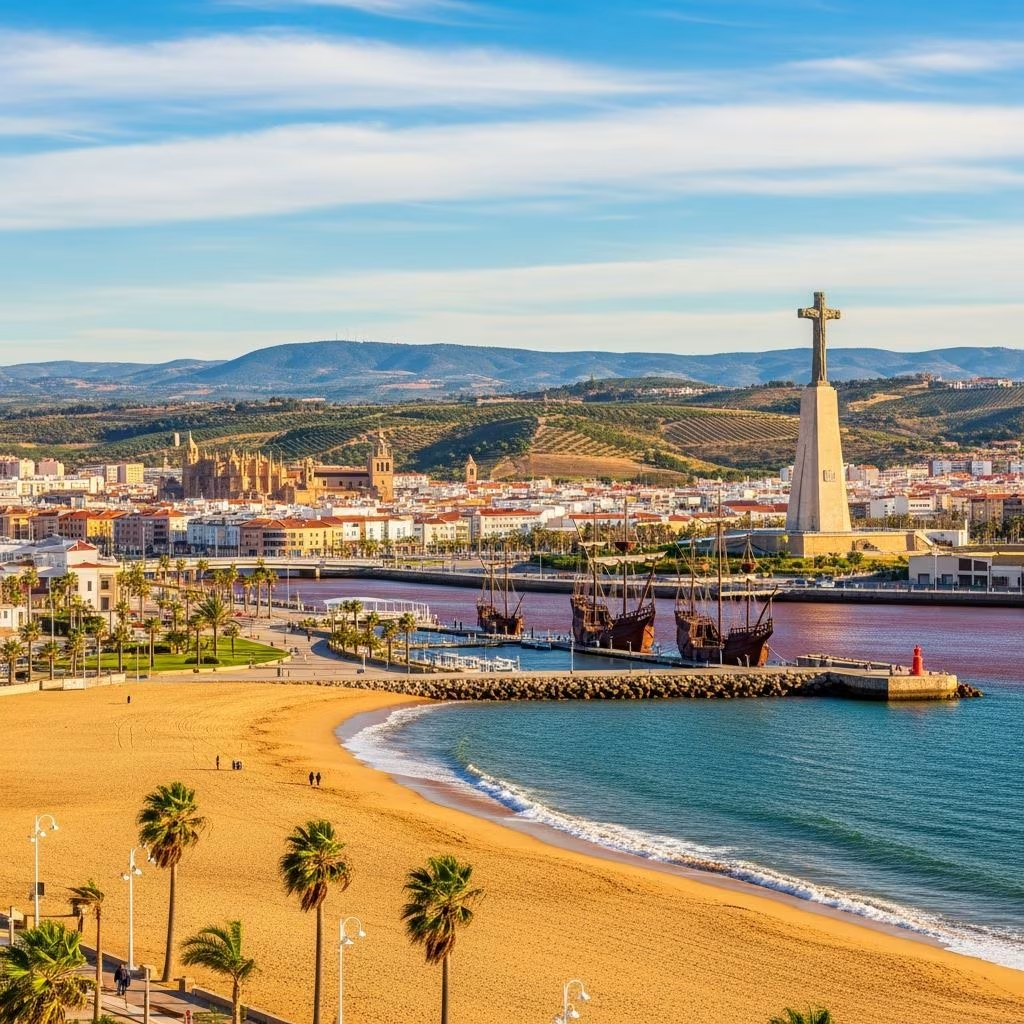
Few historical figures maintain such enduring global significance as Christopher Columbus, and Huelva claims distinctive connections to his legendary voyage. The Muelle de las Carabelas presents three meticulously crafted wooden replicas of Columbus’s original vessels, positioned within a protected artificial lagoon that shields the reproductions from tidal fluctuations. These scale models offer tangible impressions of the maritime technology and courage that enabled early transatlantic exploration.
The adjacent Monasterio de la Rábida enhances this historical experience, showcasing the Mudéjar-style cloister adorned with exceptional frescoes that reflect Islamic architectural influences preserved within Christian religious contexts. The site’s botanical gardens complement the historical atmosphere, creating an integrated experience that combines education with natural beauty.
The Muelle del Tinto embodies Huelva’s transformation from extraction-based economy to leisure-oriented destination. This three-level pier structure originated during British colonial operations when minerals from the Rio Tinto mines were loaded onto vessels destined for the British Isles. Contemporary visitors navigate the pier’s ascending levels, obtaining panoramic perspectives that encompass both Huelva’s urban landscape and the extensive Marismas del Odiel Natural Park.
The adjacent Paseo de la Ría pathway provides complementary recreational opportunities, enabling leisurely waterfront strolls that capture sunset moments and aquatic ambiance. Together, these riverside features represent reclaimed urban spaces that honor industrial heritage while serving contemporary leisure purposes.
Within densely developed urban environments, parks provide essential respite and cultural expression. Zafra Park, positioned near Huelva’s port district, encompasses substantial green acreage featuring rose gardens and unusual sculptural installations. The park’s art collection transforms landscape architecture into an open-air museum, where unexpected artistic elements engage visitors exploring the grounds.
Understanding authentic community life requires experiencing markets where residents conduct their essential commerce. The Mercado del Carmen represents this commercial and social nexus, where merchants and customers engage in the exchange of fresh fish, artisanal cheeses, regional olives, local wines, and diverse agricultural products. These market environments preserve traditional commerce patterns that contemporary supermarkets have displaced in many locations, providing valuable cultural observations for interested travelers.
The Iglesia de San Pedro, positioned atop Cabezo de San Pedro elevation, dominates the surrounding plaza while presenting architectural complexity resulting from centuries of modifications. Originally constructed during the fifteenth century on foundations of earlier Muslim religious structures, the church embodies the religious transformation characteristic of medieval Andalusia. Successive alterations through the present era have created an amalgamation of architectural styles reflecting evolving aesthetic preferences and construction methodologies.
Huelva Province extends considerably beyond city limits, encompassing diverse natural attractions. The Gruta de las Maravillas near Aracena showcases underground formations created through millennia of water action. This approximately 1-kilometer subterranean journey reveals crystalline lakes and dramatic chamber formations that transform throughout the cave system, providing geological insights and aesthetic impressions impossible to adequately capture through photography.
The Doñana National Park represents another significant natural conservation area, encompassing wetland ecosystems, sand dunes, and wildlife habitats that support diverse Mediterranean species. This protected landscape provides environmental education opportunities and ecological appreciation for travelers interested in natural systems beyond urbanized areas.
The province’s Atlantic coastline offers beach experiences ranging from developed tourist facilities to quieter naturalistic settings. Punta Umbría and Isla Cristina provide accessible beach environments, while boat excursions through estuarine systems reveal marshland ecosystems and fishing communities. These maritime experiences connect visitors with the aquatic foundations of regional economy and ecology.
Effective travel requires thoughtful scheduling and prioritization. Visitors with limited timeframes should concentrate on central city attractions including the museum, main plaza, and riverside features. Those with extended availability can incorporate provincial attractions including cave systems, national parks, and coastal communities.
| Attraction Category | Location | Best Time to Visit | Estimated Duration |
|---|---|---|---|
| Museums & Culture | City Center | Tuesday-Sunday | 2-3 hours |
| Religious Sites | Various | Morning Hours | 1-2 hours |
| Natural Attractions | Province Exterior | Spring/Autumn | Half to Full Day |
| Waterfront Activities | Riverside | Late Afternoon | 1-2 hours |
| Market Experiences | Mercado del Carmen | Morning | 1-2 hours |
Spring (March through May) and autumn (September through November) provide comfortable temperatures and reduced summer crowding. Summer visitors should anticipate heat and increased tourist presence, while winter offers mild temperatures but occasional rainy periods.
Three to four days enables exploration of primary city attractions, one provincial excursion, and leisure time for casual discovery. Budget-conscious travelers can accomplish meaningful experiences within two days by prioritizing central attractions.
Bus services link Huelva to Seville, other Andalusian destinations, and Portuguese towns across the nearby border. Local transportation includes city buses for urban navigation and regional buses for provincial exploration.
Tourist establishments including museums and major attractions provide English information and assistance. Restaurant staff in central areas increasingly speak English, though smaller local businesses may operate primarily in Spanish.
Regional offerings include olive oil, jamón (cured ham), local cheeses, wine, and ceramics. Markets provide authentic local products at competitive prices compared to tourist-oriented retailers.
Huelva occupies a distinctive position within Spanish tourism—significant enough to warrant dedicated exploration, yet sufficiently underdeveloped to preserve authentic character and avoid excessive commercialization. The province simultaneously honors its historical importance through museums and monuments while embracing contemporary leisure culture through modernized waterfront facilities and cultural programming. Whether you prioritize maritime history, natural environmental appreciation, religious architecture, or authentic local experiences, Huelva provides meaningful engagement with Andalusian identity and Mediterranean culture.
The region rewards curiosity and exploration, offering rewards to travelers willing to venture beyond internationally recognized circuits. From Columbus’s transformative Atlantic voyages memorialized in multiple locations to underground geological wonders and protected wildlife reserves, Huelva presents diverse attractions that collectively constitute a comprehensive and satisfying travel experience.
