

 Travel Essentials
 Travel Essentials

Explore Jaipur's iconic forts like Amber, royal palaces, astronomical wonders, and colorful markets in this comprehensive travel guide.
 Travel Essentials
Jaipur, the vibrant capital of Rajasthan, captivates visitors with its blend of royal heritage, architectural splendor, and lively bazaars. Known as the Pink City for its distinctive terracotta-hued buildings, this destination offers a treasure trove of forts perched on hillsides, opulent palaces echoing tales of maharajas, and unique sites that reflect India’s astronomical ingenuity and artistic flair. Whether you’re drawn to panoramic viewpoints, intricate carvings, or bustling street life, Jaipur delivers unforgettable experiences.
Jaipur’s forts stand as sentinels of its storied past, offering not just historical insights but also breathtaking vistas. These hilltop strongholds were constructed to defend the kingdom while showcasing masterful Rajput architecture.
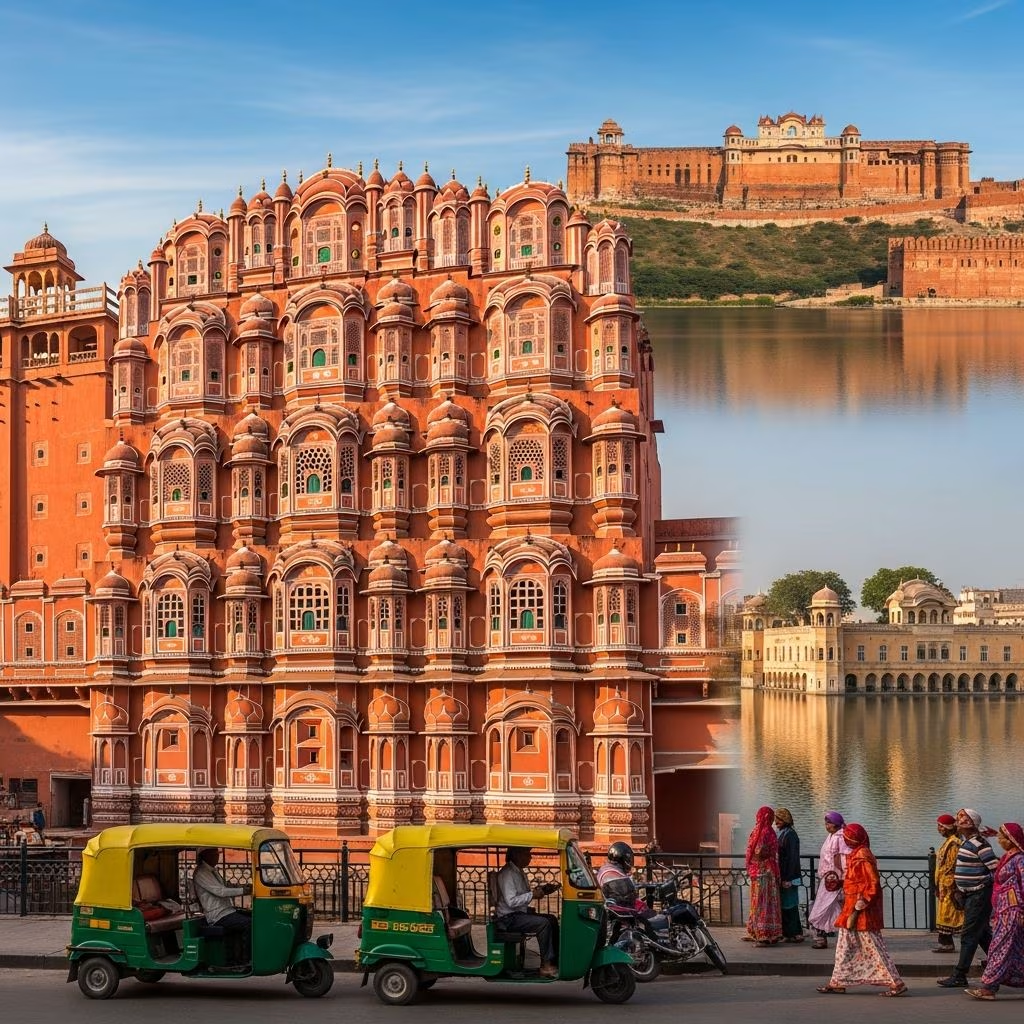
Perched dramatically atop a rugged hill about 11 kilometers from central Jaipur, Amber Fort (also called Amer Fort) is a UNESCO World Heritage Site built in the late 16th century by Raja Man Singh I. This sprawling complex combines Mughal and Hindu design elements, featuring red sandstone and white marble structures that gleam under the sun. Visitors ascend via elephant rides or jeeps along a winding path, entering through grand gates into courtyards adorned with mirrored halls and delicate frescoes.
Inside, explore the Diwan-i-Aam (Hall of Public Audience) with its latticed galleries, the opulent Sheesh Mahal (Mirror Palace) where a single candle could illuminate the entire room, and lush gardens offering serene escapes. Audio guides or on-site experts reveal legends of royal intrigue and battles. Arrive early to avoid crowds and midday heat; entry fees are around 100 INR for Indians and 600 INR for foreigners, including light shows in evenings.
Completing the defensive triad with Amber and Jaigarh forts, Nahargarh was erected in 1734 by Maharaja Sawai Jai Singh II along the Aravalli Hills. Its strategic location provides sweeping 360-degree views of Jaipur’s skyline, making it the ultimate sunset spot. The fort’s rugged walls enclose palaces with panoramic balconies, perfect for photography as the city lights flicker to life.
Hike or drive up via a winding road; inside, modest structures house a canteen serving local snacks. Combine with a visit to nearby Jaigarh Fort, home to the world’s largest wheeled cannon. Open from 10 AM to 5:30 PM, it’s budget-friendly at 50 INR entry.
Jaipur’s palaces transport you to an era of pomp and grandeur, filled with courtyards, museums, and innovative designs born from royal vision.
At the city’s core, the City Palace complex, founded in 1727 by Maharaja Sawai Jai Singh II, blends Rajput, Mughal, and European styles. It remains the private residence of the former royal family alongside museums showcasing armor, textiles, and manuscripts. Key highlights include the Pritam Niwas Chowk with season-themed doorways, Chhavi Niwas hall painted in blue floral motifs, and Mubarak Mahal housing royal costumes.
Adjacent Chandra Mahal towers impress with mirrored interiors. Tickets start at 75 INR, with cameras extra; guided tours enhance the experience. Don’t miss the peacock gate’s vibrant mosaics.
This five-story honeycomb facade, built in 1799 by Maharaja Sawai Pratap Singh, features 953 jharokhas (latticed windows) in pink sandstone, designed for royal women to observe street festivities discreetly while cool winds flowed through. Best admired from across the road at cafes like Tattoo Cafe’s rooftop, where cold coffee accompanies the view.
Entry via City Palace is 50 INR for foreigners; climb to the top for city panoramas. Its poetic nickname evokes Jaipur’s romantic allure.
Next to City Palace, this 18th-century observatory by Maharaja Jai Singh II holds the world’s largest stone sundial, accurate to two seconds, and 19 massive instruments tracking celestial bodies. A UNESCO site, it highlights India’s scientific heritage predating modern telescopes.
Guides explain samrat yantras (equinoctial sundials) and rashivalaya (zodiac instruments). Entry 50 INR for Indians, 200 INR foreigners; visit post-City Palace for efficiency.
India’s oldest museum (1876), inspired by Indo-Saracenic architecture, displays Rajasthani artifacts, Egyptian mummies, and global curiosities like traditional attire and sculptures. Its red domes and friezes make it photogenic; explore galleries for 40 INR (Indians) or 300 INR (foreigners).
Unveiled in 2016 at Jawahar Circle Garden, this free 24/7 archway bursts with pink, gold, and rainbow murals symbolizing Jaipur’s vibrancy. Early mornings dodge crowds; perfect for cultural photo ops amid pagodas and arches.
Nestled in Aravalli foothills, this peaceful site honors Kachwaha rulers with intricately carved chhatris (domed pavilions). Far less crowded, it’s ideal for contemplating Jaipur’s dynastic history; open 9:30 AM-4:30 PM.
On Man Sagar Lake, this mirage-like marble palace appears afloat, its four stories submerged. Best viewed from afar during golden hour; no entry, but surrounding drives reveal its ethereal beauty.
Beyond monuments, Jaipur pulses with sensory delights.
| Day | Morning | Afternoon | Evening |
|---|---|---|---|
| 1 | Amber Fort | Jaigarh/Nahargarh | Sunset at Nahargarh |
| 2 | City Palace & Jantar Mantar | Hawa Mahal & Markets | Food tour |
| 3 | Albert Hall & Patrika Gate | Gaitor Cenotaphs | Jal Mahal drive |
Travel by auto-rickshaw or Uber; winters (Oct-Mar) ideal. Respect dress codes at sites.
October to March for pleasant weather; avoid summer heat.
3-4 days to cover majors without rush.
Yes, with standard precautions; use reputable transport.
Hire a guide or join combo tours for Amber-Nahargarh.
Abundant; try Rajasthani thalis everywhere.
