

 Travel Essentials
 Travel Essentials

A comprehensive guide to Jaipur's top destinations including historic palaces, astronomical sites, and cultural experiences.
 Travel Essentials
Jaipur, known as the Pink City for its distinctive salmon-colored buildings, stands as one of India’s most captivating destinations. This vibrant capital of Rajasthan seamlessly blends architectural grandeur with cultural richness, offering visitors an extraordinary journey through centuries of royal heritage. Whether you’re a history enthusiast, architecture lover, or cultural explorer, Jaipur presents an impressive array of experiences that showcase the region’s magnificent past and dynamic present.
Founded in 1727 by Maharaja Sawai Jai Singh II, Jaipur represents one of India’s earliest planned cities. The city was constructed based on ancient Hindu and Mughal architectural principles, creating a unique urban layout that remains largely preserved today. The distinctive pink color, adopted in 1876 to welcome the Prince of Wales, has become the city’s defining characteristic. Understanding this historical context enriches any visit to Jaipur’s major attractions.
The City Palace stands as a remarkable testament to Jaipur’s royal past and remains one of the city’s most significant structures. This magnificent complex, constructed during the 18th century as part of Maharaja Sawai Jai Singh II’s new capital development, seamlessly blends Rajasthani, Mughal, and European architectural styles. What makes the City Palace particularly exceptional is that portions of it continue to serve as the residence of the royal family, while other sections welcome public visitors.
Within the palace complex, visitors encounter several stunning courtyards, each reflecting intricate design principles. The Pritam Niwas courtyard captivates guests with its four elaborately painted doorways, each representing a different season through its distinctive artistic style. The Chhavi Niwas hall showcases dramatically painted ceilings and walls featuring intricate blue and white floral motifs that demonstrate exceptional craftsmanship. The Sri Niwas area impresses with floor-to-ceiling mirror work that creates an illusion of infinite space and light.
Standard admission tickets provide access to museum galleries displaying royal artifacts and these magnificent courtyards, offering glimpses into the lifestyle and aesthetic preferences of Jaipur’s rulers. The palace also operates evening visits that include illuminated displays, adding another dimension to the experience.
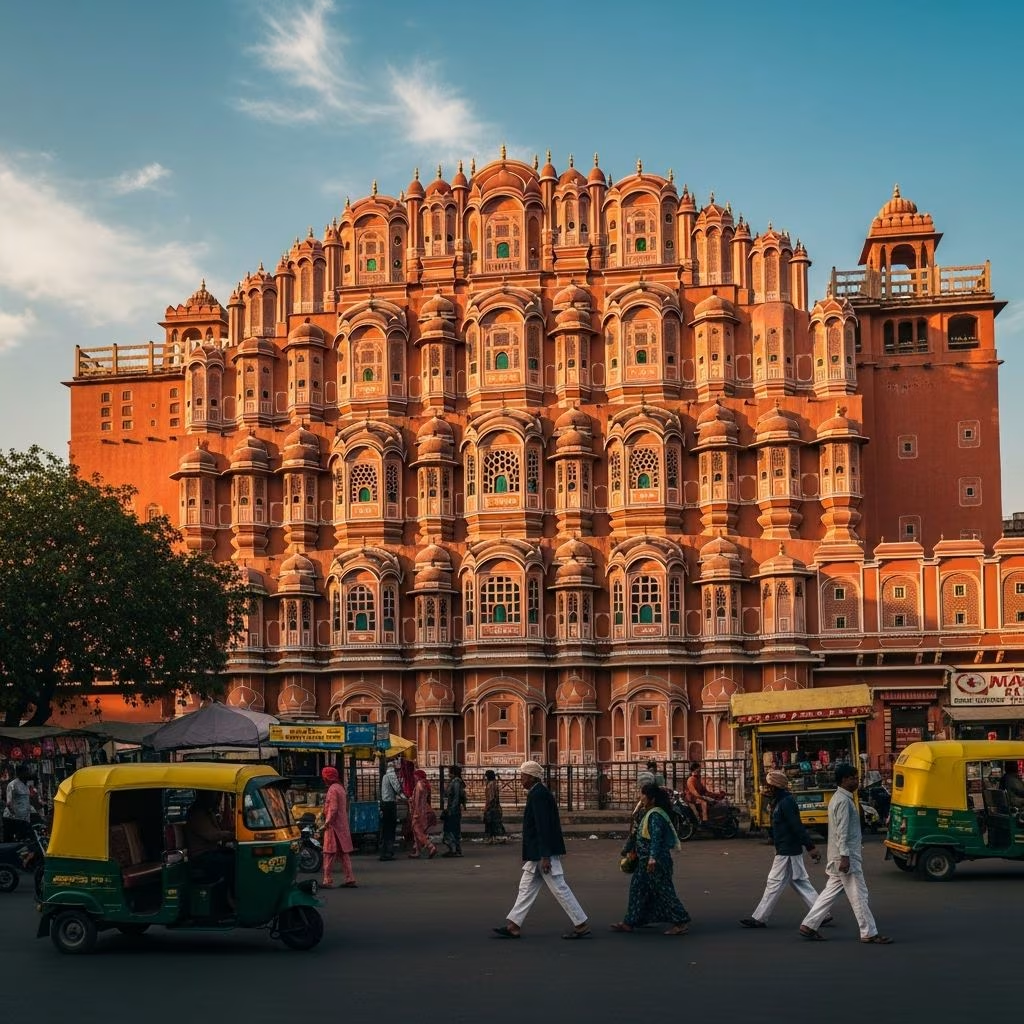
The Hawa Mahal, or Palace of the Winds, represents Jaipur’s most iconic architectural symbol and commands immediate attention with its distinctive facade. This extraordinary structure, designed in 1799 by Maharaja Sawai Pratap Singh, was ingeniously conceived to serve a specific social purpose. The building features nearly one thousand intricately carved latticed windows arranged in a honeycomb pattern, allowing royal women to observe street life and festivals without being observed themselves—a crucial accommodation to the social restrictions of that era.
The facade’s remarkable red and pink sandstone construction creates an immediately recognizable silhouette that photographers and artists have captured countless times. Beyond its historical significance, the architectural design demonstrates sophisticated understanding of climate control; the numerous windows allow cooling breezes to flow through the structure, providing natural ventilation in Jaipur’s hot climate.
Visiting Hawa Mahal requires strategic timing, as the monument attracts substantial crowds throughout the day. Sunrise and sunset visits offer optimal lighting conditions for photography and provide a less congested experience. The nearby Wind View Cafe offers elevated perspectives of the monument from its rooftop location across the street.
Jantar Mantar represents a fascinating intersection of mathematics, astronomy, and architecture, standing as a testament to Maharaja Sawai Jai Singh II’s scholarly interests. This remarkable site contains over a dozen astronomical instruments constructed during the 18th century, designed to track celestial phenomena with remarkable precision. The instruments measure the sun’s path, monitor planetary orbits, predict lunar and solar eclipses, and track zodiac constellations.
Among its numerous instruments stands the world’s largest sundial, towering at 90 feet in height. This impressive structure, known as the Samrat Yantra, continues to provide remarkably accurate time measurements. The diverse collection of instruments demonstrates advanced understanding of celestial mechanics and mathematical principles that predate modern astronomical equipment by centuries.
Jantar Mantar’s convenient location directly adjacent to the City Palace allows visitors to combine both attractions efficiently. The site benefits significantly from guided tours, as the complex instruments and their purposes require expert explanation to fully appreciate their ingenious design and practical applications.
Located approximately eleven kilometers outside Jaipur’s city center, Amber Fort commands a prominent hilltop position overlooking the surrounding landscape. This massive fortified palace complex showcases the architectural and defensive strategies of Rajasthani rulers. The fort’s impressive gates, intricate carvings, and sprawling courtyards provide profound insights into royal life and military architecture during earlier centuries.
The elephant rides offered to visitors ascending the fort’s winding paths add a distinctive cultural dimension to the experience, though these activities merit ethical consideration. The fort’s interiors reveal lavishly decorated halls, reflective tile work, and sophisticated water management systems that demonstrate advanced engineering knowledge.
Situated within the Man Sagar Lake, Jal Mahal presents an enchanting architectural presence that has captivated visitors for generations. Originally constructed as a summer retreat for royal hunting expeditions, particularly for duck hunting parties, this palace showcases a distinctive blend of Mughal and Rajput architectural elements. The structure’s location in the middle of the lake creates an ethereal quality, especially during sunrise and sunset hours.
While direct access to the interior remains restricted, the palace’s exterior view from the shoreline provides exceptional photography opportunities. Many visitors time their visits to witness the sunrise, when local residents and tourists gather to observe the palace bathed in morning light. The surrounding landscape offers peaceful moments for reflection and cultural appreciation.
Two significant fortifications enhance Jaipur’s historical landscape. Nahargarh Fort, perched on a nearby hilltop, combines palace architecture with defensive fortifications. The complex includes palace structures, a sculpture park, and a wax museum, offering diverse attractions within a single location. Visiting during late afternoon allows guests to experience spectacular sunset views across the city from elevated vantage points.
Jaigarh Fort, positioned to protect Amber Fort, represents one of the finest preserved 17th-century military structures. The fortress houses the remarkable Jaivana Cannon, recognized as the world’s largest wheeled cannon. The fort’s strategic position and architectural integrity provide compelling evidence of historical military sophistication.
For visitors seeking authentic cultural engagement, Chokhi Dhani presents a specially designed village environment that showcases Rajasthani traditions and contemporary performances. This entertainment complex offers puppet shows featuring traditional stories, magic demonstrations, folk performances by regional artists, traditional games, acrobatic displays, and cultural demonstrations that span the breadth of regional heritage.
The venue caters to diverse audiences, appealing equally to families with children and adult visitors seeking cultural immersion. The combination of entertainment and educational elements creates a comprehensive introduction to Rajasthani traditions and artistic expressions.
Beyond architectural and historical attractions, Jaipur provides opportunities for wildlife experiences. The Jhalana Leopard Safari Park offers 4×4 jeep expeditions through terrain inhabited by leopards and other regional wildlife species. These safaris provide adventurous visitors with opportunities to encounter fauna native to Rajasthan’s landscape.
The Elefantastic Elephant Sanctuary offers ethical interactions with elephants, combining educational information about these magnificent creatures with responsible animal treatment practices. These experiences appeal to travelers interested in wildlife conservation and animal welfare.
| Attraction | Location | Best Time to Visit | Approximate Duration |
|---|---|---|---|
| City Palace | Old City Center | Early morning or late afternoon | 2-3 hours |
| Hawa Mahal | Old City | Sunrise or sunset | 1-2 hours |
| Jantar Mantar | Near City Palace | Morning hours | 1.5-2 hours |
| Amber Fort | 11 km north | Early morning | 3-4 hours |
| Jal Mahal | Outside city center | Sunrise | 1 hour |
Beyond monuments and historical sites, Jaipur offers culinary experiences featuring authentic Rajasthani cuisine, including traditional thali meals that showcase regional flavors and cooking techniques. Markets throughout the old city provide opportunities to purchase traditional crafts, textiles, gemstones, and souvenirs reflecting local artistic traditions.
October through March offers the most comfortable weather conditions, with moderate temperatures suitable for outdoor exploration. Summer months bring intense heat, while monsoon season can disrupt travel plans.
Standard tickets provide access to specific museum galleries and courtyards. Some residential areas remain restricted as the palace continues serving as the royal family’s residence.
Three to four days allows adequate time to experience major attractions, cultural sites, and local experiences without excessive rushing.
Guided tours significantly enhance understanding of historical contexts and architectural details, particularly for complex sites like Jantar Mantar and Amber Fort.
Taxis, auto-rickshaws, and ride-sharing applications provide convenient transportation. Many hotels offer arranged transportation services for major attractions.
