

 Travel Essentials
 Travel Essentials

A comprehensive guide to Naples' top attractions, neighborhoods, and experiences, from ancient archaeology to modern street art.
 Travel Essentials
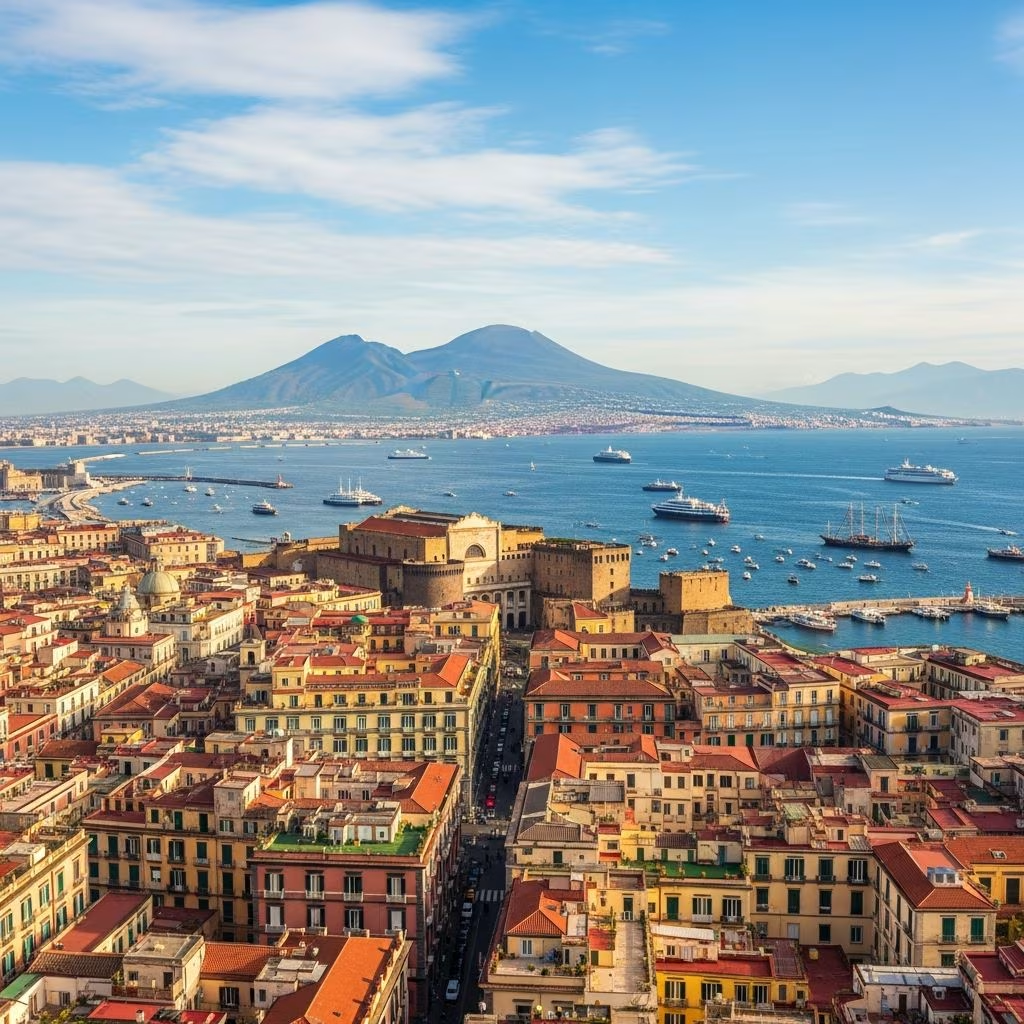
Naples stands as one of southern Italy’s most compelling cities, a place where centuries of history converge with contemporary energy and unmistakable character. The capital of Campania region attracts visitors seeking authentic Italian experiences beyond the typical tourist circuits. From underground passageways to volcanic peaks, from Renaissance masterpieces to vibrant street culture, Naples presents a multifaceted destination that rewards exploration and curiosity.
At the core of Naples lies a remarkably preserved medieval and ancient urban layout, where visitors can traverse streets that date back to Greco-Roman times. The city’s most famous thoroughfare, Spaccanapoli—literally meaning “splitter of Naples”—cuts through the historic center in an almost perfectly straight line. This street actually comprises several interconnected roadways that flow into one another, creating a continuous passage through centuries of architecture and everyday Neapolitan life.
Walking Spaccanapoli and its adjacent route, Via dei Tribunali, offers an immersive experience in the city’s daily rhythm. These streets function as living museums where contemporary commerce, religious devotion, and historical preservation coexist. Visitors encounter artisan workshops, pizza establishments at nearly every corner, and small churches tucked between residential buildings. This UNESCO World Heritage route provides authentic glimpses into how Neapolitans actually live, work, and socialize.
The famous Pulcinella statue serves as an iconic photo location along these historic streets. This cultural figure represents Naples’ theatrical tradition and playful spirit, making it a symbol that visitors instinctively seek out when navigating the center.
Naples contains numerous religious complexes that serve simultaneously as spiritual centers and repositories of artistic achievement. The Santa Chiara complex represents one of the most significant, encompassing a church, monastery, and archaeological museum dating back to the 14th century. Many Neapolitan royalty found their final resting places within these walls, underscoring the complex’s historical importance to the Kingdom of Naples.
The monastery’s cloister stands as the crown jewel of the Santa Chiara property. Eighteenth-century frescoes adorn the surrounding arcades, while the distinctive characteristic lies in the columns and seats decorated with maiolica tiles. This combination creates an extraordinarily atmospheric space where visitors encounter both spiritual tranquility and artistic sophistication.
The Sansevero Chapel and Museum houses an exceptional collection of marble sculptures from the 18th century. Among the masterpieces displayed are the remarkably detailed “Veiled Christ,” “Il Disinganno,” and “Pudicizia”. An optional audio guide provides comprehensive analysis of the pieces, typically lasting about 25 minutes. Photography restrictions preserve the chapel’s contemplative atmosphere, encouraging visitors to engage directly with the artworks.
San Gregorio Armeno represents another distinctive religious site, though it has become particularly famous for its surrounding artisan shops specializing in nativity scenes. These Neapolitan craftspeople create intricate figurines ranging from traditional religious imagery to contemporary caricatures of politicians, television personalities, and notably, Diego Maradona. This street embodies Naples’ unique blend of deep religious tradition with popular culture commentary.
Beyond religious structures, Naples showcases remarkable secular architecture reflecting its history as a capital of powerful kingdoms. Castel Nuovo, also known as Maschio Angioino, was constructed in 1279 not as a military fortress but as a royal palace. King Robert, who commanded its creation, possessed passionate interest in art and literature, transforming the castle into a cultural center for the kingdom. Visitors today can climb the castle’s towers, rewarded with panoramic views encompassing the harbor and the distinctive silhouette of Mount Vesuvius.
The Royal Palace (Palazzo Reale) anchors the southern portion of the historic center, representing another monument to Naples’ royal heritage. This structure, combined with the nearby Teatro San Carlo, creates an impressive architectural ensemble in the city’s grand squares.
Teatro San Carlo stands among the world’s most beautiful theaters, a distinction sometimes overshadowed by La Scala’s international renown. However, the San Carlo Theater actually predates Milan’s famous opera house and surpasses it in architectural beauty. The theater’s interior decoration and acoustic design reflect 18th-century craftsmanship at its finest.
Piazza del Plebiscito provides the ceremonial heart of modern Naples, while smaller squares like Piazza San Domenico Maggiore offer intimate encounters with the city’s layered history. The soaring obelisk of San Domenico rises from the center of this square, creating a dramatic focal point.
Beneath Naples’ streets exists an entire parallel city carved from volcanic rock over millennia. The Underground Naples tours reveal the ancient aqueduct system that once supplied water throughout the city, transforming visitors’ understanding of how the metropolis functioned across different historical periods. These subterranean passages, catacombs, and chambers create a compelling narrative about urban adaptation and ancient engineering.
The Catacombs of San Gennaro and San Gaudioso offer guided tours through early Christian burial sites featuring mosaics and elaborate sculptural elements. These sacred underground spaces connect visitors directly to Naples’ Christian heritage spanning nearly two millennia.
The National Archaeological Museum of Naples houses one of the world’s most significant collections of Roman antiquities. Beyond Roman material, the museum contains artifacts from Pompeii, Herculaneum, Egyptian civilization, and other ancient cultures. This comprehensive collection contextualizes the region’s profound historical layers, allowing visitors to understand how Naples emerged from earlier civilizations.
The Galleria Borbonica, featured prominently among Naples’ attractions, represents another significant historical site. This structure and its collections add further dimension to the city’s artistic and historical narrative.
While Naples preserves ancient history extensively, contemporary culture equally shapes the city’s identity. The Spanish Quarter (Quartieri Spagnoli) transformed from a historically poor working-class district into a vibrant open-air museum celebrating Diego Maradona. When the legendary footballer died in 2020, the crossroads of Vico Lungo Gelso and Via Emanuele de Deo became a pilgrimage site, with nearly every surrounding wall covered in murals and tributes.
For Neapolitans, Maradona transcends sports stardom—he represents a saint-like cultural figure whose significance runs deeper than athletic achievement. The Museo Casa Maradona, located at Vico Cariati 58, operates as an intimate museum dedicated to El Diego, with admission fees at €15 for adults and €8 for children. Visitors combining a museum visit with walks through the surrounding streets encounter one of Naples’ most authentic neighborhoods, where colorful facades and local shops line narrow alleyways.
Mount Vesuvius, the volcano that famously buried Pompeii in 79 AD, remains accessible to modern visitors seeking an extraordinary experience. The climb proves surprisingly manageable, making this iconic natural landmark achievable for most fitness levels. The journey involves taking the Circumvesuviana train line to Ercolano, followed by a bus to the starting point (approximately €10 return fare, with buses departing hourly). From there, a 30-minute walk leads to the crater, though the final section presents moderate physical challenge. The unforgettable views justify the effort, providing perspectives across the Naples region from Europe’s most famous active volcano.
The Solfatara crater, situated on Naples’ periphery within the Phlegraean Fields, offers another extraordinary volcanic experience. This shallow crater enables visitors to literally walk across volcanic ground, observing steam rising from the earth as geothermal heat escapes. The landscape genuinely resembles Mars or another extraterrestrial environment, creating surreal sensations for visitors. Informative signage throughout the site provides educational context about volcanic processes and geological history. While temporarily closed for safety reasons since 2017, the site’s last recorded eruption occurred in 1198, making it geologically “dormant”.
Beyond major attractions, Naples reveals itself through neighborhood exploration. The waterfront district centered on Via Caracciolo provides a leisurely boulevard experience. This main promenade connects to Villa Comunale, the city’s principal park featuring palm trees and designed landscapes. The route continues through Piazza della Vittoria, adorned with commemorative statuary, ultimately reaching Mergellina harbor, where the walk concludes with maritime views and local dining establishments.
The historic center’s narrow alleys crossing major streets like Via dei Tribunali reward aimless wandering, offering unexpected discoveries around each corner—a small shrine, a family business operated for generations, a sudden vista opening onto a historic square. This approach captures the authentic essence of Naples more effectively than rushing through predetermined itineraries.
| Attraction | Type | Key Details |
|---|---|---|
| Spaccanapoli & Via dei Tribunali | Historic Street | UNESCO World Heritage site, free to explore, cuts through ancient center |
| Santa Chiara Complex | Religious Site | 14th-century church and monastery, beautiful tiled cloister |
| Museo Casa Maradona | Museum | €15 adults, €8 children, Vico Cariati 58, Spanish Quarter |
| Mount Vesuvius | Natural Attraction | Accessible via Circumvesuviana train, 30-min crater walk |
| National Archaeological Museum | Museum | Roman antiquities, Pompeii artifacts, comprehensive collection |
| Teatro San Carlo | Cultural Venue | Historic opera house, world-class architecture |
Spring (April-May) and fall (September-October) offer pleasant weather with fewer crowds than summer months. Winter sees fewer tourists but occasional rainfall.
Three to four days allows thorough exploration of the city center, key museums, and at least one excursion to Vesuvius or nearby areas. One day provides only a glimpse of major attractions.
The historic center and major tourist areas maintain regular police presence. Visitors should exercise standard urban precautions regarding valuables and remain aware of surroundings, particularly in less-frequented areas at night.
Traditional Neapolitan pizza features simple ingredients—San Marzano tomatoes, buffalo mozzarella, fresh basil, and olive oil—baked in wood-fired ovens reaching extremely high temperatures. Quality establishments throughout the city maintain these standards.
Yes, Pompeii is easily accessible via the Circumvesuviana train line from central Naples, making it an ideal day trip destination.
