

 Travel Essentials
 Travel Essentials

Explore Pamplona's medieval walls, stunning cathedral, bullring legacy, and San Fermín festivities alongside hidden gems like parks and museums.
 Travel Essentials
Pamplona, the lively capital of Navarra in northern Spain, blends medieval charm with modern vibrancy. Nestled along the Camino de Santiago pilgrimage route, this city captivates visitors with its star-shaped fortifications, Gothic architecture, and world-famous San Fermín festival. Beyond the adrenaline of the bull runs, Pamplona offers serene parks, flavorful pintxos bars, and deep cultural heritage. This guide dives into must-see sites, local flavors, and practical tips for an immersive visit.
The Casco Antiguo, or Old Town, forms the pulsing core of Pamplona. Encircled by 16th-century walls, this compact district rewards explorers with narrow cobblestone streets, Renaissance doorways, and lively plazas. Begin at the Monumento al Encierro, a bronze sculpture depicting mid-run bull chasers, setting the tone for the city’s daring spirit. Nearby, the Plaza de Toros stands as Spain’s second-largest bullring, hosting tours that reveal its architectural grandeur and historical significance.
Stroll Calle del Redin to admire ornate portals, then head to Plaza del Castillo, the social hub since the 18th century. Flanked by elegant arcades, this square buzzes with café-goers. Iconic Café Iruña, a belle époque gem frequented by Ernest Hemingway, serves robust coffee and pintxos amid Art Nouveau splendor. Hemingway immortalized Pamplona in The Sun Also Rises, drawing global attention to its July festivities.
Pamplona’s Catedral de Santa María la Real hides treasures behind its neoclassical facade. Step inside to a soaring Gothic nave, 14th-century cloister with intricate oak-leaf carvings, and tombs of King Carlos III and Queen Leonor d’Albret from the 15th century. Archaeological digs uncovered Roman-era mosaics and a 12th-century Romanesque chapel, now part of the innovative Occidens museum.
The museum employs multisensory exhibits—sounds of monastic chants, evocative scents—to narrate 2,000 years of history. Highlights include the Abauntz stone, Europe’s oldest known map from 9815 BCE, and the bronze El Togado de Pompelo statue. Guided tours at 11:15am climb the bell tower for sweeping city views and a close-up of Spain’s largest operational bell.
| Cathedral Feature | Description | Visitor Tip |
|---|---|---|
| Gothic Cloister | Delicate stonework with natural motifs | Best light in late afternoon |
| Occidens Museum | Archaeological artifacts and immersive displays | Audio guides in multiple languages |
| Bell Tower | Panoramic vistas | Book timed tour slots online |
Pamplona’s star-shaped fortifications, among Europe’s best-preserved, span 5 kilometers and offer elevated walks with river and countryside panoramas. Start at Media Luna Park along the Arga River, following shaded paths past the Magdalena Front’s imposing ramparts. These defenses, built in the 16th-18th centuries, protected the city from invasions and now provide peaceful green spaces.
Climb to Fortín de San Bartolomé, a petite bastion turned museum detailing military history. Continue to La Ciudadela, a pentagonal fortress repurposed as a park with sculptures by Basque artist Eduardo Chillida. This V-shaped promenade, Paseo de Ronda, links historic sites and is ideal for sunset strolls.
No Pamplona visit skips Plaza de Toros Monumental. As the finale of the daily encierro (bull run), it seats 19,720 and exemplifies Spanish tauromaquia tradition. Year-round guided tours explore tunnels, stables, and the arena, contextualizing the July 6-14 San Fermín festival’s mix of revelry, processions, fireworks, and peril.
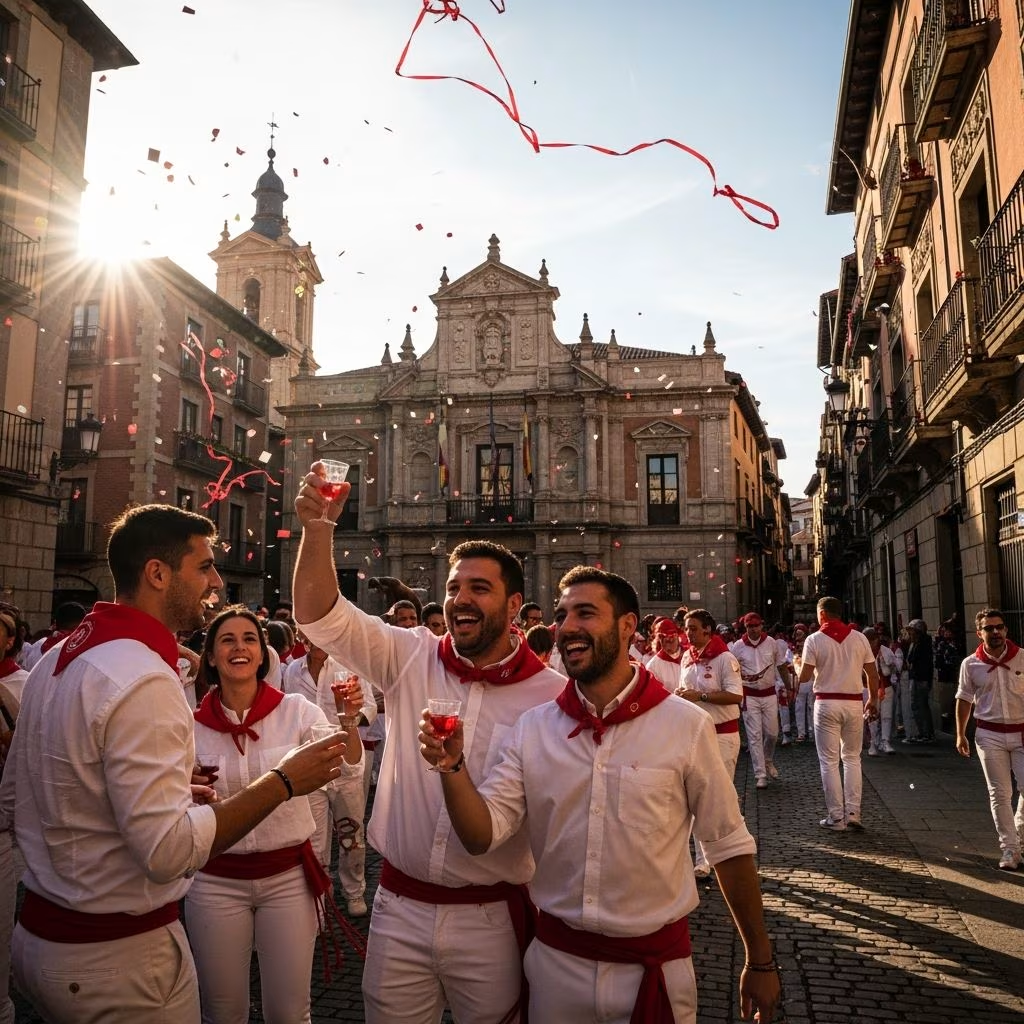
San Fermín transforms Pamplona into a white-and-red clad frenzy, honoring the city’s patron saint. A digital countdown clock on Calle Estafeta builds anticipation. Even off-season, the route—from Cuesta de Santo Domingo to the bullring—evokes thrill. Ethical debates surround the event, but it undeniably shapes local identity.
The Museo de Navarra chronicles regional history in a 16th-century palace. Exhibits span prehistoric carvings to Roman relics, with standout pieces like the Abauntz map and medieval frescoes. Nearby, Mercado de Santo Domingo (1876) brims with fresh produce, Idiazabal cheese, and Roncal varieties from Navarre’s valleys.
La Ciudadela hosts contemporary art and events in its moated grounds. For a detour, drive an hour to Zugarramurdi’s Museo de las Brujas, exploring 17th-century witch trials and folklore in a cave-linked village. Herboleras’ plant lore adds mystical depth.
Pamplona’s food scene shines through pintxos—Basque-style tapas perched on bread. Bar-hop in Plaza del Castillo or Calle San Nicolás, sampling txistorra sausage, morcilla blood pudding, and Idiazabal sheep’s cheese. Pair with txakoli wine or local vermouth.
Markets like Mercado del Ensanche offer high-ceilinged halls of seasonal fruits, seafood, and nuts. Try piquillo peppers stuffed with bacalao or tender roast lamb, hallmarks of Navarran cuisine influenced by Pyrenean pastures.
Taconera Gardens provide botanical respite with peacocks, aviaries, and French-style parterres. Paseo de Sarasate leads to restored Iglesia de San Nicolás, a Baroque jewel. University of Navarra’s campus features modern architecture amid green expanses.
Follow Camino de Santiago markers through town, linking to global pilgrim paths. For families, Navarra Arena hosts events, while river paths suit cyclists.
Best visited July for San Fermín (book ahead) or shoulder seasons for calm. Fly into Pamplona Airport or train from Madrid/Barcelona. Stay in Old Town paradores or boutique hotels. Entry fees: Cathedral €5-8, museums €3-6, bullring tours €8.
Yes, with standard precautions; festival crowds require vigilance.
875 meters from Calle Santo Domingo, via Plaza Consistorial and Calle Estafeta to the bullring.
Spring (April-June) or fall for mild weather and fewer tourists.
Abundant: stuffed peppers, cheeses, and market veggies.
Olite Palace, Ujué Monastery, or Zugarramurdi caves.
