

 Travel Essentials
 Travel Essentials

Explore Quebec City's historic streets, stunning waterfalls, cultural landmarks, and outdoor pursuits with this comprehensive guide to top experiences year-round.
 Travel Essentials
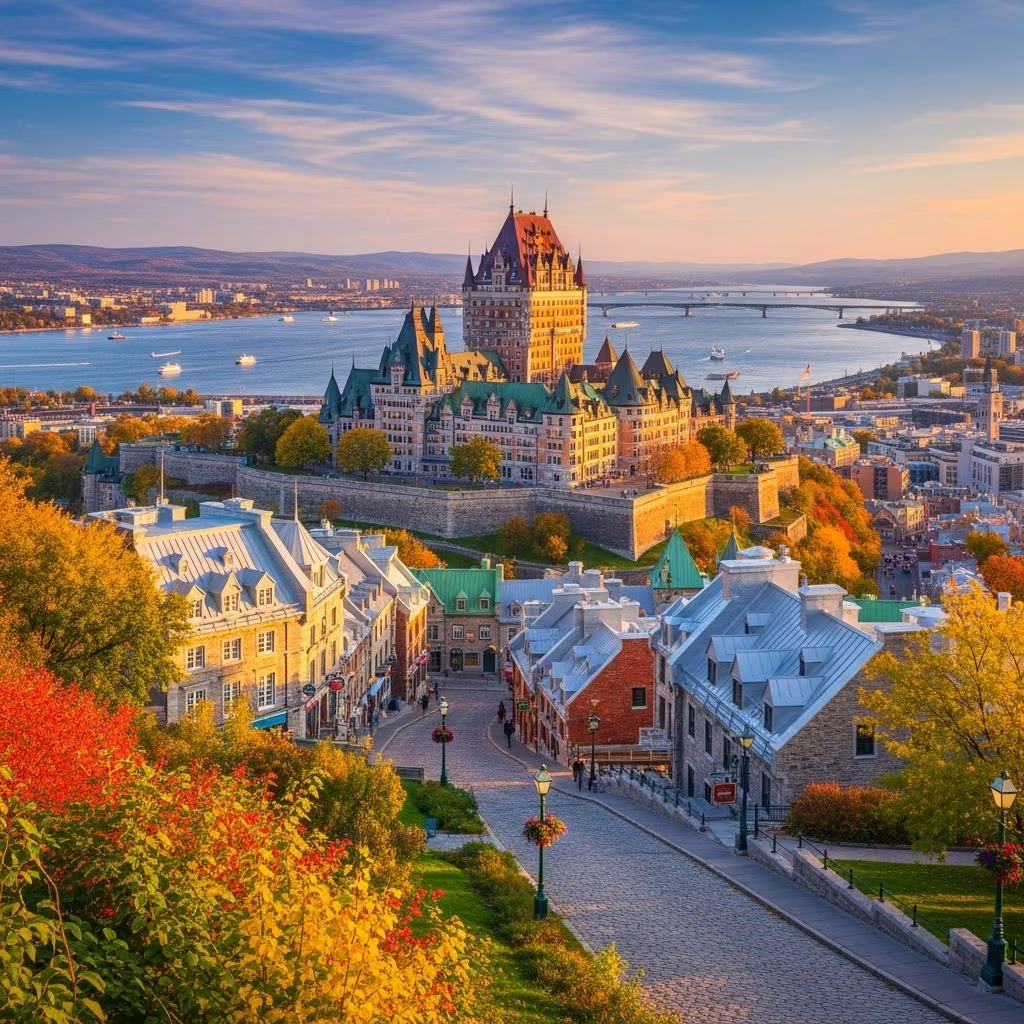
Quebec City captivates visitors with its blend of European charm, rich history, and natural beauty. Nestled along the St. Lawrence River, this UNESCO World Heritage site offers cobblestone streets, grand chateaus, and thrilling outdoor activities. Whether you’re wandering historic neighborhoods or chasing waterfalls, this guide highlights the essential adventures for an unforgettable trip.
The heart of Quebec City beats in Old Quebec, divided into Upper and Lower Town. This fortified area, the only remaining walled city north of Mexico, transports you to 17th-century France. Start your exploration in the Upper Town along Rue Saint-Jean and Rue Saint-Louis, lined with boutique shops, cafes, and centuries-old architecture. Street performers and horse-drawn caleches add to the lively atmosphere.
Descend to Lower Town via the iconic Funiculaire du Vieux-Québec, a cable car operating since 1879 that offers panoramic views of the river and cityscape. It costs about $4 one way and spares your legs from steep stairs. At the bottom, Rue du Petit-Champlain unfolds as one of North America’s oldest commercial streets, with colorful facades, artisan galleries, and cozy bistros perfect for people-watching.
No visit is complete without Terrasse Dufferin, a wooden boardwalk stretching 650 meters along the cliffs beside Fairmont Le Château Frontenac. This fairy-tale hotel, opened in 1893, dominates the skyline and hosts afternoon tea with river views. Stroll the terrace for street musicians, gazebos, and vistas of the St. Lawrence. In winter, thrill-seekers ride the historic toboggan run, plunging 90 meters at speeds up to 70 km/h.
Walk the Quebec City Walls, a 4.6 km fortified rampart with gates, bastions, and cannons. Built between 1690 and 1898, they protected the city during sieges. Guided tours reveal battle stories, while self-guided paths offer photo ops overlooking the Plains of Abraham.
| Landmark | Highlight | Best Time |
|---|---|---|
| Fairmont Le Château Frontenac | Iconic architecture, high tea | Year-round |
| Terrasse Dufferin | Boardwalk views, toboggan slide | Summer strolls, winter thrills |
| City Walls | Fortifications walk | Spring-fall |
Venture 15 minutes east to Parc de la Chute-Montmorency, home to falls plunging 83 meters—30 meters taller than Niagara. Cross the suspension bridge for misty close-ups, or ride the cable car for aerial perspectives. Ziplines span the gorge, while hiking trails and picnic areas suit families. In winter, the frozen cascade draws ice climbers.
For a quieter escape, head to Canyon Sainte-Anne, 40 minutes north. This 74-meter deep gorge features suspended bridges, waterfalls, and via ferrata climbing. The park’s trails reveal dramatic vistas and geological history formed over 10,000 years ago.
Parc national de la Jacques-Cartier, 45 minutes away, spans 670 square km of valleys, rivers, and forests. Hike 100 km of trails, kayak the Jacques-Cartier River, or spot moose and beavers. Seasonal activities include dog sledding and snowshoeing.
Delve into Quebec’s past at the Plains of Abraham, a 235-hectare urban park site of the 1759 battle that shaped Canada. Walking paths, museums, and monuments commemorate British and French forces. Summer festivals feature reenactments and fireworks.
The Morrin Centre blends eerie history with beauty: once Quebec’s first prison (1698-1868), its cells now lead to an English-language library modeled after Oxford’s. Guided tours recount hangings and hauntings, followed by a climb to the Victorian reading room.
Musée national des beaux-arts du Québec houses 40,000 works in Battlefields Park. From Inuit carvings to modern abstracts, pavilions showcase Quebecois identity. The architecture fuses stone and glass for striking effect.
Unwind at Strøm Nordic Spa in Old Quebec, with saunas, hot tubs, and cold plunges overlooking the St. Lawrence. A 3-hour circuit promotes Nordic wellness traditions amid 10,000 square meters of facilities.
Savor local flavors: poutine at microbreweries, tourtière pies, and maple treats. Île d’Orléans, a 20-minute drive, offers farm stands, vineyards, and cideries amid pastoral scenery.
Summer: Festivals like Festival d’été de Québec draw 1 million with 300+ shows. Cycle paths and river cruises abound.
Fall: Foliage peaks in September; harvest on Île d’Orléans.
Winter: Carnaval de Québec features ice sculptures, canoe races on frozen rivers, and hotel ice slides.
Spring: Maple syrup shacks and blooming parks.
| Season | Top Activities |
|---|---|
| Summer | Festivals, cruises, biking |
| Fall | Leaf peeping, harvests |
| Winter | Carnival, snow sports |
| Spring | Syrup tours, hikes |
Yes, Old Quebec is highly pedestrian-friendly, though hilly. Use the funicular for ease.
3-4 days covers highlights; add 2 for day trips.
Variable: summers mild (20-25°C), winters cold (-10°C). Pack layers.
Yes, bilingual in tourist areas; French dominates.
Wall walks, terrace strolls, Plains of Abraham.
