

 Travel Essentials
 Travel Essentials

Explore Saxony's top attractions: from Dresden's opulent palaces and Elbe River cruises to Saxon Switzerland's dramatic bridges, Ore Mountains' mining heritage, and Leipzig's musical legacy. Uncover natural beauty, architecture, and traditions.
 Travel Essentials
Saxony, nestled in eastern Germany, blends stunning natural landscapes with rich cultural heritage. This region captivates with its baroque architecture, dramatic sandstone formations, ancient mining traditions, and vibrant music history. From the grandeur of Dresden to the wilds of national parks and the festive spirit of the Ore Mountains, Saxony offers endless discoveries for every traveler.
Dresden stands as Saxony’s crown jewel, rebuilt after wartime destruction to showcase its opulent past. The city’s old town buzzes with life, drawing visitors to its iconic landmarks.
Beyond palaces, Dresden’s Semperoper hosts world-class performances, while the Elbe River invites scenic cruises on historic steamships. These paddlewheelers glide past vineyards and hills, with onboard dining enhancing the experience.
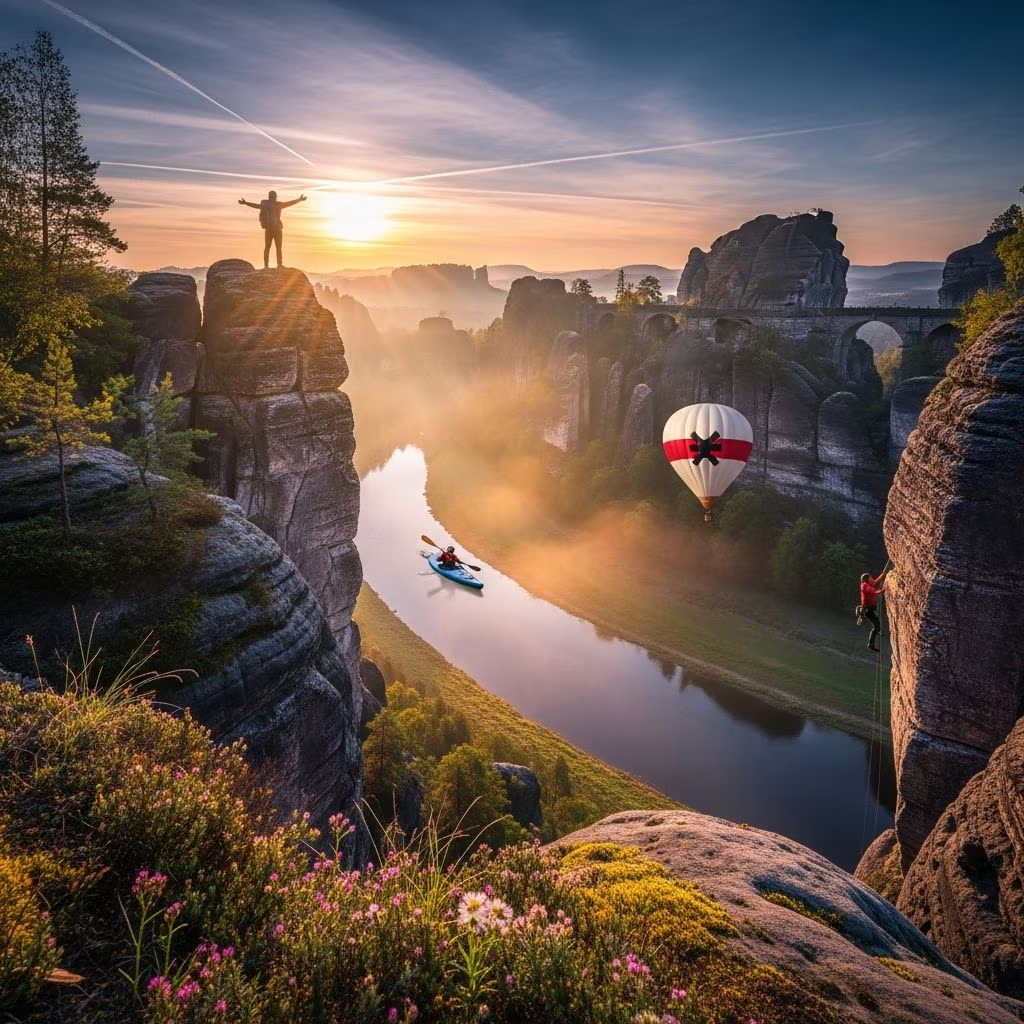
Saxon Switzerland National Park, straddling the German-Czech border, mesmerizes with towering sandstone cliffs, deep gorges, and the Elbe River slicing through. It’s a haven for hikers, climbers, and photographers.
Cycling and rock climbing abound, with hundreds of routes. The park’s untamed beauty contrasts urban Saxony, providing serene escapes.
The Elbe Valley hides a string of enchanting palaces. Schloss Pillnitz delights with Chinese-inspired pavilions and courtly artifacts like Augustus the Strong’s throne. Schloss Moritzburg, a yellow-white fairy-tale castle, reflects in its surrounding lake, ideal for boating.
Nearby, Schloss Weesenstein fuses medieval, Renaissance, and baroque styles. These sites, reachable by steamship or train, immerse visitors in royal history.
The UNESCO-listed Ore Mountains (Erzgebirge) pulse with industrial heritage and Christmas folklore. Ancient silver mines like Dorothea-Stollen offer boat tours through flooded tunnels.
Winter brings nutcrackers, pyramids, and candle arches—iconic crafts lighting up markets. Ride the Fichtelberg suspended railway or hike Stoneman trails for adventure.
Leipzig pulses with musical heritage. Johann Sebastian Bach’s legacy lives at St. Thomas Church, home to the famed boys’ choir. The Bach Museum delves into his life, while Nikolaikirche marks the Peaceful Revolution.
The Music Trail connects sites, and Auerbachs Keller offers literary dining from Goethe’s Faust.
Vogtland boasts the world’s largest brick bridge, Göltzschtalbrücke, spanning a valley. Markneukirchen’s Musical Instrument Museum highlights Europe’s crafting hub. Plohn Leisure Park thrills with waterslides.
In Lusatia, Muskauer Park—a UNESCO landscape masterpiece—spans Germany and Poland. Cycle its paths around Schloss Muskau, designed by Prince Pückler. Upper Lusatia’s heath and ponds form a biosphere reserve, with narrow-gauge railways chugging through.
Chemnitz features Augustusburg Castle’s motorbike museum. Zwickau honors Robert Schumann at his birthplace. The Sachsenring circuit hosts MotoGP races, blending speed with history.
| Region | Key Attractions | Best For |
|---|---|---|
| Dresden | Palaces, museums, opera | Culture lovers |
| Saxon Switzerland | Bridges, hikes, fortress | Outdoor adventurers |
| Ore Mountains | Mines, crafts, spas | History and relaxation |
| Leipzig | Churches, zoo, monument | Music enthusiasts |
| Vogtland/Lusatia | Bridges, parks, museums | Families and nature |
Travel by efficient trains connecting Dresden, Leipzig, and parks. Spring and fall avoid crowds; winter suits festive markets. Book castle tickets online. Stay in Dresden’s Altstadt or Leipzig’s Plagwitz for vibe.
Spring (April-June) for blooms and hikes; December for Christmas markets. Summers are vibrant but busier.
Take a 40-minute train to Bad Schandau, then bus or hike to Bastei.
Yes, most Dresden museums and Königstein offer audio guides in English.
Absolutely—zoos, theme parks like Belantis, and dinosaur exhibits in Bautzen entertain kids.
Ore Mountain wood carvings, Vogtland instruments, Plauen lace.
