

 Travel Essentials
 Travel Essentials

Explore Split's iconic Diocletian's Palace, scenic Riva promenade, Marjan Hill vistas, local markets, and island escapes in this comprehensive guide to Croatia's Dalmatian highlight.
 Travel Essentials
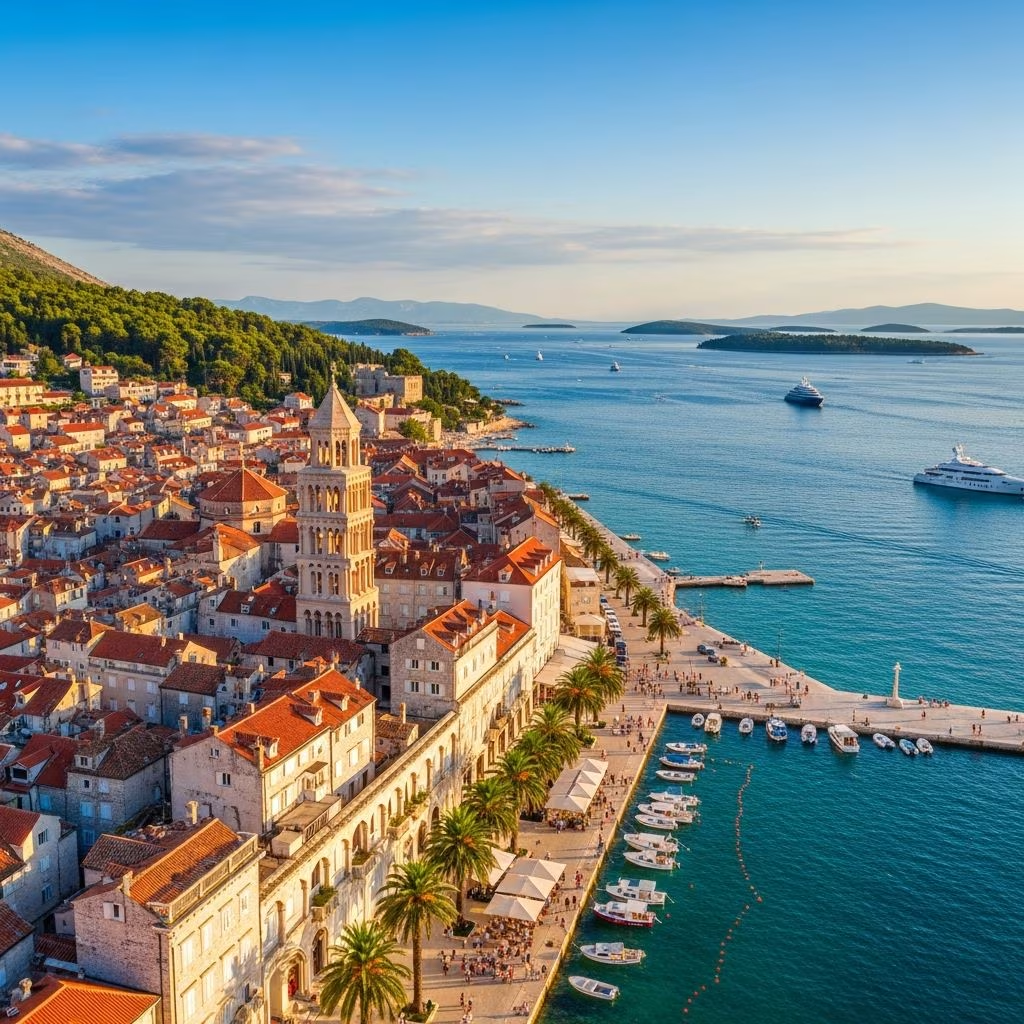
Split, nestled on Croatia’s Dalmatian Coast, captivates visitors with its fusion of Roman antiquity and contemporary Mediterranean vibrancy. This Adriatic hub offers a compact yet diverse array of experiences, from wandering through living archaeological wonders to savoring seafood by the sea. Whether you’re drawn to historical landmarks, panoramic hikes, or island adventures, Split delivers an unforgettable blend of culture, nature, and cuisine.
At Split’s core lies one of the world’s most extraordinary preserved Roman structures, a sprawling complex that once served as a retirement palace for Emperor Diocletian in the early 4th century. Today, this UNESCO World Heritage site pulses with life, its ancient walls housing shops, homes, and eateries. Unlike static ruins, this palace invites exploration through narrow alleys where sphinxes guard forgotten cellars and peristyles echo with footsteps.
Key areas within the palace include the grand Peristyle, a colonnaded courtyard perfect for photos, and subterranean chambers that reveal the site’s layered history. Entry to much of the palace is free, allowing spontaneous discoveries amid marble columns and arched gateways. For deeper insights, guided walks highlight its transformation from imperial residence to medieval fortress.
Beyond the palace, Split brims with landmarks that tell tales of saints, sculptors, and seafarers. The towering Cathedral of Saint Domnius, originally Diocletian’s mausoleum, boasts a climbable bell tower offering sweeping city vistas. Nearby, the massive bronze statue of Gregory of Nin invites a traditional toe-rub for good luck, surrounded by Renaissance-era gates.
The Temple of Jupiter, repurposed as a baptistery, showcases intricate carvings, while the Ethnographic Museum perched above the palace provides glimpses into Dalmatian folk life through costumes and tools. Venture to the Green Market for fresh produce and local cheeses, a sensory delight just outside the Silver Gate.
| Landmark | Highlight | Best Time to Visit |
|---|---|---|
| Cathedral of Saint Domnius | Bell tower panoramas | Morning for fewer crowds |
| Gregory of Nin Statue | Luck-rubbing tradition | Evening lighting |
| Green Market | Fresh figs and olives | Early morning |
For breathtaking overlooks, ascend Marjan Hill, Split’s lush green lung rising 178 meters above the city. This forested peninsula rewards hikers with pine-scented trails leading to hermitages, chapels, and observation points framing the Adriatic, islands, and urban sprawl below. The summit path passes the medieval Oratory of St. Cyriaka, offering serene spots amid wild herbs and sea breezes.
Less strenuous options include the Telegrin viewpoint via a short funicular or road, perfect for picnics. Trails cater to all levels, with coastal paths linking to pebbly coves for swims. Sunset from here transforms the city into a golden canvas, making it a must for photographers.
Split’s Riva, a palm-lined waterfront stretching 250 meters, serves as the city’s social heartbeat. This horseshoe-shaped harbor buzzes with strollers, street performers, and yacht-spotters against a backdrop of ferries departing for islands. Cafes spill onto terraces serving caffe macchiato and gelato, ideal for people-watching.
Evenings ignite with live music and fireworks during festivals, while mornings suit relaxed jogs. Extend your Riva ramble westward to Sustipan Park, a tranquil former monastery site with cliffs plunging into turquoise waters and a quaint chapel.
Split’s Varoš neighborhood, with its stone houses and artisan workshops, exudes authentic charm just below Marjan. Wander cobblestone lanes to family-run konobas (taverns) dishing out pašticada (slow-cooked beef) and crni rižot (black cuttlefish risotto). Old Town alleys reveal Gothic-Renaissance palaces and hidden squares.
Game of Thrones fans trace filming spots like the Iron Throne in the palace cellars or Septa Unella’s court. For quieter moments, the Archaeological Museum displays Hellenistic relics in a neoclassical villa surrounded by gardens.
Split’s food scene celebrates the sea and stone, with markets hawking Pag cheese, Neretva Valley oysters, and Hvar lavender honey. Iconic dishes include peka, meat or octopus baked under a bell dome, best at hillside tavernas. Seafood risottos and grilled fish shine at Riva spots, paired with Plavac Mali wines.
Join a cooking class to master blitva (Swiss chard with potatoes) or forage for wild herbs on Marjan.
While not beach-centric, Split offers accessible shores. Bačvice Beach, a sandy rarity, hosts picigin, a local water volleyball game. Kasjuni and Ježina coves on Marjan provide clearer waters and fewer crowds. For adrenaline, cliff jumps at Sustipan thrill daring souls.
Just 10km north, Salona’s ruins surpass Split’s palace in scale, featuring amphitheaters, basilicas, and aqueducts from Croatia’s first Roman capital. A small museum contextualizes finds like mosaics and tombs.
Island hopping via ferry or tours accesses Hvar’s lavender fields, Brač’s Zlatni Rat beach, or Vis’s Blue Cave. Popular excursions combine swimming stops with cliffside lunches, showcasing the 200+ islets dotting the Adriatic.
| Day Trip | Distance | Highlights |
|---|---|---|
| Salona Ruins | 10km north | Amphitheater, early Christian sites |
| Blue Cave & Islands | Boat tour | Swimming, caves, hidden beaches |
| Krka Waterfalls | 60km north | Cascades, boardwalks, swims |
April to October suits most visits, with summer peaks requiring early bookings. Buses and ferries connect efficiently; walk the compact center. Stay in palace apartments or Marjan villas for immersion. Budget €100-150 daily for mid-range.
Three to four days allow palace immersion, hill hikes, and a day trip, with extra for relaxation.
Yes, with beaches, easy walks, and interactive sites like picigin games.
Shoulder seasons (May, September) offer mild weather and shorter lines.
Bačvice and Marjan coves provide clean, accessible spots.
Abundant: blitva, cheeses, and vegetable peka at markets and tavernas.
