

 Travel Essentials
 Travel Essentials

Discover Sweden's most compelling attractions, from chasing Northern Lights to exploring Viking heritage and scenic archipelagos.
 Travel Essentials
Sweden stands as one of Europe’s most compelling destinations, offering visitors an extraordinary blend of natural magnificence, cultural depth, and modern Nordic sophistication. This Scandinavian nation stretches across vast landscapes encompassing everything from pristine Arctic wilderness to vibrant urban centers, creating countless opportunities for meaningful travel experiences. Whether you seek adventure in untamed environments or cultural immersion in historic settings, Sweden delivers unforgettable moments at every turn.
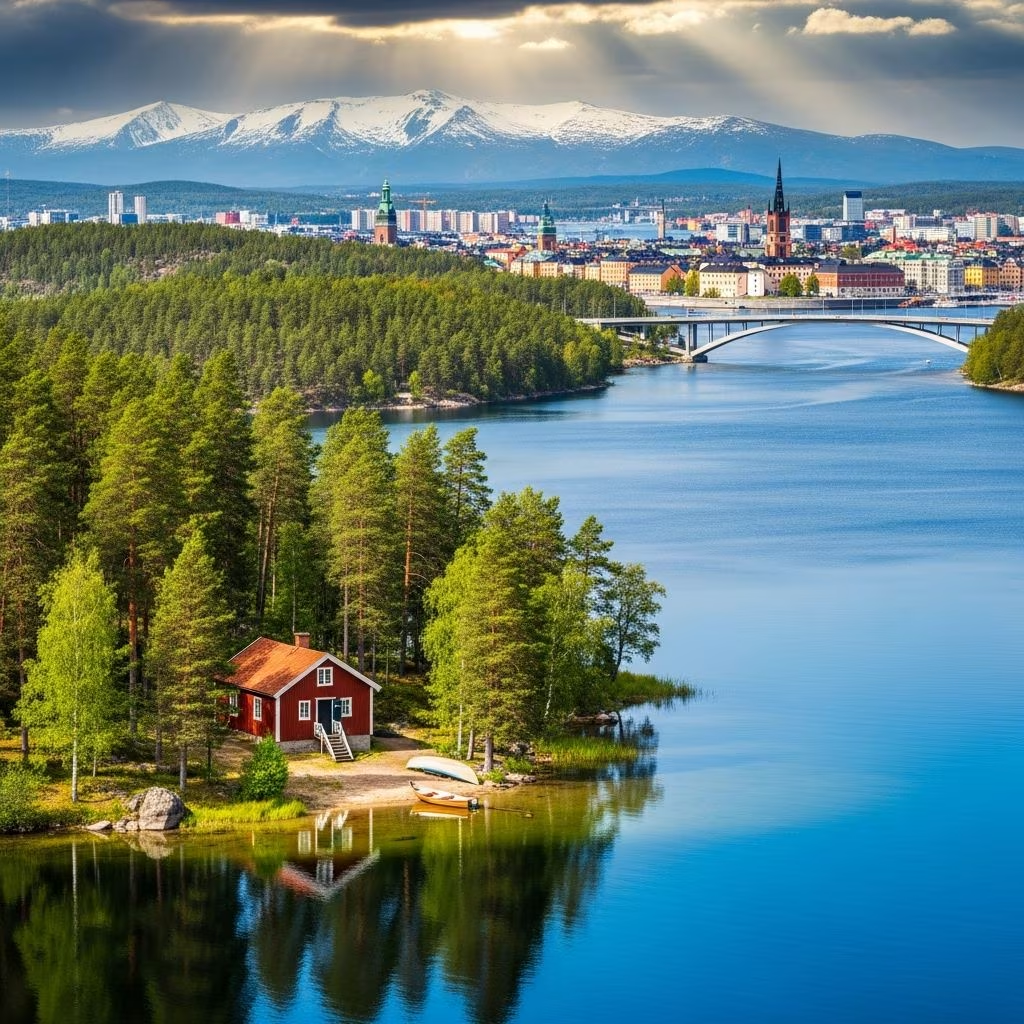
Sweden’s relationship with water defines much of its character and provides travelers with unique opportunities for exploration. The country’s extensive network of waterways, from dramatic coastal passages to serene inland channels, creates natural highways for discovery.
The Stockholm Archipelago represents one of the world’s most extensive maritime landscapes, comprising approximately 30,000 islands and skerries. This expansive system stretches outward from the capital, offering visitors countless ways to experience Scandinavian coastal beauty. Travelers can navigate between inhabited islands featuring charming villages and remote skerries showcasing untouched natural environments. The archipelago experience transitions seamlessly from urban proximity to profound wilderness, all achievable through short ferry connections. Island hopping allows visitors to encounter traditional Swedish maritime culture while discovering secluded beaches, hiking trails, and waterfront communities that showcase authentic Nordic life beyond city boundaries.
The Göta Canal represents an engineering achievement dating to the nineteenth century, functioning as a remarkable transportation corridor through Sweden’s heartland. This historic waterway winds through Swedish countryside, connecting numerous lakes and passing beneath fifty-eight heritage locks that require manual operation. Traveling this route provides intimate views of dense forests, traditional villages, and landscapes largely unchanged for generations. Modern canal cruises combine historical authenticity with contemporary comfort, allowing passengers to experience nineteenth-century travel methods while enjoying modern amenities. The slow pace of canal travel permits meaningful observation of the Swedish landscape, creating opportunities for reflection and connection with natural surroundings.
The Northern Lights represent nature’s most captivating atmospheric display, drawing observers to Sweden’s Arctic regions annually. This natural phenomenon occurs when solar particles interact with Earth’s magnetic field, creating luminous curtains that dance across darkness in shades of green, purple, and red. Witnessing this spectacle requires travel to northern latitudes where atmospheric conditions permit visibility, typically between autumn and spring. The experience combines scientific wonder with emotional transcendence, creating memories that often define entire travel journeys. Photographing these lights challenges technical skills while rewarding patient observers with images of extraordinary beauty.
Sweden’s dramatic seasonal variations create distinct natural experiences throughout the year. Summer brings endless daylight to northern regions, enabling extended outdoor activities and exploration during extended sunlight hours. Winter transforms landscapes through snow coverage and ice formation, creating opportunities for sledding, ice fishing, and winter sports. Spring and autumn transitions showcase vegetation changes and wildlife movements that reflect nature’s cycles. Each season presents advantages for different activities and perspectives, making timing an important consideration for specific experiences.
Uppsala functions as a repository of Scandinavian historical significance, combining Viking legacies with academic prestige and medieval architecture. This ancient city hosts burial mounds associated with legendary Viking rulers, a magnificent Gothic cathedral dating to medieval times, and one of Northern Europe’s oldest universities. Uppsala’s cultural calendar includes the Valborg celebration, where approximately 150,000 students and visitors gather for traditional festivities combining academic traditions with popular celebration. Visiting during this event provides insight into contemporary Swedish student culture while experiencing traditions maintained for centuries. The city represents how historical significance integrates with modern Nordic life, creating layered cultural experiences.
Medieval sites throughout Sweden preserve physical evidence of earlier periods, with fortified walls and castle structures demonstrating defensive strategies and architectural evolution. Visby on the island of Gotland retains substantial medieval fortifications that enclose a charming Old Town featuring narrow streets and historical buildings. Castle complexes showcase Renaissance design principles and royal history, while archaeological sites reveal pre-historical settlement patterns and cultural practices. These locations provide tangible connections to European history while offering beautiful settings for exploration and photography.
The Stockholm Metro system transcends typical transportation infrastructure by functioning as the world’s longest art gallery. Approximately ninety of one hundred metro stations feature permanent artistic installations, murals, and sculptures that transform utilitarian spaces into venues for creative expression. Each station incorporates distinct artistic themes and designs, with notable examples including the cave-like blue walls of T-Centralen and the vibrant red installations of Solna Centrum. Rather than viewing transit as mere movement between locations, travelers navigate a continuous exhibition of contemporary and historical Swedish art. This integration of artistic expression with daily urban infrastructure reflects Nordic design philosophy emphasizing aesthetic quality across all environments.
Stockholm’s Gamla Stan (Old Town) preserves medieval street patterns and architecture within a compact island setting, featuring narrow cobblestone passages, traditional buildings housing restaurants and galleries, and major landmarks including Parliament House and the Royal Palace. Wandering these streets provides atmospheric experience of historical Stockholm while encountering contemporary Swedish culture. Beyond the capital, other cities maintain historic character through preserved architecture and maintained traditions, enabling visitors to experience Swedish urban life across different regional contexts.
Sweden’s abundant water resources support extensive swimming culture, with more than ninety thousand lakes and extensive coastline providing accessible recreational opportunities. Summer swimming in pristine waters surrounded by forests represents quintessential Swedish leisure activity. Many lakes feature organized swimming areas with facilities, while others remain wild and undeveloped. Coastal swimming combines ocean recreation with archipelago exploration, offering salt-water alternatives to freshwater lakes. This deeply embedded cultural practice reflects Swedish environmental values and close relationship with natural spaces.
Dalarna region encapsulates rural Swedish character through dense forests, crystalline lakes, and traditional red cottages that define popular imagery of Scandinavia. Lake Siljan offers expansive water views and traditional villages including Rättvik and Tällberg, where visitors encounter authentic Swedish rural life. This region produces the iconic Dala Horse wooden figures, with workshops offering insight into traditional craft production. Active pursuits including hiking, swimming, and horseback riding enable full engagement with landscape and culture.
Gothenburg represents modern Swedish urbanism, combining architectural innovation with environmental consciousness and social warmth. The city features world-class museums, vibrant cultural institutions, botanical gardens, and distinctive canals creating European charm. This welcoming metropolis hosts diverse populations and maintains strong creative communities, making it ideal for visitors seeking contemporary Scandinavian urban experience beyond Stockholm’s scale.
| Activity Type | Best Season | Duration | Physical Intensity |
|---|---|---|---|
| Northern Lights Viewing | September-March | 2-5 days | Low-Moderate |
| Archipelago Island Hopping | May-September | 1-3 days | Moderate |
| Canal Cruising | May-September | 3-4 days | Low |
| Wild Swimming | June-August | Flexible | Low-Moderate |
| Historic City Exploration | Year-round | 2-3 days per city | Low-Moderate |
| Winter Sports | November-March | 1-3 days | Moderate-High |
Summer (June-August) offers extended daylight and warm weather for outdoor activities, while winter (November-February) provides Northern Lights viewing opportunities and winter sports. Spring and autumn offer moderate conditions with fewer crowds and beautiful seasonal landscapes.
Specialized tour operators arrange flights and accommodations in northern locations like Kiruna and Abisko, combining transportation with viewing opportunities and photography guidance. Advance booking ensures availability and optimal timing.
Ferry services operate from coastal cities, providing regular connections to inhabited islands and seasonal service to remote skerries. Private boat rentals and guided tours offer alternative exploration methods.
Major attractions maintain year-round operations, though some outdoor sites experience reduced accessibility during winter months. Summer months offer optimal conditions for archaeological site exploration.
Uppsala’s Valborg celebration (late April) combines academic traditions with popular festivities. Midsummer celebrations (June) showcase Swedish folk traditions, while various music and art festivals occur throughout summer months.
Successful travel to Sweden requires consideration of personal interests, seasonal preferences, and available time. Combining multiple activities—such as urban exploration in Stockholm with archipelago adventures and potential Northern Lights viewing—creates comprehensive experiences. Transportation infrastructure connects major attractions efficiently, though rental vehicles enable independent exploration of remote regions. Accommodation ranges from luxury hotels in major cities to traditional lodges in rural areas, supporting various travel styles and budgets.
Sweden’s appeal lies partly in the juxtaposition of accessibility and wilderness, urban sophistication and natural authenticity. Whether pursuing dramatic natural phenomena, cultural enrichment, or simple landscape appreciation, Sweden accommodates diverse travel motivations while maintaining distinctive Scandinavian character throughout.
