

 Travel Essentials
 Travel Essentials

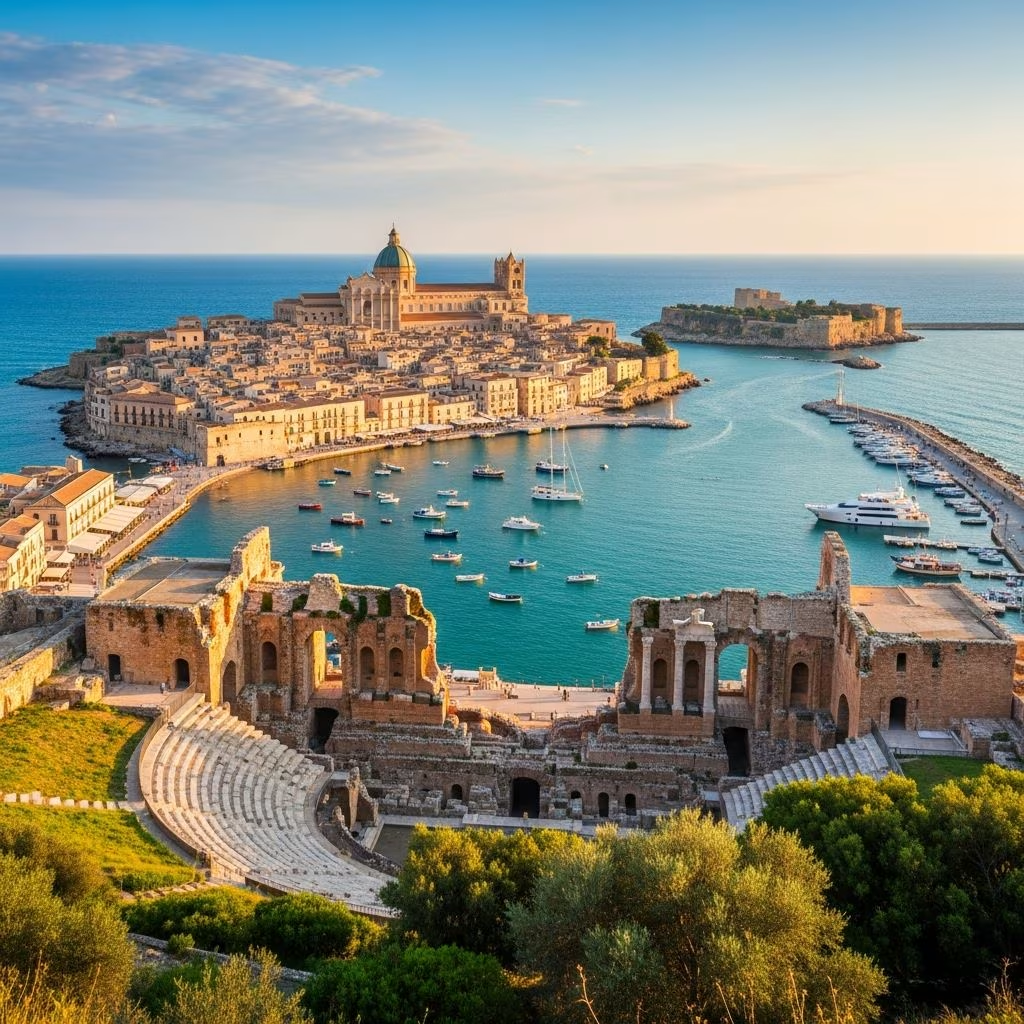
Comprehensive guide to Syracuse, Sicily's premier attractions including ancient Greek theatres, archaeological parks, and the enchanting island of Ortigia.
 Travel Essentials
Syracuse stands as one of Sicily’s most captivating destinations, seamlessly blending millennia of history with vibrant contemporary life. This southeastern Sicilian city represents a living museum where ancient Greek civilization meets baroque elegance, and Mediterranean coastlines frame archaeological treasures. Whether you arrive as a history enthusiast, cultural explorer, or leisure traveler, Syracuse offers layers of experiences that appeal to diverse interests.
Syracuse comprises two distinct areas that together create the region’s appeal. The mainland city serves as the modern hub, while Ortigia Island, connected by a narrow bridge, functions as the historic heart. This island has served as a human settlement for over 2,700 years, making it one of Europe’s longest continuously inhabited areas. The combination of these two zones allows visitors to experience both ancient heritage and contemporary Sicilian life within walking distance.
The city’s historical importance stems from its founding as a Greek colony around 734 BC. Syracuse became one of the most powerful Greek city-states in the ancient world, rivaling even Athens in influence and prosperity. This legacy permeates every corner, visible in architectural remnants, archaeological discoveries, and the cultural values that persist among residents today.
Dominating the Neapolis Archaeological Park, the Greek Theatre represents one of the world’s most impressive preserved amphitheaters. Carved directly into limestone during the 5th century BC, this massive structure could accommodate approximately 15,000 spectators. The theatre’s architectural ingenuity remains evident in its precision engineering and acoustical design, which allowed even whispered words from the central stage to reach distant upper rows.
Visitors can explore the theatre’s multiple levels, understanding how ancient audiences navigated the structure and imagining the theatrical performances that once captivated crowds. The surrounding landscape, now featuring Mediterranean vegetation including lemon and orange trees, adds authenticity to the experience, transporting visitors across centuries.
Within the same archaeological park, the Ear of Dionysius presents a fascinating intersection of natural geology and historical legend. This massive limestone cave, carved into the quarry face, stretches 65 meters deep and measures up to 23 meters in height. Its distinctive shape, resembling a human ear, inspired the name and numerous historical tales.
Ancient writers claimed that the tyrant Dionysius imprisoned captives within this cavity, where the cave’s acoustical properties allowed him to overhear conversations from above. Whether historically accurate or purely legendary, the story enhances the site’s mystique. The cave’s actual purpose likely related to limestone extraction for construction projects, but the dramatic storytelling adds layers to visitor understanding.
The Neapolis Archaeological Park also preserves substantial remains of a Roman Amphitheatre, built during the imperial period. Though less intact than the Greek Theatre, these ruins demonstrate Rome’s architectural influence following their conquest of Syracuse. The amphitheatre’s design reflects Roman preferences for gladiatorial combat and public spectacles, differing significantly from Greek theatrical traditions.
Piazza del Duomo stands as Ortigia’s crowning achievement in baroque design. This expansive square showcases honey-colored limestone buildings that gleam in Mediterranean sunlight, creating an almost dreamlike atmosphere. The Syracuse Cathedral dominates the plaza, its facade representing a masterpiece of baroque architectural expression.
The cathedral’s interior reveals layers of historical construction. What appears today as a baroque structure incorporates elements of a Doric temple dedicated to Athena, originally built during the 5th century BC. This architectural palimpsest—where different civilizations built atop previous structures—epitomizes Syracuse’s historical complexity.
The Fontana Aretusa captivates visitors with its unusual combination of natural phenomenon and mythological significance. This freshwater spring emerges at sea level, creating an inexplicable natural phenomenon that ancient Greeks explained through the story of the nymph Arethusa. According to legend, fleeing the river god Alpheus, she was transformed into a spring to escape his pursuit.
Beyond mythology, the fountain presents ecological uniqueness: it hosts the only naturally occurring papyrus plants in Europe. These tall, graceful plants create a distinctly Egyptian appearance in the heart of Sicily, thriving despite the Mediterranean setting. Ducks paddle through the circular fountain’s waters, and nearby cafes provide perfect vantage points for observation and reflection.
Greeting visitors as they cross the bridge onto Ortigia, the Temple of Apollo stands as one of the world’s oldest surviving Doric temples, dating to approximately 570 BC. Its distinctive columns and partial wall sections remain visible despite millennia of weathering. The site’s overgrown character, with Mediterranean vegetation and sunbathing cats, creates an unexpectedly intimate encounter with ancient architecture.
Beneath Ortigia’s streets lies an extensive network of early Christian catacombs, representing one of the Mediterranean’s most significant underground burial sites. The Basilica di San Giovanni serves as the entrance to these subterranean chambers, which date to the early Christian period when practicing Christianity remained dangerous under pagan authorities.
The catacombs are only accessible through guided tours lasting approximately 30-45 minutes, with costs typically around 10 euros per person. Tours guide visitors through limited accessible sections, describing burial practices, early Christian symbolism, and the spiritual significance of these underground spaces. Photography restrictions preserve the site’s historical integrity.
Syracuse’s culinary traditions offer authentic windows into Sicilian culture. Street food walking tours provide structured introductions to local cuisine while delivering contextual historical information. These three-hour experiences typically include multiple tastings of regional specialties, often limited to small groups that allow personal interaction with knowledgeable guides.
The Ortigia Market functions as both a practical shopping venue and cultural attraction. Vendors sell fresh produce, seafood, and regional products while the market’s atmosphere reflects centuries of commercial tradition. Early morning visits typically offer the most vibrant experiences, with organized layout and abundant vendor interactions.
This narrow lane represents Syracuse’s Jewish history, once hosting a thriving Jewish community. Today’s street features restaurants, bars, and shops that honor this heritage while serving contemporary visitors. The area provides opportunities to understand medieval Mediterranean Jewish life through historical context and modern commercial establishments.
Located at Ortigia’s southern tip, Castello Maniace represents 13th-century defensive architecture. Built to protect Syracuse from maritime invasions, this castle remains surrounded by water, creating a dramatic visual presentation. Late afternoon visits provide optimal lighting for photography and waterfront promenading, with breathtaking coastal views framing the fortification.
This seafront walkway transforms at sunset into Syracuse’s most atmospheric location. Lined with bars and outdoor seating, the promenade offers opportunities to experience Mediterranean leisure culture. Residents and visitors converge here during evening hours, creating vibrant social atmospheres while coastal views provide natural beauty.
Located approximately 30 minutes’ walking distance from Ortigia, this expansive park warrants dedicated time. Beyond the prominent Greek Theatre and Ear of Dionysius, the park contains numerous smaller archaeological features, limestone quarries, modern art installations, and Mediterranean vegetation. Visitors should allocate 2-3 hours for thorough exploration.
This nearby town complements Syracuse experiences by showcasing baroque town planning and architecture in a different context. Hilltop positioning creates dramatic vistas and requires walking through atmospheric medieval streets. Many travelers combine Syracuse visits with Ragusa Ibla day trips, experiencing complementary historical and architectural expressions.
| Consideration | Details |
|---|---|
| Best Season | June through September represents peak tourist season; April-May and October offer favorable weather with fewer crowds |
| Recommended Duration | 2-3 days allows adequate time for major attractions without excessive rushing |
| Catacombs Tour Cost | Approximately 10 euros per person with 30-45 minute duration |
| Neapolis Park Access | 30-minute walk from Ortigia or short bus ride; allocate 2-3 hours for exploration |
| Food Tours | Three-hour street food walking tours provide culinary and historical context |
June through September offers warm weather but attracts peak tourist crowds. April-May and October provide pleasant temperatures with fewer visitors, making these months ideal for those seeking more intimate experiences. Winter months are quieter but feature occasional rainy days.
Two to three days allows exploration of major Ortigia attractions, the Neapolis Archaeological Park, and participation in specialized tours or day trips. Visitors with particular historical interests might extend stays to 4-5 days.
Yes, though somewhat rushed. Morning exploration of Ortigia followed by afternoon archaeological park visits provides basic coverage, but splitting across two days allows more leisurely engagement with each location.
No, photography is prohibited within the catacomb sections to preserve these historical spaces and respect their spiritual significance.
This ancient freshwater spring is Europe’s only location where papyrus grows naturally in outdoor settings, combining geological uniqueness with mythological significance.
Syracuse represents more than a collection of historical sites—it embodies the continuous evolution of Mediterranean civilization across three millennia. Walking through Ortigia’s baroque streets, exploring the Greek Theatre’s massive columns, and observing papyrus beside Mediterranean waters creates profound connections to human history. The city accommodates various travel styles, from cultural deep-dives through specialized tours to leisurely wandering through atmospheric streets.
Whether spending two focused days or extended weeks, Syracuse rewards exploration with authentic Sicilian culture, world-class archaeological treasures, and Mediterranean beauty that justifies its status as one of Europe’s premier destinations.
