

 Travel Essentials
 Travel Essentials

Your complete guide to Tegucigalpa's top attractions, from colonial architecture and religious sites to cloud forests and panoramic viewpoints.
 Travel Essentials
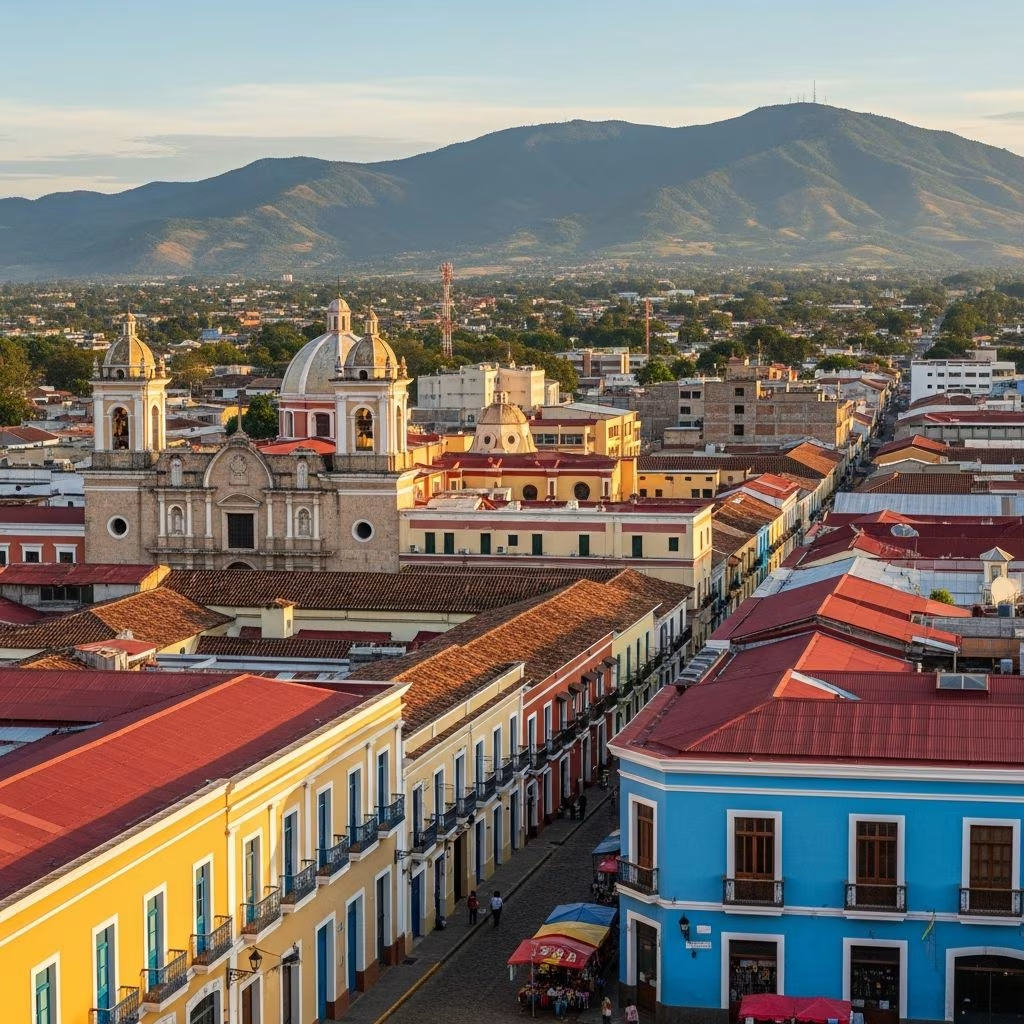
Tegucigalpa, the capital of Honduras, stands as a compelling destination for travelers seeking authentic Central American culture, architectural heritage, and natural landscapes. Nestled in a mountainous valley, this vibrant city offers visitors an intricate blend of colonial history, religious significance, and contemporary urban energy. Whether you arrive seeking spiritual experiences, historical insights, or outdoor adventures, Tegucigalpa presents numerous opportunities for meaningful exploration.
The downtown district of Tegucigalpa functions as a living museum where centuries of history converge in bustling plazas, colonial churches, and active marketplaces. This area serves as the cultural heartbeat of Honduras, where daily life unfolds amid architectural remnants from multiple eras.
Beginning your exploration at Parque de la Merced introduces you to Iglesia de la Merced, an impressive structure originally established as a convent during the 17th century and site of the nation’s earliest university. This landmark demonstrates the religious and educational priorities of colonial Honduras.
Progressing through the downtown core reveals numerous significant sites within walking distance. Catedral de San Miguel Arcángel commands attention on Plaza Morazán with its neoclassical design, reflecting 18th-century architectural sensibilities. Despite restoration work following civil conflicts in the early 20th century, the cathedral maintains its original structural integrity and aesthetic appeal.
The pedestrianized Paseo Liquidámbar corridor connects multiple cultural attractions while providing respite from vehicular traffic. A diversion northward leads to Iglesia Los Dolores, distinguished by its ornate facade and intricate interior design. Adjacent to this religious structure lies the sprawling Mercado de Los Dolores, a labyrinthine marketplace where local commerce thrives amid vendor stalls and food vendors preparing traditional Honduran cuisine.
Continuing westward along the pedestrian avenue eventually reaches the historic Correo Nacional post office, an architectural landmark representing governmental infrastructure from earlier centuries. Immediately proximate stands the Museo para la Identidad Nacional, housed within the former Palace of Ministries, a 19th-century structure transformed into Honduras’ premier museum showcasing national heritage through exhibits spanning archaeology, visual arts, and cultural history.
The downtown circuit extends to the Galeria Nacional de Arte, which celebrates contemporary and historical creative expressions from local artists. The route culminates at Teatro Nacional Manuel Bonilla, an architectural gem featuring neoclassical design elements accessible for interior viewing upon request. Nearby, Parque Herrera provides comfortable respite with landscaped grounds suitable for relaxation.
The final downtown landmark, Iglesia del Calvario, sits adjacent to the Choluteca River, fronted by a towering stone cross. For elevated perspectives across the city sprawl, the Monumento a la Paz atop Parque Cerro Juana Lainez rewards visitors with sweeping panoramic vistas.
Honduras maintains deep Catholic traditions, and Tegucigalpa’s religious landscape reflects this cultural foundation. Beyond the downtown churches previously mentioned, the city hosts additional sacred sites worthy of visitation.
The Basilica of Our Lady of Suyapa holds profound spiritual importance as the primary shrine dedicated to Honduras’ patron saint. This sanctuary attracts pilgrims year-round and represents a central point of devotion for the nation’s Catholic population. The architectural and spiritual significance of this basilica extends beyond casual tourism, embodying elements of national identity intertwined with religious faith.
These religious structures collectively demonstrate how spiritual expression and architectural ambition intersected throughout Honduras’ history, creating spaces that serve simultaneously as prayer destinations, architectural specimens, and historical documents.
Tegucigalpa’s topography creates multiple elevated locations offering spectacular city and valley vistas. These parks serve as recreational destinations where locals and visitors gather to appreciate natural panoramas and escape urban intensity.
Parque El Picacho, situated approximately six kilometers from downtown, dominates the northern skyline with its most recognizable feature: an imposing white statue representing Christ. Created by Honduran sculptor Mario Zamora, this 32-meter-high sculpture presents dramatic visual impact whether observed from urban vantage points or approached directly within the park.
The park encompasses extensive walking trail networks crisscrossing the mountain ridge, suitable for various fitness levels. Sunset visits generate particularly memorable experiences, as golden light bathes the valley. Evening hours prove especially magical, with thousands of city lights illuminating the sprawling urban landscape below. The park maintains security presence and welcomes night visitors, offering comfortable conditions for extended stays.
An unusual secondary attraction within the park includes a structure replicating Paris’ Eiffel Tower, positioned at a cliff edge providing dramatic elevated viewpoints for photography and observation. While aesthetically incongruous, this reproduction offers additional exploration opportunities within the park’s geography.
Cerro Juana Lainez, ascending to 1,224 meters elevation, represents one of Tegucigalpa’s highest accessible points. The mountainous terrain, designated as an official park, attracts visitors specifically seeking comprehensive city overviews from elevated positions. The panoramic vistas encompassing Tegucigalpa and surrounding topography justify the modest effort required for ascent.
Santa Lucia Park presents an alternative evening destination, featuring Mirador Santa Lucia, an elevated viewing platform accessed via stone steps and illuminated by decorative hanging lanterns. The nocturnal atmosphere created by ambient lighting transforms the experience into a distinctly romantic setting, though daytime visits equally reward visitors with valley and mountain perspectives extending toward Tegucigalpa’s horizons.
Beyond urban attractions, Tegucigalpa provides accessible entry points to Honduras’ natural heritage through protected areas demonstrating the nation’s commitment to environmental conservation.
La Tigra National Park, declared Honduras’ inaugural national park in 1980, encompasses 328 square kilometers of tropical cloud forest northeast of the capital. This protected mountainous zone preserves diverse ecosystems threatened by deforestation pressures affecting broader regional landscapes. The park’s designation reflected governmental recognition of environmental protection necessity and ecological value.
The cloud forest environment hosts remarkable biodiversity including endemic bird species, particularly the colorful quetzal, alongside numerous fern varieties, moss colonies, and fungal organisms thriving in the moisture-rich microclimate. This ecological specificity creates a distinctive environment substantially differentiated from lower-elevation Central American landscapes.
Eight well-maintained trails traverse the park, offering hiking opportunities ranging from moderate day excursions to more challenging multi-hour adventures. The primary entrance accommodates vehicle access, while an alternative entrance near the abandoned San Juancito mining settlement provides secondary access via daily bus service from Tegucigalpa. During the early 20th century, San Juancito functioned as a significant mining hub supporting over 40,000 inhabitants and notably represented the first Honduran location receiving electrical infrastructure.
Visitors drawn to natural environments benefit substantially from La Tigra’s cool mountain temperatures, offering respite from Tegucigalpa’s warm urban climate. The park functions as the city’s primary ecological lung, maintaining air quality and hydrological functions essential to regional environmental health.
Tegucigalpa supports cultural institutions providing systematic exploration of national heritage and contemporary artistic expression.
The Museo para la Identidad Nacional, housed within a 19th-century governmental building, presents comprehensive exhibitions addressing Honduran archaeology, artistic traditions, and cultural narratives. The museum architecture itself merits attention, representing architectural preservation success and adaptive reuse principles.
The Galeria Nacional de Arte complements historical exhibitions by showcasing creative works from established and emerging Honduran artists, demonstrating cultural vitality within contemporary artistic practice.
Additional institutions including Chimineke and the Republican History Museum Villa Roy expand opportunities for visitors seeking specialized historical understanding or thematic focus areas.
Tegucigalpa distinguishes itself through abundant parks and landscaped areas distributed throughout the urban footprint. Beyond the mountain parks previously discussed, numerous green spaces provide recreational opportunities, rest locations, and environmental benefits characteristic of well-planned urban development.
These parks collectively create networks allowing residents and visitors to access nature without traveling extensive distances, supporting public health objectives and quality-of-life enhancement.
Tegucigalpa experiences tropical climate conditions with pronounced wet and dry seasons. Dry season months (November through April) generally provide superior conditions for outdoor activities and park visitation. However, the city remains accessible throughout the year, with rain typically occurring during afternoon hours rather than extended periods.
Downtown attractions concentrate within walkable distances, making pedestrian exploration feasible for most fitness levels. Taxi services provide affordable transportation between dispersed attractions. Public bus networks connect downtown with peripheral parks, including La Tigra National Park access points. Organized tour operators offer guided experiences combining multiple sites with professional commentary and cultural context.
The downtown mercados, particularly Mercado de Los Dolores, provide authentic environments for experiencing Honduran culinary traditions. Local vendors prepare traditional foods reflecting regional agricultural products and inherited recipes. Restaurants throughout downtown offer both casual and refined dining experiences, accommodating various preferences and budgetary considerations.
Beginning at Parque de la Merced in downtown provides logical orientation to the historic quarter while introducing major landmarks and establishing geographic understanding. From this central location, visitors can extend explorations in multiple directions based on specific interests.
Two to three full days allows comprehensive downtown exploration, park visits, and museum experiences without excessive rushing. Visitors prioritizing single attractions might accomplish meaningful experiences within shorter timeframes.
The park’s eight trails accommodate varying fitness levels, from leisurely nature walks to challenging mountain hiking. Most visitors without specialized hiking experience can enjoy park exploration through appropriate trail selection.
El Picacho Park accommodates vehicle access to primary viewing areas, reducing elevation gain requirements. Juana Lainez Park similarly provides accessible routes. However, those with mobility limitations should verify current conditions beforehand.
El Picacho Park maintains security presence supporting safe evening visits. However, visitors should employ standard urban precautions and consider visiting with companions during nighttime hours.
