

 Travel Essentials
 Travel Essentials

Explore top activities in the Azores: hike volcanoes, chase waterfalls, spot whales, soak in hot springs, and savor local flavors on São Miguel, Pico, Faial, and more.
 Travel Essentials
The Azores archipelago, a chain of nine volcanic islands in the North Atlantic belonging to Portugal, offers a paradise for nature enthusiasts, adventure seekers, and those craving authentic escapes. Remote and rugged, these mid-Atlantic gems boast dramatic landscapes shaped by fiery eruptions, from towering craters and steaming hot springs to lush craters filled with twin lakes. With mild climates year-round, diverse marine life, and trails that reveal hidden waterfalls and coastal cliffs, the Azores deliver experiences unlike anywhere else. Whether summiting Portugal’s highest peak or dipping into geothermal pools, every island promises unique thrills. This guide dives into must-do activities, drawing from official tourism insights and traveler accounts to help you craft the perfect itinerary.
São Miguel, the largest and most accessible island, serves as the ideal entry point with its international airport in Ponta Delgada. Known as the Green Island for its verdant hills and rainforests, it blends urban charm with natural spectacles. Wander Ponta Delgada’s historic core, featuring colonial architecture, lively markets like Mercado de Graça selling fresh seafood and pineapples, and black-sand beaches nearby. Rent a car or join jeep tours to navigate winding roads safely, as public transport is limited.
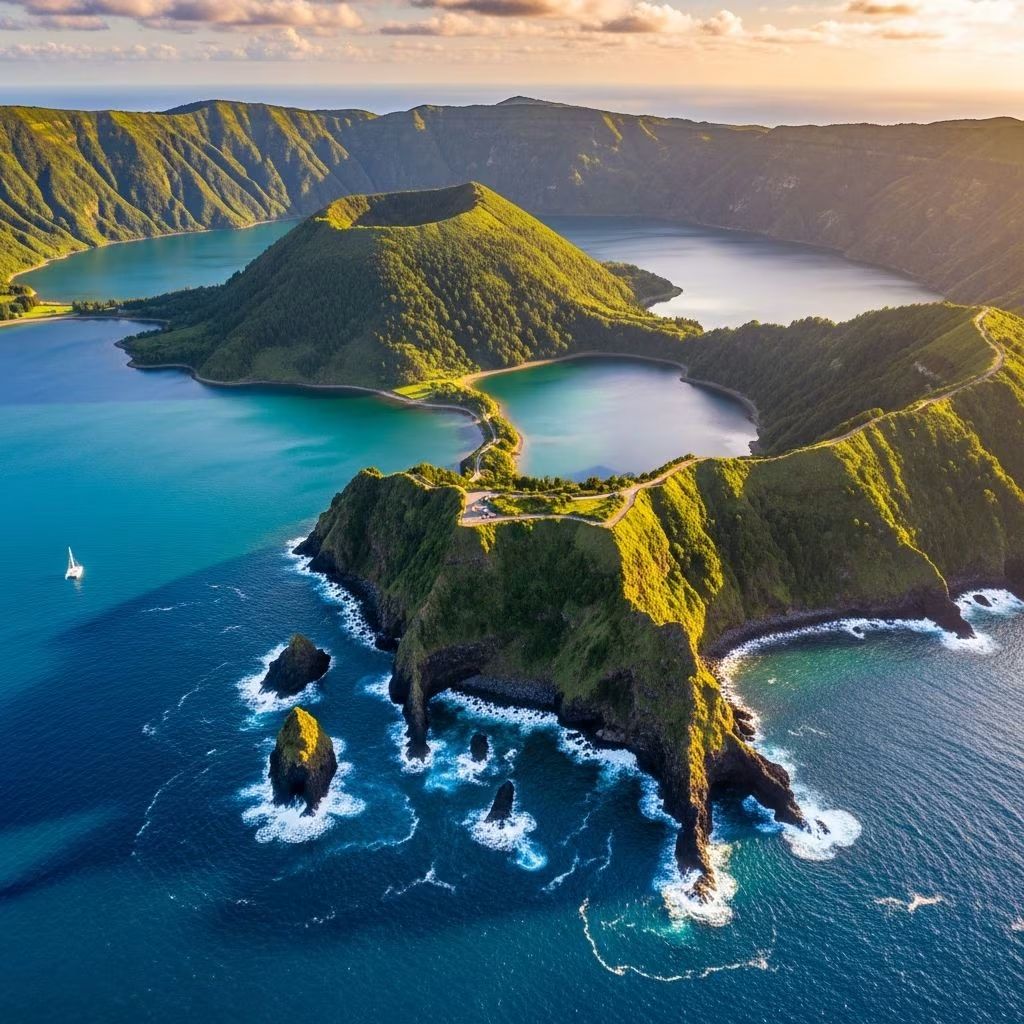
At the heart of São Miguel lies Caldeira das Sete Cidades, a massive volcanic crater holding two mirror-like lakes—one emerald green, the other azure blue. Local legend ties their colors to a forbidden romance between a shepherd and a princess, their tears forming the waters. Hike rim trails for panoramic vistas or descend to lakeside villages. Jeep excursions handle the steep access, revealing viewpoints like Vista do Rei. This site ranks among Portugal’s Seven Natural Wonders, drawing hikers and photographers.
Furnas Valley pulses with volcanic energy, where bubbling hot springs cook traditional meals. Try cozido das Furnas, a stew of meats and vegetables buried in steam vents for hours, served at local eateries amid fumaroles. Nearby, Parque Terra Nostra’s 18th-century botanical gardens showcase exotic camellias, hydrangeas, and a rust-colored thermal pool fed by iron-rich waters—perfect for a soothing soak. Don’t miss Queijo do Vale, cheese matured in geothermal ovens, available from family producers.
Pico Island captivates with its stratovolcano, Mount Pico, standing at 7,713 feet (2,351 meters)—Portugal’s tallest peak and another Natural Wonder. The ascent demands fitness: a 4-8 hour round-trip through vine-covered foothills, lava fields, and scree slopes to a lunar summit crater. Clear days reward with 360-degree views across the central islands and endless ocean. Guided tours provide gear and navigation; summit between June and September for best weather. Beyond the climb, explore UNESCO-listed basalt vineyards producing robust wines amid stark black lava.
Delve into Gruta das Torres, Pico’s 3.2-mile (5 km) lava tube formed 1,500 years ago. Equipped with helmets and lights, guided tours reveal stalactites, geological layers, and ancient flows. Pair this with tastings at cooperative wineries, where vines cling to stone walls in a UNESCO Vineyard Landscape, producing tangy verdelho.
Faial, the Blue Island, blooms with hydrangeas in summer and hosts Horta’s yacht-filled harbor, a historic stop for transatlantic sailors adorned with painted murals. Off-road to Ponta dos Capelinhos, a 1957 eruption’s legacy: a stark volcanic peninsula with craters, black-sand beaches, and a visitor center detailing the event that doubled the landmass. Hike Caldeira do Faial’s 1.3-mile (2 km) rim for crater lake views.
Hiking defines the Azores, with over 100 trails mapped by regional parks. On São Jorge, the Caldeira de Santo Cristo Trail descends 1,000 feet (300 m) from Serra do Topo to a secluded fajã—a cliff-base hamlet with lagoons and waterfalls. Quad bikes offer alternatives for less strenuous access. São Miguel’s Salto do Prego trail winds through laurel forests to a 65-foot (20 m) cascade and swimmable pool, showcasing endemic flora. Terceira features Algar do Carvão, a walkable volcanic tube, and Serra do Cume’s vast crater panorama.
The Azores host one-third of global cetacean species, including sperm, blue, and humpback whales, plus dolphins. Faial and Pico excel for tours (3-4 hours), spotting migratory pods from March to October. Combine with birdwatching for shearwaters or swim with dolphins under strict eco-guidelines. Horta’s marine center educates on conservation.
Beyond nature, savor Gorreana Tea Plantation on São Miguel—Europe’s only tea fields, with free factory tours and tastings amid manicured bushes. Sample spiky pineapples from plantations, fresh seafood like lapas (limpets), and bolo lêvedo (sweet bread). Furnas’ geothermal cooking demos highlight sustainable traditions.
| Activity | Best Island | Season | Duration | Tips |
|---|---|---|---|---|
| Mt Pico Hike | Pico | Jun-Sep | 6-8 hrs | Guide mandatory; start pre-dawn |
| Sete Cidades | São Miguel | All year | 2-4 hrs | Jeep for access; fog common |
| Whale Watch | Faial/Pico | Mar-Oct | 3 hrs | Book calm mornings |
| Terra Nostra Pool | São Miguel | All year | 1-2 hrs | Bring swimsuit; stains clothes |
| Gruta das Torres | Pico | All year | 1 hr | Wear sturdy shoes |
Direct flights to Ponta Delgada (São Miguel) from Europe and the US East Coast; inter-island ferries or planes connect others. SATA Air Azores handles most hops.
May-October for hiking and whales; shoulder seasons (April/May, September/October) offer fewer crowds and wildflowers.
Yes for flexibility; roads are narrow but scenic. ATVs or tours suit thrill-seekers.
Absolutely—easy trails, pools, and boat trips; watch steep drops on hikes.
Stay in guesthouses, eat local (meals ~€15), free hikes; tours €50-100.
From São Miguel’s steaming valleys to Pico’s lofty craters, the Azores weave adventure with serenity. Pack layers for microclimates, respect trails to preserve this UNESCO biosphere, and prepare for soul-stirring vistas. Island-hop via short flights or ferries for a full tapestry of experiences.
