

 Travel Essentials
 Travel Essentials

Your essential guide to Tianjin's best attractions, from the famous Ferris wheel to historic European architecture and traditional Chinese culture.
 Travel Essentials
Tianjin, China’s vibrant coastal metropolis, represents a fascinating blend of ancient traditions and modern architecture. Located just 120 kilometers southeast of Beijing, this major port city has evolved into a world-class destination that showcases China’s rich heritage alongside contemporary development. With over 15 million residents and centuries of history, Tianjin offers visitors an impressive array of experiences that range from thrilling viewpoints to culturally significant museums and historic neighborhoods.
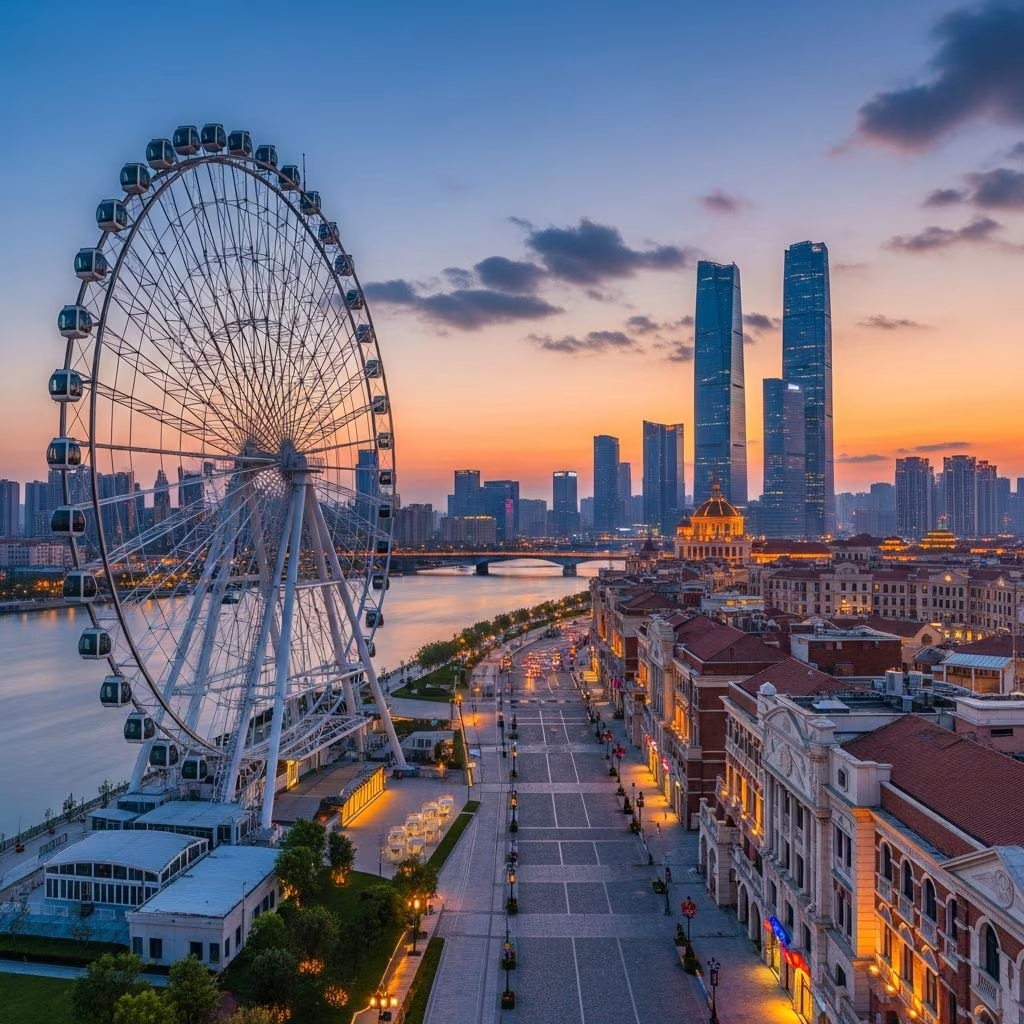
The most recognizable symbol of Tianjin’s modern skyline is the towering observation wheel that provides unparalleled views of the urban landscape. This engineering marvel stands as one of China’s most significant Ferris wheels, with a total height of 120 meters and a diameter of 110 meters. What makes this attraction particularly distinctive is its unique positioning—it’s the only Ferris wheel globally constructed directly above a bridge, spanning the Haihe River while integrated into the Yongle Bridge structure.
The wheel features enclosed passenger capsules that rotate smoothly during a 30 to 40-minute journey around the circumference. From these vantage points, visitors gain comprehensive perspectives of both riverbanks, the sprawling downtown district with its forest of contemporary residential and commercial towers, and the industrial zones that extend toward the horizon. The viewing experience transforms dramatically depending on the time of day. Morning visits offer clarity and distance viewing, sunset sessions provide golden-hour photography opportunities, while evening excursions reveal the city’s spectacular illuminated skyline with millions of lights reflecting off the water below.
Tianjin’s historical relationship with Western powers has left an indelible mark on its urban landscape, particularly in designated districts that preserve colonial-era infrastructure. The Five Great Avenues neighborhood represents perhaps the most concentrated assemblage of European architectural styles in China, featuring tree-lined thoroughfares flanked by restored mansion residences that date primarily to the early twentieth century.
Within this historic precinct stands the Tianjin Concert Hall, a 1922 neoclassical structure featuring distinctive domed architecture and classical columns. This performing arts venue continues to host orchestral performances, theatrical productions, and cultural events within an intimate auditorium accommodating approximately 900 attendees. The hall’s elegant exterior, enhanced by carefully maintained hedgerow landscaping and period-appropriate furnishings, transports visitors back to the cosmopolitan golden age of twentieth-century Tianjin.
The former Minyuan Stadium complex, also situated within this district, carries particularly significant historical connections. Designed by Eric Liddell—the legendary Scottish athlete immortalized in the film “Chariots of Fire”—the structure has been thoughtfully repurposed as a contemporary public recreational area. The site now incorporates multiple museum galleries dedicated to Liddell’s extraordinary life and athletic achievements, offering visitors insight into both local history and international sporting heritage.
One of Tianjin’s most unconventional museums celebrates the ancient craft of ceramic production through its extraordinary exterior rather than merely displaying artifacts within climate-controlled interior galleries. This distinctive residential mansion constructed during the nineteenth century incorporates an estimated 400,000 individual ceramic pieces directly into its walls, creating a mosaic-like facade that shimmers with glazed surfaces in varying hues and finishes.
The structure itself functions as both architectural marvel and educational institution. Visitors encounter vessels, decorative plates, vases, and bowls integrated seamlessly into the building’s load-bearing walls and decorative elements. This innovative approach to museum design reflects the genuine historical importance of porcelain within Chinese civilization—a craft tradition extending more than 3,000 years into antiquity. The term “china” itself, used throughout European languages to describe porcelain, derives directly from this country’s legendary ceramic mastery.
Beyond the exterior’s visual spectacle, the interior galleries house extensive collections of antique porcelain pieces, contemporary ceramic art, and technical exhibits explaining production methodologies. Interpretive displays document the evolution from early earthenware through advanced porcelain manufacturing techniques, offering comprehensive context for understanding this culturally significant craft tradition.
Tianjin’s commitment to preserving its complex history is evidenced through several substantial museum institutions housed within a contemporary cultural campus. The primary repository contains over 200,000 objects spanning multiple historical periods and cultural traditions. Particularly notable collections include oracle bone artifacts from ancient divination practices, exceptional examples of traditional inkstone craftsmanship, and extensive documentation of the city’s multifaceted interactions with European colonial powers.
The institution’s third floor specifically chronicles Tianjin’s transformation into a modern metropolitan center from the Opium Wars onward, providing essential historical context for understanding the city’s development trajectory. Accompanying museums within the same cultural complex include dedicated galleries for contemporary visual arts and natural history exhibitions. The latter occupies a striking glass structure architecturally resembling a manta ray, housing an impressive dinosaur skeleton collection and paleontological specimens that appeal particularly to younger visitors.
The pedestrian shopping arcade positioned at Tianjin’s historic commercial center preserves centuries-old patterns of urban retail and dining organization. This traffic-free zone comprises densely packed retail establishments selling merchandise ranging from religious iconography to decorative crafts and regional specialty foods. Street-level vendors offer traditional snacks including twisted dough preparations and savory crepe variations, their aromas permeating the arcade’s atmosphere.
The spiritual centerpiece of this district consists of an ivory-colored sculpture depicting a significant maritime deity revered throughout coastal Asian regions. This representation joins another sculptural installation located at a specialized cultural park dedicated to the same goddess, underscoring her importance within local religious practice and maritime heritage. Adjacent to the goddess sculpture stands an unassuming temple structure representing among Tianjin’s oldest extant buildings. Originally constructed centuries ago, the temple presently incorporates galleries dedicated to documenting folk customs, traditional practices, and historical photographic documentation of urban life across multiple generations.
The district’s northern boundary features a fourteenth-century temple structure characterized by sweeping green-tiled roofs and serene landscaped pathways. This religious structure honors a supreme figure within Taoist cosmological traditions, maintaining peaceful contemplative spaces despite the commercial energy pervading the surrounding commercial arcade.
Tianjin’s location provides convenient access to restored fortification sections located beyond the more crowded, heavily trafficked areas accessible from Beijing. These mountain-ridge positioned defensive walls feature notably steep ascending passages and challenging climbs that reward visitors with expansive landscape vistas extending across the surrounding terrain. The restored sections maintain authentic structural characteristics while providing safely improved access features for contemporary visitors.
These excursion destinations appeal particularly to travelers seeking more authentic experiences compared to the highly commercialized Great Wall sections situated in closer proximity to the capital. The less-crowded environment permits more contemplative engagement with the structure’s impressive engineering and historical significance without the distraction of overwhelming tourist populations.
Contemporary shopping thoroughfares contrast dramatically with historic pedestrian arcades, featuring modern retail establishments and international brand representatives alongside regional enterprises. Riverside recreational areas provide fishing opportunities, swimming facilities, tranquil walking paths, and prime observation locations for viewing the city’s dramatic nighttime illumination.
| Attraction | Time Required | Best Time to Visit |
|---|---|---|
| Observation Wheel | 30-40 minutes | Sunset or evening for optimal views |
| Historic District Walking Tour | 2-3 hours | Morning for comfortable temperatures |
| Museum Complex | 3-4 hours | Tuesday-Sunday, avoid weekends for crowds |
| Pedestrian Arcade | 1-2 hours | Weekday afternoons for shorter wait times |
| Great Wall Section | 4-5 hours | Spring or autumn for optimal weather |
High-speed rail connections operate frequently between the two cities, making the journey accessible and economical. The transportation infrastructure connects downtown areas directly, eliminating lengthy airport transfers.
A two to three-day itinerary permits thorough exploration of central attractions without excessive rushing. Visitors with greater flexibility can incorporate day excursions to surrounding sites and nearby Great Wall sections.
Major tourist attractions provide English signage and information materials. However, visitors should consider acquiring translation applications for enhanced navigation and communication with local vendors.
Tianjin hosts various performing arts festivals, art exhibitions, and seasonal celebrations. Visitor bureaus can provide current event calendars and scheduling information.
Spring (April-May) and autumn (September-October) offer comfortable temperatures and favorable weather conditions. Summer temperatures can reach uncomfortable levels, while winter requires substantial layered clothing.
