

 Travel Essentials
 Travel Essentials

A comprehensive travel guide to Toulouse featuring historic architecture, museums, culinary experiences, and unique attractions that showcase why this southwestern French city captivates visitors.
 Travel Essentials
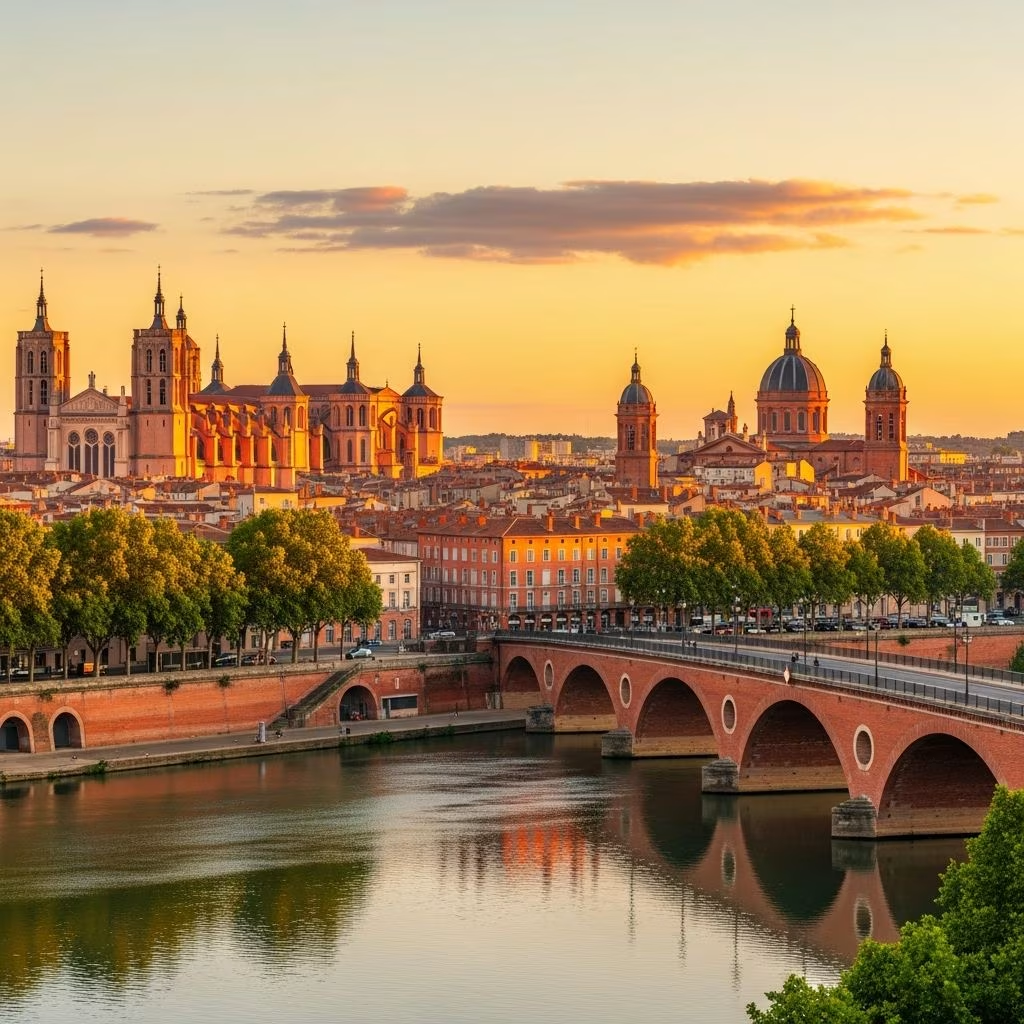
Nestled in the heart of southwestern France, Toulouse stands as a captivating destination that seamlessly blends centuries of history with contemporary vitality. Known affectionately as the “Pink City” for its distinctive terra-cotta brick architecture, Toulouse offers travelers an authentic glimpse into French regional culture, culinary traditions, and artistic heritage. Whether you’re drawn by its medieval charm, innovative museums, or riverside tranquility, this guide illuminates the must-experience aspects of this remarkable destination.
The most rewarding way to experience Toulouse’s character is through unhurried exploration on foot. Beginning from the elegant Pont Neuf, a 17th-century stone bridge spanning the Garonne River, visitors can transition into the historic core where pastel-colored brick buildings create an enchanting urban landscape. The winding pathways reveal elegant private mansions, intimate boutiques, and welcoming cafés that embody the relaxed sophistication Toulouse is celebrated for.
The journey naturally gravitates toward Place du Capitole, a neoclassical square dominated by the striking Capitole building, which serves dual purposes as both city hall and opera house. This pink-hued structure, adorned with eight marble columns, becomes particularly dramatic when illuminated against the evening sky. Inside, the Salle des Illustres showcases elaborate ceiling paintings and sculptures honoring Toulouse’s distinguished past, with complimentary entry allowing visitors to appreciate its ornate interior design.
From this central hub, quieter backstreets lead to the Couvent des Jacobins, a medieval architectural masterpiece featuring a serene cloister garden that provides respite from the bustling streets. Nearby stands the Basilique St-Sernin, a Romanesque structure renowned for its slightly tilted bell tower and historical significance as a pilgrimage destination. The honey-colored brick of the adjacent Musée St-Raymond houses an impressive collection of Roman artifacts, positioning it as an essential stop for those interested in Toulouse’s ancient origins.
The city’s student population, numbering approximately 130,000, congregates around the Jardin du Grand-Rond, where three interconnected gardens create a vibrant social space that captures Toulouse’s youthful energy and cosmopolitan atmosphere.
Toulouse’s gastronomic reputation extends far beyond typical French fare, as the southwestern region maintains distinctive culinary traditions rooted in agricultural abundance and time-honored preparation methods. The Marché Victor Hugo, recognized as France’s oldest covered market, exemplifies this food-centric culture with vendors displaying seasonal treasures throughout the year.
Operating daily except Mondays between 6 AM and 2 PM, this market reflects the rhythm of regional agriculture and local preferences. Spring brings delicate artichokes and distinctive pink garlic, while summer showcases succulent strawberries and fresh produce ideal for light meals. Autumn and winter necessitate heartier vegetables that form the foundation of traditional stews and cassoulets, the iconic slow-cooked bean and meat dish that defines southwestern French cuisine.
Beyond shopping for ingredients, the market environment itself offers cultural immersion, allowing visitors to observe how locals select provisions, interact with vendors, and maintain connections to traditional foodways despite modern convenience alternatives.
Two distinct waterways create recreational opportunities while telling different chapters of Toulouse’s history. The Canal du Midi represents a 17th-century engineering triumph commissioned during the reign of Louis XIV, designed to establish a maritime route connecting the Mediterranean Sea with the Atlantic Ocean. Featuring 77 locks that manage elevation changes across its length, the canal transformed trade patterns and regional development while remaining remarkably functional today.
Visitors can experience the canal through leisurely bicycle rides along dedicated towpaths, boat excursions that navigate authentic locks, or simple waterside strolls that provide perspective on this historical achievement. The engineering ingenuity required for the canal’s construction becomes apparent when observing how water levels transition between sections and how traffic currently moves along routes designed centuries ago.
The Garonne River, which flows through the city center, offers complementary experiences with its riverside promenades, restaurant terraces overlooking the water, and sunset viewpoints that capture Toulouse’s natural beauty. The Quai de la Daurade particularly attracts visitors seeking panoramic views and atmospheric evening ambiance.
Toulouse’s museum landscape reflects both historical preservation and progressive cultural development. The Fondation Bemberg occupies a sumptuous Renaissance mansion constructed in 1562 for a prosperous merchant, providing architectural context that enhances appreciation of its art collection. The collection encompasses paintings, sculptures, and decorative objects spanning from the 15th century through the World War II era, with particular emphasis on Renaissance masterworks and modern art movements.
The Musée des Augustins, housed within a former monastery, recently completed an extensive six-year renovation and reopened partially in December 2025. This transition from religious institution to secular museum illustrates how Toulouse adapts historical structures for contemporary cultural purposes while maintaining respect for architectural heritage.
Les Abattoirs represents perhaps the most dramatic transformation, converting a former municipal slaughterhouse into a dynamic contemporary art venue and cultural center. The museum exhibitions showcase modern and contemporary works by renowned artists, while the surrounding district has evolved into a creative neighborhood featuring galleries, theaters, and independent artistic enterprises. A sculptural trail encompassing 16 installations guides visitors from the central courtyard toward the river, combining gallery experience with outdoor artistic engagement.
The Pass Tourisme discount card, available from the tourist office at €26, provides admission to multiple museums and includes a complimentary city tour, making extended cultural exploration economically accessible.
Located on a former airport runway approximately 25 minutes by bicycle from central Toulouse, Halle de la Machine presents an utterly unique attraction combining mechanical engineering with artistic vision. The venue features oversized moving sculptures crafted from wood and steel, with the 14-meter-tall mechanical Minotaur serving as the most iconic creation. Visitors can experience interactive rides atop various mechanical creatures, including a giant buffalo and carousel animals, creating experiences that transcend traditional museum visits.
Beyond static displays, periodic performances orchestrated by street theater company La Machine coordinate mechanical creations with live symphony orchestras, DJs, or musical ensembles, producing spectacular productions that attract hundreds of thousands of spectators. These special events elevate the venue from curious attraction to major cultural happening, drawing international attention to Toulouse’s commitment to innovative performance art.
Toulouse’s extensive cycling infrastructure, comprising nearly 600 kilometers of dedicated lanes and 400 VélôToulouse bike-share stations with standard bicycle distribution, makes reaching Halle de la Machine a manageable excursion that doubles as a scenic journey along canal towpaths.
The Cité de l’Espace operates as a sophisticated science museum that engages visitors through interactive exhibits exploring planetary systems and cosmic phenomena. These displays cater to diverse age groups, functioning simultaneously as educational resources for school groups and accessible entertainment for general audiences seeking to expand understanding of astronomical science.
Complementing Toulouse’s role as a center for aerospace innovation, these scientific institutions reflect the city’s historical connection to aviation development and its ongoing commitment to technological advancement. The synergy between historical industrial heritage and contemporary scientific education creates comprehensive learning opportunities throughout the city.
Toulouse’s parks and gardens provide essential green spaces where residents and visitors alike find respite and recreation. The Jardin des Plantes features meticulously maintained gardens, botanical collections, sculptural installations, and serene pond environments that attract nature enthusiasts and casual wanderers alike. The adjacent Natural History Museum offers additional opportunities for exploration on inclement days.
The Jardin du Grand-Rond, formed by three converging garden sections, functions as the city’s primary social gathering point, particularly for students who utilize the spaces for socializing and relaxation. These interconnected gardens establish Toulouse as a city where urban design prioritizes livability and public enjoyment.
Toulouse’s strategic location enables exploration of surrounding attractions through day excursions. The medieval walled city of Carcassonne, featuring 13th-century architecture including towers, turrets, and atmospheric cobblestone alleys, represents the most popular nearby destination. These accessible day trips expand Toulouse’s appeal beyond the city limits.
Toulouse’s substantial student population cultivates vibrant evening entertainment options, with wine bars, casual eateries, and cultural venues hosting regular gatherings. This youthful energy ensures the city remains animated after dark, with diverse social scenes accommodating various preferences and interests.
The distinctive terra-cotta brick and salmon-colored stone used extensively throughout the city’s architecture creates the characteristic pink hue that inspired this affectionate nickname.
A three-day visit allows exploration of primary attractions, museums, and neighborhoods, though extended stays enable deeper engagement with local culture and day trips to surrounding areas.
Yes, attractions like Halle de la Machine, parks, and interactive museums appeal to various age groups, making family travel particularly rewarding.
Public transit, bicycle sharing, walking, and rental cars all provide effective mobility within and around the city.
Toulouse transcends typical tourist destination classifications by offering multifaceted experiences that satisfy diverse interests and travel styles. Whether drawn by historical architecture, culinary excellence, artistic innovation, or simply the pleasure of unhurried urban exploration, Toulouse delivers distinctive French character and contemporary vitality. The city’s commitment to preserving heritage while embracing creative expression creates an environment where past and present coexist harmoniously, ensuring visitors depart with lasting impressions and likely intentions to return.
