

 Travel Essentials
 Travel Essentials

Explore top Tunisia experiences: from Roman amphitheaters and coastal villages to desert oases and bustling markets, blending culture, history, and adventure.
 Travel Essentials
Tunisia captivates with its seamless blend of ancient civilizations, Islamic heritage, and natural wonders. From towering Roman amphitheaters to cliffside villages awash in blue and white, this North African nation offers diverse experiences for history enthusiasts, beach lovers, and adventure seekers alike.
Begin your Tunisian odyssey along the northern coast, where picturesque towns enchant with their unique architecture and serene vibes. Sidi Bou Said stands out as a gem perched on cliffs overlooking the Mediterranean, its narrow lanes lined with whitewashed buildings accented by vivid blue doors and jasmine-scented balconies. Wander these streets, sip aromatic mint tea at traditional cafes, and browse artisan shops for ceramics and textiles. The village’s bohemian atmosphere, inspired by Andalusian influences, draws artists and photographers year-round.
Nearby Bizerte offers a contrasting coastal allure with its historic old port, Ottoman fountains, and medieval fortifications. Stroll the marina for fresh seafood amid fishing boats, or unwind in a hammam on breezy days. This port city’s medina reveals layers of history from Phoenician times through Ottoman rule, making it a perfect day trip from Tunis.
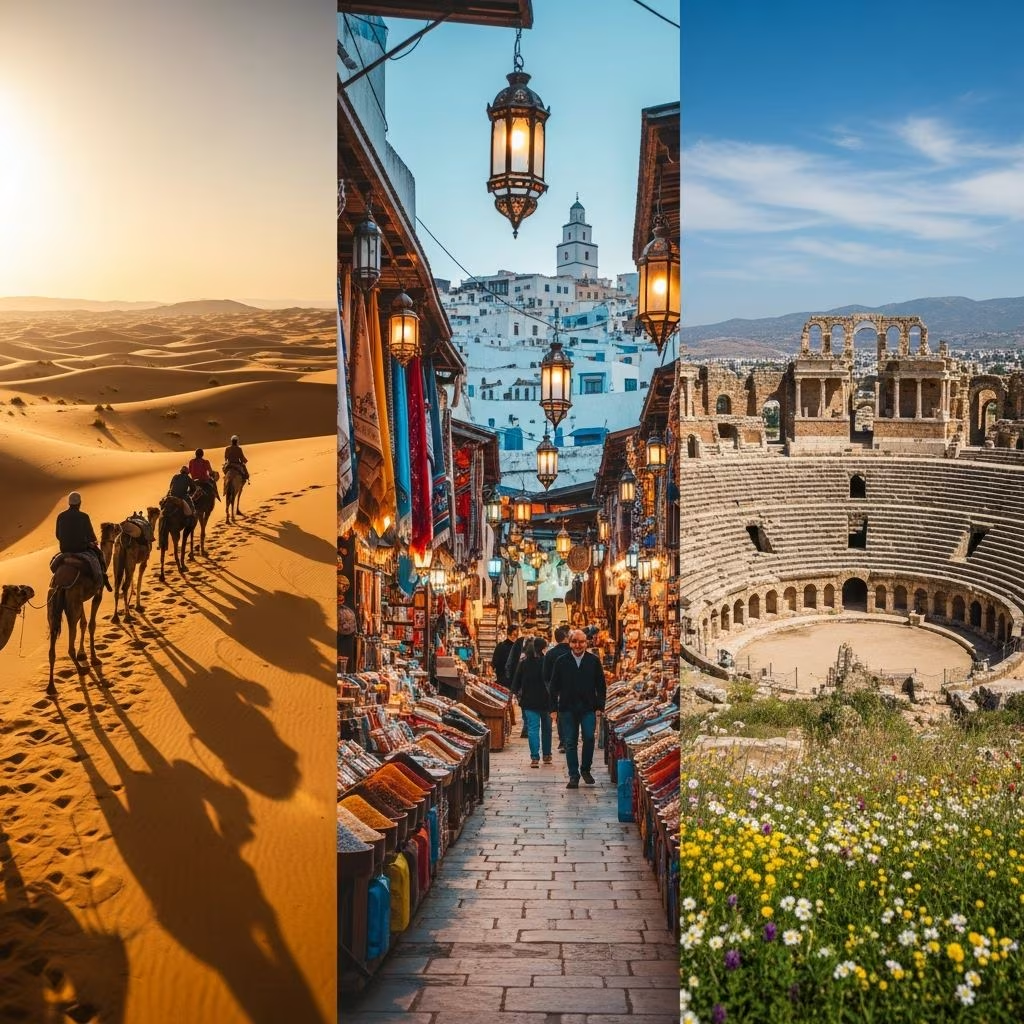
Tunisia boasts some of the world’s best-preserved Roman sites, rivaling Italy’s treasures. El Jem Amphitheatre, a UNESCO-listed wonder from the 3rd century, once seated 35,000 spectators for gladiatorial contests. Its intact arches, underground tunnels, and arena podium evoke the grandeur of Rome’s Colosseum, set against a quiet modern town once thriving on olive oil trade.
Dougga, another UNESCO gem, presents a sprawling complex of temples, theaters, baths, and homes amid olive groves. This remarkably complete city from the 2nd-3rd centuries AD showcases daily Roman life, with mosaics still in place. Carthage, near Tunis, reveals Phoenician and Roman layers through hilltop ruins like the Antonine Baths—among the largest ever built—overlooking the sea. Bulla Regia uniquely features underground houses with preserved mosaics, offering a cool retreat from the sun.
Tunisia’s medinas are living labyrinths of souks, mosques, and palaces. Tunis Medina, a UNESCO site, pulses with over 700 monuments amid stalls selling spices, jewelry, and leather goods. Key paths like Rue Dar El Jeld lead to vibrant cafes and the grand Ez-Zitouna Mosque, where non-Muslims can admire the courtyard. Avenue Habib Bourguiba in the New Town contrasts with colonial-era buildings like the Municipal Theatre and Clock Tower, ideal for people-watching over coffee.
Kairouan, Islam’s fourth holiest city, centers on the Great Mosque (Sidi Uqba), built in 670 AD with a vast courtyard and towering minaret. The medina’s souks brim with carpets and silverware, while the Mausoleum of Sidi Sahbi adds spiritual depth.
| Medina | Highlights | UNESCO Status |
|---|---|---|
| Tunis | Souks, Ez-Zitouna Mosque, palaces | Yes |
| Kairouan | Great Mosque, carpet souks | Yes |
| Sousse | Ribat fortress, archaeological museum | Yes |
Southern Tunisia transforms into a dramatic landscape of palm-fringed oases and rugged canyons. Tamerza Oasis, the largest mountain variety, features a canyon, abandoned Berber village, and swimmable waterfall amid stark cliffs. Nearby Chebika offers springs and salt lakes, perfect for hiking and cooling dips.
Kesra, Tunisia’s highest inhabited village at 1,100 meters, immerses visitors in Berber culture with wooden-stick houses, fig orchards, and olive groves. Cobblestone streets echo with daily life as locals tend crops and children play. Nefta and Douz provide gateway vibes to the Sahara, with Douz’s pale dunes ideal for camel treks and quad biking toward Mos Espa—famous Star Wars filming sets.
Tunisia’s 1,300 km coastline delivers golden sands and clear waters. Hammamet Beach stretches endlessly, backed by resorts and a lively medina. Port El Kantaoui marina combines yacht-spotting with golf courses. Djerba Island enchants with Park Djerba Explore, featuring a crocodile farm, heritage museum, and flamingo lagoons. Sousse’s sandy shores pair with its UNESCO medina and ribat fortress.
Beyond ruins, Tunisia thrives on sensory delights. Bardo Museum in Tunis houses the globe’s finest Roman mosaics and sculptures in a 19th-century palace. Traditional hammams provide exfoliating scrubs and steam rituals. Culinary highlights include seaside seafood, couscous with lamb, harissa-spiced dishes, and sweets like makroudh.
Testour’s Andalusian architecture and 16th-century charm offer a quieter cultural stop. For adventure, kayak in Al Huwariyah’s coves or cycle Carthage ruins.
Tunisia suits year-round visits, with spring (April-June) and fall ideal for mild weather. Fly into Tunis-Carthage Airport; louages (shared taxis) connect efficiently. Respect mosque dress codes and bargaining norms in souks. Safety has improved post-2015, but check advisories. Budget: $50-100/day covers mid-range stays, meals, sites.
| Region | Best Time | Top Transport |
|---|---|---|
| North (Tunis, Carthage) | Oct-Apr | Train/Louage |
| Center (El Jem, Kairouan) | Mar-May, Sep-Nov | Bus |
| South (Oases, Djerba) | Oct-Mar | 4×4 Tours |
Yes, popular sites are secure with police presence; avoid border areas and follow local advice.
Louages for affordability, trains for north-center routes, or rent a car for flexibility.
Many nationalities get 90-day visa-free entry; check official requirements.
Try brik (fried pastry), lablabi (chickpea soup), and fresh seafood.
Often yes, for courtyards; cover shoulders/knees and remove shoes.
