

 Travel Essentials
 Travel Essentials

Explore Uppsala's medieval landmarks, royal mounds, botanical wonders, and vibrant student scene. From cathedrals to castles, uncover the best activities in this northern gem.
 Travel Essentials
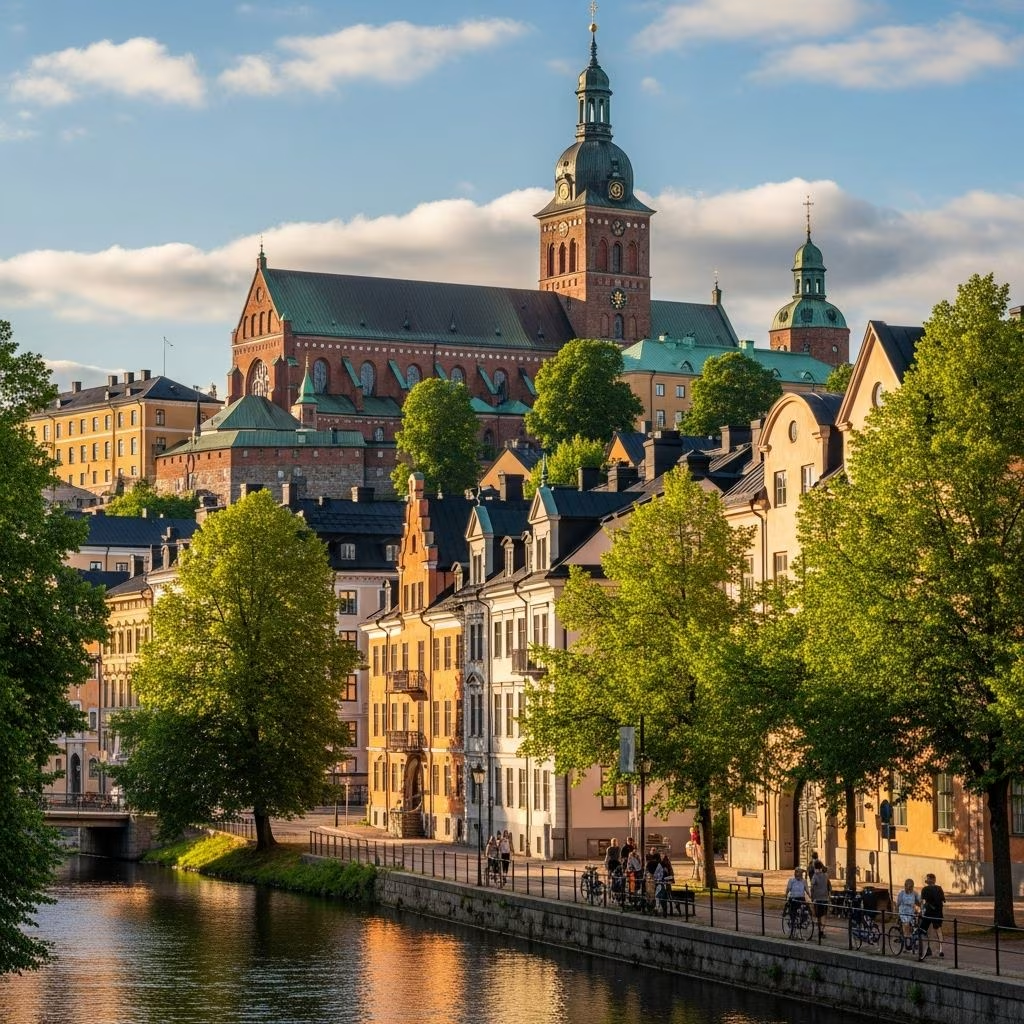
Uppsala, Sweden’s fourth-largest city, pulses with a unique mix of intellectual energy, ancient history, and serene landscapes. Home to the nation’s oldest university, founded in 1477, this riverside destination draws visitors eager to trace Viking roots, marvel at Gothic architecture, and wander lush gardens curated by world-renowned botanists. Nestled along the Fyris River, Uppsala offers year-round appeal, from snowy winter explorations to vibrant summer festivals. Whether you’re a history buff, nature enthusiast, or culture seeker, this guide highlights the premier experiences that define a perfect visit.
Begin your Uppsala adventure in the heart of the historic center, where cobblestone streets whisper tales of centuries past. Start at **Stora Torget**, the lively main square bustling with cafes and markets. From here, venture northwest along Svartbäcksgatan, pausing at the statue of Anders Celsius, the innovative scientist who refined the temperature scale we use today. Uppsala University’s legacy shines through figures like him and Carl Linnaeus, whose contributions to science echo across the city.
Cross the picturesque **Järnbron**, a 19th-century iron suspension bridge—one of Europe’s earliest—spanning the Fyris River. Nearby, **University Park** on Sankt Olofsgatan features ancient **Uppland runestones**, Viking-era memorials standing like silent guardians. The standout is the 11th-century ‘Woman’s Stone’ (No. 489), etched with intricate runes telling stories of loss and legacy.
This 2-3 hour loop captures Uppsala’s medieval essence, blending architecture, science, and royalty. Wear comfortable shoes for the hilly terrain.
Five kilometers north of the city center lies **Gamla Uppsala (Old Uppsala)**, Sweden’s most sacred prehistoric site and a window into pagan Scandinavia. This UNESCO-nominated area features three massive **royal burial mounds** from the 6th century, believed to entomb legendary kings Aun, Adils, and Egil. Rising up to 20 meters high, these grass-covered giants dominate the landscape, evoking the power of early Nordic rulers.
The adjacent **Gamla Uppsala Museum** brings the era alive with interactive exhibits on Viking rituals, artifacts, and temple reconstructions. A pagan temple once stood here, site of bloody sacrifices described in medieval chronicles. Explore the site’s trails, including the flat-topped **Tingshögen** mound, a former assembly site.
Next door, the 12th-century **Gamla Uppsala Church** incorporates an 11th-century runestone with a carved dragon into its south wall—a testament to architectural reuse. For an authentic touch, visit **Odinsborg**, a Viking-themed cafe atop Tingshögen serving mead in horns since the 1890s.
| Site Feature | Historical Significance | Best Time to Visit |
|---|---|---|
| Royal Mounds | 6th-century burials of mythic kings | Summer for events |
| Museum | Viking artifacts and replicas | Year-round, guided tours |
| Church & Runestone | Christian transition from paganism | Spring for fewer crowds |
Bus 110 from central Uppsala reaches the site in 15 minutes. Allocate 2-3 hours.
Extend your historical journey at **Disagården**, an open-air museum adjacent to Gamla Uppsala showcasing 19th-century Uppland farm life. This preserved village of 26 timber buildings—barns, homes, and workshops—feels frozen in time, especially under winter snow. Wander interiors furnished with period tools, textiles, and utensils, imagining daily chores of crofters.
Summer brings free daily guided tours at 1pm (adult-focused) and 2pm (kids’), plus midsommar celebrations on its open-air stage with folk dances and maypole rituals. It’s a vivid contrast to Gamla Uppsala’s ancient mystique, highlighting Sweden’s agricultural evolution.
Housed in Uppsala University’s oldest building (1620s), **Gustavianum** is a cabinet of wonders blending science, history, and eccentricity. Marvel at Egyptian mummies, Viking helmets, preserved sea creatures, and Celsius’ original thermometer prototype. The star is the **anatomical theater**, a 17th-century wooden tiered arena where public dissections drew crowds until 1766.
Exhibits span global cultures: Nordic runes, ethnographic artifacts, and even a ‘auger mummy’ from the university’s early research. Organized thematically, it’s family-friendly yet intellectually stimulating. Open year-round; entry around 100 SEK.
Carl Linnaeus, father of modern taxonomy, shaped Uppsala’s green spaces. Visit **Linnéträdgården (Linnaeus Garden)**, Sweden’s oldest botanical garden (1655), redesigned by Linnaeus in the 1700s with systematic plant beds demonstrating his classification system. Adjacent **Linnaeum Orangery** houses exotic species in baroque halls.
The expansive **Botanical Garden** nearby features rockeries, alpine sections, and a 200-year-old orangery. For deeper immersion, day-trip to **Linnaeus’ Hammarby** (15km away), his summer estate with the world’s largest collection of his plants. These sites bloom vibrantly May-September.
For adrenaline atop history, join **Go Adventure’s** guided roof climb at Uppsala Slott. Harness up in the castle’s grand interiors, then ascend to the rooftop for unobstructed 360-degree views over spires, river, and countryside. Safety-focused with helmets and briefings, it’s suitable for ages 8+.
The castle grounds house the free **Uppsala Art Museum** (book special exhibits) and **Castle Museum** on royal history. Stroll the orchards and gardens below.
Uppsala’s student vibe shines outdoors. Rent bikes from Ski Total Cykel for city pedaling, or kayak the gentle **Fyris River**—rentals available centrally. Other pursuits: mini-golf, bowling, or trails to **Biotopia** castle ruins with castle playgrounds.
Join Uppsala’s 40,000 students at brewpubs like those near the university, sampling craft beers amid lively chatter. Cafes serve **fika**—coffee with cinnamon buns. Vegan spots and meaderies add variety.
Summer: Midsommar at Disagården, garden blooms.
Winter: Snowy mounds, cathedral lights.
Events: Culture Night, Linnaeus festivals.
Getting Around: Walk center; buses for outskirts. Uppsala is 40min train from Stockholm. Stay in hostels or boutique hotels near Domkyrka.
Summer (June-August) for festivals and gardens; shoulder seasons for fewer crowds.
Yes—museums have kids’ tours, river activities, and playgrounds like Biotopia.
Bus 110 from Dragarbrunnsgatan, 15min ride.
Linnéträdgården has entry fees May-Sep; Botanical Garden free areas.
Yes, south tower for views (seasonal).
