

 Travel Essentials
 Travel Essentials

Explore Warsaw's remarkable blend of reconstructed heritage, cutting-edge architecture, world-class museums, and thriving cultural scene in Poland's captivating capital city.
 Travel Essentials
Warsaw stands as one of Europe’s most compelling urban centers, a city that has risen from devastation to become a beacon of cultural innovation and architectural ambition. The Polish capital tells a story of extraordinary resilience, where centuries of history intersect with contemporary creativity. Today’s visitors encounter a metropolis that honors its complex past while embracing a dynamic future, making it an essential destination for travelers seeking authentic experiences beyond conventional European tourism.
Understanding Warsaw requires grasping its extraordinary historical journey. Eighty years ago, the city lay in ruins following World War II’s devastation. Rather than surrendering to this tragedy, Varsovians—the city’s residents—rebuilt their capital with determination and ingenuity. What emerged from this reconstruction represents one of humanity’s most impressive acts of urban restoration. The Communist era that followed presented additional challenges, yet the city’s inhabitants maintained their cultural spirit and resilience.
This transformative history has created a unique character. Contemporary Warsaw blends authentic reconstruction with modern innovation, creating neighborhoods that feel both deeply rooted in tradition and forward-thinking in ambition. Recent generations have injected youthful energy and creative entrepreneurship into the urban fabric, establishing Warsaw as a cultural trendsetter across Europe. The result is a metropolitan area distinguished by ambitious architectural projects, innovative cultural spaces, and a thriving gastronomic scene.
With its sprawling 518 square kilometers and 18 distinct districts, Warsaw presents both opportunities and logistical considerations for visitors. The city’s geographic scale means that comprehensive exploration on foot alone remains impractical. However, the central districts compensate with exceptional walkability and pedestrian-friendly infrastructure.
The recommended walking route begins in the downtown Śródmieście district, starting from the atmospheric Old Town. From this historic nucleus, routes extend past the iconic Palace of Culture and Science into Mokotów, a sophisticated neighborhood celebrated for its abundant green spaces and flourishing café culture. Popular thoroughfares including Nowy Świat and Krakowskie Przedmieście transform into pedestrian zones during weekends and holidays, creating ideal conditions for leisurely urban exploration.
The nearly four-mile Vistulan Boulevards along the Vistula River represent an exceptional urban amenity. Walking this riverside route at sunset offers spectacular views and access to numerous river clubs and cafés. The newly constructed pedestrian bridge connecting the Świętokrzyski and Śląsko-Dąbrowski bridges provides an excellent vantage point for photographing the skyline or simply experiencing the city’s riverside character.
While walking covers central areas effectively, navigating Warsaw’s full extent requires utilizing the city’s sophisticated transportation network. The system comprises trams, buses, subway services, and even a complimentary ferry operation, making comprehensive urban navigation straightforward for visitors.
A distinctive transportation experience involves riding the historical trams that operate weekends along the tram 36 line. These vintage cars, dating from the 1940s and 1950s, traverse historically significant routes passing by Filtrowa Street, the Warsaw Rising Museum, and Wola Cemetery. Note that these heritage trams require ticket purchases through the mobiWAWA app or at station machines, and they feature stairs rather than wheelchair accessibility.
Warsaw’s cultural landscape encompasses institutions ranging from unconventional museums to world-class galleries. These venues provide multilayered insights into Polish history, contemporary creativity, and artistic expression.
The Muzeum Neonów represents one of Warsaw’s most distinctive cultural attractions, appealing simultaneously to history enthusiasts and Instagram-focused visitors. The museum preserves neon signage that once symbolized Soviet dominance, transforming these artifacts into expressions of human creativity and resilience. The collection includes oversized sculptural elements like a mermaid figure and curved rainbow installations. Detailed bilingual explanations in Polish and English contextualize the historical significance of these vintage neon pieces. The museum’s expanded location within the Palace of Culture and Science provides significantly more exhibition space, allowing visitors to engage with an extensive historical collection documenting this unique visual culture.
The Museum of Warsaw operates multiple branches throughout the city, each examining different historical periods and aspects of urban life. The main location in Old Town Square houses thousands of carefully curated objects that illuminate various dimensions of Warsaw’s complex history. Visitors should actively seek out the museum’s satellite locations dispersed across Old Town. The Praga Museum of Warsaw, situated on the eastern Vistula riverbank, offers additional perspectives on the city’s development and cultural heritage.
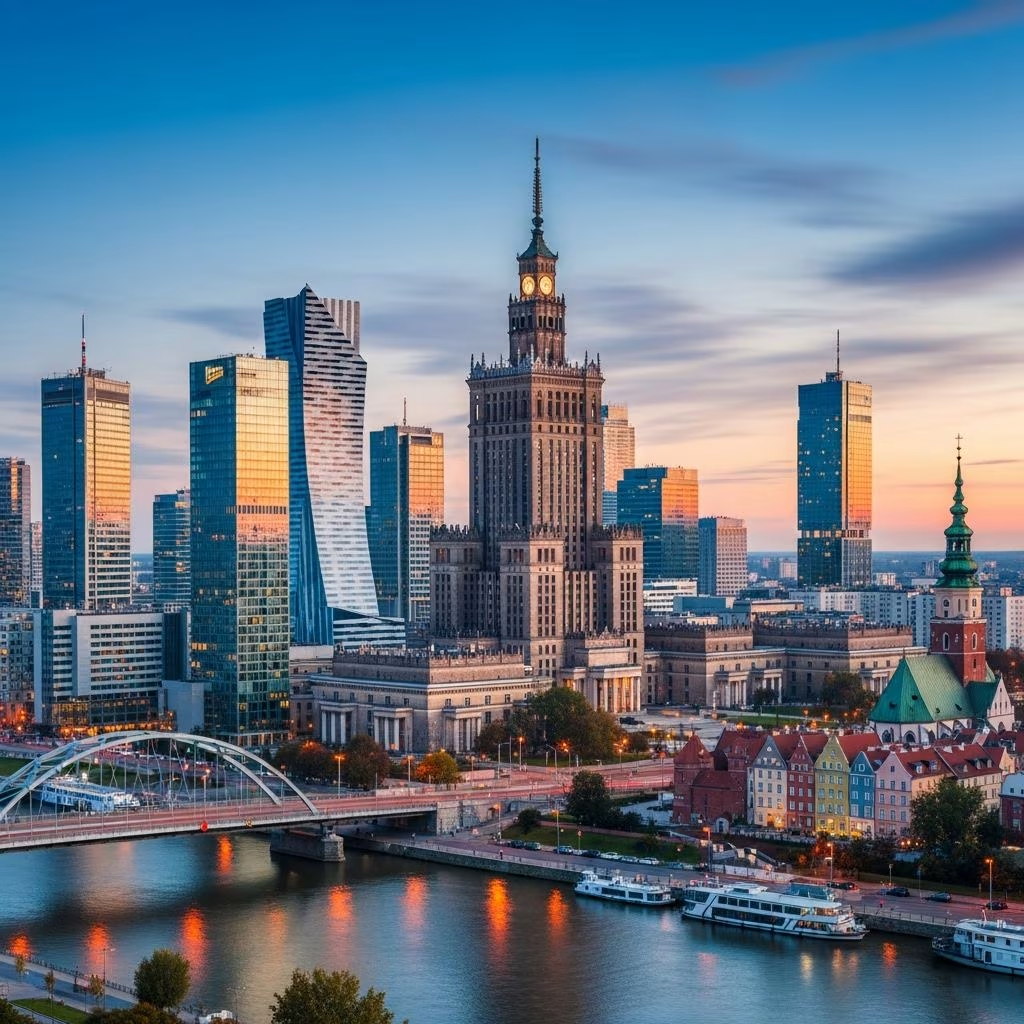
Warsaw’s skyline reflects centuries of architectural evolution and recent ambitious development projects. Several vantage points provide panoramic perspectives of this dynamic urban environment.
The Varso Tower exemplifies Warsaw’s contemporary aspirations, standing as the European Union’s tallest residential and office tower at 330 meters. An integrated hotel now operates within the structure, while observation decks positioned at 205 and 230 meters above ground will offer unparalleled cityscape views. These decks will enable visitors to appreciate both the surrounding contemporary urban fabric and the distinctive retro-futuristic architecture of the Palace of Culture and Science, a Communist-era landmark positioned thirty stories above street level with its own observation terrace.
The E. Wedel factory on Praga’s eastern riverbank offers rooftop access providing spectacular skyline photography opportunities. The University of Warsaw Library features impressive rooftop gardens accessible to visitors, combining horticultural beauty with architectural views. For those seeking lower-altitude perspectives, St. Anna’s Church’s Bell Tower provides Old Town vistas particularly striking at sunset, though accessibility is limited to stairs only.
Warsaw surprises visitors with its abundant green infrastructure, offering substantial respite from urban intensity. Multiple parks provide recreational opportunities and historical context.
The Saxon Garden, inaugurated as Warsaw’s first public park in 1727, features baroque statuary and a mock Grecian temple structure. Łazienki Park encompasses a former royal hunting ground transformed into a multifunctional recreational area containing palaces, ornamental lakes, amphitheaters, and museums. These spaces attract residents and visitors seeking both passive recreation and cultural engagement.
Elektrownia Powiśle exemplifies Warsaw’s commitment to creative urban transformation. Following decommissioning as a power generation facility in the early 2000s, this complex has evolved into a premier shopping destination showcasing Polish brand merchandise. The preserved industrial architecture featuring exposed brickwork and steel elements pays homage to the building’s functional heritage. Beyond retail experiences, the venue hosts vintage fairs, yoga classes, and open-air cinema screenings, functioning as a multipurpose cultural space. The vibrant neon-lit food hall offers international and domestic dining options within this repurposed industrial environment.
Warsaw’s gastronomic landscape encompasses traditional Polish establishments and innovative contemporary venues. Milk bars—casual, cafeteria-style restaurants serving traditional Polish comfort food—remain essential cultural institutions despite their unpretentious presentation. These establishments provide affordable, authentic cuisine reflecting generations of Polish culinary tradition.
The city’s weekend markets represent significant cultural and culinary events. The Breakfast Market and Nocny Market operate exclusively on Saturdays and Sundays, offering artisanal foods, local products, and vibrant social atmosphere. The Polish Vodka Museum, located within Koneser complex in Praga, provides interactive experiences exploring vodka’s cultural significance. Museum tours conclude with tastings of three distinct vodka varieties accompanied by traditional Polish toasts.
Warsaw’s Old Town presents an unusual historical phenomenon. Designated as a UNESCO World Heritage Site despite its post-war reconstruction, this compact district originated as a 13th-century settlement organized around a fortified castle. The devastating World War II destruction necessitated meticulous reconstruction completed during the 1960s. Rather than representing deception, this reconstruction demonstrates extraordinary historical fidelity and craftsmanship. Visitors encounter a meticulously detailed facsimile of the 17th and 18th-century urban environment, balancing authentic historical recreation with contemporary usability.
While acknowledging its reconstructed nature enhances rather than diminishes visitor appreciation. The Old Town Market Square features one of the city’s famous mermaid sculptures and provides quintessential Warsaw photography opportunities. The Heritage Interpretation Centre, operated as a specialized Museum of Warsaw branch, documents the specific reconstruction history and restoration methodology employed to recreate this urban district.
Late spring and early summer months present optimal conditions for Warsaw exploration, combining favorable weather with extensive cultural programming. Weekend food markets, the Orange Warsaw Festival occurring in late May and early June, and the Warsaw Old Town Jazz Festival—featuring Saturday performances throughout July and August in Old Town Square—concentrate during this season. Seasonal events like Christmas Markets provide alternative winter visitation incentives for specific cultural experiences.
A weekend visit provides sufficient time to experience Warsaw’s historical foundations, cultural institutions, and basic urban atmosphere. However, expanded three to four-day itineraries enable deeper engagement with street art districts on Praga’s eastern riverbank and day excursions to Kampinos National Park situated northwest of the city. This extended timeframe allows methodical museum exploration and unhurried neighborhood discovery.
Warsaw offers reasonable value compared to Western European capitals. Accommodation, dining, and attractions cost less than comparable offerings in Paris, London, or Berlin. Milk bars and street food provide particularly budget-friendly options.
Central districts feature substantial pedestrian infrastructure, though some historic attractions like church bell towers remain stairs-only. The modern transportation system and newer cultural venues generally accommodate wheelchair users, though some heritage trams do not.
English proficiency among younger residents in central Warsaw is substantial, particularly in tourism-oriented establishments. Learning basic Polish phrases enhances interactions with local communities. Museum displays typically feature Polish and English signage.
Weekend food markets including the Breakfast Market and Nocny Market operate exclusively on Saturdays and Sundays. The Christmas Markets function during winter months, while the Orange Warsaw Festival and Old Town Jazz Festival concentrate in late May through August.
Warsaw represents far more than a historical curiosity or architecture museum. This vibrant capital city embodies human resilience, creative adaptation, and contemporary cultural vitality. The convergence of meticulously preserved history, innovative architectural projects, sophisticated cultural institutions, and thriving urban life creates an compelling destination for diverse traveler interests. Whether exploring reconstructed medieval streets, experiencing cutting-edge artistic spaces, enjoying riverside sunset walks, or engaging with authentic Polish hospitality, Warsaw delivers multifaceted urban experiences. The city’s transformation from wartime devastation to contemporary European prominence continues inspiring visitors seeking destinations with genuine character, authentic cultural depth, and forward-looking ambition.
