

 Travel Essentials
 Travel Essentials

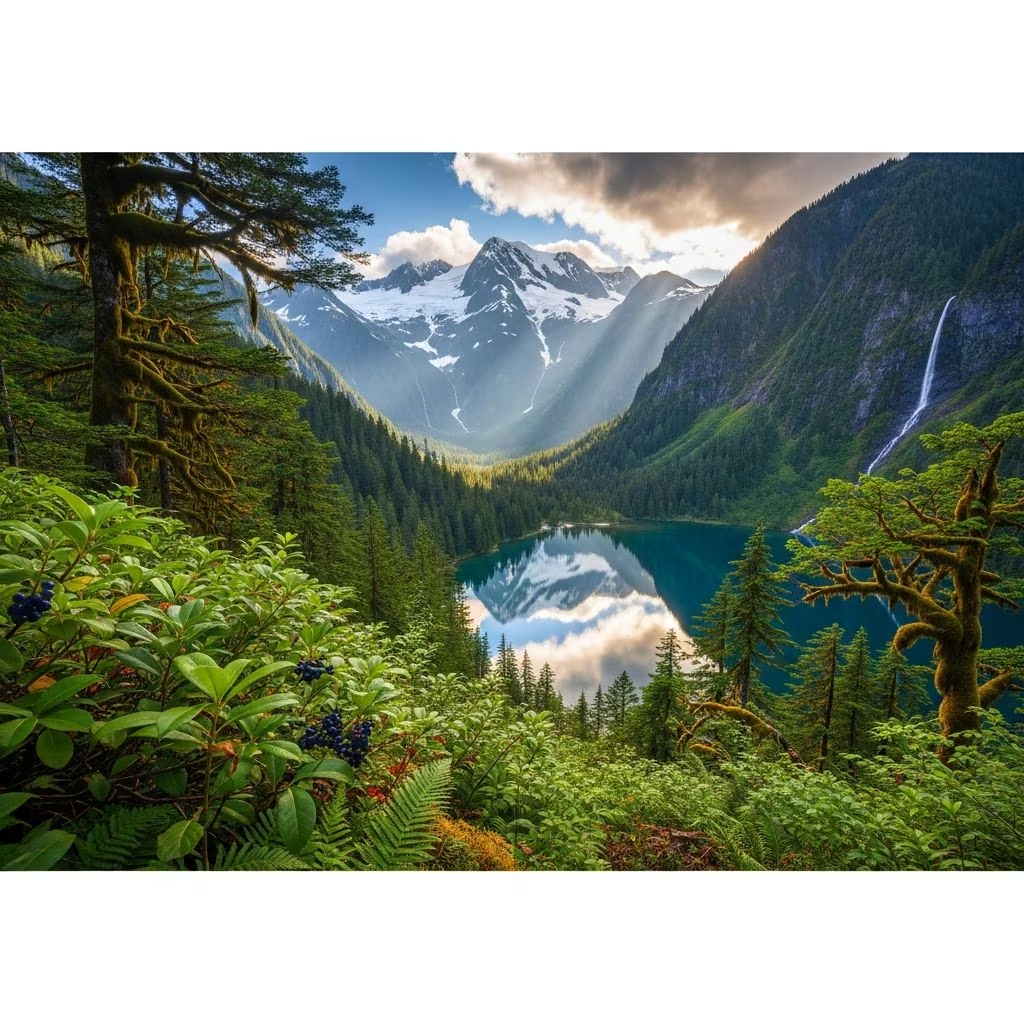
Explore Washington State's natural wonders and urban attractions, from Olympic National Park to Seattle's iconic landmarks and hidden gems.
 Travel Essentials
Washington State stands as one of America’s most geographically diverse destinations, offering visitors an exceptional blend of natural wonders, cosmopolitan urban centers, and outdoor recreation opportunities. Whether you’re seeking alpine peaks, temperate rainforests, volcanic landscapes, or vibrant cultural experiences, this Pacific Northwest gem delivers unforgettable adventures for travelers of all interests and abilities.
Few destinations in North America rival the ecological diversity found within Olympic National Park’s boundaries. Spanning nearly one million acres across the Olympic Peninsula, this UNESCO World Heritage Site encompasses three distinct ecosystems that showcase the region’s remarkable biodiversity and geological significance.
The park’s mountainous core features Hurricane Ridge, an elevated panoramic viewpoint that provides sweeping vistas across the Cascade Range and Puget Sound. Visitors can access this scenic area via a scenic drive that winds through alpine terrain, revealing wildflower meadows and mountain vistas at every turn. The ridge particularly captivates visitors during late spring and early summer when seasonal blooms paint the landscape in vibrant hues.
The western portion of Olympic National Park protects one of the largest intact temperate rainforests in North America—the Hoh Rainforest. This moss-draped wonderland features towering Sitka spruce and western hemlock trees draped in lush vegetation, creating an otherworldly atmosphere that transports visitors to primordial landscapes. Accessible via scenic hiking trails, the rainforest environment showcases the region’s extraordinary precipitation levels and the ecological richness that results from this unique climate.
Along the park’s western boundary lies a rugged Pacific coastline characterized by sea stacks, tide pools teeming with marine life, and pristine beaches accessible only by foot. This remote coastal zone provides a stark contrast to the forested interior and represents one of the last truly wild coastlines in the continental United States.
Multiple cascades throughout the park reward hikers with accessible yet stunning natural features. Sol Duc Falls presents a moderate 1.6-mile hiking experience through old-growth forest, culminating at a powerful waterfall plunging into a narrow gorge surrounded by verdant vegetation. Marymere Falls offers a more leisurely 1.8-mile route near Lake Crescent, making it ideal for families and those seeking a gentler exploration of the park’s aquatic attractions.
Mount Rainier, the Pacific Northwest’s most iconic peak, dominates the regional landscape at 14,411 feet above sea level. This stratovolcano forms the centerpiece of Mount Rainier National Park, which attracts mountaineers, hikers, and nature enthusiasts from across the globe seeking to experience one of America’s most geologically significant mountains.
While the technical ascent to Rainier’s glaciated summit challenges only experienced climbers, the park’s Paradise area provides accessible alpine experiences for general visitors. Located at approximately 5,400 feet, Paradise serves as the park’s primary hub and features the historic Paradise Lodge, originally constructed in 1916. This rustic facility marks the trailhead for numerous routes through spectacular alpine meadow systems.
The renowned Skyline Trail extends approximately five miles through endless alpine blooms during peak summer conditions, leading to Panorama Point at 7,100 feet. This route showcases Mount Rainier’s stunning wildflower displays while offering progressive elevation gains and panoramic perspectives across the Cascade Range. The trail’s moderate difficulty makes it accessible to reasonably fit hikers while providing mountain-immersion experiences comparable to more demanding alpine pursuits.
Seattle’s reputation as a progressive, culturally vibrant city extends far beyond its famous coffee culture. The city’s neighborhoods each possess distinct personalities and attractions that reflect the diverse interests and values of its residents and visitors.
The Space Needle stands as Seattle’s most recognizable symbol, its observation deck providing 360-degree perspectives of the city, Elliott Bay, the Olympic Mountains, and Mount Rainier on clear days. Adjacent to this 1962 World’s Fair structure lies Chihuly Garden and Glass, a museum dedicated to the revolutionary glass art of renowned Pacific Northwest artist Dale Chihuly. The museum’s combination of indoor galleries and outdoor installations creates an immersive experience exploring contemporary glass sculpture.
Pike Place Market has operated continuously since 1907, functioning as both a working farmers market and a vibrant cultural institution. The market’s multiple levels house produce vendors, fishmongers, artisan crafts, and food establishments, creating a sensory-rich environment that captures Seattle’s commitment to local commerce and sustainability.
Seattle’s diverse neighborhoods reward exploratory wandering. Fremont, situated north of the downtown core, embraces quirky artistic sensibilities evident in public art installations like the famous Fremont Troll sculpture lurking beneath a bridge. The neighborhood’s vintage shops, independent bookstores, and eclectic restaurants attract creative individuals and curious visitors alike.
Kerry Park on Queen Anne Hill provides the city’s most photographed vantage point, offering compositions featuring the Space Needle, Elliott Bay, and Mount Rainier in a single frame. Gasworks Park, situated on a converted industrial site along the Ship Canal, transforms a former gasification facility into a dynamic recreational space offering panoramic city views from its elevated terrain.
Post Alley’s celebrated Gum Wall represents Seattle’s embrace of quirky urban traditions, where visitors contribute their used chewing gum to create an ever-evolving public art installation. Ballard, a historic maritime neighborhood, has evolved into a destination for dining, craft beverages, and Nordic cultural heritage, reflecting the area’s Scandinavian settlement history.
Mount St. Helens’ catastrophic 1980 eruption fundamentally reshaped understanding of volcanic processes and ecosystem recovery in North American geology. The volcano’s subsequent four decades of renewal provide remarkable evidence of nature’s resilience and adaptive capacity following environmental disturbance.
Johnston Ridge Observatory, located approximately nine miles from the volcano’s crater, offers interpretive displays and viewing platforms that contextualize the eruption’s magnitude and aftermath. From this vantage point, visitors observe the lava dome that has grown within the volcano’s crater since the initial blast, the blast zone showing various stages of ecological regeneration, and educational exhibits explaining the geological mechanisms that produced this dramatic event.
The Ptarmigan Trail on the volcano’s south side presents a strenuous but non-technical hiking opportunity for visitors seeking closer engagement with the mountain’s recovery. This challenging route requires significant elevation gain and endurance but rewards hikers with unobstructed perspectives of Mount St. Helens’ distinctive landscape and crater formation.
Ape Caves, situated on the mountain’s south flank, represent among the longest lava tubes in North America. These underground formations, created by flowing lava thousands of years ago, offer visitors unique spelunking adventures through subterranean passages that reveal geological processes operating beneath the landscape’s surface.
Washington’s attractions extend well beyond its most famous destinations, offering remarkable experiences throughout the state’s varied geography.
Snoqualmie Falls, located east of Seattle, drops 270 feet into a narrow gorge, creating one of the Pacific Northwest’s most visually striking waterfalls. The site combines natural grandeur with cultural significance, holding spiritual importance for regional Native American tribes. Easy trails and viewing platforms make the falls accessible to visitors of varying mobility levels.
Deception Pass State Park spans Whidbey and Fidalgo Islands, featuring dramatic coastal scenery where the park’s namesake pass creates distinctive whirlpools and swirling waters as two separate bodies of water converge. The iconic Deception Pass Bridge provides vehicle and pedestrian access across this dramatic waterway, offering panoramic coastal perspectives and photography opportunities. Visitors can explore the bridge from various angles, including boat tours that navigate directly beneath its span for unique photographic compositions.
The Columbia River Gorge’s Washington-side portion offers spectacular hiking opportunities and geological displays that rival its Oregon counterpart while typically attracting fewer crowds. This 80-mile canyon stretches along the Washington-Oregon border, creating a dramatic landscape carved by ancient geological forces.
Dog Mountain presents a challenging springtime hike where hillsides explode with bright yellow balsamroot wildflowers and purple lupine blooms, creating photogenic compositions. The steep ascent rewards effort with panoramic gorge perspectives from the summit. Beacon Rock State Park features an 848-foot monolith accessible via a switchback trail that negotiates the rock’s vertical face, providing hikers with unique perspectives and technical challenges. Falls Creek Falls offers a moss-forest hike leading to a dramatic two-tiered waterfall that cascades through pristine wilderness.
Eastern Washington’s Walla Walla region produces exceptional wines while preserving agricultural traditions and rural character. Wine-tasting experiences allow visitors to sample regional varietals while learning about the distinctive terroir that characterizes this semi-arid environment. Beyond vineyards, the region offers culinary experiences, artisan shopping, and agricultural tourism opportunities reflecting the area’s harvest cycles and farming heritage.
Spokane’s Downtown Riverfront Park emerged from the transformative 1974 World’s Fair, establishing itself as the region’s premier cultural and recreational destination. The SkyRide Gondola provides thrilling perspectives over Spokane Falls, while the hand-carved Looff Carousel represents a preserved National Historic Landmark offering nostalgic experiences since its 1909 installation. The 100-acre park situated along the Spokane River creates an urban oasis emphasizing public recreation and cultural programming.
| Season | Characteristics | Recommended Activities |
|---|---|---|
| Spring (March-May) | Mild temperatures, wildflower blooms, increasing daylight | Waterfall hikes, lower elevation trails, wildflower photography |
| Summer (June-August) | Warm, dry weather, alpine access, peak tourism | High-altitude hiking, mountain climbing, camping |
| Fall (September-November) | Cooling temperatures, foliage colors, fewer crowds | Scenic drives, moderate hiking, photography |
| Winter (December-February) | Cold, precipitation, snow at higher elevations | Skiing, snowshoeing, indoor attractions |
Washington State’s size and geographic diversity reward flexible itineraries allowing spontaneous exploration and extended engagement with particular regions. First-time visitors often benefit from combining Seattle’s urban attractions with one or two natural destinations, while return visitors can explore less-traversed areas and pursue more specialized outdoor activities.
The state’s extensive trail systems, national parks, and diverse ecosystems support adventures throughout the calendar year, though summer remains the optimal season for high-altitude exploration and water-based activities. Regional tourism organizations provide comprehensive trip planning resources, accommodation options ranging from rustic backcountry camping to luxury hotels, and interpretive programming that contextualizes the landscape’s geological, biological, and cultural significance.
Washington State ultimately delivers experiences transcending typical vacation paradigms, instead offering transformative encounters with landscapes of exceptional beauty and complexity. Whether seeking solitude in ancient forests, mountaineering challenges on dramatic peaks, urban cultural immersion, or geological education through volcanic landscapes, this remarkable destination provides the geographic and cultural infrastructure supporting these diverse pursuits.
