

 Travel Essentials
 Travel Essentials

Navigate Xi'an's rich heritage, from the legendary Terracotta Army to evening lantern-lit streets. Essential tips for maximizing a weekend getaway.
 Travel Essentials
Xi’an holds a distinctive place in China’s identity as the former imperial capital that shaped dynasties and launched one of history’s most pivotal trade networks. For travelers seeking to understand Chinese civilization beyond surface-level tourism, a weekend spent wandering this city’s atmospheric neighborhoods and standing before ancient monuments offers transformative experiences. The challenge lies not in finding things to do, but in deciding which experiences take priority within a compressed timeframe.
The city served as home to multiple Chinese dynasties, with the Tang Dynasty leaving the most visible cultural imprint on contemporary Xi’an. Walking through certain districts transports visitors to different historical periods, where architectural remnants and street layouts preserve centuries-old patterns. This historical consciousness permeates the city’s identity, influencing everything from restaurant menus to evening entertainment venues.
The legendary Silk Road initiated from Xi’an, connecting China to distant markets across Central Asia and beyond. This historical fact remains deeply embedded in local pride and continues to attract scholars, merchants, and curious travelers to the city.
Xi’an experiences four distinct seasons, each offering different advantages for visitors. Spring and autumn months provide the most comfortable conditions for exploration, with mild temperatures and lower humidity levels. These seasons allow for extended outdoor activities without the physical strain that summer heat or winter cold might impose.
The city becomes particularly enchanting during evening hours when artificial lighting transforms historic structures. Street musicians perform traditional compositions on corners, and lanterns illuminate ancient neighborhoods, creating an atmosphere that feels simultaneously ancient and vibrant. Timing weekend activities to capture these evening atmospheres significantly enhances the overall experience.
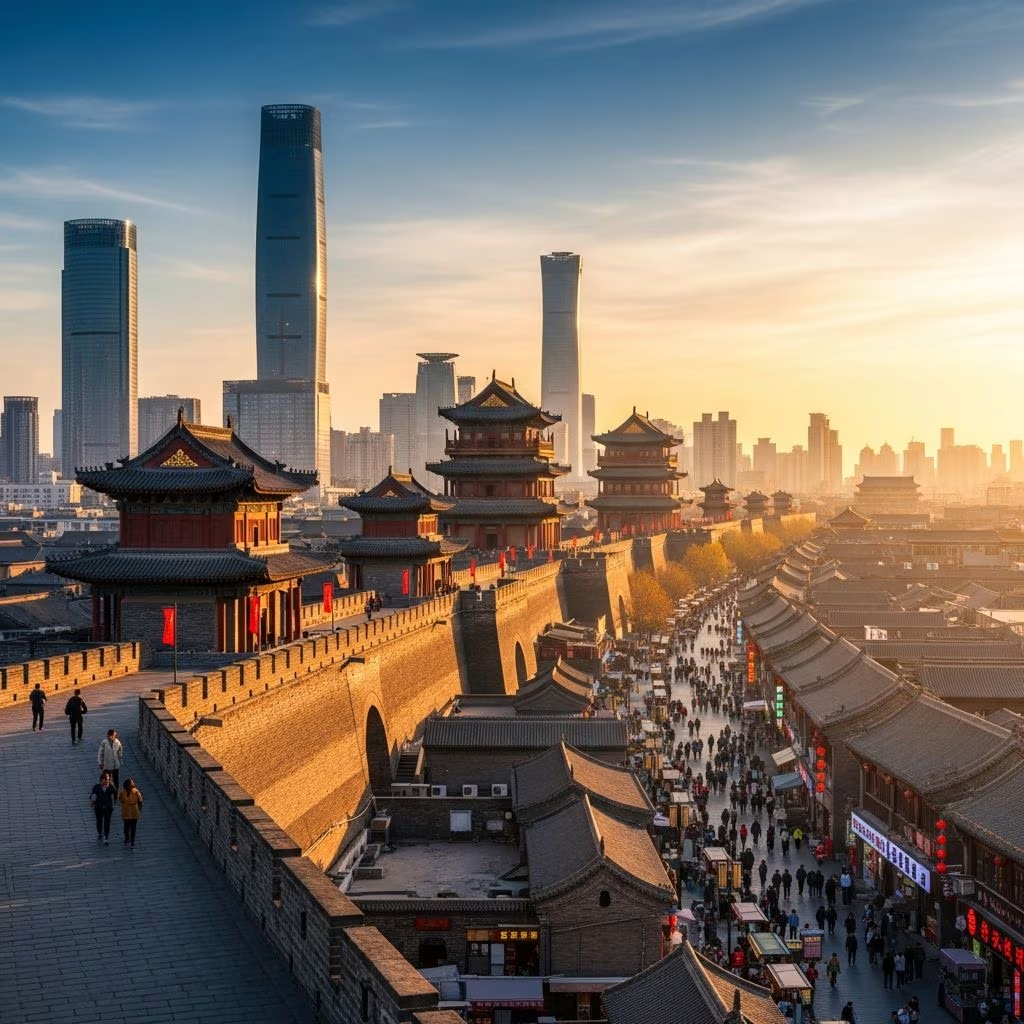
The fortified wall encircling Xi’an’s center represents one of China’s most impressive preserved defensive structures, constructed during the Ming Dynasty in the 14th century. The 13.4-kilometer circumference accommodates multiple exploration methods, allowing visitors to choose based on available time and physical preference.
Renting bicycles through mobile applications provides independent exploration with flexibility. The cycling experience differs substantially depending on timing: afternoon visits encounter significant crowds and intense sun exposure, while early morning rides offer solitude and comfortable conditions. Wearing protective clothing becomes essential given the strong ultraviolet exposure at this altitude.
Cycling the complete circuit can become visually repetitive, making a half-wall experience equally satisfying while reducing physical exertion. Sunset provides the aesthetically optimal cycling window, combining manageable temperatures with dramatic lighting conditions for photography.
Walking the wall accommodates those preferring slower pace and better photo opportunities. Guided tours through specialized tourism platforms provide historical context about the wall’s construction, defensive mechanisms, and evolution across centuries. These tours often include less-visited sections that independent exploration might overlook.
This UNESCO-recognized site represents one of archaeology’s most significant discoveries, revealing an entire military force preserved in fired clay for millennia. The Terracotta Army Museum receives enormous visitor volumes, particularly during peak tourist seasons, requiring strategic planning to maximize the experience.
The museum complex extends beyond the famous warrior formations, including detailed exhibits about excavation techniques, restoration processes, and the historical context of Emperor Qin’s reign. Interactive displays explain the craftsmanship involved in creating thousands of individualized figures. Visiting during morning hours reduces crowding and allows unhurried examination of the intricate details distinguishing each warrior.
Many local restaurants near the museum feature menus celebrating the Terracotta Army’s discovery narrative, including establishments where visitors can meet descendants of the farmers who initially unearthed these sculptures. These dining experiences combine culinary appreciation with personal historical testimony.
Xi’an’s Muslim Quarter represents far more than a tourist commercial area—it functions as a living cultural neighborhood where generations of Muslim Chinese families maintain traditional food preparation methods and vendor practices. The street food scene captures centuries of culinary evolution, with recipes passed through family lineages spanning generations.
The main shopping street caters primarily to tourist preferences, featuring predictable vendor arrangements and standardized pricing. Local residents typically navigate the smaller parallel streets for authentic dining experiences and daily shopping. Exploring these secondary streets reveals family-operated restaurants where English menus remain absent and genuine neighborhood atmosphere persists.
The Great Mosque within this quarter functions as both religious center and architectural landmark, combining Islamic design principles with traditional Chinese structural elements. Standard operating hours run 8:00 AM to 5:30 PM, with entrance fees varying by season—¥25 during peak periods and ¥15 during off-peak months.
This ancient Buddhist temple stands as Xi’an’s most recognized landmark, visible across significant distances within the city. The surrounding plaza and gardens comprise one of the city’s most developed public spaces, hosting evening fountain performances synchronized with musical accompaniment and elaborate lighting effects.
The pagoda interior contains Buddhist relics displayed across multiple levels, though the architectural ascent rather than collection contents draws most visitors. Climbing to the summit rewards explorers with panoramic perspectives of temple grounds and surrounding cityscape. The interior ascent costs ¥30, with steep narrow staircases requiring physical preparation.
Evening visits concentrate enormous crowds around fountain showtimes, creating challenging photography conditions and limiting movement within plaza areas. Arriving ten minutes before scheduled performances ensures viewing position, though this timing decision represents a trade-off against solitude and unhurried observation.
Beyond major tourist sites, Xi’an contains numerous old neighborhoods preserving architectural heritage and community character. The zone between the Bell Tower and Great Mosque includes narrow lanes lined with traditional residences, small temples, and historic doorways featuring intricate stonework. The western section beyond the South Gate similarly retains authentic district qualities despite modernization pressures.
Pedestrian-focused exploration of these areas reveals architectural details—decorative roof tiles, carved door frames, courtyard arrangements—that illustrate residential design philosophy across centuries. Narrow alleyways occasionally open into small temples or historical sites unmarked by tourist signage, creating opportunities for serendipitous discoveries.
These adjacent structures historically served time-keeping functions within the imperial city—bells announced morning hours while drums marked evening transitions. Today they represent preserved architectural traditions surrounded by contemporary urban development. Small museums within each tower explain their historical significance while maintaining traditional interior designs.
The bustling streets surrounding these towers create stark contrasts between ancient structures and modern commercial activity, offering insights into how historical preservation coexists with urban development.
Xi’an’s metro system provides efficient connectivity between major attractions while reducing traffic congestion encountered in taxis or private vehicles. The metro network continues expanding, though not all attractions maintain direct metro access. Bicycle rentals through mobile applications supplement metro travel for specific neighborhoods and activities.
Lodging near the Bell Tower or within old neighborhoods places visitors within walking distance of multiple attractions while maintaining connection to authentic neighborhood life. Hotels in these central areas facilitate evening exploration while reducing transportation time to major sites.
A typical weekend visit optimizes site-seeing through strategic sequencing. Day one prioritizes the Terracotta Army morning visit, followed by afternoon city wall cycling and evening Muslim Quarter dining. Day two focuses on pagoda complex exploration, historical neighborhood walking tours, and evening fountain performances.
| Day | Morning Activity | Afternoon Activity | Evening Experience |
|---|---|---|---|
| Day 1 | Terracotta Army Museum | City Wall cycling | Muslim Quarter dining and neighborhood walking |
| Day 2 | Historical neighborhood exploration | Giant Wild Goose Pagoda visit | Fountain show and Datang Everbright City entertainment district |
Spring (April-May) and autumn (September-October) offer optimal conditions with mild temperatures and comfortable humidity levels for outdoor exploration.
Two full days accommodate primary attractions and provide initial cultural immersion. Additional time allows deeper exploration of neighborhoods, mountain excursions, or leisurely pace without rushing between sites.
Cycling approximately half the wall provides more enjoyable experience than the complete circuit, which can become visually repetitive while requiring substantial physical endurance.
English proficiency varies significantly. Major hotels and tourist-oriented restaurants maintain English capabilities, while neighborhood establishments may lack English-speaking staff, requiring translation applications or basic Mandarin phrases.
The Terracotta Army and pagoda complex benefit from advance booking through official channels to reduce wait times, particularly during peak season months.
A weekend in Xi’an transcends typical tourism through opportunities to physically stand within spaces shaped by millenia of history. The experience combines archaeological significance with living cultural practices, blending ancient monuments with contemporary neighborhood vitality. Strategic planning allows visitors to experience major attractions while maintaining flexibility for spontaneous discoveries that often become trip highlights.
