

 Travel Essentials
 Travel Essentials

Explore the ideal periods from late summer to spring for viewing the Northern Lights in Norway, with tips on locations, weather factors, and viewing techniques for an unforgettable experience.
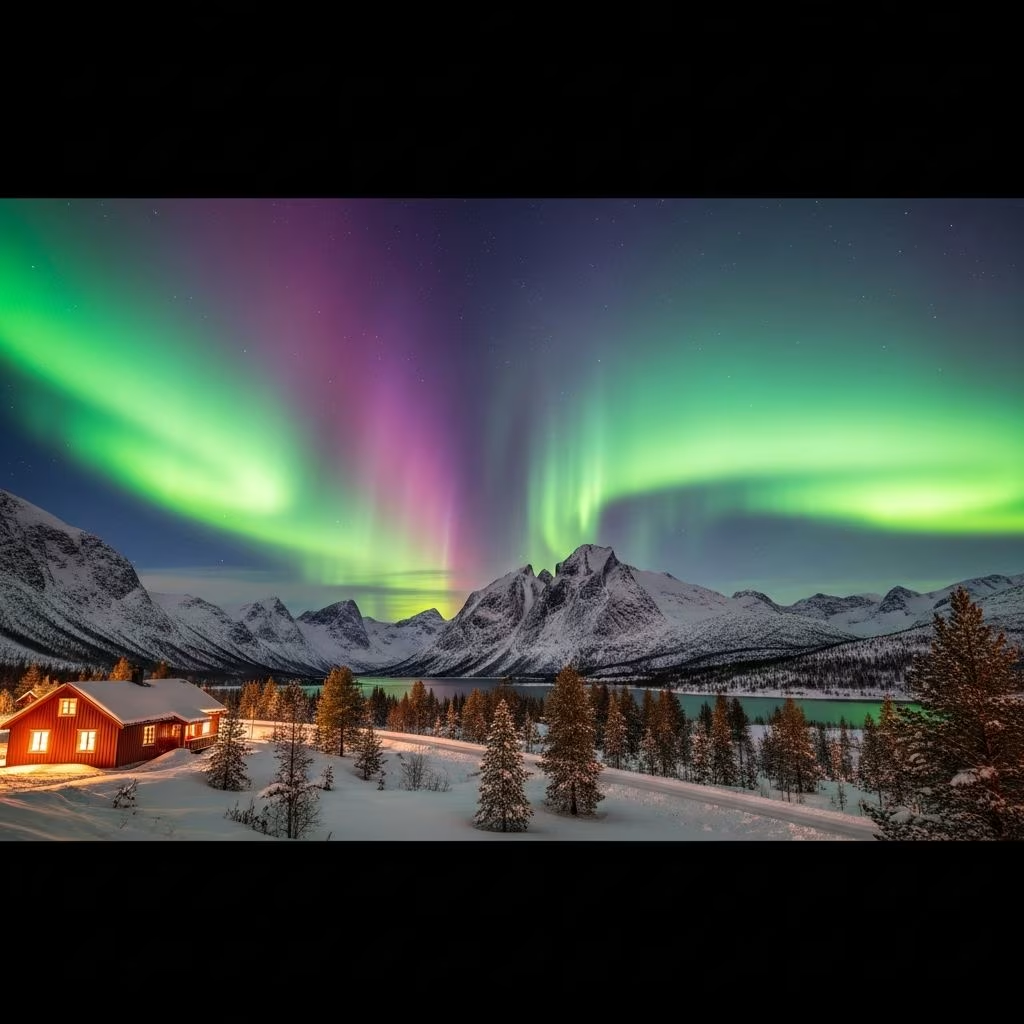 Travel Essentials
The Northern Lights, or aurora borealis, create one of nature’s most spectacular shows, dancing across Norway’s dark winter skies. Visible primarily in the northern regions above the Arctic Circle, these luminous displays result from charged solar particles colliding with Earth’s atmosphere. Optimal viewing occurs during extended dark periods from late August to mid-April, when clear skies and minimal light pollution align with heightened solar activity.
The aurora borealis emerges when the sun ejects charged particles during solar storms, which travel to Earth and interact with atmospheric gases. Oxygen produces green hues, while nitrogen yields purples and reds. Solar cycles, peaking every 11 years, influence intensity; experts predict a solar maximum around 2025, enhancing visibility for several years thereafter. Norway’s position under the auroral oval—roughly 60-75°N latitude—positions it ideally for frequent displays.
While auroras can appear year-round, darkness is essential, ruling out summer’s midnight sun. The viewing window spans late August to early April, with variations in reliability based on month-specific conditions.
Peak activity often hits between 11 PM and 2 AM, when solar wind peaks. Monitor forecasts via apps like Aurora Forecast for real-time solar data and cloud cover.
Northern Norway dominates due to its latitude and weather patterns. Prioritize spots with low light pollution and high clear-sky probabilities.
| Location | Why Ideal | Best Months | Avg. Clear Nights |
|---|---|---|---|
| Tromsø | Abundant tours, urban access with nearby dark sites | Sep-Apr | 40-50% |
| Alta | Inland clarity, “Town of Northern Lights,” dry climate | Dec-Mar | 50-60% |
| Lyngen Alps | Dramatic fjords and mountains for reflections | Oct-Mar | 45% |
| Finnmark Plateau | Remote, vast openness, minimal clouds | Nov-Feb | 55% |
| Lofoten Islands | Stunning scenery, but cloudier; chase inland | Sep-Mar | 35% |
| Svalbard | Arctic extreme, 24h darkness Oct-Feb | Oct-Mar | 40% |
Inland areas like Alta and Finnmark outperform coastal spots with frequent clouds. Cities require venturing 20-30 km out.
Clear, cold, dry nights are crucial; clouds obscure 50-70% of potential views. Winter’s stability aids this, while autumn/spring equinoxes correlate with geomagnetic storms. Track Kp index (0-9 scale; 4+ for strong auroras) and cloud forecasts. Solar maximum in 2025 promises elevated activity through 2028. Avoid full moons, which dim fainter displays.
Success demands preparation beyond timing.
Detailed calendar for planning:
Capture the spectacle with tripods, wide-angle lenses (14-24mm), and manual focus to infinity. Foreground elements like fjords elevate shots. Viewers: Dress warmly, use red flashlights to preserve night vision, and scan horizons—auroras start faint.
Norway’s north offers husky sledding, snowshoeing, whale watching, and Sami cultural experiences. Winter days, though short, suit indoor saunas or museums; spring extends outdoor pursuits.
No, midnight sun prevents darkness from May-July.
Great for accessibility, but Alta/Finnmark edge out for clarity.
Post-peak but still strong; expect vivid displays.
Geomagnetic activity measure; 5+ yields widespread auroras.
Not always, but recommended for remote access and forecasts.
Book 3-7 nights in shoulder months (Sep/Oct/Mar/Apr) for value/crowds. Flights to Tromsø/Alta; trains/buses connect. Budget $150-300/night for aurora lodges, $100+ for tours. Visas unnecessary for many; check Visit Norway for updates.
