

 Travel Essentials
 Travel Essentials

Discover when, where, and how to experience the breathtaking tulip fields of the Netherlands during peak bloom season with practical travel guidance.
 Travel Essentials
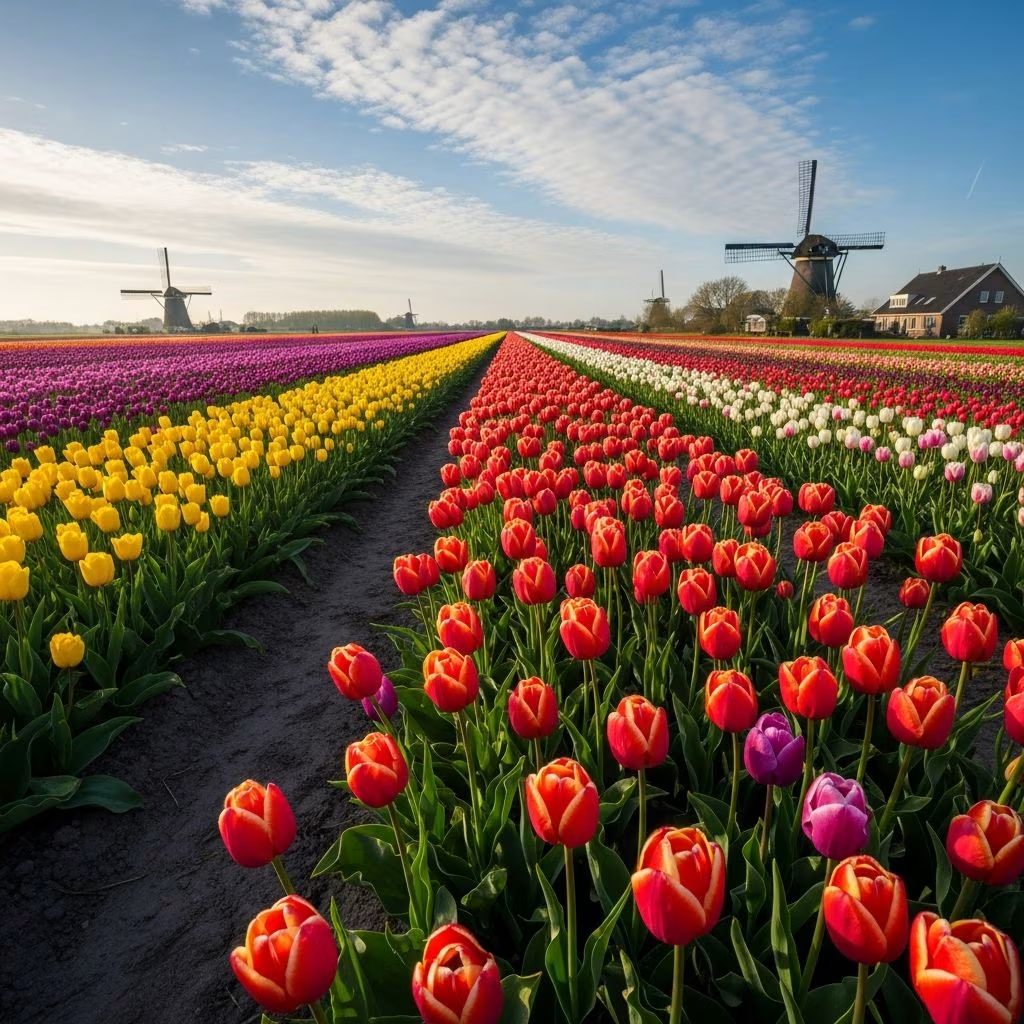
The Netherlands transforms into a luminous canvas of color each spring when millions of tulips burst into bloom across sprawling agricultural fields. For travelers seeking this natural spectacle, understanding the rhythms of the Dutch flower season is essential to witnessing the flowers at their most spectacular. This guide consolidates crucial information about timing, locations, and strategies for maximizing your tulip season experience.
The flower season in the Netherlands spans several weeks, but each bloom cycle follows a predictable pattern influenced by temperature and weather conditions. April represents the ideal month for observing tulips in peak condition, though the broader floral calendar extends from late March through early May. The progression begins with early spring bloomers and culminates in the spectacular tulip displays that draw visitors worldwide.
Within April itself, timing becomes increasingly precise for optimal viewing. The period from April 10 to April 25 offers the safest window for guaranteed tulip sightings. This timeframe positions travelers to witness the flowers at their fullest bloom before agricultural harvesting begins. However, weather variability means that cold springs may delay peaks into late April, while unusually warm autumns can advance blooms into early April.
The flower calendar follows a sequential pattern as temperatures gradually warm:
The Netherlands contains several distinct regions celebrated for their bulb cultivation and floral displays. Understanding each location’s characteristics helps travelers select destinations aligned with their preferences and mobility considerations.
The Bollenstreek region, encompassing areas like Flevoland, Overijssel, and North Holland, represents the geographical epicenter of Dutch bulb agriculture. This sprawling area contains the majority of the country’s tulip fields, offering visitors diverse viewing options from cycling routes to organized tours. The landscape’s flat terrain and extensive bicycle infrastructure make independent exploration accessible even for casual cyclists.
Keukenhof stands as the Netherlands’ most internationally recognized tulip destination, operating exclusively from mid-March through mid-May each year. The gardens showcase over 7 million tulips planted across nearly 80 acres of meticulously designed landscapes. Unlike outdoor field viewing, Keukenhof provides a curated horticultural experience where visitors can observe hundreds of tulip varieties in controlled garden settings.
The gardening team prepares the entire venue annually, hand-planting bulbs throughout the year to ensure continuous floral displays. The sheer scale generates significant visitor traffic, with over a million people visiting during the season. Early morning hours (arriving around 8 a.m.) offer notably quieter conditions and superior photography opportunities compared to midday visits when tour groups peak.
Several complementary destinations enhance tulip season exploration. The Flower Parade traverses the bulb region, showcasing elaborately decorated floats and mobile displays. Regional towns including Leiden and Haarlem provide convenient bases for field exploration, offering cultural attractions and accommodations suitable for extended stays. The village of Lisse, home to Keukenhof, functions as an alternative base camp for travelers prioritizing proximity to the gardens.
The Netherlands’ renowned cycling culture extends directly to tulip season tourism. Dedicated bicycle paths encircle Keukenhof and connect nearby flower fields, enabling independent exploration without vehicle rental. This approach provides flexibility for timing and route selection while supporting the region’s transportation infrastructure.
Train connectivity between major cities and the bulb region offers alternatives for travelers without cycling experience. Multiple train lines service Haarlem, Leiden, and Lisse, providing efficient daily access to flower fields and gardens. This option proves particularly valuable for visitors with mobility limitations or those preferring guided transportation.
Natural lighting dramatically influences photography outcomes in flower fields. Early morning hours and the final two hours before sunset deliver superior light quality and minimize harsh shadows that plague midday photography. These golden hour windows also coincide with reduced tourist congestion, as peak visitor traffic arrives during midday hours when tour bus schedules concentrate.
Windy conditions, common during midday periods, create photographic challenges by moving flowers and creating atmospheric haze. Morning and evening sessions typically feature calmer conditions and improved visibility for capturing details and field-wide landscapes. Strategic timing thus serves dual purposes: enhancing photographic outcomes while improving the overall experience quality through reduced crowding.
The gardens’ scale and popularity demand intentional planning rather than spontaneous visits. Advance ticket booking proves essential during peak weeks, with morning time slots offering superior experiences. Arriving at the gates’ opening minimizes queue times and maximizes hours for unrushed exploration across the extensive grounds.
Many visitors underestimate the time required for thorough garden exploration. While partial viewing fits into 3-4 hour windows, comprehensive experiences benefit from two-day visits enabling gradual discovery. Specific garden features like the windmill observation point provide elevated perspectives of surrounding fields, justifying extended time allocation.
Spring weather in the Netherlands remains unpredictable despite seasonal generalizations. Layered clothing accommodates temperature fluctuations between morning chill and afternoon warmth. Waterproof outerwear addresses frequent precipitation, while comfortable walking shoes suit extended field exploration and garden traversal.
Early morning field visits often require warm jackets and long pants despite April calendar dates. Afternoon sessions may permit lighter clothing as temperatures rise. Sunscreen, despite cooler temperatures, remains important given extended outdoor exposure and reflection from light-colored tulip petals.
The Tulip Festival Amsterdam operates annually from March through May, providing structured programming and coordinated events throughout the season. For 2026, festival activities run from March 19 through May 10, aligning with natural tulip bloom cycles. The festival framework facilitates visitor planning by consolidating information and coordinating access to multiple garden venues.
Additional attractions like the Tulip Experience and Tulip Barn operate during festival periods, providing supplementary venues beyond Keukenhof. The Flower Parade represents another festival highlight, moving through the bulb region and demonstrating horticultural artistry in mobile form.
Base location selection influences both convenience and experience quality. Lisse’s proximity to Keukenhof minimizes travel time for multiple garden visits. Conversely, Noordwijk and nearby coastal communities offer parade viewing advantages and access to secondary attractions like the night parade in Noordwijkerhout. Historical cities like Leiden provide cultural experiences complementing flower viewing, enriching overall trip value.
Weather’s influence on bloom timing creates uncertainty when scheduling trips months in advance. Cold springs consistently delay peak blooms toward late April, while mild winters enable earlier displays. Resources tracking historical bloom data provide probability assessments, though absolute certainty remains impossible until days before peak conditions.
Agricultural harvesting schedules further complicate timing, as farmers prune flowers to direct energy toward bulb development when bloom peaks. Visiting precisely during the peak window requires balancing natural bloom cycles with human agricultural practices both seeking the same plants’ developmental stages.
Popular destinations experience significant crowding during peak weeks. Keukenhof regularly accommodates over a million annual visitors compressed into the 8-week season. Strategic timing during morning hours and weekday visits reduces crowding compared to afternoon and weekend periods. Alternative locations like less-publicized flower fields provide parallel experiences with substantially reduced visitor pressure.
April 10-25 offers statistically superior outcomes for guaranteed tulip sightings. Within this window, mid-April (around April 15-20) typically presents the optimal bloom stage, though annual weather variations create year-specific variability.
Commercially grown tulips appear in flower shops from December through May. However, outdoor field blooms—the signature Netherlands tulip experience—occur only during the March-May window, with April delivering optimal visual results.
Many visitors combine Keukenhof’s curated displays with cycling through surrounding agricultural fields. This approach samples both horticultural curation and agricultural-scale beauty within manageable timeframes. Multi-day stays enable leisurely exploration of both venue types.
Keukenhof’s gardeners work continuously throughout the year, hand-planting over 7 million bulbs to ensure perpetual floral displays. This year-round preparation enables the synchronized bloom timing visitors experience during the 8-week operating season.
Successful tulip season visits require coordinating multiple variables: temporal precision for peak blooms, geographic location selection, accommodation positioning, and flexibility accommodating weather-driven variability. Mid-April represents the statistically optimal window, providing the highest probability of vibrant field displays and cooperative weather conditions. Early morning visits to any destination maximize both experience quality and photographic success while minimizing crowding.The investment in advance planning—from booking Keukenhof tickets to securing accommodation—yields disproportionate returns in experience quality and stress reduction. The Netherlands’ spring transformation into a floral landscape represents a temporally limited natural phenomenon worthy of intentional travel planning and thoughtful execution.
