

 Travel Essentials
 Travel Essentials

Explore seasonal variations in Botswana to plan your ideal safari adventure, from dry season wildlife concentration to wet season bird migrations.
 Travel Essentials
Botswana stands as one of Africa’s premier safari destinations, offering diverse ecosystems and abundant wildlife throughout the year. However, understanding the seasonal variations significantly influences the quality of your experience, accommodation availability, and overall travel costs. Each season presents distinct advantages and challenges, making it essential to align your visit with your personal priorities and expectations.
Botswana experiences two primary seasons that dramatically shape visitor experiences and wildlife behavior. The country’s geographic location in southern Africa creates distinct climatic patterns that affect temperature, precipitation, vegetation density, and animal activity throughout the year. These seasonal shifts have evolved over millennia, creating natural rhythms that guide migration patterns and predator-prey interactions across the landscape.
The dry season spans from May through October, corresponding to the Southern Hemisphere’s winter months. During this period, temperatures range from warm daytime highs to surprisingly cold nights, with some mornings registering near freezing in inland areas. The wet season extends from November through April, bringing intense afternoon thunderstorms, lush vegetation growth, and dramatically increased humidity levels.
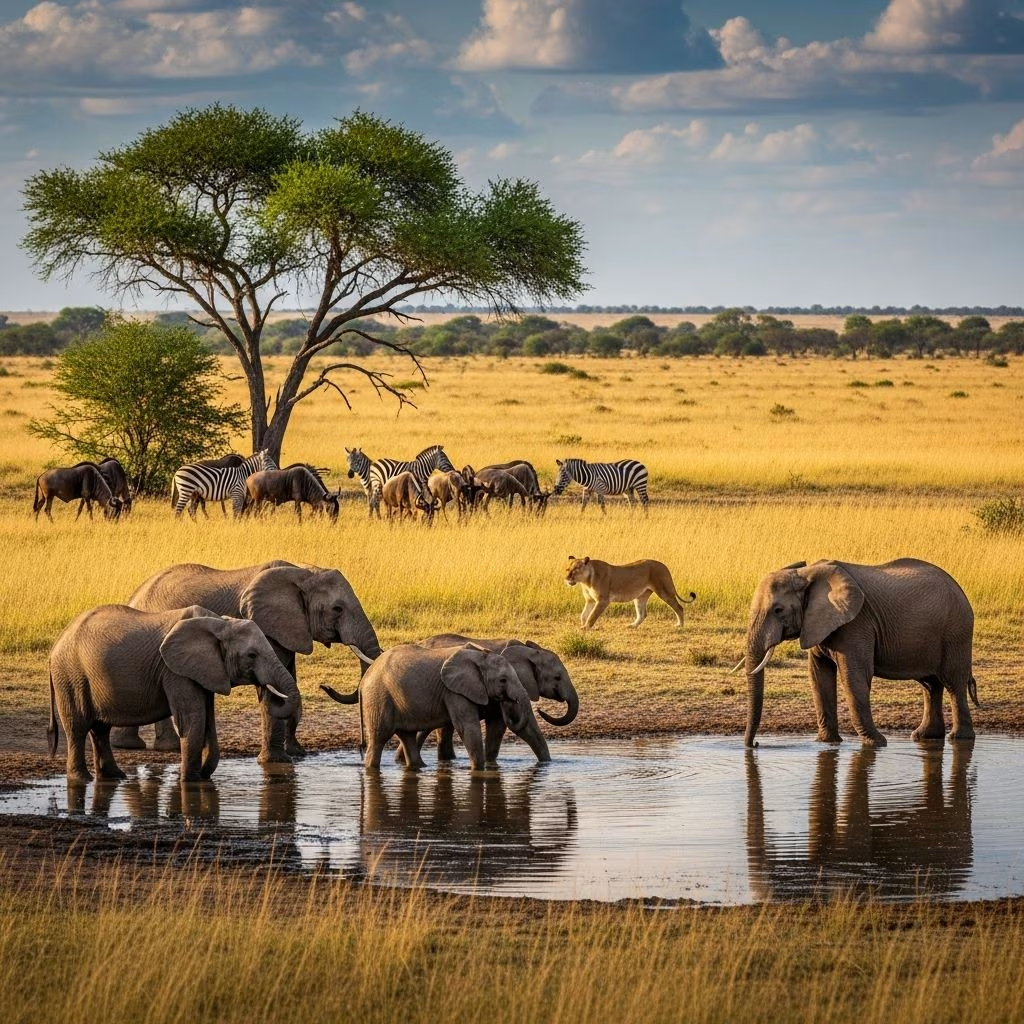
From May to October, Botswana transforms into an ideal safari destination for wildlife enthusiasts. As water sources become scarce across the landscape, animals congregate around remaining waterholes and river systems, creating exceptional viewing opportunities. This concentration effect dramatically increases the likelihood of witnessing predator-prey interactions and observing large herds within manageable distances.
August through October represents the absolute peak of the dry season, offering crystalline skies, minimal rainfall, and outstanding visibility across vast plains. The foliage dies back considerably, removing natural obstacles that typically obscure wildlife in vegetation-dense environments. Elephants gather in massive numbers along river corridors, while other species become increasingly visible as they traverse toward remaining water sources.
Daytime temperatures during the dry season range comfortably between 68°F and 86°F, providing pleasant conditions for extended game drives. However, visitors frequently underestimate the dramatic temperature fluctuations between day and night. Mornings and evenings can become unexpectedly cold, particularly during June, July, and August, when temperatures occasionally drop near freezing in some regions. Layered clothing becomes essential, allowing travelers to adjust to temperature variations throughout each day.
The dry season concentrates wildlife at shrinking water sources, fundamentally altering viewing dynamics. This natural aggregation creates unparalleled opportunities for photographers and wildlife enthusiasts to observe multiple species within single game drive sessions. Predator-prey interactions become more dramatic and frequent as competition intensifies for diminishing resources.
Mosquito populations plummet during the dry season, significantly reducing disease transmission risks and improving overall comfort. Combined with clear skies and excellent visibility, these factors make extended time outdoors more enjoyable and medically safer.
The dry season’s appeal inevitably attracts substantial visitor numbers, particularly during July through September. Popular lodges and camps often book months in advance, and accommodation prices reach their annual peaks. Despite increased tourism, most parks maintain a sense of spaciousness, with the exception of heavily visited areas like Chobe’s riverfront.
The wet season, extending from November through April, often receives limited consideration from traditional safari planners. However, this period offers distinctive advantages for specific interests and preferences. Afternoon thunderstorms typically develop in late afternoon hours, providing natural cooling while leaving substantial morning hours for wildlife observation and outdoor activities.
The wet season triggers remarkable ecological transformations across Botswana’s landscapes. Vegetation explodes with new growth, transforming arid regions into emerald environments. This lush backdrop provides exceptional photography opportunities and creates unique aesthetic experiences compared to the barren dry season vistas.
Migratory bird species arrive in abundance during wet season months, offering unparalleled birdwatching opportunities for ornithology enthusiasts. The combination of water availability and food resources attracts species not regularly observed during other seasons, dramatically expanding the potential bird species list for any visit.
While animal concentration decreases during the wet season due to widespread water availability, wildlife dispersion enables observation of different behavioral patterns. Newborn antelope and other species appear during this period, with predators maintaining close proximity to these vulnerable young. This dynamic creates fascinating predator-prey relationships distinct from dry season observations.
The wet season offers opportunities to witness natural behaviors that dry season crowds sometimes disrupt. Wildlife encounters feel less orchestrated, providing more authentic glimpses into animal daily routines and interactions.
Wet season travel provides significant financial benefits, with accommodation rates typically declining 30-50% compared to peak season prices. Lodges maintain lower occupancy levels, offering more personalized service and greater flexibility in scheduling activities. December through February presents the wettest conditions, occasionally rendering some park roads challenging or temporarily impassable.
| Month | Season | Temperature Range | Rainfall | Wildlife Viewing | Best For |
|---|---|---|---|---|---|
| January | Wet | Hot (86°F+) | High | Fair | Budget travelers, birdwatchers |
| February | Wet | Hot (86°F+) | High | Fair | Extreme budget, low crowds |
| March | Wet | Hot (86°F+) | Moderate | Fair | Transition period exploration |
| April | Dry Season Begins | Warm (75-95°F) | Low | Good | Value seekers, moderate crowds |
| May | Dry | Warm (75-95°F) | Minimal | Excellent | Serious wildlife enthusiasts |
| June | Dry | Cool (75-95°F nights near freezing) | Minimal | Excellent | Photographers, cold-tolerant travelers |
| July | Dry | Cool (75-95°F nights near freezing) | Minimal | Excellent | Peak safari seekers, families |
| August | Dry | Warm (75-95°F) | Minimal | Outstanding | First-time visitors, elephant enthusiasts |
| September | Dry | Warm (75-95°F) | Minimal | Excellent | Prime safari season |
| October | Dry | Hot (approaching 86°F+) | Minimal | Good | Transition period, early peak |
| November | Wet | Hot (86°F+) | Moderate | Good | Bird enthusiasts, value seekers |
| December | Wet | Hot (86°F+) | High | Fair | Holiday travelers with flexibility |
Botswana’s diverse ecosystems respond differently to seasonal changes, creating region-specific optimal visiting periods. Understanding these variations enables travelers to tailor itineraries to specific geographic areas and wildlife interests.
The Okavango Delta reaches maximum water levels during the dry season, creating extensive waterways and channels essential for mokoro excursions and water-based wildlife viewing. From April through October, the delta maintains optimal conditions for boat-based exploration and wading safaris. The abundance of water during dry season months creates an apparent paradox—while surrounding regions become parched, the delta flourishes with water resources and wildlife activity.
Chobe National Park experiences dramatic seasonal shifts, with August through October bringing massive elephant concentrations along river corridors. These aggregations create world-renowned spectacles as hundreds of elephants navigate waterfront areas. However, this concentration also attracts substantial tourist presence, particularly at popular viewing points.
The Central Kalahari Game Reserve and associated peripheral parks maintain different optimal visiting windows compared to delta regions. December through May offers superior conditions for these arid landscapes, when scattered rains improve wildlife distribution and vegetation density.
If maximum wildlife encounters constitute your primary objective, the dry season from August through October presents optimal conditions. During these months, animal concentration reaches peaks, visibility spans vast distances, and predator activity becomes most dramatic and predictable.
Birdwatchers should prioritize wet season visits from November through March, when migratory species arrive and local bird populations expand dramatically. November through January offers particularly favorable conditions before the most extreme rainfall intensifies in February and March.
Photography enthusiasts benefit from different seasonal conditions depending on desired aesthetic outcomes. Dry season photography captures dramatic wildlife interactions against sparse landscapes, while wet season photography emphasizes lush vegetation and unique lighting conditions during afternoon storms.
Budget-conscious travelers should consider November through March wet season visits, when accommodation prices decline substantially and park facilities maintain acceptable standards. Early wet season months (November-December) offer favorable balances between affordability and weather predictability.
Camping enthusiasts should focus on the dry season from May through September, when camping conditions remain optimal and thunderstorms don’t create muddy challenges. June and August attract particularly high campsite occupancy from regional visitors, influencing crowds and accommodation availability.
August through October generally offers the optimal combination of wildlife visibility, weather conditions, and overall experience quality for most travelers. First-time visitors particularly benefit from visiting during this window, as multiple factors converge to create exceptional safari conditions.
Yes, wet season travel remains viable and rewarding, particularly for specific interests like birdwatching and behavioral observation. Weather patterns typically involve afternoon thunderstorms rather than all-day rainfall, allowing morning game drives to proceed normally.
January through March experiences minimal tourist presence, offering exceptional solitude and more intimate wildlife encounters. However, these months include February and March, when wet season conditions intensify and mosquito populations peak in March.
Dry season lodges typically require booking 4-6 months in advance, particularly for July through September travel. Wet season accommodations can often be booked with shorter notice, sometimes just 4-8 weeks ahead, providing greater flexibility.
Dry season travel demands layered clothing due to temperature extremes, with light clothing for daytime warmth and heavy sweaters or jackets for cold mornings and evenings. Wet season travel requires primarily light, breathable clothing suitable for heat and humidity.
Botswana welcomes visitors throughout the year, with each season offering distinct advantages aligned with different travel objectives. The choice between seasons ultimately depends on personal priorities—whether maximizing wildlife viewing, pursuing specific ornithological interests, maintaining budget constraints, or seeking solitude. Understanding these seasonal dynamics enables travelers to craft itineraries that maximize satisfaction and create memorable African experiences tailored to individual preferences and expectations.
