

 Travel Essentials
 Travel Essentials

Unlock the ideal windows for visiting Cambodia's temples, beaches, and lakes, from cool dry months to lush rainy escapes with fewer tourists.
 Travel Essentials
Cambodia welcomes visitors year-round with its tropical climate divided into distinct dry and wet phases, each offering unique advantages for travelers seeking ancient temples, vibrant beaches, or serene lakeside villages. The prime window falls between November and February, when mild temperatures and minimal rain create ideal conditions for outdoor adventures, though crowds peak during these months.
Cambodia’s weather follows a monsoon-driven rhythm, with the dry period spanning November to May and the wet season from June to October. Daytime highs average 25-30°C (77-86°F) in cooler months, climbing above 35°C (95°F) during peak heat from March onward, while rains typically deliver short, intense afternoon showers rather than all-day deluges.
This division influences not just comfort but also scenery, accessibility, and pricing across regions like Siem Reap’s Angkor complex, Phnom Penh’s urban hubs, and Sihanoukville’s coastal stretches.
From November to February, Cambodia transforms into a traveler’s haven with temperatures hovering at 21-30°C (70-86°F), occasional dips below 20°C (68°F), and negligible rainfall. This mirrors a pleasant Mediterranean summer, making it perfect for extended temple explorations at Angkor Wat or boat trips on Tonle Sap Lake.
December and January stand out as golden periods: blue skies illuminate intricate carvings, markets buzz without oppressive heat, and early mornings reward with misty vistas. However, this draws massive crowds, especially around Christmas, New Year, and Khmer New Year (mid-April), necessitating advance bookings for guesthouses and tours.
| Month | Avg High (°C/°F) | Rainfall | Key Pros | Key Cons |
|---|---|---|---|---|
| November | 30/86 | Low | Post-rain freshness, fewer crowds | Building tourism |
| December | 28/82 | Minimal | Cool days, festive vibe | Holiday price surges |
| January | 29/84 | Minimal | Ideal for beaches, temples | Peak crowds |
| February | 30/86 | Low | Warm, dry exploration | Pre-heat rise |
Coastal areas like Koh Rong shine here with calm seas for snorkeling, while highlands around Mondulkiri offer crisp air for trekking.
As dry conditions persist into March-May, temperatures surge past 35-40°C (95-104°F), turning the landscape dusty and testing endurance for full-day outings. Mornings and evenings remain viable for visits to remote sites, but midday siestas become essential.
April hosts Chaul Chnam Thmey (Khmer New Year), a water-throwing festival blending joy with sweltering heat—fun for cultural immersion if hydrated. Fewer rains mean reliable roads, but expect higher costs lingering from prior peaks and parched rice fields altering rural charm.
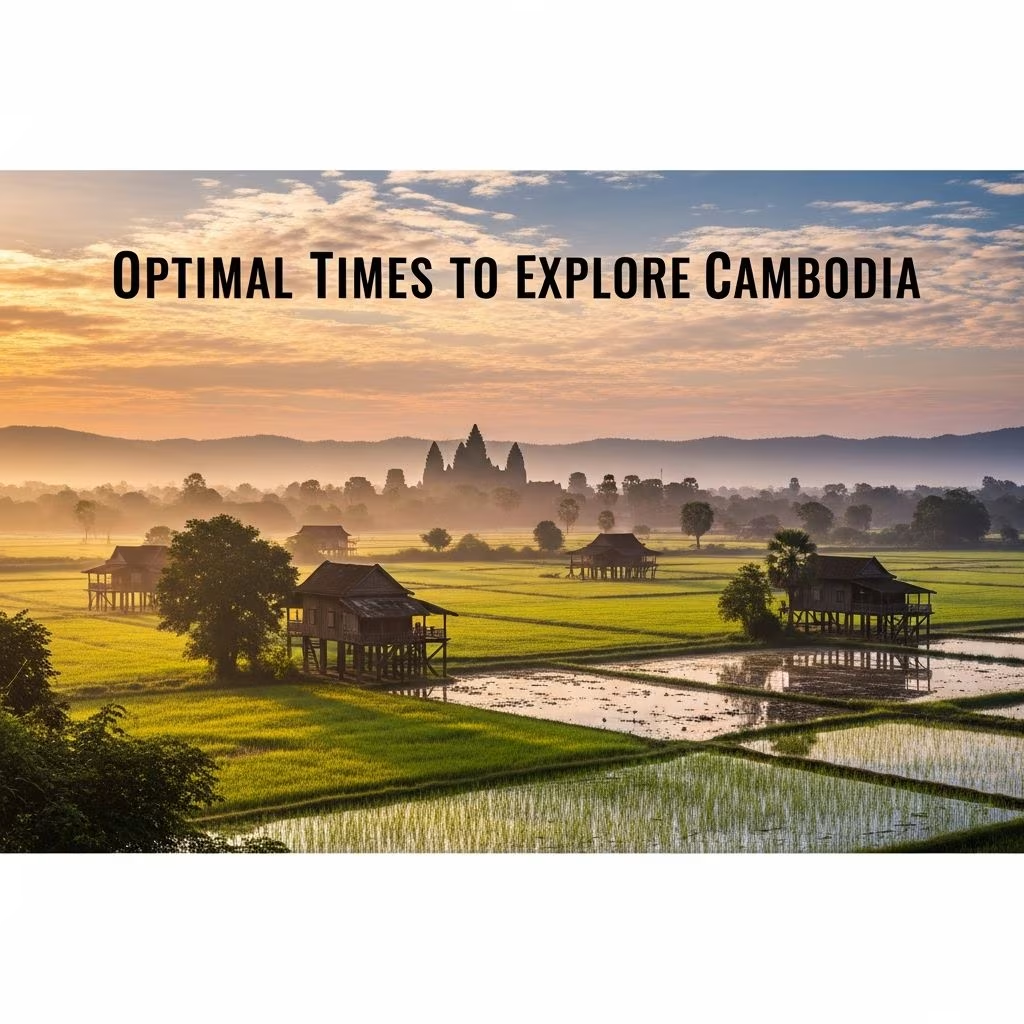
The southwest monsoon ushers in June-October with daily downpours, often late afternoon, leaving mornings clear and temperatures at 25-27°C (77-81°F). Landscapes explode in emerald rice paddies, Tonle Sap swells into a vast flooded forest revealing stilt villages, and Angkor’s bas-reliefs gain dramatic depth from wet stones.
Discounts slash hotel rates by 30-50%, crowds thin for intimate temple encounters, and biodiversity peaks with blooming flora. Challenges include occasional flooding on rural paths and higher humidity, but waterproof gear and flexibility mitigate these.
July-September marks the wettest stretch, yet early rains (June) or tail-end (October) balance greenery with drier spells, ideal for off-beat pursuits like birdwatching or village homestays.
Weather nuances vary: Siem Reap basks evenly in dry bliss but swelters in heat waves; Phnom Penh endures urban humidity amplified by concrete; southern coasts face stronger early monsoons yet boast pristine beaches November-March; northeastern highlands cool faster with mists.
Timing aligns with cultural highlights: Water Festival (Bon Om Touk, November) celebrates Mekong reversals with boat races; Pchum Ben (September-October) honors ancestors amid ancestral feasts; Chinese New Year (January/February) packs markets. These amplify peak pressures but enrich immersion—book early.
Cool Dry: Light layers, sunscreen, hat, comfortable shoes for ruins.
Hot Dry: Breathable fabrics, electrolytes, early-start itineraries.
Wet: Ponchos, quick-dry clothes, insect repellent, sturdy sandals for mud.
Across all, modest attire for temples (cover shoulders/knees), vaccination proofs, and e-visas streamline entry.
November-February sees 20-50% premiums with 80% occupancy; wet months drop to 30-50% capacity and slashed fares. Shoulder spans (late October, early March, June/October) blend value and weather.
| Season | Crowd Level | Accommodation Savings | Activity Accessibility |
|---|---|---|---|
| Cool Dry | High | None | Excellent |
| Hot Dry | Medium | 10-20% | Good (mornings) |
| Wet | Low | 30-50% | Fair (post-rain) |
Yes, for budget-savvy explorers enjoying verdant scenery and solitude at major sites, with rains rarely disrupting plans.
June to October, when fewer tourists compete for sunrise slots amid reflective pools.
April-May, with peaks over 40°C (104°F), best tackled with shaded transport.
Prime November-February; rougher June-October but warmer waters.
Wet season reveals full floating villages; dry shrinks the lake.
Tailor by goals: History buffs prioritize dry for Angkor; nature lovers wet for flooded forests; beachgoers cool months. Multi-region trips favor November-March transitions. Monitor forecasts via official met offices for anomalies like El Niño shifts.
Cambodia’s allure persists regardless—strategic timing maximizes joy while sidestepping extremes.
