

Food & Culture Stays Travel Essentials Travel Guides Trip Ideas
Categories
From the Blog
Remy’s Ratatouille Adventure at EPCOT: Ride Review, Tips & 2D Update
Travel Essentials

Best Time to Visit Switzerland: Seasons, Weather & Travel Tips

Explore Switzerland year-round: summer for hikes and lakes, winter for skiing, spring and fall for fewer crowds and stunning scenery. Find your perfect time.
Travel Essentials

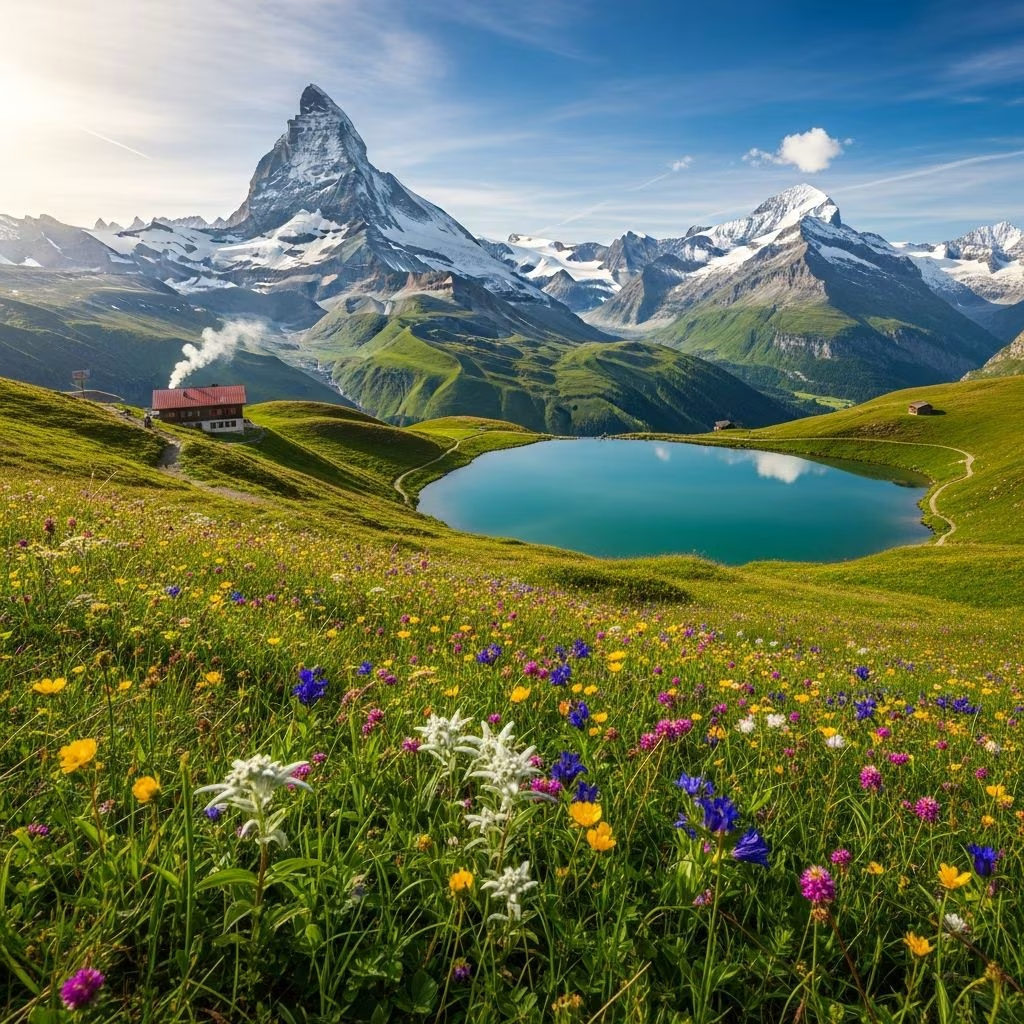
Switzerland captivates travelers with its dramatic Alpine landscapes, pristine lakes, and vibrant cities, but choosing the right season can transform your trip. Each period offers unique advantages, from blooming valleys in spring to snow sports in winter. This guide breaks down weather patterns, crowd levels, costs, and must-do activities to help you decide the perfect window for your adventure.

Understanding Switzerland’s Climate and Seasons

Switzerland’s diverse terrain—from high Alps to lowlands—influences its weather, creating varied microclimates. The country enjoys four distinct seasons, with continental influences in the north and Mediterranean vibes in the south. Temperatures fluctuate widely by elevation: lowlands average 10-25°C (50-77°F) in summer, while peaks stay cooler. Precipitation is frequent but rarely prolonged, especially in valleys. Shoulder seasons (spring and fall) provide milder conditions and savings, while summer and winter draw peak crowds.

Key factors to consider include your interests (hiking, skiing, festivals), budget, and tolerance for crowds. High season means higher prices and busier trails, but optimal conditions. Off-peak offers tranquility and deals on trains, hotels, and passes like the Swiss Travel Pass.

Spring: Renewal and Fewer Crowds (March to May)

Spring awakens Switzerland with melting snows, wildflowers, and budding greenery, making it a shoulder season gem for budget travelers. Temperatures climb from 5°C (41°F) in March to 15°C (59°F) in May in lowlands, with mountains retaining snow for late skiing. Expect variable weather: sunny days mixed with showers, ideal for flexible itineraries.

  • Top Activities: Cherry blossom viewing in Zurich and Bern; gentle hikes in blooming valleys; boat cruises resuming on Lake Lucerne and Lake Thun; city strolls in Geneva and Basel without summer hordes.
  • Crowds and Costs: Low to moderate, with 20-40% lower hotel rates than summer. Trains and cable cars operate fully by late April.
  • Highlights: Snowcapped Alps against green meadows; waterfalls swelling from meltwater; Easter markets in some regions.

May stands out as the sweet spot: stable weather, full access to trails like those around Mount Rigi, and vibrant parks. Avoid early March if rain-sensitive, as lowlands can be damp.

Summer: Peak Adventure Season (June to August)

Summer brings long days, warm weather, and Switzerland at its lush best, perfect for outdoor enthusiasts. Daytime highs reach 18-28°C (64-82°F) in cities and lakesides, cooler (10-20°C) in Alps. Brief rains refresh the air, but sunshine dominates for hiking and water sports.

  • Must-Do Experiences: Epic treks like the Five Lakes Walk in Zermatt or Eiger Trail in Grindelwald; swimming and paddleboarding on Lake Geneva, Lucerne, or Thun; scenic trains such as Glacier Express and Bernina Express with crystal-clear views; summit cable cars to Jungfraujoch or Titlis.
  • Crowds and Costs: High, especially July-August; book accommodations early. Festival season amps up energy with open-air music and lake fetes.
  • Pro Tips: Pack layers for altitude changes, sun protection, and sturdy boots. Alps offer respite from lowland heat.

June edges out as less crowded than peak July-August, with wildflowers still blooming. This is prime time for families and first-timers seeking quintessential Swiss scenery.

Fall: Golden Serenity and Harvest Vibes (September to November)

Autumn paints Switzerland in fiery hues, with crisp air and clear vistas drawing hikers seeking peace. Temperatures drop from 10-15°C (50-59°F) in September to 2-8°C (36-46°F) by November. Foliage peaks mid-September to October, before early snows in highlands.

  • Key Attractions: Foliage hikes in Lauterbrunnen Valley or Appenzell; wine harvests in Lavaux vineyards (UNESCO site); cozy fondue in mountain huts; fewer-wait cable car rides to Gornergrat.
  • Crowds and Costs: Moderate to low post-September; savings on lodging and passes rival spring. Ideal for couples or photographers.
  • Weather Notes: Dry and sunny early on, turning chillier; pack rain gear for November fog in valleys.

September-October shines for panoramic Alps views unobscured by haze, plus truffle hunts in Ticino. It’s a tranquil interlude before winter prep.

Winter: Alpine Wonderland (December to February)

Winter transforms Switzerland into a skier’s paradise, with reliable snow from 1,500m upward. Lowland temps hover 0-5°C (32-41°F), resorts -5 to -10°C (23-14°F). Powder blankets peaks, enabling world-class skiing alongside festive charm.

  • Winter Wonders: Downhill at Zermatt (Matterhorn views), St. Moritz, or Verbier; cross-country trails in Engadin; ice skating on frozen lakes; Christmas markets in Zurich and Basel; New Year’s fireworks over Lake Geneva.
  • Crowds and Costs: High around holidays; premium lift passes, but shoulder winter (late Feb) eases up. Non-skiers enjoy sledding and winter walks.
  • Best Months: January-February for deepest snow; December for holidays.

High-altitude resorts guarantee snow, even if lowlands thaw. Après-ski scenes thrive in chic chalets.

Season Comparison Table

SeasonWeatherCrowdsCostsBest For
Spring (Mar-May)Mild 5-15°C, showersLowLowFlowers, cities, budget
Summer (Jun-Aug)Warm 18-28°C, sunnyHighHighHiking, lakes, trains
Fall (Sep-Nov)Cool 2-15°C, crispLow-ModMediumFoliage, wine, hikes
Winter (Dec-Feb)Cold 0 to -10°C, snowyHighHighSkiing, holidays

Frequently Asked Questions (FAQs)

What is the single best month to visit Switzerland?

June or September for balanced weather, activities, and fewer crowds—ideal for first-timers.

Is Switzerland expensive year-round?

Peak summer/winter spikes prices 30-50%; shoulder seasons cut costs significantly via deals on Swiss Travel Pass and hotels.

Can I ski in spring?

Yes, higher resorts like Zermatt stay open into May with excellent snowpack.

What if I hate crowds?

Opt for April-May or September-October; visit lesser-known spots like Appenzell or Ticino.

Does Switzerland have festivals by season?

Summer: music fests; Fall: wine events; Winter: markets; Spring: flower shows.

Tailoring Your Trip: By Traveler Type

Families: Summer for kid-friendly lakes and trains; winter school holidays for resorts.
Couples: Romantic fall foliage or spring blooms.
Budget Backpackers: Shoulder seasons with rail passes.
Adventure Seekers: Summer hikes or winter extremes.
Solo Explorers: Spring/fall cities like Lucerne or Interlaken.

Monitor regional forecasts via MeteoSwiss for precision. A 7-14 day itinerary blending lowlands, lakes, and Alps maximizes variety regardless of season.

References

  1. Best Time to Visit Switzerland | Climate Guide & Travel Tips — Enchanting Travels. 2023. https://www.enchantingtravels.com/destinations/europe/switzerland/best-time-to-visit-switzerland/
  2. Best Time to Visit Switzerland | Best Months for Travel — Audley Travel. 2024-04-15. https://www.audleytravel.com/us/switzerland/best-time-to-visit
  3. When is the Best Time to Visit Switzerland? — Insight Vacations. 2023-10-01. https://www.insightvacations.com/blog/best-time-to-visit-switzerland/
  4. Best Time to Visit Switzerland: Expert Guide for Every Season — Swiss Tours. 2024-02-20. https://www.swisstours.com/blog/best-time-to-visit-switzerland
  5. Best Time To Visit Switzerland: A Season-By-Season Guide — JayWay Travel. 2023. https://jaywaytravel.com/switzerland/travel-guide/best-time-to-visit-switzerland
  6. Best times to visit — Switzerland Travel Centre. 2024. https://switzerlandtravelcentre.com/en/information/switzerland/best-times-visit
SN
Sneha Tete
Sneha is a relationships and lifestyle…

Sneha is a relationships and lifestyle writer with a strong foundation in applied linguistics and certified training in relationship coaching. She brings over five years of writing experience to CultureTreker,  crafting thoughtful, research-driven content that empowers readers to build healthier relationships, boost emotional well-being, and embrace holistic living.Her writing and insights reflect the belief that beauty, happiness, and wellness begin from within, through the harmonious balance of the mind, body, and heart. With a background in instructional design and research writing, Sneha transforms complex topics into practical insights that are easy to understand and apply.Sneha has also self-published a novella on adolescent mental health, highlighting her ability to navigate emotionally layered topics with nuance and empathy. When she's not writing, you'll find her exploring storytelling through photography, diving into K-dramas, or enjoying quiet moments with her family and friends.

← Previous
Best Time to Visit Dubai: Seasons, Weather & Travel Tips
‹›
