

 Travel Essentials
 Travel Essentials

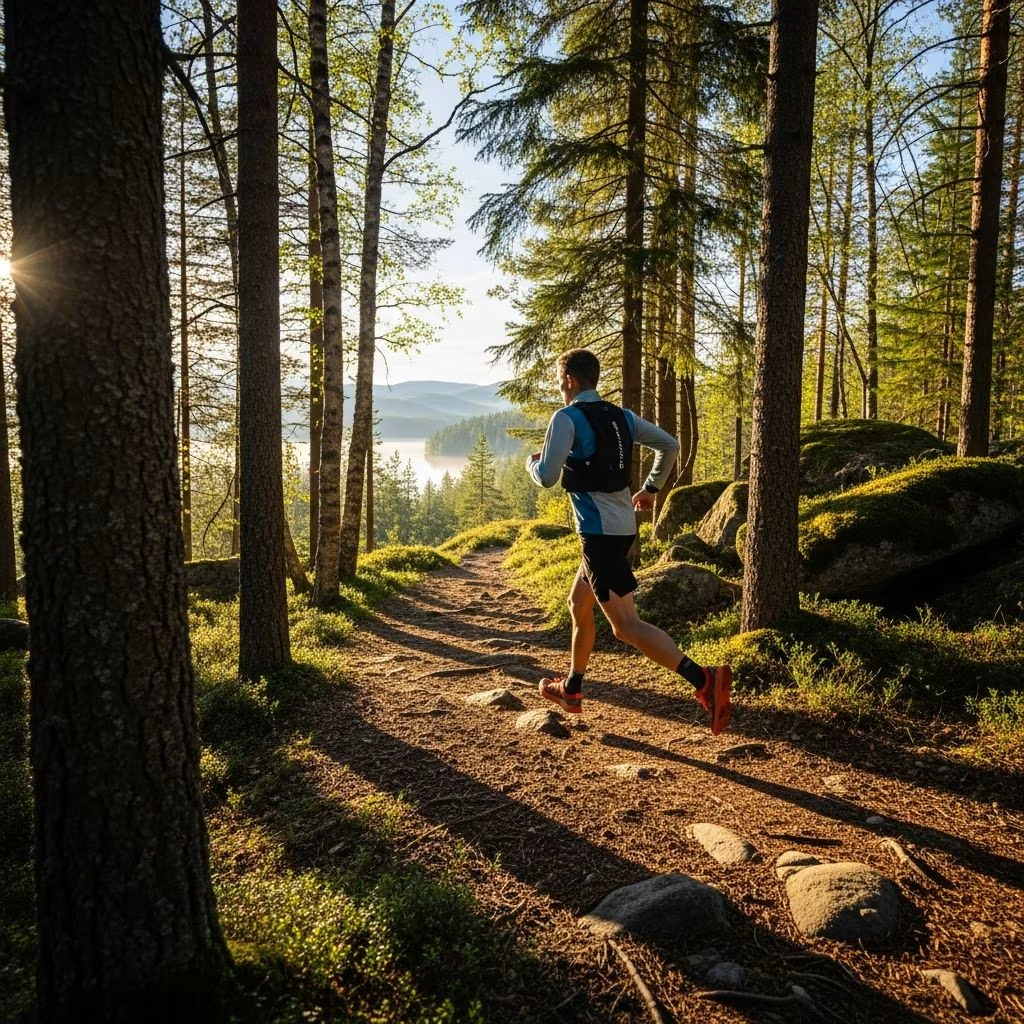
Explore Sweden's diverse trail running opportunities across stunning natural landscapes, from coastal cliffs to mountain trails.
 Travel Essentials
Trail running has become an increasingly popular way to experience Scandinavia’s untamed landscapes, and Sweden stands out as one of Europe’s premier destinations for this dynamic sport. The country offers an exceptional combination of accessibility, natural beauty, and well-maintained routes that cater to runners of varying skill levels. Unlike many European trail running destinations, Swedish routes rarely suffer from overcrowding, allowing athletes to experience profound solitude while navigating some of the continent’s most dramatic terrain.
The appeal of Swedish trail running extends beyond mere physical challenge. Runners immerse themselves in ecosystems that have remained largely unchanged for centuries, traversing ancient forests, pristine waterways, and mountain vistas that inspire both competitive ambition and contemplative appreciation of nature. Whether you seek technical downhill sections, steady forest cruising, or high-altitude panoramic running, Sweden’s diverse geography delivers comprehensive trail running experiences.
Sweden’s geographical diversity creates ideal conditions for trail running throughout much of the country. The landscape transitions dramatically from south to north, featuring everything from gentle rolling terrain in regions like Skåne to dramatic mountain scenery in northern areas such as Åre and Gällivare. This variety means runners can select experiences matching their capabilities and preferences.
The Swedish approach to outdoor recreation reflects a cultural philosophy that values access to wild spaces. The concept of “allemansrätten” (the Right to Roam) allows public access across vast areas of undeveloped land, creating extensive running opportunities that would be impossible in many other nations. This fundamental right ensures that runners can explore diverse ecosystems without encountering barriers or privatized restrictions.
Sweden maintains an extensive network of marked trails that facilitate navigation and encourage exploration. Approximately 1,300 kilometers of clearly designated routes exist throughout the country, with regional trail networks providing thousands of additional kilometers of documented paths. This infrastructure allows both experienced trail runners and newcomers to confidently venture into unfamiliar territory.
Modern technology has simplified the process of discovering and planning trail running routes across Sweden. Several platforms offer comprehensive databases of established trails, complete with detailed information about difficulty levels, distance, elevation gain, and user feedback.
Primary Planning Resources:
Learning the Swedish term “runt” (meaning loop or circular route) proves helpful during route research, as this terminology frequently appears in trail descriptions and local resources. This simple linguistic knowledge accelerates the process of identifying suitable running experiences.
The Åre region in northern Sweden has developed recognition as a premier trail running destination, particularly among regional running enthusiasts and social media personalities who frequently document their experiences. While best known to international travelers for its winter ski operations, Åre transforms during warmer months into exceptional trail running terrain.
The Björnen Triangeln (translating to “Bear Triangle”) represents the region’s signature trail running experience. Spanning 16.2 kilometers, this circuit navigates through pristine mountain scenery and extensive birch forests interspersed with demanding elevation changes. The route follows clearly marked path 221, ensuring straightforward navigation even for those unfamiliar with the area. Runners encounter sufficient technical sections to provide genuine challenge while remaining manageable for experienced athletes. The combination of natural elevation gain, diverse forest composition, and mountain views creates a memorable running experience that justifies the route’s popularity among local communities.
Southern Sweden’s Kullaberg Nature Reserve offers dramatically different running experiences compared to northern mountain regions. The 16-kilometer route from the seaside village of Mölle to the medieval fishing settlement of Arild provides what many consider Sweden’s most spectacularly scenic coastal trail running opportunity.
This physically demanding circuit begins at Mölle and progresses toward the distinctive round turret of Kullen lighthouse, a 19th-century structure that serves as an architectural landmark and visual reference point throughout portions of the route. The path traverses the Kullaberg Nature Reserve’s clifftop terrain before descending toward Arild, a well-preserved medieval village that offers cultural interest alongside its natural setting. Throughout the run, dramatic coastal vistas dominate the visual landscape, with the Baltic Sea providing a constant reminder of Sweden’s maritime heritage.
This route functions as section three of the longer SL5 Öresund trail, which forms part of the Skåneleden network—an impressive 1,300-kilometer trail system spanning the entire Skåne region. Runners may choose to abbreviate the experience by returning to Mölle via the Hjorthagen alternative, or extend their adventure by continuing along subsequent SL5 sections to create a multi-day trail running expedition.
For trail runners seeking accessibility without sacrificing natural beauty, the Fornborgsslingan loop within Tyresta National Park provides an ideal solution. Located mere kilometers from Stockholm’s city center, this 6.4-kilometer circuit demonstrates how proximity to urban infrastructure need not compromise authentic wilderness experiences.
Tyresta National Park encompasses miles of interconnected running and hiking trails winding through enchanting forest environments. The landscape features small sparkling lakes, smooth rocky outcrops, and diverse woodland ecosystems that create visual variety throughout each run. The Fornborgsslingan loop specifically follows green and white markers, simplifying navigation for first-time visitors. While the route includes steep gradients that provide cardiovascular challenge, the grades never become prohibitively difficult, making this loop accessible for developing trail runners.
The route’s primary attraction—magnificent views across Stensjön lake—emerges gradually as runners progress through ancient pine forest. The combination of technical challenge, natural beauty, and convenient location makes this loop ideal for Stockholm-based athletes seeking weekend trail running without investing substantial travel time.
The Stora Delsjön route near Gothenburg exemplifies how trail running can accommodate athletic goals alongside recreational enjoyment. This classic waterfront loop circles a substantial lake within the Delsjöområdets Nature Reserve, offering a complete running experience within reasonable distance from Sweden’s second-largest city.
The trail primarily follows gravel pathways through surrounding woodland, with minimal elevation gain making this route suitable for runners prioritizing steady-paced distance work over technical climbing. The predominantly wooded setting provides substantial shade, an appreciated feature during summer months when Swedish temperatures can rise significantly. Numerous access points along the route enable swimmers to take refreshing dips during warm months, transforming this loop into a combined running and swimming experience.
Runners completing the standard circuit can celebrate their achievement at Kaffestugan, a traditional red wooden coffee shop located near the trail’s terminus, where fresh waffles and other Swedish delicacies reward post-run appetite. For those seeking extended distance, an additional 4-kilometer loop encompasses Lilla Delsjön, the lake’s smaller neighbor, effectively creating a customizable running experience adaptable to individual capacity and motivation.
Sweden’s climate significantly influences optimal trail running periods and necessary equipment preparation. The country experiences dramatic seasonal variation, with profound implications for trail runners planning their experiences.
Seasonal Characteristics:
| Season | Characteristics | Recommended Preparation |
|---|---|---|
| Spring | Moderate temperatures, melting snow at higher elevations, increasing daylight hours, emerging wildflowers | Layered clothing, trail-specific shoes with adequate grip, navigation tools for snow-covered sections |
| Summer | Extended daylight (near-midnight sun in northern regions), warmest temperatures, fully open trails, lowest precipitation | Sun protection, hydration systems, lightweight breathable clothing, insect repellent |
| Fall | Variable weather, increased precipitation, temperature fluctuations, colorful foliage, moderate trail conditions | Waterproof outerwear, shoes with superior traction, layers for temperature changes, weather monitoring |
| Winter | Snow coverage, frozen trails and lakes, minimal daylight, extreme cold, dramatically reduced trail access | Winter-specific trail shoes, thermal layers, avalanche awareness, limited trail availability |
Spring and summer emerge as optimal seasons for most trail runners, offering reliable trail conditions and extended daylight enabling longer adventures. Fall remains viable for prepared runners equipped to manage variable weather and maintain adequate footing on potentially slippery surfaces. Winter running in Sweden requires specialized equipment and expertise, limiting options to well-prepared athletes or those participating in dedicated winter events.
Beyond recreational running, Sweden hosts several established trail running competitions that attract both national and international participants. These events provide structured challenges while showcasing the country’s diverse trail systems.
The Höga Kusten Trail, held each September, presents runners with choices between 25-kilometer and 43-kilometer distances. This event traverses Sweden’s High Coast region, delivering high-altitude vistas across rocky terrain distinctive to this UNESCO World Heritage site. The spectacular landscape combines technical challenge with profound natural beauty.
Held during December, the Åhus winter trail run offers an unconventional challenge combining frozen forest paths with beach sections. Available distances ranging from 6 to 17 kilometers accommodate varying experience levels while introducing the unique experience of winter trail conditions.
Regional events such as the Gotaleden Stafett provide team-based running opportunities, while the Ultra Gothenburg/Alingsås event serves dedicated ultramarathon runners seeking substantial distances. The Dalsland X-trail offers flexible distance options for runners of differing capabilities within a single event framework.
For experienced trail runners seeking multi-day expeditions, Sweden’s extensive trail networks enable ambitious adventures. The King’s Trail (Kungsleden), extending over 300 miles from Abisko to Nikkaluokta, represents Scandinavia’s most renowned long-distance trail running experience. The route traverses dramatic northern mountain terrain, passing through Kebnekaise, Sweden’s highest peak.
Logistically, runners can complete a 70-mile segment from Abisko to Nikkaluokta via Kebnekaise, taking advantage of public transportation access at both termini. This section provides substantial physical challenge while remaining logistically manageable without elaborate support systems. The well-established hiking infrastructure provides regular rest opportunities, accommodation options, and resupply capabilities throughout the journey.
Runners undertaking extensive Kungsleden sections experience dramatic environmental transitions, from alpine tundra to subarctic forest to deep mountain valleys. The trail’s excellent maintenance and clear markings simplify navigation compared to off-trail running, enabling athletes to focus energy on forward progress rather than route-finding challenges.
Swedish trails accommodate diverse fitness levels. Routes like Stora Delsjön offer gentle terrain suitable for developing runners, while the Björnen Triangeln and Kungsleden sections demand significant experience and conditioning. Match route selection to current capabilities and gradually progress toward more challenging terrain.
One of Sweden’s primary advantages involves minimal trail congestion compared to European trail running destinations. The combination of extensive trail networks and cultural attitudes toward outdoor access ensure that even popular routes rarely feel crowded outside peak summer weekends.
Sweden’s well-marked trail systems and digital navigation resources enable independent trail running for most established routes. However, off-trail adventuring and winter running benefit significantly from experienced guides familiar with navigation challenges and safety considerations specific to Sweden’s environments.
Trail-specific running shoes with adequate grip remain essential. Additional gear depends on season, with summer requiring sun protection and hydration capacity, while spring and fall demand waterproof outerwear and layered clothing. Winter running necessitates specialized winter trail shoes and thermal insulation.
Summer offers optimal conditions with reliable weather and extended daylight, while spring and fall provide viable alternatives for prepared runners. Winter running remains challenging for most recreational athletes, though dedicated winter races provide structured opportunities.
Successful Swedish trail running experiences begin with clear objective-setting and thorough advance planning. Consider your current fitness level, available time, and geographic preferences when selecting routes. Utilize available digital resources to review elevation profiles, difficulty ratings, and user feedback before committing to specific adventures.
Consult seasonal weather patterns and pack appropriate gear for prevailing conditions. Invest in quality trail-specific footwear that provides adequate traction and support for the terrain you anticipate. Ensure your digital navigation resources contain offline mapping capabilities, as cellular coverage remains unreliable in remote areas despite Sweden’s overall technological development.
Consider beginning with established routes in populated regions like Stockholm or Gothenburg, progressing toward more remote experiences as familiarity with Swedish trail systems develops. This graduated approach allows skill development while minimizing logistical complexity during early adventures.
Sweden’s trail running opportunities transform athletic pursuits into profound engagements with some of Europe’s most pristine wild landscapes. Whether you seek challenging mountain circuits, peaceful forest running, or dramatic coastal experiences, Swedish trails deliver exceptional natural environments alongside the physical challenges that drive trail running’s global appeal.
