

 Travel Essentials
 Travel Essentials

Explore Washington DC's remarkable trees, including historic cherry blossoms, serene arboretum collections, and symbolic landmarks that offer beauty and tranquility year-round.
 Travel Essentials
Washington DC transforms into a verdant paradise each season, thanks to its extraordinary collection of trees that blend history, culture, and natural splendor. From the world-famous cherry blossoms that draw millions annually to lesser-known gems like research hybrids and symbolic landmarks, the city’s arboreal treasures offer endless exploration opportunities. These trees not only beautify iconic sites but also tell stories of international friendship, scientific innovation, and urban resilience.
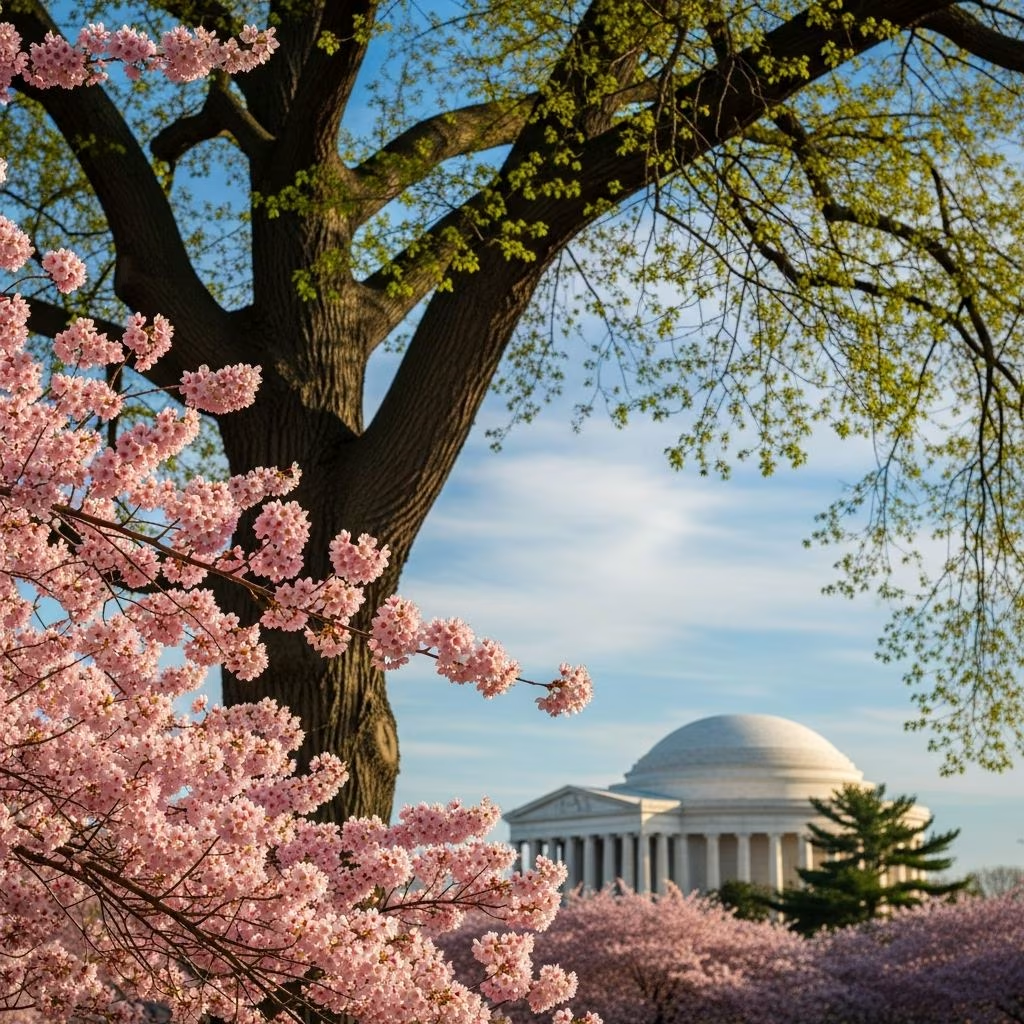
The cherry blossoms, or sakura, represent the quintessential spring spectacle in DC. Originating from a 1912 gift of 3,020 trees from Tokyo’s Mayor Yukio Ozaki to the United States, these delicate pink blooms symbolize enduring friendship between Japan and America. Planted initially around the Tidal Basin, they quickly became a cultural phenomenon, inspiring the annual National Cherry Blossom Festival that runs from late March to early April.
Peak bloom typically occurs when petals create a canopy over pathways, but crowds at the Tidal Basin can overwhelm visitors. For a serene alternative, head to the United States National Arboretum, established by Congress in 1927 to advance plant research and conservation. This expansive 446-acre site boasts over 1,000 cherry trees of various hybrids, allowing visitors to enjoy the display amid rolling hills and research fields without the congestion.
The cherry trees’ journey to DC began with early experiments by botanist Dr. David Fairchild, who tested their viability on his Chevy Chase property in 1909. Deemed successful, the official planting ceremony in 1912 was attended by First Lady Helen Herron Taft and Viscountess Chinda, marking a pivotal moment in U.S.-Japan relations. This event laid the foundation for the National Cherry Blossom Festival, now a global celebration featuring parades, fireworks, and cultural events.
First Ladies have long championed these trees. Taft expanded plantings along the National Mall as part of her beautification initiatives, while Lady Bird Johnson reenacted the original planting in 1965. Today, the festival incorporates virtual elements like BloomCam for bird’s-eye views and hunts for giant blossom sculptures scattered across the city.
DC’s tree diversity extends far beyond sakura. The National Arboretum serves as a living laboratory with azaleas, magnolias, and hollies complementing its cherry collection. Visitors can wander paths lined with boxwoods from George Washington’s Mount Vernon and dwarf conifers in the Gotelli Collection.
| Site | Key Trees | Best Season | Unique Feature |
|---|---|---|---|
| Tidal Basin | Yoshino Cherry | Spring | Waterfront reflections |
| National Arboretum | Cherry Hybrids | Spring/Fall | Research tours |
| Capitol Grounds | Preserved Yoshino | Spring | Hanami picnics |
| Rock Creek Park | Oaks, Maples | Fall | Native forests |
On Capitol Hill, mature cherry trees frame the U.S. Capitol, inviting hanami—the Japanese tradition of blossom viewing picnics. These trees, some of the oldest, underwent recent preservation efforts to ensure their legacy.
For those seeking solitude, the National Arboretum provides a peaceful retreat just eight kilometers from the Tidal Basin. Spanning research plots and themed gardens, it emphasizes trees’ environmental and economic roles. Visitors praise its reliability: “Cherry blossoms are something Washingtonians can count on every year,” notes a local guide.
Explore the Arbor House Visitor Center for maps, or join guided walks revealing pollination studies and climate adaptation projects. In fall, maples ignite in crimson, while winter silhouettes against evergreens offer stark beauty.
DC’s urban forestry shines beyond spring. Rock Creek Park harbors ancient oaks and beeches, remnants of pre-colonial forests. The National Mall features American elms resistant to Dutch elm disease, a testament to horticultural resilience.
One standout is the “Tree of Life,” an otherworldly banyan-like fig at the arboretum, its roots weaving fantastical patterns. Symbolizing life’s interconnectedness, it captivates photographers and philosophers alike. Nearby, the Bamboo Forest sways mysteriously, evoking Asian serenity.
Trees in DC transcend aesthetics, embodying renewal and diplomacy. The cherry blossom’s ephemeral beauty mirrors life’s transience, a core Japanese philosophy influencing American observances. Festivals blend traditions: taiko drums, bonsai exhibits, and sakura tastings.
In 2021, amid challenges, the event adapted with virtual tours and sculptures, proving resilience. Today, it invites global participation, fostering cultural exchange.
Plan visits during weekdays to avoid peaks. Wear comfortable shoes for arboretum trails; bring water for summer heat. Metro access: Eastern Market for Capitol, Orange Line for Arboretum.
Sustainable practices: Stay on paths to protect roots, participate in tree-planting volunteers via Casey Trees nonprofit.
Typically late March to early April, depending on weather. Check NPS forecasts for accuracy.
Yes, open daily dawn to dusk, though parking fees apply.
National Cherry Blossom Festival (March-April); fall foliage events at Dumbarton Oaks.
Tidal Basin loops and arboretum paths offer accessible routes; inquire at visitor centers.
Join tree adoptions or cleanups through official parks services.
Climate change poses threats like warmer blooms and pests, but initiatives like hybrid breeding at the Arboretum counter them. Visitors play a role by supporting conservation. DC’s trees—blossoms to icons—invite all to connect with nature’s quiet majesty.
