

 Travel Essentials
 Travel Essentials

Explore Nepal's most spectacular mountain trails, from accessible day hikes to multi-week expeditions in the Himalayas.
 Travel Essentials
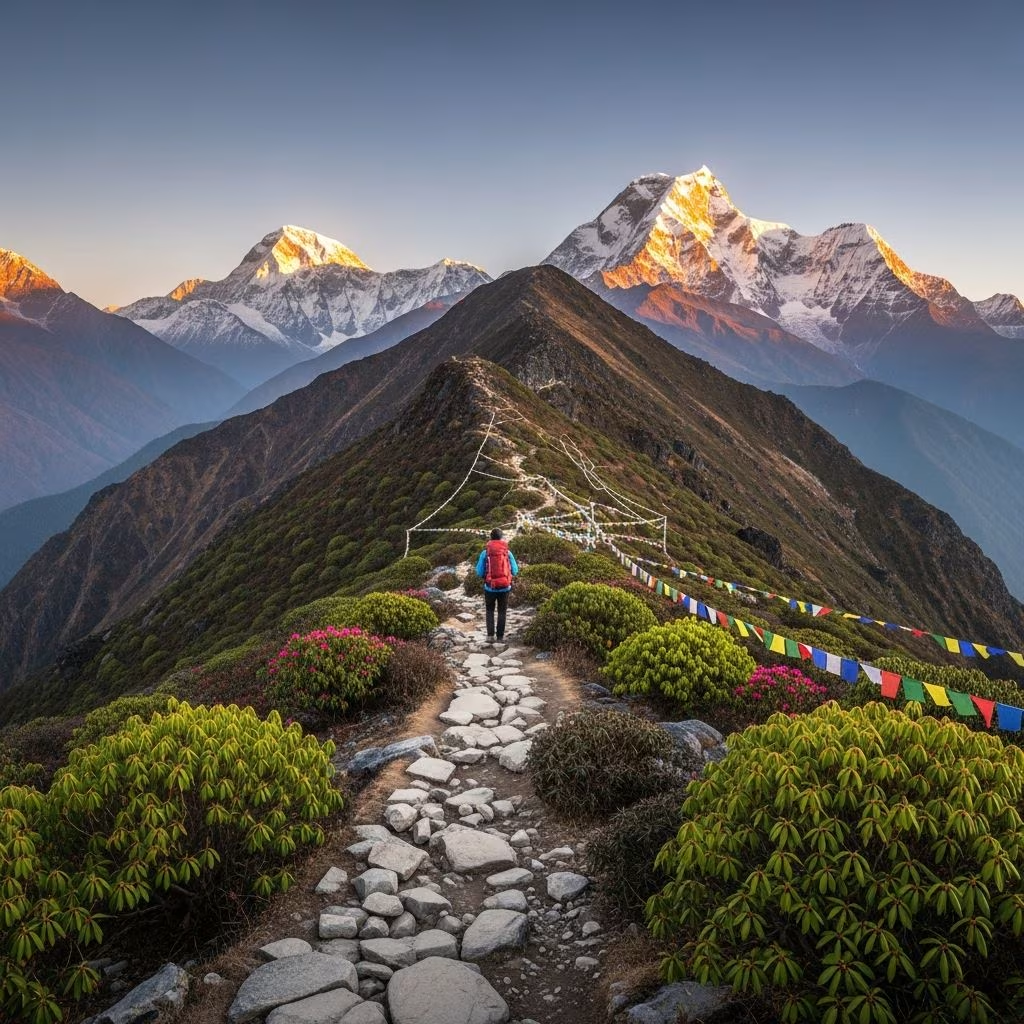
Nepal stands as one of the world’s premier destinations for mountain trekking and hiking, offering adventurers an extraordinary range of trails that traverse through dramatic landscapes, remote villages, and some of the highest peaks on Earth. The Himalayan kingdom attracts thousands of trekkers annually, from complete beginners seeking short excursions to experienced mountaineers undertaking challenging multi-week expeditions. Understanding the diverse trekking opportunities available is essential for planning a memorable Himalayan adventure.
The trek to Everest Base Camp represents Nepal’s most iconic mountain journey and ranks among the world’s most celebrated long-distance hiking routes. This legendary expedition draws tens of thousands of adventurers each year who are drawn to the challenge of reaching the staging ground for ascents of Mount Everest, the planet’s highest mountain. The journey spans approximately 130 kilometers and typically requires 14 to 20 days to complete, making it a significant but achievable undertaking for those with moderate to strong fitness levels.
This expedition qualifies as a moderate to hard difficulty trek that relies primarily on a teahouse accommodation model, allowing trekkers to lodge in small family-run guesthouses throughout the journey rather than carrying heavy camping equipment. The route winds through the Khumbu region, passing through settlements of the Sherpa people and offering increasingly dramatic mountain vistas as elevation increases. Trekkers experience the gradual acclimatization process necessary for high-altitude hiking while traversing through alpine forests, rhododendron groves, and eventually sparse mountain terrain.
The Annapurna Circuit represents one of the most comprehensive trekking experiences available in Nepal, offering trekkers an immersive loop through varied terrain and cultural landscapes. This extended expedition provides an alternative perspective on Himalayan trekking compared to the more direct routes toward individual peaks. The circuit encompasses diverse elevations, ecosystems, and settlement patterns across the Annapurna mountain range.
Unlike expeditions focused on reaching a single destination, the circuit structure allows trekkers to appreciate the full geographical and cultural context of the region. The journey incorporates numerous mountain passes, river valleys, and traditional villages inhabited by various ethnic groups. This comprehensive approach to experiencing the Himalayas appeals to adventurers seeking a more complete understanding of Nepal’s mountain environment rather than a destination-focused trek.
For trekkers desiring a more authentic and less crowded experience in the Himalayas, the Manaslu Circuit offers an excellent alternative to Nepal’s most famous routes. This trek provides comparable mountain scenery and cultural immersion with significantly fewer other trekkers sharing the trail. The region maintains traditional character while offering sufficient infrastructure to support independent trekking.
The Manaslu Circuit circumnavigates the eighth-highest mountain in the world, providing trekkers with intimate perspectives on this less-visited peak. The route begins at Syabrubesi and winds through hills to the north, connecting a series of traditional villages primarily inhabited by the Tamang ethnic group. This less-commercialized trek offers opportunities to experience authentic village life and cultural interactions less filtered by tourism than some of Nepal’s more established routes.
The Annapurna Sanctuary trek represents a distinct approach to experiencing Himalayan mountains, focusing on proximity to alpine scenery rather than extended circuit routes. This trek differs from longer expeditions by concentrating trekkers’ time in a compact region surrounding the Annapurna Sanctuary, a high-altitude glacial basin encircled by dramatic peaks.
The sanctuary trek allows trekkers to experience high-altitude environments without committing to three-week expeditions. The route leads progressively higher into the mountains, culminating in the Annapurna Base Camp positioned at 4,130 meters elevation. This concentrated approach appeals to trekkers with limited vacation time or those preferring shorter journeys while still experiencing substantial altitude gain and mountain immersion.
Nepal accommodates trekkers seeking shorter experiences through well-established day hikes that deliver significant mountain exposure in compact timeframes. The ridge-top village of Nagarkot to the Newari town of Dhulikhel represents one of the most celebrated single-day trekking routes in Nepal. This 20-kilometer journey can be completed in one full day and carries an easy difficulty classification, making it accessible to trekkers with limited experience or fitness levels.
Both terminus points of this day trek are renowned for extraordinary sunrise and sunset views of the Himalayan range. The route traverses through cultural landscapes reflecting Nepal’s diverse ethnic heritage while maintaining proximity to traditional accommodation in village hotels. This day trek provides trekkers with mountain experiences that integrate comfortably into shorter vacation periods or serve as valuable acclimatization before attempting longer expeditions.
Nepal’s trekking community employs standardized difficulty and duration classifications to help adventurers select appropriate routes. Difficulty ratings typically span from easy through moderate to hard designations, with easy treks suitable for individuals with minimal hiking experience, moderate treks requiring basic fitness levels, and hard treks demanding substantial endurance and mountain experience.
Duration classifications reflect typical trekking speeds across various terrain types. Short treks covering under 30 kilometers typically complete within one or two days, while medium treks spanning 50 to 100 kilometers generally require five to ten days. Extended expeditions exceeding 100 kilometers demand two to four weeks to complete. Understanding these classifications enables trekkers to honestly assess their capabilities and select routes matching their fitness levels and available vacation time.
Beyond Nepal’s most celebrated trekking circuits, less-publicized trails offer rewarding experiences with considerably lower crowding. The Mardi Himal trek, introduced to the broader trekking community in 2012, exemplifies this emerging category of Himalayan routes. Situated east of the Annapurna Base Camp, this relatively obscure trail winds through the mountains, presenting unobstructed mountain vistas including Annapurna peaks I through IV, along with dramatic views of Machhapuchhre, commonly known as the fishtail mountain due to its distinctive silhouette.
These less-established routes appeal particularly to trekkers seeking adventure with reduced tourism infrastructure and fewer fellow hikers on the trail. While requiring greater self-reliance than heavily-trafficked routes, these alternatives reward explorers with authentic cultural encounters and pristine mountain landscapes less impacted by tourism development.
The Ghorepani Poon Hill trek serves as an ideal introduction to Himalayan trekking for those beginning their mountain adventure. Designated as the “Queen of Viewpoints,” this route combines reasonable duration with spectacular scenery, making it particularly popular among first-time trekkers. The trek typically requires four to five days to complete and reaches a maximum elevation of 3,210 meters at Poon Hill.
Beginning at Nayapul and concluding at Gandhruk, the second-largest village in Nepal, this route introduces fundamental trekking rhythms and altitude experience without overwhelming beginners with excessive difficulty or time commitment. The trek’s relative accessibility has contributed to its popularity, though the maintained route still offers authentic cultural encounters and mountain environments substantially removed from modern infrastructure.
Nepal’s trekking options extend beyond standard mountain trails to include specialized expeditions combining multiple objectives. Six-day itineraries can be structured to incorporate numerous monasteries, gompas (Buddhist temples), and stupas, integrating cultural and spiritual dimensions into trekking experiences. These specialized routes appeal to adventurers seeking deeper engagement with Nepali Buddhist culture and religious heritage alongside mountain immersion.
Island Peak combination treks represent another specialized category, linking basic climbing experiences with comprehensive trekking. The Everest Base Camp trek can be extended to incorporate Kala Patthar and Gokyo Lake visits, transforming a 14-day expedition into a 17-day comprehensive high-altitude mountain experience. These extended itineraries cater to adventurers seeking maximum Himalayan exposure and diverse mountain perspectives within single expeditions.
Successfully executing a Nepal trekking expedition requires careful consideration of multiple planning factors. Essential gear includes robust hiking boots specifically designed for mountain terrain and extended daily use. Physical conditioning appropriate to intended route difficulty proves essential, particularly for higher-altitude expeditions where lack of acclimatization causes significant challenges. Understanding altitude’s physiological impacts and implementing gradual elevation gain prevents serious altitude-related illnesses that can terminate expeditions prematurely.
The diversity of Nepal’s trekking options necessitates acknowledging that experiencing all desired routes typically requires multiple visits to the country. Most adventurers cannot realistically complete Nepal’s entire trekking portfolio within single trips. Prioritizing specific routes based on available time, fitness levels, and personal interests enables focused, rewarding expeditions rather than rushed attempts at multiple trails.
| Trek Region | Primary Characteristics | Typical Duration | Best For |
|---|---|---|---|
| Everest Region | Highest peaks, Sherpa culture, extreme altitudes | 14-20 days | Experienced trekkers seeking iconic experiences |
| Annapurna Region | Diverse ecosystems, varied communities, comprehensive circuits | 10-21 days | Trekkers wanting comprehensive mountain experiences |
| Langtang Region | Accessible first trek options, moderate altitudes, quick access | 5-10 days | Beginners and those with limited time |
| Gokyo Lakes | Alpine lakes, dramatic scenery, less crowded than base camps | 12-16 days | Trekkers seeking alternative Everest Region perspectives |
Spring (March-May) and autumn (September-November) represent the optimal trekking seasons in Nepal, offering stable weather, clear mountain views, and comfortable temperatures. Winter treks are possible but involve challenging weather and reduced visibility, while monsoon seasons (June-August) bring heavy rainfall and dangerous trail conditions.
Certain trekking regions require special permits beyond the standard tourist visa. Restricted areas like Upper Mustang and Upper Dolpo require permits obtained through licensed trekking companies. Most popular circuits like Everest Base Camp and Annapurna do not require specialized permits beyond basic tourist documentation.
Most popular Nepali trekking routes support independent trekking with established teahouse accommodations and clear trail marking. However, remote routes and restricted regions typically require hired guides for safety, navigation, and permit compliance. Independent trekking is generally affordable and feasible for well-prepared adventurers on main routes.
Gradual acclimatization through slow elevation gain represents the primary altitude illness prevention strategy. Ascending no more than 300-500 meters daily above 2,500 meters allows bodies to adapt to reduced oxygen availability. Staying hydrated, avoiding alcohol, and recognizing early altitude sickness symptoms (headache, nausea, fatigue) enable early intervention.
Budget trekking with teahouse accommodation typically costs $30-50 daily, while guided treks with porters range from $50-100+ daily. Costs include accommodation, meals, guide services, and park fees but not international flights. Less-developed routes and specialized experiences command higher expenses than established popular treks.
Beyond the primary expeditions, Nepal offers numerous additional trekking possibilities serving various experience levels and interests. The Royal Trek, Helambu Circuit, Kanchenjunga trek, and Upper Dolpo expedition represent alternative routes appealing to adventurers seeking different mountain perspectives or cultural immersion outside the most heavily-traveled circuits. Each route offers distinct advantages, from the Royal Trek’s accessibility to the remote wilderness character of Upper Dolpo.
The geographic and cultural diversity across Nepal’s trekking regions enables adventurers to customize expeditions matching personal objectives. Whether seeking iconic mountain vistas, authentic cultural encounters, wildlife observation, or spiritual dimensions through monastery visits, Nepal’s extensive trekking infrastructure accommodates varied interests and experience levels.
Nepal’s extraordinary trekking opportunities span the complete spectrum from accessible single-day excursions to challenging multi-week high-altitude expeditions. Whether trekkers prioritize the legendary Everest Base Camp experience, the comprehensive Annapurna Circuit, quieter alternative routes, or specialized cultural and spiritual expeditions, Nepal delivers world-class mountain adventures suited to virtually every experience level. The combination of magnificent mountain scenery, welcoming local cultures, established trekking infrastructure, and affordable costs positions Nepal as an unmatched global destination for mountain trekking experiences.
