

 Travel Essentials
 Travel Essentials

Discover the best US national parks for landscape photography, with expert tips on light, gear, timing, and standout locations for stunning shots.
 Travel Essentials
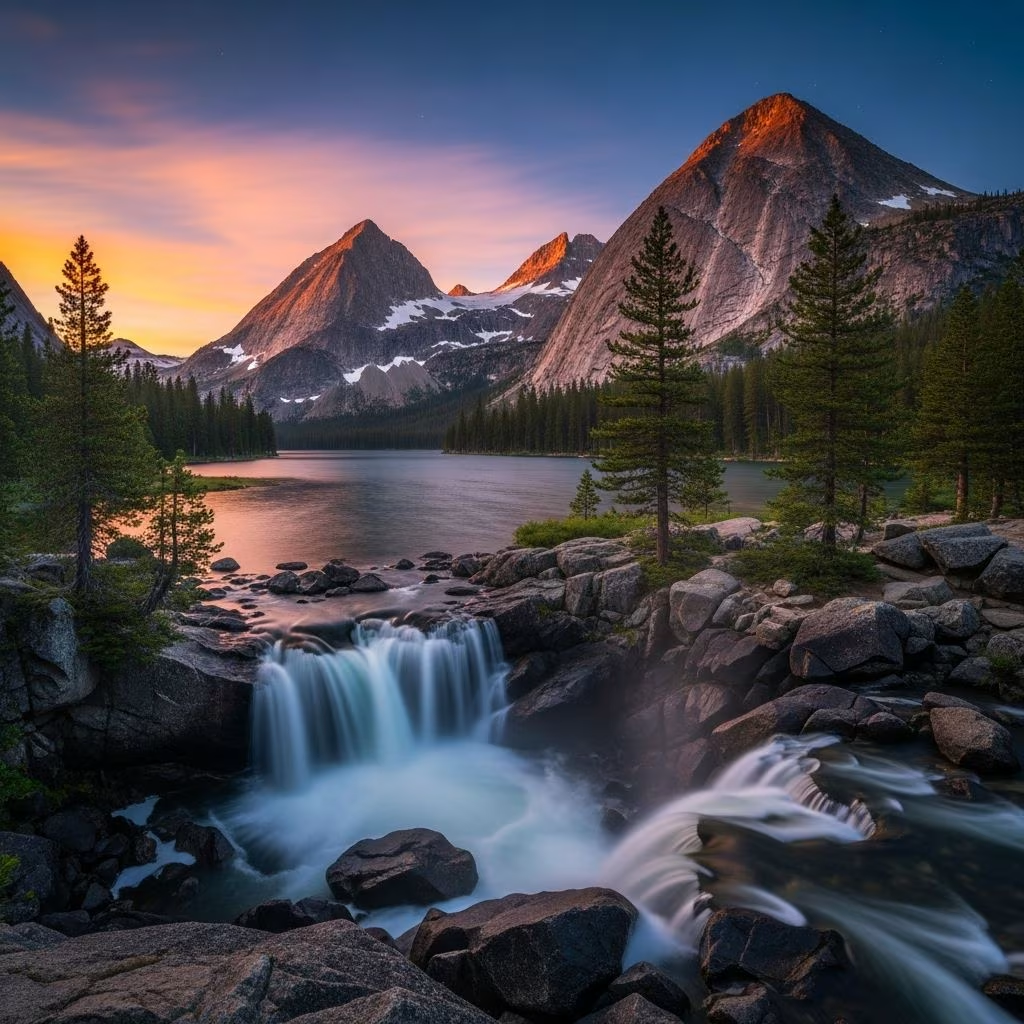
United States national parks offer unparalleled opportunities for photographers seeking to capture nature’s grandeur. From towering granite cliffs to vast desert expanses and misty mountain ranges, these protected areas provide diverse subjects illuminated by dramatic lighting throughout the day. Photographers can leverage golden hour glows, monsoon storms, and clear night skies to create portfolio-worthy images. This guide highlights standout parks, optimal shooting times, essential techniques, and preparation advice drawn from expert insights.
National parks preserve raw, untouched scenery that transforms under varying light conditions. Early mornings and late evenings deliver soft, warm light that enhances textures and colors, while midday shadows add depth to rugged terrains. Low light pollution in remote areas enables astrophotography, capturing Milky Way arcs over ancient formations. Wildlife abundance allows for dynamic action shots, blending environmental portraits with behavioral moments. Success hinges on timing visits with weather patterns, such as clearing storms for rain-washed vibrancy or fog for ethereal atmospheres.
The American West dominates photography lists due to its sculpted rock formations and expansive vistas. These parks reward patience with fleeting light shows on layered strata and natural stone bridges.
Located in Utah, Arches boasts over 2,000 natural arches amid red rock canyons. Arrive before dawn at Delicate Arch for the sun’s first rays igniting the sandstone in golden hues, casting long shadows that emphasize its graceful curve. Balanced Rock glows orange at sunset, ideal for silhouettes against fiery skies. For night shots, the park’s dark skies permit wide-angle captures of the Milky Way arching overhead. Use a sturdy tripod, wide-angle lens (14-24mm), and 20-30 second exposures at ISO 1600-3200. Scout locations midday to plan compositions amid crowds.
Southeastern Utah’s Canyonlands features eroded canyons carved by the Colorado and Green Rivers. Mesa Arch at sunrise frames the sun rising beneath the span, bathing distant cliffs in vivid orange—a composition demanding early arrival. Grand View Point in Island in the Sky district offers evening panoramas of canyon mazes with stretched shadows. Employ graduated neutral density filters to balance bright horizons with deep gorges. Mid-range zooms (24-70mm) capture both intimate details and sweeping views. Monsoon season brings clearing storm clouds for black-and-white drama.
Arizona’s Grand Canyon exposes 2 billion years of Earth’s history in colorful strata. South Rim viewpoints like Mather Point excel at sunrise, with light creeping up layered walls. Desert View Watchtower captures the Colorado River’s serpentine path at dusk. Wide-angle lenses showcase immensity, while telephotos compress perspectives for intimate patterns. HDR merging handles high contrast between lit rims and shadowed depths. Night skies above the canyon rival the best for star trails.
Sierra Nevada and Rocky Mountain parks deliver vertical drama with mirrored lakes and glacier-carved valleys, perfect for leading lines and symmetrical compositions.
California’s Yosemite features El Capitan and Half Dome rising above Yosemite Valley. Tunnel View at sunset bathes the scene in alpenglow. Bridalveil Fall and Yosemite Falls shine in spring mist, captured with slow shutters for silky flows. Use polarizing filters to cut haze and saturate greens. Autumn aspens add golden foregrounds to granite backdrops. Telephotos isolate climbers on sheer faces.
Wyoming’s jagged Tetons surge from Jackson Hole’s sage flats. Schwabacher Landing and Oxbow Bend mirror peaks in glassy ponds at dawn, with snake rivers leading eyes upward. Snake River Overlook silhouettes ranges at dusk. Dawn/dusk yield moose and elk sightings; pair 70-200mm telephotos with landscapes. Calm winds are key for reflections.
Montana’s Glacier preserves icy remnants amid wildflower meadows. Hidden Lake Overlook captures turquoise waters and peaks. Going-to-the-Sun Road offers pullouts for Logan Pass vistas. Polarizers enhance glacial hues; drones (where permitted) add overhead drama.
Eastern parks contrast with western drama, offering ocean edges, foggy ridges, and wetland wildlife.
Maine’s Acadia claims the first US sunrise at Cadillac Mountain. Bass Harbor Head Lighthouse frames crashing waves at sunset. Long exposures smooth rocky beach tides; wide-angles embrace shorelines. Polarizers tame water glare.
Straddling Tennessee-North Carolina, the Smokies feature fog-shrouded peaks and black bears. Cades Cove mornings host deer and turkeys amid historic cabins. Clingmans Dome overlooks layered blue ridges. Wide-angles suit forested layers; telephotos track wildlife.
Pack versatile kits: full-frame bodies with weather sealing, 14-24mm ultra-wide, 24-70mm standard, 70-200mm telephoto, and tripods. Filters include polarizers, ND grads, and 10-stop NDs for long exposures. Apps like PhotoPills predict light and stars. HDR combines bracketed shots for dynamic range.
| Park Feature | Best Lens | Key Technique | Optimal Time |
|---|---|---|---|
| Canyons/Arches | 14-24mm | Grad ND Filter | Sunrise/Sunset |
| Mountains/Reflections | 24-70mm | Polarizer | Dawn/Dusk |
| Wildlife/Coasts | 70-200mm | Long Exposure | Golden Hour |
| Astrophotography | 14-24mm | Star Trails | Clear Nights |
Secure entry permits; some sites require advance reservations. Spring/fall avoid crowds and extreme weather. Check NPS apps for road statuses. Leave No Trace: pack out trash, stay on trails to protect scenes.
Golden hours (sunrise/sunset) provide ideal light; nights for astro in dark-sky parks.
Yes, for low light, long exposures, and stability on uneven terrain.
Restricted in most areas; check NPS rules per park.
Visit off-peak, scout ahead, use telephotos to isolate subjects.
Clearing storms, fog, or monsoon clouds add drama and contrast.
Compose with rule of thirds, leading lines, and foreground interest. Post-process in Lightroom: adjust highlights/shadows, clarity for textures, and selective saturations. Black-and-white suits high-contrast scenes like badlands storms. Blend panoramas for ultra-wide vistas.
