

 Travel Essentials
 Travel Essentials

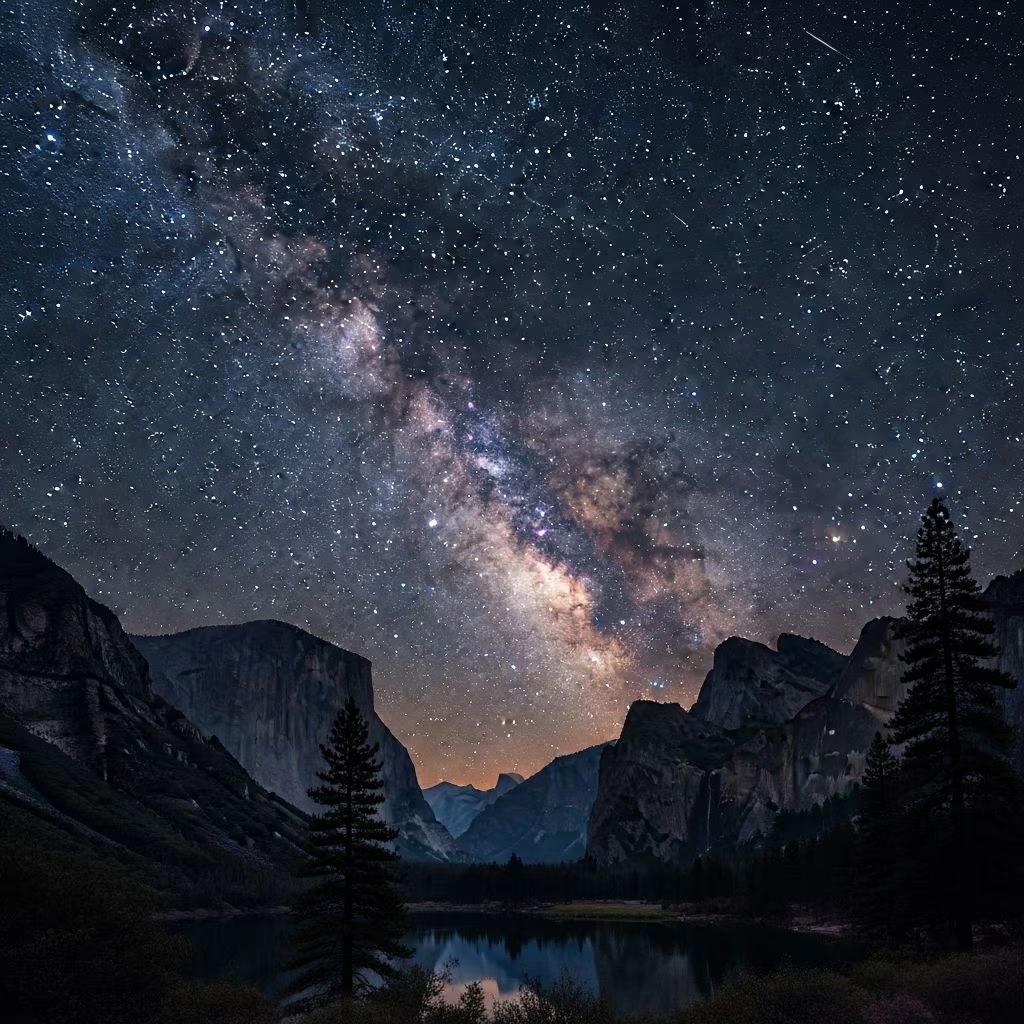
Explore the best national parks for stargazing across the USA, from desert landscapes to mountain peaks, with tips for optimal viewing conditions.
 Travel Essentials
Light pollution has become one of the most pervasive environmental challenges affecting our ability to observe the night sky. Nearly 80 percent of Americans can no longer see the Milky Way from their homes due to excessive artificial lighting. However, America’s national parks offer extraordinary sanctuaries where visitors can escape urban glow and reconnect with the cosmos. These protected areas represent some of the last remaining places where the celestial sphere displays its full magnificence, with thousands of stars visible to the naked eye on clear nights. Whether you’re an amateur astronomer, a photography enthusiast, or simply seeking a humbling natural experience, America’s national parks provide world-class stargazing opportunities.
The International Dark-Sky Association has established formal recognition programs that certify parks meeting strict standards for darkness and stargazing quality. A designated Dark Sky Park must maintain exceptional nighttime conditions while offering outstanding opportunities for stargazing experiences. These certifications serve as reliable indicators for travelers seeking the most promising astronomical viewing locations. Parks earning this designation have implemented comprehensive light management practices, educated staff, and robust programs supporting night sky appreciation. Understanding these certifications helps travelers select destinations that genuinely deliver on their stargazing promises rather than merely claiming to offer night sky viewing.
Death Valley National Park in California and Nevada represents one of continental America’s most exceptional stargazing destinations. Spanning vast areas with minimal light pollution, Death Valley offers some of the darkest skies accessible within the contiguous United States. The park’s extreme aridity and remote location—combined with its significant elevation variations—create ideal atmospheric conditions for astronomical observation. Visitors planning winter visits will find comfortable temperatures for extended outdoor viewing sessions, whereas summer nights remain exceptionally hot despite cooler conditions after sunset. The park’s dedicated astronomy programs, led by knowledgeable rangers and volunteers, provide educational opportunities that enhance visitor understanding of celestial phenomena.
Big Bend National Park in Texas maintains the distinction of having less light pollution than any other National Park unit in the lower 48 states. This remote location in far West Texas offers visitors the remarkable opportunity to observe approximately 2,000 stars on clear nights—a stark contrast to the few hundred typically visible from medium-sized cities. Big Bend’s commitment to eliminating remaining light pollution sources demonstrates a genuine dedication to preserving the night sky for future generations. The park’s isolated position, combined with surrounding desert terrain, creates conditions where celestial navigation—a practice essential to human history—remains genuinely possible and profoundly moving.
Great Sand Dunes National Park and Preserve in Colorado presents a unique stargazing environment where landscape and sky create an almost otherworldly experience. The expansive sand formations create unobstructed 360-degree views of the heavens, while the cool evening sand provides comfortable areas for extended observation sessions. Climbing dunes beneath starlight or moonlight creates sensations comparable to standing on an alien world. The park welcomes amateur astronomers to set up telescopes in designated parking areas, fostering a community atmosphere around night sky appreciation. Ranger-led astronomy programs help visitors understand the constellations, planets, and deep-sky objects visible from this remarkable desert location.
Bryce Canyon National Park in Utah stands recognized as one of America’s last great refuges for stargazing excellence. On clear, moonless nights, visitors can observe between 7,500 and 10,000 individual stars scattered across the sky—an experience increasingly rare in contemporary North America. The park’s active astronomy and night sky program, coordinated by dedicated volunteers called the Dark Rangers, reflects genuine institutional commitment to night sky preservation and visitor education. The park’s unique geology, characterized by distinctive hoodoo rock formations, creates a dramatic terrestrial backdrop that frames celestial views with unmatched visual interest. These formations, rising thousands of feet from the canyon floor, naturally block ambient light from surrounding areas while channeling visitors’ attention upward toward the heavens.
Canyonlands National Park in Utah encompasses 337,598 acres of extraordinarily dark sanctuary where rock formations frame the night sky with dramatic beauty. The canyons and buttes wrapping around the Colorado River provide the ultimate scenic backdrop to stellar observation, transforming stargazing into a comprehensive sensory experience. Visitors interested in exploring multiple dark sky locations can follow a road trip itinerary connecting Canyonlands with nearby Arches National Park, Hovenweep National Monument, and Natural Bridges National Monument—all recognized dark sky destinations offering complementary landscapes and viewing opportunities.
Chaco Culture National Historical Park in New Mexico has long earned recognition from night sky enthusiasts as one of America’s premier stargazing locations. The convergence of archaeological significance, dramatic landscape features, and exceptional darkness creates a destination where visitors experience both human and celestial history. The park’s isolated location in the New Mexico high desert provides minimum light interference, allowing stars to display their full brilliance while visitors contemplate the astronomical knowledge possessed by the ancestral peoples who inhabited this region centuries ago.
Glacier National Park in Montana features dramatic alpine landscapes—encompassing glacial lakes, towering mountain peaks, and ancient forests—that create ideal conditions for night sky photography and observation. The Going-to-the-Sun Road’s higher elevations offer easily accessible dark skies for visitors seeking spectacular views without requiring extensive backcountry hiking. However, potential visitors should note that this scenic roadway closes during winter months when stargazing conditions reach their optimal peak due to longer nights and typically clearer atmospheric conditions. Rocky Mountain National Park similarly offers mountain elevation advantages that lift observers above significant portions of atmospheric haze while providing expansive views of the night sky.
Acadia National Park in Maine, New England’s only national park, possesses the largest area of naturally dark sky east of the Mississippi River. The park allows summer stargazing from Cadillac Mountain’s summit, accessible by hiking, biking, or vehicle access during warmer months. Multiple star-studded trails running along the Atlantic coast, including Jordan Pond, Seawall, Ocean Path, and Sand Beach, provide additional viewing opportunities throughout the park. The combination of coastal beauty, mountain elevation, and genuine darkness creates conditions where visitors can observe the Milky Way—a sight impossible for most Eastern United States residents—while enjoying the park’s distinctive maritime character.
The Colorado Plateau region encompasses multiple exceptional stargazing destinations accessible within a concentrated geographic area. Grand Canyon National Park, recognized as a Dark Sky Park in 2019, provides after-hours seats to the Milky Way that nearly 80 percent of Americans can no longer access from their homes. The park’s vast scale becomes even more awe-inspiring when observed under a canopy of brilliant stars, transforming the already spectacular canyon into an even more profound natural wonder. Located approximately 90 minutes from Flagstaff, Arizona, the Grand Canyon offers multiple dedicated viewing points including Mather Point, Moran Point, Lipan Point, and Yavapai Point, each providing distinct perspectives on both terrestrial and celestial landscapes.
Joshua Tree National Park in California boasts some of southern California’s darkest nighttime skies, offering many visitors their first opportunity to observe the Milky Way in genuinely dark conditions. For residents of the greater Los Angeles metropolitan area—home to approximately 18 million people—Joshua Tree represents the nearest convenient stargazing destination with relatively dark skies. While the park’s western sections experience significant light pollution spillover from Palm Springs and nearby communities, the park’s eastern wilderness area rewards adventurous visitors with some of the region’s darkest remaining night skies. The park’s annual Night Sky Festival, held at the Sky’s the Limit Nature Center and Observatory just outside the park’s north entrance, provides structured opportunities for education and observation.
Flagstaff, Arizona itself earned recognition as the original International Dark Sky Place, representing the birthplace of the contemporary stargazing movement. The area now hosts multiple observatories and astronomy centers, making it an ideal base for visitors seeking comprehensive night sky educational experiences. A 34-mile loop connecting AutoCamp Joshua Tree, Walnut Canyon National Monument, and Wupatki National Monument—jointly managed by the U.S. National Park Service—links stargazing opportunities with Native American ruins, red rocks, and painted desert landscapes, creating a multifaceted travel experience.
Optimal Timing Considerations: Stargazing quality varies significantly based on lunar phases. Moonless nights, occurring near new moon periods, provide the darkest possible conditions for observation. Winter months typically offer the most comfortable viewing temperatures at lower-elevation parks, while higher elevations may become inaccessible during winter months when snow and ice create hazardous conditions. Spring and fall often represent ideal seasons, offering moderate temperatures with acceptable darkness levels.
Essential Preparation Steps:
Photography and Observation Equipment: While stargazing requires no special equipment—the human eye provides remarkable observational capacity—binoculars and telescopes significantly enhance the experience by revealing planetary details, star clusters, and deep-sky objects. Tripod-mounted cameras with wide-angle lenses enable impressive astrophotography, though technical expertise varies considerably. Many parks welcome amateur astronomers to set up personal equipment in designated areas, creating communities of shared celestial interest.
What equipment do I need to see stars effectively? The human eye requires nothing but darkness and clear skies. However, binoculars enhance the experience by revealing details invisible to naked-eye observation. Telescopes provide even greater magnification for planetary observation and deep-sky exploration.
When is the best time to visit for stargazing? Moonless nights during new moon phases provide optimal darkness. Winter months offer comfort for extended outdoor sessions at lower-elevation parks, while shoulder seasons (spring and fall) provide moderate temperatures at higher elevations.
Do all national parks offer equal stargazing experiences? No. Parks certified as Dark Sky locations maintain superior conditions compared to other areas. Geographic location, elevation, and institutional commitment to light management significantly influence actual stargazing quality.
Can I photograph stars from national parks? Yes. Many parks welcome astrophotography with basic equipment. Wide-angle lenses and tripods enable impressive night sky photography, though technical skill development requires practice and experimentation.
Are ranger-led programs available at all stargazing parks? Most major parks host astronomy programs during appropriate seasons. Checking park websites beforehand allows visitors to align trips with educational opportunities and group observation sessions.
Visitors to national parks bear responsibility for preserving the night sky resources that make these destinations exceptional. Using red-light flashlights prevents disruption to other observers’ vision adaptation. Minimizing vehicle lights and avoiding unnecessary lighting preserves darkness for entire viewing areas. Respecting quiet hours ensures peaceful stargazing experiences for all visitors. Supporting park conservation efforts through entrance fees and donations sustains the institutional commitment required for long-term dark sky preservation. Following Leave No Trace principles during nighttime visits maintains pristine natural conditions for future generations.
America’s national parks represent irreplaceable repositories of natural darkness in an increasingly light-polluted world. These destinations offer profound opportunities to reconnect with the night sky that shaped human culture, navigation, and imagination for millennia. Whether visitors seek scientific understanding, photographic documentation, spiritual renewal, or simple wonder at the cosmos, America’s stargazing national parks deliver experiences increasingly rare in contemporary society. Planning a dedicated stargazing trip to one of these exceptional locations represents an investment in personal enrichment and participation in ongoing efforts to preserve this essential natural resource.
