

 Travel Essentials
 Travel Essentials

Discover the best U.S. national parks for wildflower viewing, from spring ephemerals to alpine meadows and desert superblooms.
 Travel Essentials
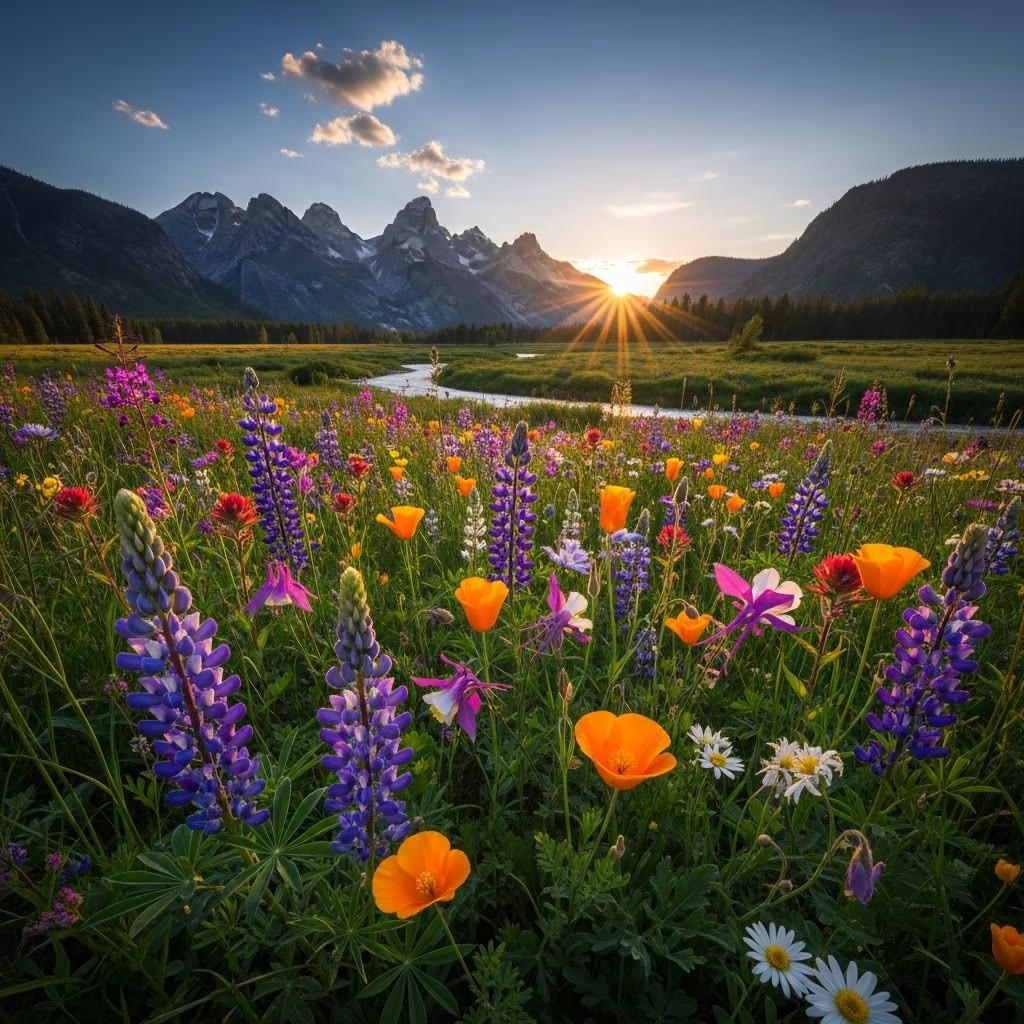
Nothing captures the raw beauty of nature quite like a sea of wildflowers carpeting landscapes in vibrant hues. America’s national parks offer some of the world’s most spectacular displays, where delicate petals transform mountainsides, meadows, and valleys into living artworks. These blooms not only dazzle the eyes but also support diverse ecosystems, attracting pollinators and wildlife. Whether you’re a botanist, photographer, or casual hiker, timing your visit to these parks during peak wildflower seasons promises memories that last a lifetime.
National parks preserve unique habitats—from misty forests and rugged peaks to arid deserts and volcanic plains—that foster thousands of native plant species. Factors like elevation gradients, soil types, moisture levels, and microclimates create ideal conditions for explosive blooms. For instance, over 1,500 flowering plants thrive in some parks due to varied elevations and protective environments. Spring ephemerals pop up early, while summer alpines race against snowmelt. Climate and rainfall dictate timing, so check ranger updates or apps like the NPS Wildflower Locator for real-time intel.
The Appalachian region shines with lush, diverse wildflower populations, thanks to rich soils and ample rainfall. These parks offer extended bloom periods, ideal for multi-day trips.
Dubbed America’s floral powerhouse, Great Smoky Mountains National Park in Tennessee and North Carolina hosts over 1,500 species of flowering plants, more than any other U.S. park. Spring ephemerals like trilliums, wild geraniums, and azaleas blanket forests from February to May, while summer brings touch-me-nots along streams. The park’s elevation range (800–6,643 feet) ensures sequential blooms. Join the annual Wildflower Pilgrimage for guided hikes and workshops.
Prime spots include Cades Cove for pink lady slippers and Mount LeConte trails for flame azaleas. Expect pink azaleas along Skyline Drive in May and orange jewelweed by rivers in summer. South River and Rose River picnics yield vivid displays.
Virginia’s Shenandoah National Park offers a generous April-to-September window for wildflowers. Skyline Drive’s 105 miles reveal pink azaleas in May, transitioning to summer touch-me-nots (orange and yellow) near streams like Hughes River and Mill Prong. Trails here are accessible, with boardwalks aiding close-up views.
Pacific Northwest and Rocky Mountain parks feature high-elevation meadows that erupt in color post-snowmelt, creating postcard-perfect scenes.
Mount Rainier’s subalpine meadows, especially Paradise and Sunrise areas, explode with lupines, avalanche lilies, penstemons, paintbrush, and asters from July to August. Over 100 species thrive in the short growing season, fueled by glacial soils. The Skyline Trail offers panoramic views amid purple lupines and red Indian paintbrush. Early August is reliable, weather permitting.
Montana’s Glacier National Park dazzles with wildflowers across elevations, from valley beargrass to alpine phlox. Varied ecosystems yield blooms from June through August. Highline Trail and alpine meadows showcase shooting stars and monkeyflowers. Ranger stations provide current hot spots.
Yellowstone’s nutrient-rich volcanic soils supercharge wildflowers. Dunraven Pass bursts with lupine, arrowleaf balsamroot, and paintbrush from May to August. Northern range areas like Lamar Valley offer evening primrose at dusk. Beaver Ponds Trail highlights bitterroot and elephant heads.
The Golden State’s parks span deserts, coasts, and sierras, delivering year-round variety and legendary poppies.
Pinnacles National Park claims 80% of its plants bloom March to May, led by California’s state flower, the golden poppy. Spot fiddlenecks, baby blue-eyes, monkeyflowers, and fiesta flowers on easy trails. Volcanic rocks create microhabitats for these annuals.
With 1,450 species—25% of California’s natives—Yosemite blooms across its 11,000-foot elevation span. Tuolumne Meadows and Glacier Point host lupines and paintbrush in summer; lower elevations see spring desert influences. Visit anytime for something in flower.
Oregon’s Crater Lake packs 200+ species into the 0.41-mile Castle Crest Wildflower Trail. Shooting stars, bistorts, Lewis’ monkeyflowers, and orange skyrocket thrive on pumice slopes. Perfect for low-effort viewing.
Death Valley’s Lee Flat transforms into a green, flower-dotted high-desert (5,000+ feet) in spring after rains. Drive graded roads for desert gold, phacelia, and chicory without strenuous hikes.
Alaska’s Denali features tundra wildflowers on Eielson Alpine Trail, Primrose Ridge, and Triple Lakes. Lupines, fireweed, and arctic poppies bloom June to August. Visitor centers flag prime areas like Savage River.
Florida’s Everglades offers orchids and prairie species year-round in sawgrass marshes and rocklands. Spring-summer mornings reveal the most, via hikes or bikes. Tree islands host rare epiphytes.
Success hinges on timing, tools, and Leave No Trace principles. Blooms vary yearly; monitor NPS sites or apps.
| Park | Peak Season | Signature Flowers | Top Trail |
|---|---|---|---|
| Great Smoky Mountains | Feb-May | Trillium, Azalea | Mount LeConte |
| Mt. Rainier | Jul-Aug | Lupine, Paintbrush | Skyline Trail |
| Pinnacles | Mar-May | Poppy, Monkeyflower | Balconies Trail |
| Yellowstone | May-Aug | Balsamroot, Lupine | Beaver Ponds |
| Yosemite | Year-round | 1,450 species | Tuolumne Meadows |
Timing varies: spring (Mar-May) for deserts/lowlands, summer (Jun-Aug) for alpines. Check park-specific forecasts.
Great Smoky Mountains leads with 1,500+.
Yes—many like Crater Lake’s are under 1 mile.
Shifting patterns; wet winters boost superbloom, droughts suppress.
In Yosemite or Everglades, yes, due to elevation/microclimates.
Wildflowers face threats from invasives, climate shifts, and trampling. Support by volunteering, advocating for parks, and treading lightly. Parks like those highlighted use restoration projects to bolster natives.
