

 Travel Essentials
 Travel Essentials

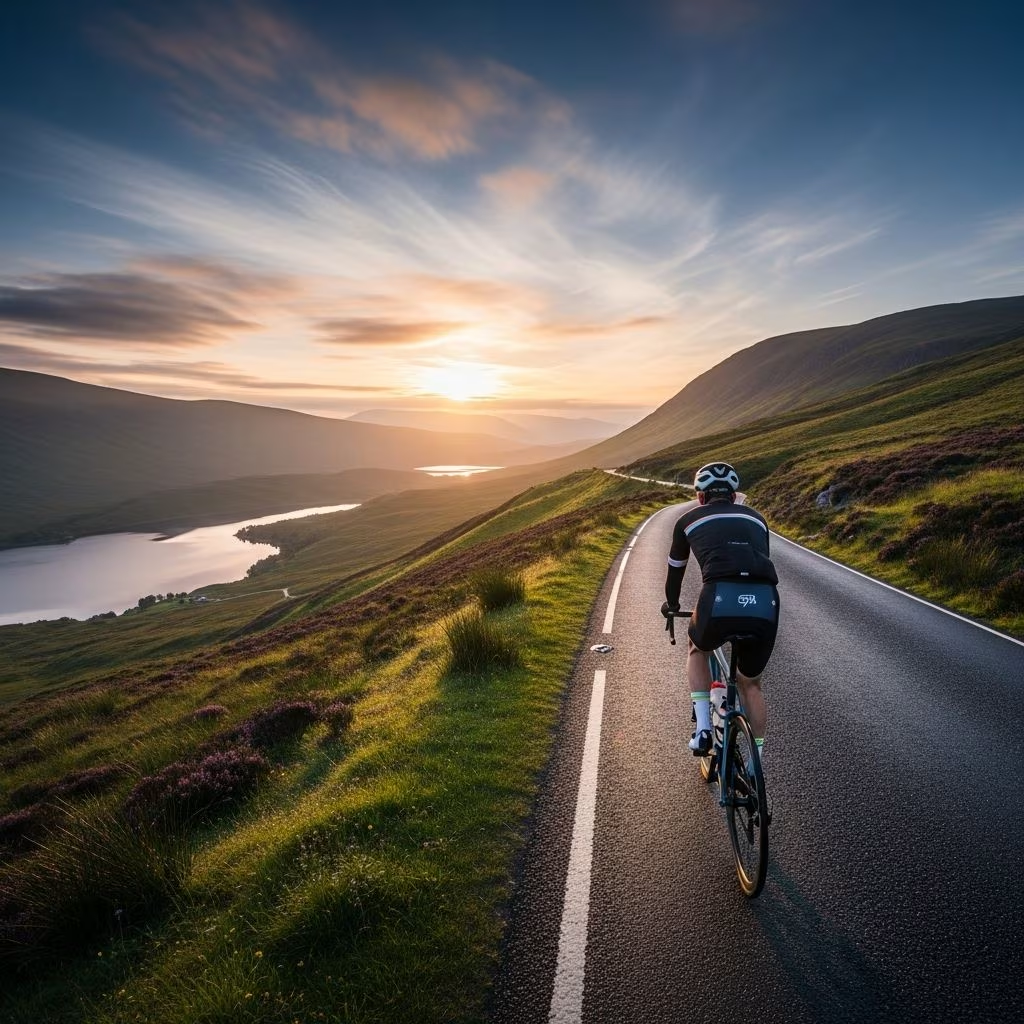
Explore the UK’s best cycling routes, from family-friendly trails to epic long-distance rides across mountains, coasts, and countryside.
 Travel Essentials
The United Kingdom offers some of Europe’s most diverse and accessible cycling experiences, ranging from peaceful towpath meanders to challenging mountain terrain. Whether you’re seeking a leisurely family outing or an ambitious multi-week expedition, Britain’s cycling infrastructure and natural landscapes provide exceptional opportunities for riders of all abilities. This guide explores the full spectrum of cycling experiences available across the British Isles, highlighting routes that showcase the country’s varied geography and cultural heritage.
British cycling encompasses an impressive variety of experiences due to the nation’s diverse topography and extensive network of dedicated cycling infrastructure. From the dramatic coastal paths of Southwest England to the remote highlands of Scotland, cyclists can traverse landscapes that range from gentle countryside to challenging fell terrain. The UK’s cycling scene benefits from well-maintained routes, numerous bike hire facilities, and supportive tourism infrastructure, making it an ideal destination for both domestic and international cycling enthusiasts.
The British cycling culture has evolved significantly, with investment in cycle networks and tourism marketing creating numerous opportunities for both serious cyclists and casual riders. National Cycle Networks and regional authorities have developed comprehensive signposted routes that make navigation straightforward, even for those unfamiliar with particular regions.
For cyclists seeking extended touring experiences, the UK provides several legendary long-distance routes that combine scenic beauty with logistical feasibility.
The most ambitious cycling undertaking available is LEJOG (Land’s End to John o’ Groats), spanning 900 to 1,000 miles from England’s southwestern tip to Scotland’s northeastern extremity. This iconic journey attracts cyclists from worldwide and typically requires 3-4 weeks to complete, passing through diverse landscapes including moors, mountains, and coastal regions. The route represents the ultimate British cycling challenge and offers riders an unparalleled sense of accomplishment.
An alternative to LEJOG is the Peak District to Scottish Highlands route, covering approximately 800 miles and providing a comprehensive traverse of Britain’s varied terrain. This journey connects lowland agricultural areas with dramatic upland scenery, offering cyclists exposure to multiple ecological zones within a single expedition.
The Badger Divide, running 210 miles from Glasgow to Inverness, provides a Scottish challenge suitable for experienced touring cyclists. This route traverses the Scottish landscape, incorporating forest tracks and mountain passes that demand fitness and technical skill. The Badger Divide appeals to cyclists seeking wilderness immersion without committing to a full Land’s End journey.
The Rebellion Way in Norfolk extends 232 miles, making it among England’s lengthiest single routes. This Norfolk-based route showcases the East Anglian landscape, characterized by flat terrain interspersed with historic villages and agricultural countryside. The Rebellion Way suits cyclists preferring less mountainous terrain while maintaining multi-day expedition status.
King Alfred’s Way encompasses 220 miles through historic Wessex, following routes associated with the Anglo-Saxon kingdom. This culturally significant route combines cycling with historical exploration, as riders pass through regions crucial to English medieval history. The relatively gentle terrain makes it accessible to intermediate cyclists seeking extended touring experiences.
Scotland’s cycling offerings range from accessible lowland routes to challenging highland terrain, reflecting the nation’s diverse landscape.
The Great Glen Way spans 79 miles connecting Fort William to Inverness, combining canal towpaths, forest tracks, and roads. This Scottish classic provides manageable daily mileage suitable for intermediate cyclists while delivering dramatic highland scenery. The Great Glen Way’s infrastructure and popularity make it well-suited for cyclists new to multi-day touring.
The Hebridean Way, covering 185 miles across the Outer Hebrides, challenges cyclists with remote island terrain and variable weather conditions. This route demands self-sufficiency and planning but rewards riders with authentic island landscapes and minimal traffic. The Hebridean Way attracts adventurous cyclists seeking genuine wilderness experiences.
The Pennine Bridleway extends 205 miles from Derbyshire to Cumbria, traversing northern England’s spine. While incorporating significant climbing, this route provides access to remote upland areas and dramatic fell scenery. Mountain bike capability is recommended for sections featuring technical terrain.
The South Downs Way stretches 100 miles from Winchester to Eastbourne, requiring two to four days for completion. This off-road route follows bridleways and byways through chalk downland, demanding mountain bike capability due to grassy and chalky terrain conditions. The South Downs Way offers chalk landscape immersion and combines moderate challenge with relative accessibility.
The Sea to Sea cycle route (C2C) connects the Lake District with the North Sea coast, spanning 137.5 miles from Whitehaven or Workington to Sunderland or Tynemouth. This celebrated route combines varied terrain types and represents an achievable trans-England cycling objective. The C2C’s popularity reflects its well-developed infrastructure and compelling route design.
Kent’s circular Round the Island Cycle Route encompasses 147 miles using traffic-free cycle paths, bridleways, and quiet roads. This route appeals to leisure cyclists seeking extended riding without excessive traffic exposure. Touring and hybrid bikes suit this generally accessible circuit through southeastern England.
The West Kernow Way creates a 150-mile figure-eight loop in Cornwall, showcasing the county’s diverse landscapes. This route provides flexibility through its double-loop design, allowing cyclists to ride complete loops or partial sections. Cornish cycling offers coastal scenery combined with moorland transitions.
The Cornish Way extends 288 kilometers along Cornwall’s length, incorporating both on-road and off-road sections. Road and gravel cyclists particularly appreciate this route’s design, which deliberately avoids major highways while passing through historic towns, fishing villages, and mining landscapes. The Cornish Way’s modular structure enables multi-day or extended touring approaches.
The Yorkshire Dales Cycleway presents a challenging 130-mile circular route starting and finishing in Skipton, requiring up to six days for completion. This route traverses one of England’s most distinctive landscapes, featuring river valleys, dramatic hills, and drystone walls. The Yorkshire Dales Cycleway suits experienced cyclists seeking challenging scenery.
The Yorkshire Wolds route covers 144 miles in a circular tour of East Yorkshire’s gently undulating landscape. This Sustrans-developed route provides a more accessible Yorkshire option compared to the Dales Cycleway, suitable for intermediate cyclists seeking extended touring.
Not all UK cycling experiences require multi-day commitments. Numerous shorter routes serve recreational cyclists and families.
The Camel Trail in Cornwall runs 18 kilometers along the River Camel between Padstow and Bodmin, with an additional 9-kilometer section to Blisland on Bodmin Moor. This traffic-free route particularly suits family cycling, with numerous bike hire facilities and stopping points. The Camel Trail’s popularity among family cyclists reflects its accessibility and scenic river-valley setting.
The Tissington Trail in the Peak District spans 13 miles, following an old railway line from Buxton to Ashbourne. This gentle route provides accessible Peak District introduction, showcasing the White Peak landscape and charming villages. Family groups appreciate the Tissington Trail’s moderate difficulty and cultural significance.
The Exmoor Cycle Route covers 62 miles of challenging terrain through dramatic Exmoor National Park scenery. Despite its challenge level, this route rewards cyclists with moorland vistas, wild ponies, and coastal viewpoints. Starting at Minehead, the route passes through chestnut forests and offers Bristol Channel views.
Tour de Holme Moss in West Yorkshire offers both mountain bike (42 miles) and gravel cycling (40 miles) options. This specialized route caters to off-road enthusiasts seeking technical terrain within defined route structures.
Britain’s National Parks provide focused cycling opportunities. The Peak District offers multiple route options ranging from gentle towpath cycling to challenging fell terrain, with the Tissington Trail and broader network of established routes. The Yorkshire Dales National Park combines shorter day rides with the more demanding 130-mile Cycleway, providing scalable options. The New Forest and Lake District provide additional National Park cycling opportunities with varying difficulty levels.
The North of Ireland Cycle Route spans 242 miles as Ireland’s first fully signed coast-to-coast cycling route, beginning north of Belfast in Whiteabbey village and traversing the Sperrin Mountains to reach the Atlantic Coast at Donegal. This route demonstrates cycling opportunities extending beyond England, Scotland, and Wales.
| Route Type | Typical Duration | Difficulty Level | Best For |
|---|---|---|---|
| Short Family Routes (under 50 miles) | 1-2 days | Easy | Families, casual cyclists, introduction to cycling holidays |
| Regional Circuits (100-150 miles) | 3-5 days | Moderate | Intermediate cyclists, extended weekend trips |
| Long-Distance Expeditions (200+ miles) | 1-3 weeks | Challenging | Experienced cyclists, dedicated touring enthusiasts |
| Full-Length LEJOG/Epic Routes (800+ miles) | 3-4 weeks | Very Challenging | Seasoned cyclists, ultimate challenges |
Late spring through early autumn (May to September) provides optimal conditions, with longer daylight hours and more stable weather. Summer peak season offers the most reliable conditions but attracts greater route congestion. Late spring and early autumn provide favorable weather with fewer tourists.
Route selection determines equipment requirements. Family and towpath routes function with standard hybrid or road bikes. Off-road and highland routes demand mountain bikes capable of handling technical terrain. Weather considerations require weatherproof gear and mudguards for wet-season riding.
Most established routes feature excellent signposting and navigation infrastructure. National Cycle Network routes benefit from consistent signage. Mapping applications and dedicated cycling GPS devices provide additional navigation support. Less famous routes may require advance planning and mapping consultation.
The UK offers diverse accommodation suitable for touring cyclists, including hostels, bed-and-breakfasts, hotels, and camping facilities. Cycling-specific accommodations cater to touring needs with secure bike storage and laundry facilities. Route guides typically recommend appropriate accommodation.
The United Kingdom’s cycling infrastructure and diverse landscapes create exceptional opportunities for riders of all abilities and ambitions. From family-friendly traffic-free paths to legendary multi-week expeditions, British cycling offers experiences matching every cyclist’s capabilities and interests. The combination of well-maintained routes, supportive tourism infrastructure, and stunning scenery makes the UK an outstanding cycling destination that continues to attract both domestic and international enthusiasts seeking memorable two-wheeled adventures.
