

 Travel Essentials
 Travel Essentials

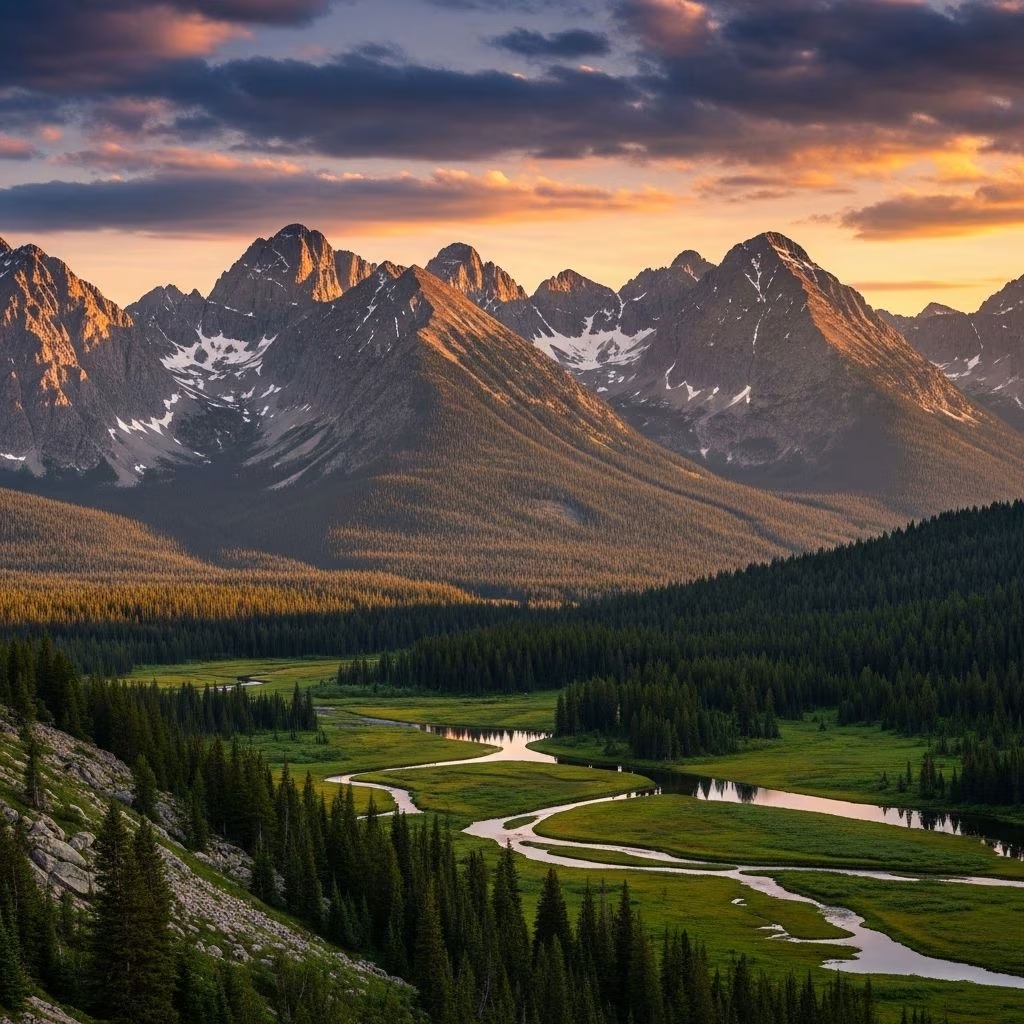
Explore the most stunning mountain ranges in the US, including the Rockies, Appalachians, and Sierra Nevada, with tips for hiking, skiing, and scenic drives.
 Travel Essentials
The United States boasts some of the world’s most dramatic and accessible mountain landscapes, offering endless opportunities for outdoor enthusiasts, nature lovers, and casual travelers alike. Spanning from the misty ridges of the East Coast to the snow-capped summits of the West, these ranges define the American wilderness. Whether you’re seeking adrenaline-pumping hikes, world-class skiing, or peaceful scenic drives, the US mountains deliver unparalleled experiences. This comprehensive guide dives into the geography, history, activities, and must-visit spots across the nation’s premier ranges, helping you plan an unforgettable trip.
North America’s mountain systems formed over millions of years through tectonic collisions, volcanic activity, and erosion. The eastern ranges, like the Appalachians, are ancient and rounded, dating back over 480 million years, while the younger western cordilleras, such as the Rockies, rose dramatically just 80 million years ago. These formations not only create stunning vistas but also influence weather patterns, biodiversity, and even human settlement patterns.
Understanding this geology enhances any visit. For instance, the folded layers in the Appalachians reveal Earth’s violent past, visible in exposed rock faces along trails. In contrast, the Rockies’ sharp peaks result from uplift along fault lines, creating ideal conditions for glaciers and alpine lakes.
The Appalachian Mountains stretch over 1,500 miles from Alabama to Newfoundland, forming a lush, forested barrier that once isolated early American colonies. Today, they attract millions for their accessible trails and vibrant fall foliage.
These areas shine in autumn, when leaves explode in reds and golds, drawing photographers from across the globe. Spring wildflowers and summer waterfalls add seasonal variety.
Dominating the continental divide, the Rocky Mountains extend from Canada to New Mexico, encompassing 3,000 miles of rugged terrain. Elevations exceed 14,000 feet in Colorado alone, with 58 ‘fourteeners’ for peak baggers.
| Rocky Mountain Highlight | Location | Key Activity | Elevation (ft) |
|---|---|---|---|
| Rocky Mountain National Park | Colorado | Trail Ridge Road drive | 12,183 |
| Glacier National Park | Montana | Going-to-the-Sun Road | 6,646 |
| Grand Teton National Park | Wyoming | Jenny Lake boat & hike | 13,775 |
Winter transforms the Rockies into a skier’s dream. Towns like Aspen offer luxury lodges and gourmet dining alongside Bald Mountain’s powder bowls. Telluride, nestled in a box canyon amid the San Juans, blends Old West charm with modern lifts accessing 2,000 acres of terrain. Its free gondola connects the town to Mountain Village, providing panoramic views year-round.
Summer brings wildflower meadows, where elk herds bugle during rutting season. Fly-fishing in crystal streams yields trophy trout, and hot air balloon rides over Jackson Hole reveal jagged Tetons piercing the sky.
The Sierra Nevada, California’s ‘Range of Light,’ rises abruptly from the Central Valley, culminating in Mount Whitney at 14,505 feet—the tallest in the contiguous US. John Muir’s writings immortalized Yosemite’s granite domes and sequoia groves.
Northward, the Cascade Range features volcanic giants like Mount Rainier (14,411 feet) and Mount Hood. Crater Lake, in the caldera of Mount Mazama, boasts the deepest lake in the US at 1,943 feet, its sapphire waters reflecting lodgepole pines.
These ranges excel in multi-day backpacking. The John Muir Trail spans 211 miles from Yosemite to Whitney Portal, traversing high passes and remote basins.
Often overlooked, the Ozark Plateau in Missouri and Arkansas rolls with karst topography—sinkholes, caves, and spring-fed rivers. Blanchard Springs Caverns reveal underground rivers, while Buffalo National River offers world-class canoeing amid hardwood bluffs.
The Ouachita Mountains, unique for their east-west orientation, feature talus slopes and quartz crystals. Hot Springs National Park’s thermal baths, flowing since prehistoric times, provide therapeutic soaks amid pine-scented air.
New York’s Adirondack Park, larger than Yellowstone, encompasses 46 High Peaks over 4,000 feet. Lake Placid hosted two Winter Olympics, with bobsled runs open to thrill-seekers. Saranac Lake’s chain offers paddling and moose spotting.
In Alaska, Denali (20,310 feet) towers in the Alaska Range, North America’s tallest. The single-road park allows shuttle access to Eielson Visitor Center, where grizzlies forage berries below the glacier-clad massif.
Mountains cater to all levels:
Rock climbing thrives in the Black Canyon of the Gunnison and City of Rocks, Idaho. Mountain biking descends Moab’s slickrock, while via ferrata routes in Telluride blend hiking with secured cables.
Best Times: Summer for high country access; fall for colors; winter for snow sports; shoulder seasons for solitude.
Gear Essentials: Layered clothing, sturdy boots, bear spray, water filter. Check avalanche forecasts via NWAC or CAIC.
Sustainable Travel: Follow Leave No Trace—pack out waste, camp 200 feet from water, support local economies.
Entry fees apply at national parks ($35/vehicle, annual pass $80). Book lodges early; backcountry permits required for overnights.
The Rockies, stretching about 3,000 miles from Canada to New Mexico.
The Sierra Nevada with Mount Whitney at 14,505 feet (Denali in Alaska is taller overall).
Yes, with gentle trails and extensive networks like the Appalachian Trail’s side paths.
Telluride for its varied terrain and authentic vibe.
Yes, in Alaska’s Alaska Range during clear winter nights.
Climate change threatens glaciers in Glacier National Park (down from 150 to 25) and increases wildfire risks. Support conservation via NPS foundations or adopt low-impact travel. These timeless ranges invite exploration while reminding us of nature’s fragility.
