

 Travel Essentials
 Travel Essentials

Discover Washington State's top hiking trails spanning from coastal mountains to alpine peaks, featuring trails for all skill levels.
 Travel Essentials
Washington State offers some of the most spectacular hiking opportunities in the Pacific Northwest, with trails that range from coastal forest paths to high-altitude alpine routes. Whether you’re a seasoned mountaineer seeking challenging summits or a casual walker looking for scenic day trips, Washington’s diverse terrain provides options for every skill level and preference. The state’s geography, shaped by ancient glaciers and volcanic activity, creates dramatic landscapes that attract hiking enthusiasts from around the world.
The hiking season in Washington varies significantly based on elevation and location. Lower elevation trails near Seattle and the coast are often accessible year-round, while high-altitude passes typically open from mid-summer through early fall. Spring and fall offer mild temperatures and fewer crowds, making these seasons ideal for many trails. Summer provides reliable weather but brings peak visitor numbers to popular destinations.
The North Cascades region represents the crown jewel of Washington hiking, characterized by jagged peaks, pristine alpine lakes, and abundant wildlife. This area offers trails with significant elevation gains and technical terrain that rewards experienced hikers with unparalleled mountain vistas.
The Heather-Maple Pass Loop showcases the region’s botanical diversity and panoramic views. This moderate trail winds through subalpine meadows filled with wildflowers during peak season, offering hikers a complete alpine experience. The route features gentle grades punctuated by steady climbs, making it accessible to fit intermediate hikers while providing sufficient challenge to keep the experience engaging.
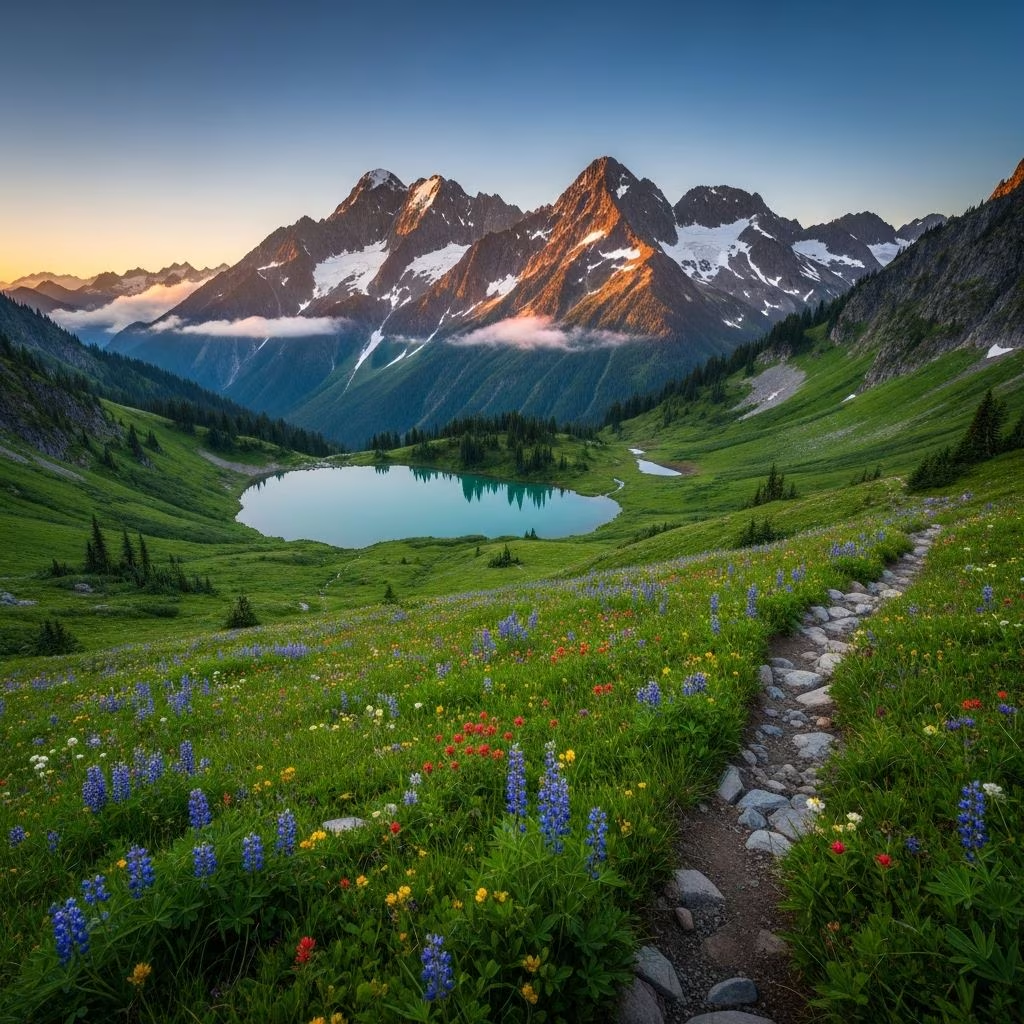
Blue Lake Trail provides a more accessible entry point to North Cascades scenery. The trail ascends through old-growth forest before opening into alpine terrain, where hikers are rewarded with vivid turquoise water reflecting surrounding peaks. This moderate hike strikes an excellent balance between effort required and visual payoff.
Park Butte Lookout offers a unique historical component to the hiking experience. This trail leads to a restored fire lookout tower where adventurous hikers can spend the night, combining day hiking with backcountry accommodation. The expansive views encompass Mount Shuksan, Mount Baker, and surrounding glaciated peaks.
Mount Rainier, Washington’s most prominent geographic feature, dominates the state’s hiking landscape. This massive stratovolcano offers trails suitable for day hikers and multi-day backpackers, with routes providing intimate perspectives of this glaciated peak.
The Skyline Loop stands as Mount Rainier’s most popular day hike for good reason. This relatively short route climbs through subalpine meadows to Panorama Point, offering dramatic close-up views of Rainier’s summit and the cascading Myrtle Falls. Hikers traverse open terrain where wildflowers carpet the landscape in summer, and afternoon light transforms the mountain’s appearance multiple times throughout the day.
Burroughs Mountain Loop provides an extended day hike alternative for those seeking additional mileage and solitude. This route frequently rewards observant hikers with marmot sightings and often presents less crowded conditions than more famous trails. The loop’s higher elevation opens additional vantage points for viewing Rainier from different angles.
Tolmie Peak Trail offers a quieter experience while still delivering spectacular alpine scenery. This moderate hike passes through varied terrain—transitioning from dense forest to open meadows—before reaching a historic fire lookout station where Reflection Lake spreads below like a giant mirror.
Beyond the mountainous regions, central Washington presents distinctive hiking opportunities in dramatically different ecosystems. These trails showcase the state’s geological diversity and offer welcome relief during peak summer when alpine trails are crowded.
White Bluffs Trail reveals Washington’s lesser-known landscape character. This series of interconnected routes traces sandy ridges and river canyons in the Tri-Cities region, offering expansive views across shrub-steppe terrain. The hikes feature dramatically different conditions from forested trails, with open exposure and minimal shade creating a completely unique desert mountain experience. Spring and fall provide optimal hiking conditions when temperatures remain moderate.
The Kettle Crest represents one of Washington’s premier backcountry routes for experienced hikers seeking extended wilderness adventures. This 44-mile high-country traverse follows ridgelines through northeastern Washington’s Selkirk Range, offering genuine solitude and extensive vistas across multiple mountain ranges. While accomplished as a multi-day thru-hike, the route can also be divided into manageable day hikes or overnight excursions.
The Mount Baker Wilderness encompasses some of the state’s most dramatic and challenging hiking terrain. These routes attract experienced hikers seeking steep elevation gains and technical alpine sections.
Yellow Aster Butte Trail delivers outstanding panoramic views despite significant effort required. The trail’s 2,600-foot elevation gain unfolds through varied ecosystems, transitioning from forest to alpine meadows to rocky terrain. Hikers reach a high pass framing a pristine alpine lake with North Cascades peaks as backdrop, justifying every step of the climb.
Park Butte Lookout combines moderate difficulty with unique overnight accommodation opportunities. The trail ascends to an occupied fire lookout tower where rangers provide insights into fire management and mountain ecology. Clear nights offer extraordinary stargazing opportunities from this elevated vantage point.
The Snoqualmie area provides convenient access to quality hiking for Seattle-area residents, offering trails within 90 minutes of the city. Despite proximity to urban centers, these routes deliver satisfying mountain experiences and genuine wilderness feeling.
Rattlesnake Ledge serves as an ideal introduction to hiking for beginners or as a quick workout for experienced trekkers. This steep but short trail reaches a ridge offering Snoqualmie Valley views and, on clear days, Mount Rainier visibility. The relatively short duration allows multiple seasonal visits to observe landscape changes throughout the year.
Mount Si presents a challenging day hike with significant elevation gain compressed into relatively short distance. The steep grades test cardiovascular fitness while forested terrain provides respite from direct sun exposure. The summit delivers expansive Cascade Range views as reward for sustained effort.
Snow Lake offers a moderate alternative combining meadow hiking with alpine lake scenery. The trail passes through productive forest before opening into subalpine terrain where seasonal wildflowers create colorful displays.
Olympic National Park encompasses multiple distinct ecosystems, including temperate rainforests, alpine meadows, and coastal wilderness. This ecological diversity creates varied hiking experiences within relatively short distances.
The park’s rainforest trails transport hikers into primordial-seeming environments where massive Sitka spruces and western red cedars create cathedral-like canopies. These trails remain accessible throughout much of the year, though wet conditions make waterproof footwear essential.
High-country routes access alpine ridges with panoramic views across the Olympic Range and, on exceptionally clear days, views toward the Cascades. These higher-elevation trails typically open mid-summer as snow melts.
Selecting appropriate trails requires understanding seasonal variations across Washington’s diverse elevations. Lower-elevation routes near sea level remain generally accessible year-round, though rainy winter months create muddy conditions. Mid-elevation trails (3,000-5,000 feet) typically open in late spring and remain accessible through mid-fall. High alpine routes above 6,000 feet require snow-free conditions, usually limited to July through September, though this varies annually based on snowpack.
Spring hiking offers emerging wildflowers, reliable water sources, and fewer crowds, though snow patches may linger on north-facing slopes even in June. Summer brings peak accessibility but also peak crowds, particularly at famous destinations. Fall provides stable weather, fewer visitors, and dramatic light conditions as days shorten. Winter requires specialized skills and equipment for most high-elevation trails, though lower routes offer quiet hiking opportunities.
Most Washington trails require understanding basic preparation requirements:
Mid-July through September provides the most reliable snow-free conditions for trails above 6,000 feet, though specific timing varies yearly based on snowpack. Lower elevation trails are accessible much earlier, often by late May.
Waterproof layers remain essential even during summer months, as weather changes rapidly. Hiking poles reduce knee strain on steep descents. Gaiters protect lower legs from mud on wet trails. Microspikes or crampons may be necessary for early-season alpine hikes with lingering snow.
Dog policies vary by location. Many trails allow dogs on leash, though some require permits or have seasonal restrictions. National park policies typically restrict dogs to developed areas only. Always verify specific trail regulations before visiting.
Famous destinations like Skyline Loop and Yellow Aster Butte experience significant summer crowds, particularly weekends. Hiking weekdays or during shoulder seasons (May-early June or September) substantially reduces crowds while maintaining good weather probability.
Make noise while hiking to avoid surprising bears. Carry bear spray in backcountry areas. Mountain lions inhabit wilderness regions but avoid humans. Marmots and pikas are common at high elevations but pose no threat.
