

 Travel Essentials
 Travel Essentials

Discover the best ways to move around Maui, from affordable public buses to car rentals, bikes, and rideshare services for every travel style.
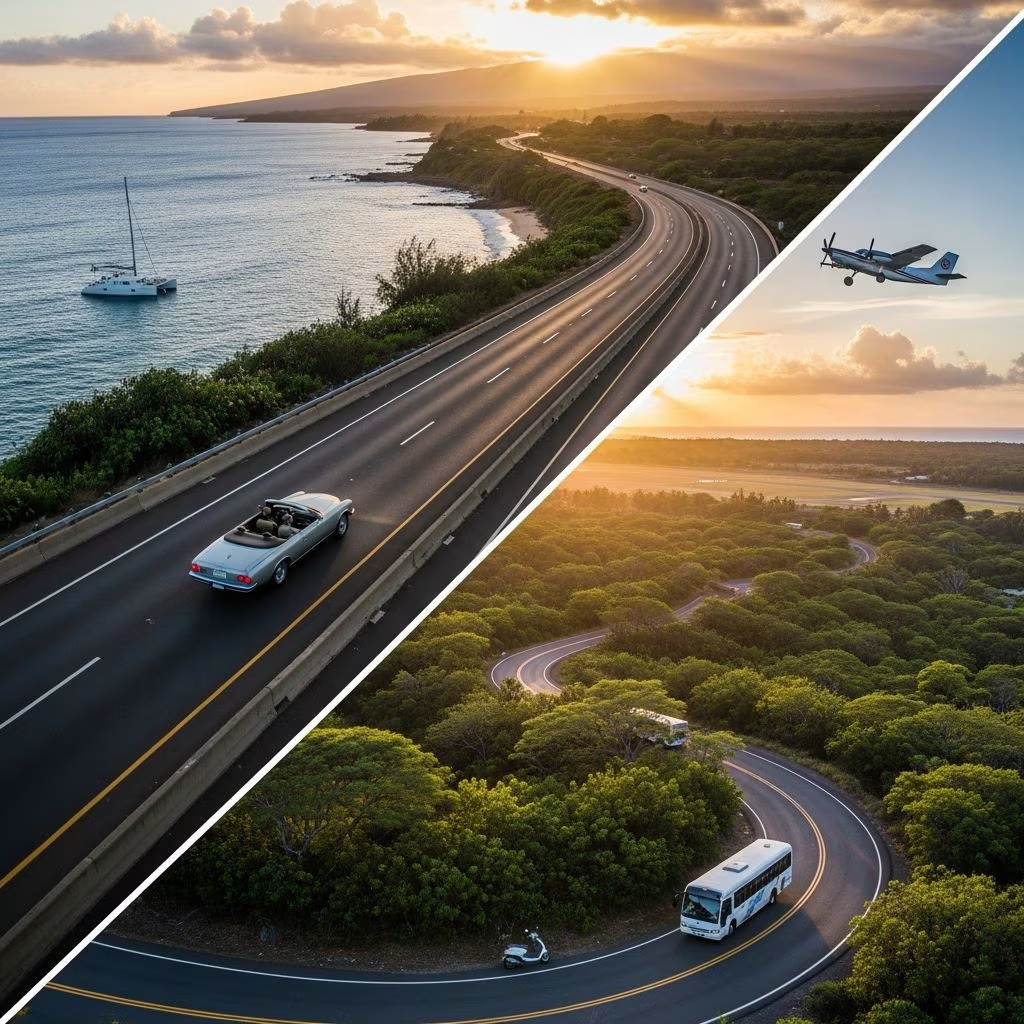 Travel Essentials
Maui presents travelers with diverse transportation options suited to different travel styles and budgets. Whether you prefer the independence of a rental car, the affordability of public transit, or the simplicity of walking and cycling through resort areas, the island accommodates various preferences. Understanding these options helps visitors plan trips that align with their itinerary scope and comfort level.
Maui is organized into five distinct regions, each anchored by its own town or small city. This geographic structure significantly influences which transportation method suits your travel plans. The island’s layout means that some visitors can accomplish their goals staying within a single area, while others need options for moving between different regions.
The distribution of attractions, resorts, and towns across these regions creates a natural framework for planning transportation. Understanding this layout helps travelers determine whether they need region-to-region mobility or can focus on exploring one area thoroughly.
Renting a car remains the most comprehensive transportation solution for visitors who want to explore Maui’s varied landscapes and attractions. A personal vehicle provides the flexibility to visit remote locations, follow your own schedule, and access areas beyond the reach of public transportation systems.
Car rentals become essential for several specific experiences. Visiting Haleakalā National Park requires personal transportation unless you book a guided tour, as the park sits far from public transit routes. Similarly, the famous Road to Hana demands either your own vehicle or participation in an organized tour. Many travelers opt for guided tours on this scenic but congestion-prone route to reduce traffic impacts and focus on the experience rather than navigation.
The flexibility of a rental car allows spontaneous stops at viewpoints, restaurants, and smaller attractions that appear during your drive. You can tailor your pace and priorities without adhering to fixed schedules or predetermined routes.
The Maui Bus serves as the island’s primary public transportation system, operated through Roberts Hawaii. The network currently operates 14 routes that connect major towns and communities throughout central, south, west, and upcountry Maui regions. These routes link popular destinations including Kahului, Kīhei, Lāhainā, and Kapalua.
The bus system specifically serves travelers staying near established routes and town centers. Main routes operate with approximately hourly frequency between roughly 7am and 8pm daily. Two routes—the Upcountry Islander and Haiku Islander—extend service to Kahului International Airport, providing budget-conscious travelers with an arrival transportation option.
The Maui Bus offers exceptional value for budget-minded travelers. Individual rides cost $2.00 per trip, while unlimited day passes provide access to all routes for $4.00. These affordable rates make the bus an attractive option for visitors who don’t mind adhering to schedules and predetermined routes.
The system includes fare programs for specific demographics. Visitors over 55 years old and students under 24 with valid identification receive free fares, making the bus particularly valuable for these groups. Digital and physical schedules help riders plan their journeys through the route maps available on the Maui Bus website and mobile application.
The bus performs exceptionally well for west coast travel, with efficient routes serving the scenic areas along Kaʻanapali, Lāhainā, and Kīhei. Travelers staying in these zones can accomplish considerable exploration via public transit. The system generally maintains reasonable on-time performance, though occasional delays and frequent stops between destinations can extend travel times.
Significant limitations affect certain travelers. The bus does not service remote attractions like Haleakalā National Park or Hana. Service ends relatively early in the evening, limiting options for night activities. Luggage storage is minimal, making the bus impractical for travelers carrying surfboards, groceries, or extensive baggage. The fixed schedule requires planning around bus departures rather than traveling at spontaneous times.
Walking provides the most intimate way to experience Maui’s resort areas, beach towns, and local communities. Travelers who remain in compact town centers or resort zones can accomplish considerable exploration on foot. This approach encourages discovering local restaurants, shops, and cultural sites that vehicular travel might bypass.
The practicality of walking depends heavily on your base location. Resort areas designed with pedestrian access accommodate foot traffic well. Established towns like Lāhainā offer walkable downtown zones with attractions, dining, and shopping within reasonable distances. However, distances between towns and toward natural attractions make walking impractical for comprehensive island exploration.
Bicycles and mopeds occupy a middle ground between walking and car rentals, offering advantages for specific travel patterns. These options work particularly well for short trips to nearby restaurants, local attractions, and exploration within your immediate vicinity.
Bicycles suit flat terrain and short-distance exploration, while mopeds extend your range slightly while still preserving the open-air experience of individual transportation. Neither option reaches remote destinations or accommodates luggage, groceries, or multiple passengers comfortably. Both require comfort with outdoor riding in variable weather and tropical heat.
Taxis and modern rideshare services offer point-to-point transportation without the commitment of renting a vehicle. These services work well for local travel within towns, airport transfers, and specific trips from resort areas to restaurants or attractions.
Rideshare services like holoholo provide alternatives for travelers carrying luggage, surfboards, or groceries—items that make public buses impractical. These services operate with more flexibility than taxis and often accommodate local travelers better than traditional taxi services.
Airport shuttle services including SpeediShuttle provide shared transfers between Kahului and Honolulu airports and major resort areas. These services offer fixed pricing for scheduled transfers, though advance booking is required and flexibility is limited compared to rental cars or rideshare options.
Ferries connect Maui to nearby islands Lānaʻi and Molokaʻi, enabling day trips or longer explorations of neighboring islands. These services provide an alternative to flying small aircraft while offering scenic ocean travel. Ferry schedules and availability vary seasonally, requiring advance planning for inter-island travel.
| Travel Style | Recommended Transportation | Best For | Key Considerations |
|---|---|---|---|
| Budget-Conscious | Maui Bus + Walking | Town exploration, set itineraries | Limited remote access, early service end times |
| Resort-Focused | Walking + Rideshare | Local area exploration, casual trips | Higher costs per trip, good for short distances |
| Active Explorer | Bike/Moped + Occasional Rentals | Local adventures, nearby attractions | Weather dependent, limited range |
| Comprehensive Touring | Car Rental | Multiple regions, park visits, Road to Hana | Highest cost, parking availability varies |
Maui transportation decisions reflect broader vacation philosophies about pace and priorities. The island culture encourages “practicing Aloha”—slowing down and aligning with island time rather than rushing between destinations. Travelers who arrive expecting quick transitions between attractions often find frustration in Maui’s more relaxed rhythms and occasional transportation delays.
Visitors who embrace a slower pace discover that missing one waterfall along the Road to Hana or arriving at a viewpoint without perfect parking creates opportunities rather than disappointments. The next similar attraction appears around the bend, and the unplanned detour often yields unexpected discoveries that planned itineraries miss.
This philosophy influences transportation choices. Choosing the bus over a rental car invites interactions with locals, exposure to authentic community spaces beyond tourist circuits, and a pace aligned with island culture. Walking through town centers reveals details that highway driving obscures. Even planned car rental trips benefit from building in flexibility and acceptance of changed plans.
Yes, if you stay in a single town or resort area and don’t plan to visit remote attractions. The Maui Bus connects major towns, and walking, cycling, and rideshare services handle local movement. However, accessing Haleakalā National Park, the Road to Hana, and other regional attractions requires either a rental car or guided tours.
The Maui Bus offers the lowest per-trip costs at $2.00 per ride, with unlimited day passes at $4.00. Walking requires no cost but limits your geographic range. Combining bus travel with walking or cycling provides budget-friendly comprehensive transportation.
The Maui Bus performs optimally along the west coast, efficiently connecting Kaʻanapali, Lāhainā, and Kīhei. It also serves central Maui communities and provides limited upcountry connections. Remote areas, national parks, and Hana remain inaccessible via bus.
Ferries connect Maui to Lānaʻi and Molokaʻi, offering day trip or extended exploration options. Schedules vary seasonally and advance reservations are recommended.
No. Rental cars become essential primarily for visiting Haleakalā National Park, exploring the Road to Hana (without guides), and comprehensive multi-region touring. Visitors content with single-area exploration can manage with alternative transportation or forgo personal vehicles entirely.
Effective transportation planning begins before arrival by assessing your specific itinerary priorities. Document which attractions matter most and their locations. This clarity reveals whether your goals cluster within a single region or span multiple areas requiring inter-regional mobility.
Consider your travel pace preferences and vacation philosophy. Rushed, packed itineraries demand rental cars for efficiency. Relaxed, discovery-oriented trips benefit from slower transportation methods that encourage local interaction and spontaneous exploration. Family groups, budget travelers, and activity enthusiasts have different optimal approaches.
Weather considerations affect bike and moped viability. Tropical weather patterns, rain intensity, and heat affect comfort on open-air vehicles. Traveling with luggage, sporting equipment, or multiple passengers influences which options prove practical. Group size determines whether single vehicles or shared transit makes sense.
Combining multiple transportation methods often provides optimal flexibility and value. Using the bus for main-route travel, rideshare for specific trips, and potentially renting a car for specific regional exploration creates comprehensive island access without committing to full-time car rental costs.
Maui accommodates diverse transportation approaches, from car rentals enabling comprehensive exploration to public buses supporting budget-conscious travel and walking facilitating intimate community connection. Your ideal transportation method reflects your specific itinerary, budget, travel pace, and personal preferences.
The island’s five distinct regions, limited bus coverage beyond major towns, and remote attractions like Haleakalā and Hana create a natural framework where different visitors optimally use different transportation methods. Accepting this reality and choosing methods aligned with your actual plans and philosophy—rather than aspirational alternatives—leads to more satisfying vacation experiences.
Whether you ultimately rent a car, rely on buses and walking, or combine multiple transportation methods, approaching Maui travel with flexibility and alignment to island culture enhances your experience beyond whatever vehicle carries you between destinations.
