

Food & Culture Stays Travel Essentials Travel Guides Trip Ideas
Categories
From the Blog
Remy’s Ratatouille Adventure at EPCOT: Ride Review, Tips & 2D Update
Travel Essentials

Best Ways to Pay in India: Cash, Cards, Forex & UPI

Discover the best ways to handle money in India using cash, credit cards, forex cards, and digital payments. Learn ATM tips, fees, and strategies for urban and rural areas.
Travel Essentials

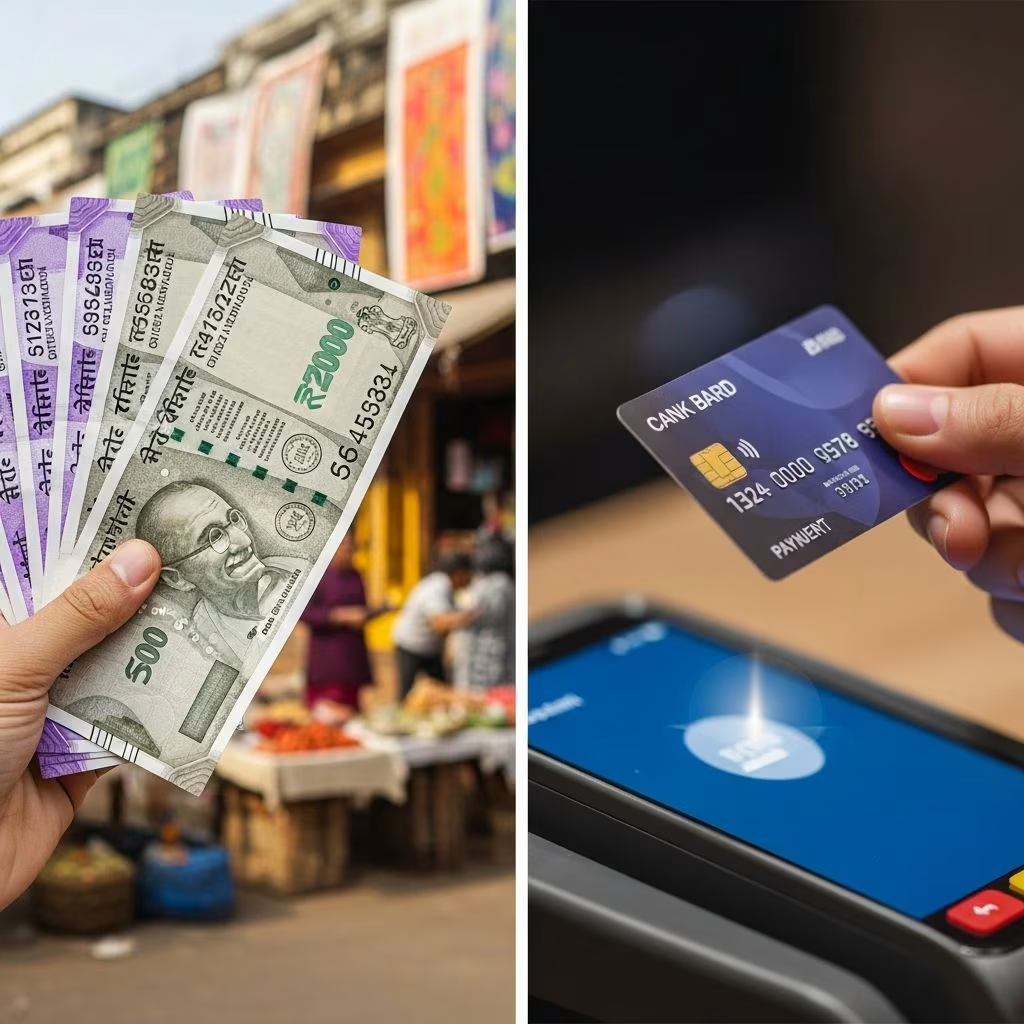
India’s vibrant travel scene demands a flexible approach to payments, blending traditional cash with emerging digital tools. Travelers benefit most from carrying a mix of rupees in hand, international cards, and UPI-enabled apps to cover everything from street food to luxury stays.

Why a Hybrid Payment Strategy Wins in India

India’s economy mixes ancient markets with modern fintech, meaning no single method suffices everywhere. Rural villages and small vendors rely solely on cash, while metros like Mumbai and Delhi embrace cards and apps. A balanced wallet prevents frustrations, ensuring smooth experiences across diverse regions.

Key advantages of combining methods:

  • Cash reliability: Accepted universally, ideal for haggling in bazaars or tipping guides.
  • Card convenience: Speeds up bookings in hotels and restaurants, reducing bulk carrying risks.
  • Digital speed: UPI apps like Google Pay enable instant peer-to-peer transfers at QR-enabled stalls.

Understanding India’s Rupee and Import Rules

The Indian Rupee (INR) comes in notes from ₹5 to ₹2000, with ₹500 being common for daily use. Foreign visitors may bring up to ₹25,000 in cash without declaration, but larger amounts require customs forms. Airports offer exchanges, but rates favor city banks or authorized changers.

DenominationCommon UseNotes
₹10-₹100Street eats, autosSmall change essential
₹200-₹500Taxis, entry feesMost practical mid-range
₹1000-₹2000Hotels, big shopsHarder to break in villages

ATM Access: Fees, Limits, and Safety

ATMs dot urban India, accepting Visa, Mastercard, and sometimes Amex. Expect ₹10,000-₹20,000 per withdrawal, with daily caps varying by bank. Fees stack up: home bank charges (2-3%), local operator (₹200-₹300), plus dynamic currency conversion pitfalls.

Safety tips for ATM use:

  • Choose bank-branded machines in lit areas.
  • Decline conversion offers to get better mid-market rates.
  • Notify your bank of travel to avoid blocks.
  • Carry multiple cards as machines occasionally eat them.

Credit and Debit Cards: Where They Shine and Fail

Visa and Mastercard dominate upscale spots—think 5-star hotels, malls, and trendy eateries. Amex lags behind. Online bookings often glitch with foreign cards due to RBI rules, blocking new rideshare accounts or deliveries.

Fee breakdown:

Card TypeTransaction FeeATM FeeAcceptance
Credit2-3.5% forex markupHigh advance feesUrban high-end
DebitLower markupVariableWider but spotty

Pro tip: Opt for no-foreign-fee cards from your home country to slash costs.

Forex Cards: The Traveler’s Prepaid Powerhouse

Preload forex cards with INR at locked rates before departure—safer than cash, versatile like debit. Providers like Wise offer low-fee withdrawals and POS use. Reload online, and they work at millions of ATMs/POS without credit checks.

Forex perks:

  • Fixed exchange rates shield from fluctuations.
  • Zero or minimal loading/ATM fees up to limits.
  • Replaceable if lost, unlike cash.

Drawbacks: Not all small shops accept; keep cash backup.

UPI Revolution: Digital Payments for Foreigners

Unified Payments Interface (UPI) powers apps like PhonePe and BHIM, scanning QR for instant payments. Recent RBI updates allow international numbers to link via apps like Wise or Revolut, spending INR seamlessly. Spot QR codes everywhere—from chai carts in Bangalore to Taj Mahal gates.

Setup steps:

  1. Download a UPI app supporting international users.
  2. Link your foreign card or travel account.
  3. Verify with passport at arrival if needed.

Regional Breakdown: Payments by Destination Type

Major Cities (Delhi, Mumbai, Bangalore)

Tech-savvy hubs favor UPI, cards at 80% of eateries/hotels. Even cycle rickshaws take scans. Crypto pops up rarely among vendors.

Tourist Hotspots (Goa, Jaipur, Kerala)

Hotels and tours take cards; markets demand cash. UPI growing in beach shacks.

Rural and Offbeat Areas

Cash-only territory. Stock up in towns; no ATMs for miles.

Avoiding Scams and Extra Charges

Watch for fake ATMs skimming data, overcharging changers, or ‘card surcharges’ at shops. Use RBI-authorized exchangers (look for AD-II license). Split cash across bags; photocopy cards.

Common pitfalls:

  • Airport exchanges: Poor rates, use only for emergencies.
  • Dynamic conversion: Always pick INR.
  • Unlicensed hawkers: Risk counterfeit notes.

Tipping and Small Transactions

₹10-₹20 for porters, ₹50+ for guides. Round up restaurant bills. Cash reigns for these micro-pays.

Ideal Packing List for Money Management

  • ₹20,000-₹30,000 cash (mix denominations).
  • 2 forex/debit cards + 1 credit backup.
  • UPI app with linked international wallet.
  • Digital passport scans for exchanges.

Frequently Asked Questions

Can I use Apple Pay in India?

No, due to regulatory hurdles; stick to physical cards or UPI.

What’s the ATM withdrawal limit?

Typically ₹10,000-₹20,000 per go, daily totals vary.

Should I get a forex card?

Yes, for best rates and security on longer trips.

Is cash still needed in big cities?

Absolutely, for street food and tips where cards fail.

How to handle online bookings?

Use hotel sites directly; food apps may reject foreign cards.

Final Thoughts on Seamless Spending

Embrace India’s payment evolution by preparing a diversified toolkit. This approach minimizes fees, maximizes convenience, and lets you focus on the journey—from Himalayan treks to Kerala backwaters.

References

  1. Cash or card in India: advice — Lonely Planet. 2023. https://www.lonelyplanet.com/articles/cash-or-card-in-india-advice
  2. Currency, Credit Cards and Changing Money in India — Bamboo Travel. 2024. https://www.bambootravel.co.uk/holidays-to-india/travel-tips/money-matters-in-inda
  3. Forex Card vs Credit Card vs Cash: Which is better for travel? — Wise. 2025-04-01. https://wise.com/in/blog/forex-card-vs-credit-card-vs-cash
  4. India Currency & Payment Tips for Foreign Tourists — Bout India. 2024. https://www.boutindia.com/blog/india-currency-and-payment-tips-for-foreign-tourists
  5. Reserve Bank of India – Master Directions on Prepaid Payment Instruments — RBI (Official). 2025-03-15. https://www.rbi.org.in/Scripts/BS_ViewMasDirections.aspx?id=10475
ME
medha deb
Medha Deb is an editor with…

Medha Deb is an editor with a master's degree in Applied Linguistics from the University of Hyderabad. She believes that her qualification has helped her develop a deep understanding of language and its application in various contexts. Medha specializes in the areas of beauty, health, sports, and wellness and is committed to ensuring that the content on the website is of the highest quality.Medha's passion for writing and editing began early in life when she joined a book writer's club with her mother. It was there that she discovered her love for the written word and the power it holds to inform, inspire, and transform lives. Since then, she has honed her skills as a writer and editor, working with a variety of clients and publications to produce compelling and informative content. Currently, she writes and edits for CultureTreker.She is also an ardent animal lover and dedicates her time and resources to the foster care of neonatal kittens, providing them with the love and attention they need to thrive. Her commitment to animal welfare is a testament to her compassion and empathy, and it underscores her belief in the importance of caring for the most vulnerable members of our society.

← Previous
Jordan on a Budget: Petra, Wadi Rum & Dead Sea for Less
‹›
