

 Travel Essentials
 Travel Essentials

Explore the best spots in Central America to observe jaguars, monkeys, birds, and more in their natural habitats, from Panama's wild frontiers to Costa Rica's biodiverse parks.
 Travel Essentials
Central America stands as a biodiversity powerhouse, boasting ecosystems that rival the world’s most famous natural wonders. From impenetrable jungles teeming with elusive predators to mist-shrouded highlands alive with colorful avifauna, this isthmus offers unparalleled opportunities for wildlife enthusiasts. Spanning six countries, its protected areas safeguard thousands of species, many found nowhere else on Earth. Whether you’re drawn to primate troops swinging through canopies or massive sea turtles nesting under moonlight, these destinations deliver authentic encounters while emphasizing conservation.
The region’s compact geography packs in extraordinary variety: over 2,000 bird species, 1,200 reptiles and amphibians, and countless mammals thrive here. Costa Rica alone harbors 5% of global biodiversity despite covering just 0.03% of land surface. Factors like altitudinal gradients, from sea level to volcanic peaks, create microhabitats supporting everything from hummingbirds to tapirs. Conservation efforts, including biosphere reserves and national parks, protect these gems amid growing ecotourism.
In eastern Panama, vast expanses challenge even seasoned explorers. This 5,790-square-kilometer protected zone borders Colombia, featuring rugged mountains and Pacific coastlines with no roads piercing its core. Abandoned outposts dot the landscape, remnants of past mining eras. Trails from remote stations plunge into thick vegetation, where howler monkeys’ roars echo at dawn. Sloths dangle from branches, while Baird’s tapirs—vulnerable herbivores—graze nocturnally. Jaguars, the apex cats, prowl silently, their presence inferred from tracks and scat. Expect insects, humidity, and self-reliance; guided treks reveal harpy eagles and poison-dart frogs. Visit during dry season (January-April) for better footing amid the deluge-prone terrain.
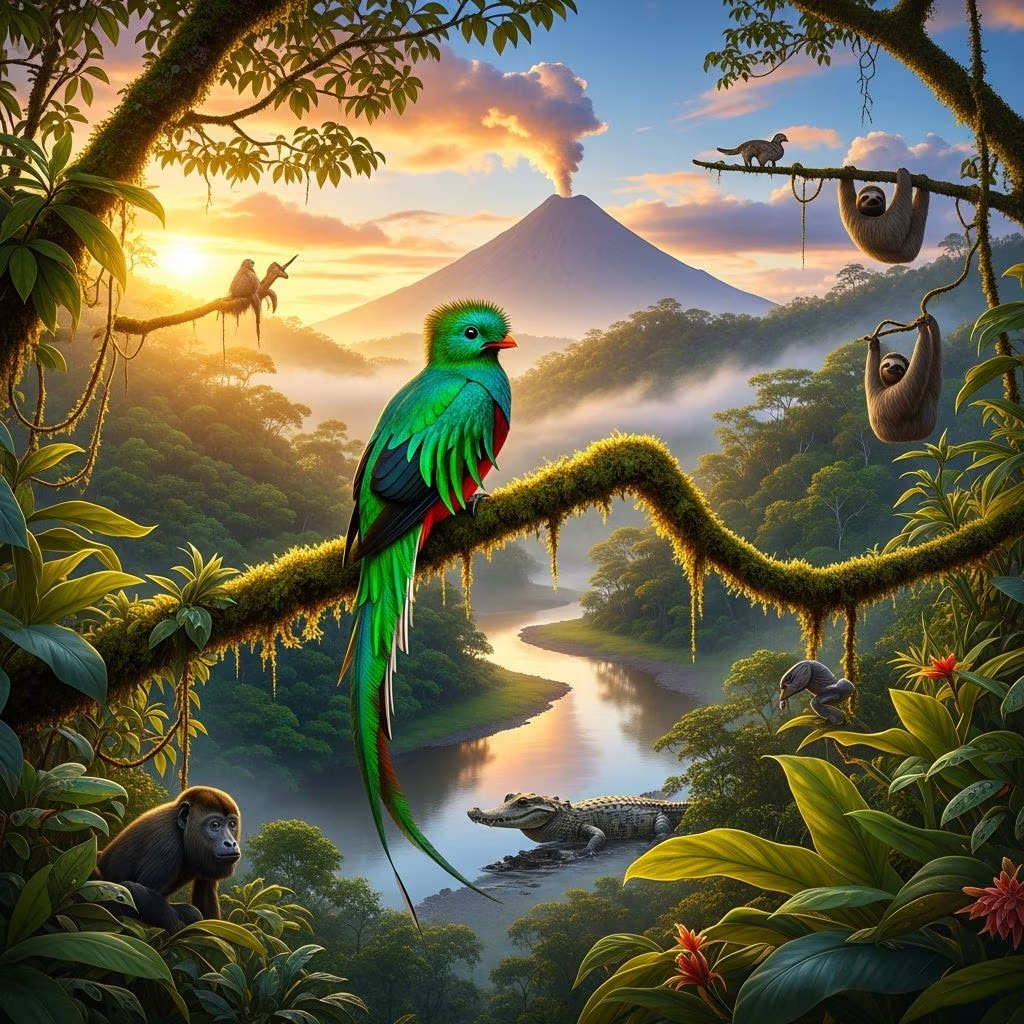
Perched on the Tilarán Mountains, this reserve elevates wildlife viewing to new heights—literally, at 4,600-5,900 feet. Encompassing multiple ecological niches within primeval rainforest, it draws ornithologists worldwide. Over 400 bird species flit among epiphyte-draped trees, including resplendent quetzals with iridescent tails and bare-throated bellbirds tolling like bells. Suspension bridges span ravines, offering canopy-level vistas of orchids and ferns. Trails vary from easy loops to strenuous hikes; waterproof gear is essential due to perpetual mist. Resplendent quetzals nest here, alongside agoutis and coatis foraging below. Night walks unveil owls and glowing fungi, transforming the forest into a symphony of sounds.
| Species | Habitat Zone | Viewing Tips |
|---|---|---|
| Resplendent Quetzal | High canopy | Dawn with guide, avocados attract them |
| Three-wattled Bellbird | Mid-level trees | Listen for calls March-July |
| Sloth | Lower branches | Patience; move slowly |
Dwarfing smaller reserves, this 424-square-kilometer park on Costa Rica’s southwest coast earns accolades as one of Earth’s most intense biodiversity hotspots. Trails from coastal entry points snake inland, converging at research stations buzzing with activity. Spider and howler monkeys crash through vines, while silky anteaters cling to heliconias. Peccaries root in understory, and collared peccaries form wary herds. Coastal rivers host caimans and bull sharks; humpback whales breach offshore seasonally. Inland paths yield scarlet macaws and poison-dart frogs in brilliant hues. Daytime tapir sightings thrill, though they’re crepuscular. Guided hikes from Sirena station maximize encounters, with lodging options nearby.
Rivaling the Amazon in scale, this 20,000-square-kilometer biosphere nurtures immense faunal diversity. Spanning Caribbean lowlands, it shelters jaguars amid mahogany giants and supports 250,000 insect species. Bromeliad-filled canopies host arboreal mammals like kinkajous and olingos. Rivers teem with manatees and river otters; birdlife includes keel-billed toucans. Indigenous communities guide visitors through sustainable paths, sharing ethnobotanical knowledge. Challenges include remoteness and occasional logging threats, but patrols enforce protections. Optimal visits align with dry season for navigable trails.
The sprawling Selva Maya blankets Belize, Guatemala, and Mexico, but Belize’s western expanse shines for feline density. Recent expansions bolster connectivity, linking jaguar corridors with ocelot and margay habitats. Over 350 bird species soar, from keel-billed motmots to ornate hawk-eagles. Lodges immerse guests via day walks spotting medicinal plants, night forays for nocturnal cats, and vehicle safaris across savannas. Camera traps document pumas and rare tapirs. This area exemplifies community-led conservation, blending luxury with purpose-driven tourism.
Beyond headliners, Costa Rica’s Caribbean parks offer affordable thrills. Monkeys caper along beaches, sloths nap overhead, and crocodiles lurk in lagoons—all for minimal entry fees. Guides unlock sloth families and morpho butterflies. Guatemala’s riverways provide manatee glimpses amid mangroves, while Belize’s reserves harbor undiscovered species in geological hotspots. These under-the-radar sites reward intrepid travelers seeking uncrowded magic.
Preparation elevates experiences. Book guides certified in low-impact methods; binoculars (8×42 ideal) and sturdy optics enhance distant views. Dry season (December-April) suits most sites, though wet months boost amphibian activity. Stay on trails to minimize disturbance; no flash photography near animals. Support locals via homestays. Health prep includes yellow fever vaccination for some zones and malaria prophylaxis. Pack layers for elevation shifts, plus reef-safe sunscreen for coasts.
| Destination | Entry Cost (USD) | Guided Tour (USD) | Peak Season |
|---|---|---|---|
| Panama Darién | 25 | 100/day | Jan-Apr |
| Costa Rica Cloud Forest | 25 | 30-50 | Dec-May |
| Osa Peninsula | 15 | 60 | Dec-Apr |
Threats loom: deforestation, poaching, climate shifts. Parks counter with reforestation and anti-trafficking. Visitors fuel protection via fees; choose operators backing reserves. Responsible tourism sustains these havens for generations.
Dry season (December to April) offers clearer trails and active animals, though wet season enhances bird and reptile sightings.
It leads in accessibility and diversity, but Panama and Belize excel for specific species like jaguars.
Highly recommended; locals spot camouflaged creatures and explain ecology.
Opt for reserves with camera traps and night drives; never bait or chase.
Binoculars, rain jacket, insect repellent, long pants, and a good field guide app.
