

 Travel Essentials
 Travel Essentials

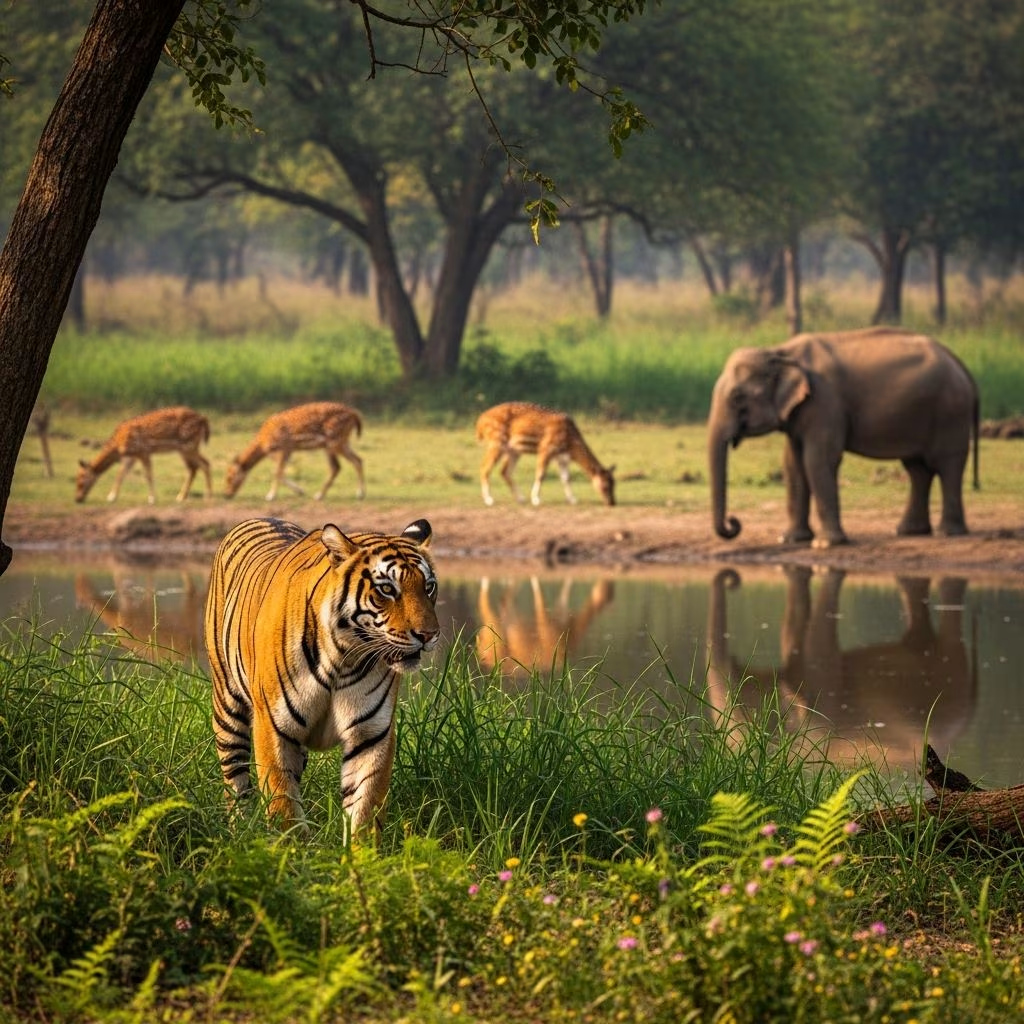
Explore India's finest national parks and reserves featuring tigers, rhinoceros, exotic birds, and diverse wildlife across stunning landscapes.
 Travel Essentials
India’s vast and varied landscapes encompass some of the world’s most biodiverse ecosystems, offering visitors unparalleled opportunities to witness remarkable wildlife in their natural habitats. From dense forests to expansive grasslands and pristine wetlands, the country’s protected areas serve as sanctuaries for endangered species and showcase the intricate balance of nature across multiple climate zones. These reserves represent critical conservation efforts while simultaneously providing transformative experiences for wildlife enthusiasts, photographers, and nature lovers seeking authentic encounters with the subcontinent’s most iconic fauna.
The central Indian plateau, spanning across Madhya Pradesh, Maharashtra, and Chhattisgarh, represents the crown jewel of tiger conservation in Asia. This region hosts the highest concentration of India’s most revered predator, with nine distinct tiger reserves operating within Madhya Pradesh alone. The landscape varies from dense sal and mixed forests to open meadows and rolling grasslands, creating ideal conditions for both predators and their prey species.
Bandhavgarh Tiger Reserve stands as a premier destination for tiger sightings, positioned approximately 180 kilometers northeast of Jabalpur. The reserve distinguishes itself through systematic wildlife management practices, with up to 147 safari vehicles permitted in the core zone daily. Strategic observation points including Chakradhara meadows and Sukhi Patiha watering holes significantly enhance sighting probabilities. Beyond tigers, visitors encounter leopards, sambar deer, gaur, nilgai, and sloth bears. The reserve’s historical significance adds cultural dimension to wildlife experiences, with ancient caves and the centuries-old Bandhavgarh Fort nestled within the protected boundaries.
Kanha National Park represents the largest wildlife reserve in central India, distinguished by its role in inspiring Rudyard Kipling’s literary works. The park’s extensive hardwood forests interspersed with bamboo thickets and expansive grasslands provide optimal habitat for Bengal tigers. The landscape’s configuration creates natural corridors where wildlife moves freely across varied terrain. Keoladeo and river systems support diverse herbivore populations, creating a balanced ecosystem where predator-prey dynamics remain relatively undisturbed. The park’s accessibility from major cities combined with its conservation success makes it a cornerstone destination for wildlife tourism in the region.
Satpura National Park offers a complementary experience to nearby reserves, with exceptional birdwatching opportunities that rival some of Asia’s most celebrated avian destinations. The park’s network of waterholes, rivers, and lakes creates diverse habitats supporting endemic and migratory bird species. Over ten eagle varieties inhabit the park alongside rare Indian skimmers, providing ornithologists and casual bird enthusiasts with remarkable observation opportunities. The park connects conveniently to Kanha through a scenic two-hour train journey, enabling visitors to experience multiple ecosystems within a single trip.
The remote northeastern regions of India contain ecosystems fundamentally distinct from central reserves, characterized by vast wetlands, towering grasslands, and pristine river systems. These areas maintain populations of megafauna found nowhere else in India, making them essential for global biodiversity conservation.
Kaziranga National Park in Assam represents a UNESCO World Heritage Site of extraordinary ecological significance. The reserve’s distinctive landscape combines tall grasslands exceeding three meters in height with swamps, woodlands, and tributaries of the mighty Brahmaputra River. Kaziranga maintains the world’s largest concentration of Indian one-horned rhinoceroses, a species found nowhere else in the wild. Beyond rhinoceroses, the park shelters wild buffalo, elephants, tigers, leopards, and bears alongside hundreds of bird species. The reserve’s remote location in India’s northeast and accessibility via Guwahati creates a sense of pristine wilderness rarely encountered elsewhere. The best visiting period spans November through April, when water levels recede and animal concentrations increase around remaining water sources.
The wetland ecosystem’s productivity supports both resident and migratory populations, with seasonal variations creating distinct wildlife viewing opportunities. During monsoon seasons, the landscape transforms dramatically, with grasslands reaching peak growth and water levels inundating adjacent areas. Conversely, the dry season concentrates animals around remaining water sources, facilitating observations.
Western India’s arid zones contain specialized wildlife adapted to harsh desert conditions, representing entirely distinct ecological communities from tropical forest reserves. Gujarat’s protected areas showcase evolutionary adaptations and conservation successes in challenging environments.
Gir National Park serves as the world’s only natural habitat for the Asiatic lion, a critically endangered subspecies found exclusively within this reserve. The park’s dramatic landscape combines arid plateaus with dense forest patches, creating microclimates supporting diverse fauna. Leopards, sambar deer, and various ungulate species coexist with the charismatic lions that define the park’s conservation mission.
The Little Rann of Kutch presents India’s most unusual wildlife destination, featuring vast expanses of salt desert punctuated by seasonal water sources. This surreal landscape hosts wild asses, chinkara gazelles, desert foxes, and striped hyenas adapted to extreme aridity. The mirage-shimmering saline flats create otherworldly vistas while supporting specialized species found nowhere else in India.
Velavadar National Park protects significant blackbuck populations within grassland habitats, serving as a refuge for antelope species facing pressure in surrounding agricultural regions. The park’s conservation efforts have stabilized populations of this graceful species through dedicated management and protection protocols.
India’s wetland reserves support phenomenal bird populations, attracting migratory species from Central Asia, Siberia, and Afghanistan. These sites provide critical breeding, feeding, and resting grounds for hundreds of avian species, making them essential components of transcontinental migration networks.
Keoladeo National Park in Rajasthan represents one of Asia’s most spectacular birding sites, supporting more than 370 bird species. Located south of Bharatpur, this vital wetland receives migratory visitors crossing India from Afghanistan, Turkmenistan, China, and Siberia. The park’s marshes, seasonal water bodies, and vegetation provide ideal conditions for waterfowl, waders, and raptors. Seasonal variations create distinct birding opportunities, with winter months bringing influxes of northern migrants while summer supports breeding populations of local species.
Beyond major national parks, India contains numerous specialized reserves catering to specific wildlife interests.
Jawai National Park in Rajasthan earns its designation as the ‘Land of the Leopards,’ offering remarkable opportunities for observing these elusive carnivores. Rocky outcrops and serene lakes create picturesque backdrops while facilitating leopard observations as these creatures navigate their rocky domain. The park represents successful coexistence between local communities and wildlife, demonstrating sustainable conservation models.
Ranthambore National Park combines wildlife viewing with historical exploration, featuring the ancient Ranthambore Fort situated within reserve boundaries. This integration of natural and cultural heritage creates uniquely immersive experiences where visitors encounter Bengal tigers, sloth bears, leopards, and marsh crocodiles against backdrops of centuries-old architecture.
Wildlife viewing success depends significantly on understanding seasonal patterns and ecological dynamics affecting animal visibility and behavior. Different seasons produce distinct advantages across India’s diverse ecosystems.
Central Indian reserves peak during the cool, dry season spanning November through March, when animals congregate around reduced water sources and vegetation loss improves visibility. Early morning safaris capitalize on this improved visibility combined with natural behavioral patterns where animals feed during cooler hours.
Northeastern reserves follow similar patterns, with November through April representing peak visiting periods when water levels recede dramatically from monsoon highs. This seasonal water stress concentrates megafauna around remaining sources, dramatically improving sighting probabilities.
Desert reserves present opposing considerations, with extreme heat during summer months reducing wildlife activity to brief dawn and dusk periods. Winter visiting provides comfortable conditions while wildlife remains relatively active throughout daylight hours.
Wetland sanctuaries follow migratory calendars, with distinct seasonal bird populations creating varied experiences throughout the year. Winter months bring maximum avian diversity as northern migrants arrive, while breeding seasons concentrate local species during spring and early summer.
India’s protected areas represent critical conservation infrastructure protecting endangered species while maintaining ecosystem services benefiting human populations. These reserves embody decades of conservation investment and scientific management aimed at reversing historical declines in wildlife populations.
Visitor engagement through responsible tourism generates economic incentives supporting conservation objectives while fostering appreciation for natural heritage. Wildlife experiences create personal connections that inspire lifetime conservation commitment and inform policy advocacy. However, tourism requires careful management to prevent habitat degradation or behavioral disruption of studied populations.
| Destination | Primary Wildlife | Best Season | Access Point |
|---|---|---|---|
| Bandhavgarh | Tigers, Leopards, Ungulates | Nov-March | Jabalpur |
| Kanha | Bengal Tigers, Leopards | Nov-April | Jabalpur/Nagpur |
| Kaziranga | Rhinoceros, Elephants, Buffalo | Nov-April | Guwahati |
| Keoladeo | 370+ Bird Species | Oct-March | Bharatpur |
| Gir | Asiatic Lions, Leopards | Nov-June | Junagadh |
What is the best time to visit Indian national parks? November through March represents the optimal period for most central and northeastern reserves, offering comfortable temperatures and concentrated wildlife visibility. Desert reserves require winter visiting to avoid extreme heat, while monsoon seasons transform landscapes dramatically across all regions.
How reliable are tiger sightings at major reserves? Bandhavgarh maintains particularly high sighting success rates due to systematic management and controlled vehicle access. However, wildlife encounters remain inherently unpredictable natural events, and no destination guarantees sightings despite optimal conditions.
Can visitors explore reserves independently or must they use organized tours? Most reserves require designated safari vehicles operated by licensed guides, with specific entry protocols and vehicle quotas managing visitor impacts on wildlife and habitats. Independent exploration typically remains restricted to designated viewing areas only.
What photography equipment and techniques optimize wildlife documentation? Early morning safaris provide superior lighting conditions for wildlife photography. Long telephoto lenses enable distant observations without disturbing animals, while patients persistence during extensive watering hole vigils frequently produces exceptional results.
How do seasonal water availability and vegetation changes affect wildlife viewing? Dry season water scarcity concentrates animals around remaining sources, dramatically improving observation opportunities. Conversely, monsoon abundance disperses wildlife across expanded habitat, reducing sighting probabilities despite increased overall animal activity.
