

 Travel Essentials
 Travel Essentials

Discover family-friendly wildlife destinations where kids can see elephants, tigers, orangutans, and sea lions while learning about nature.
 Travel Essentials
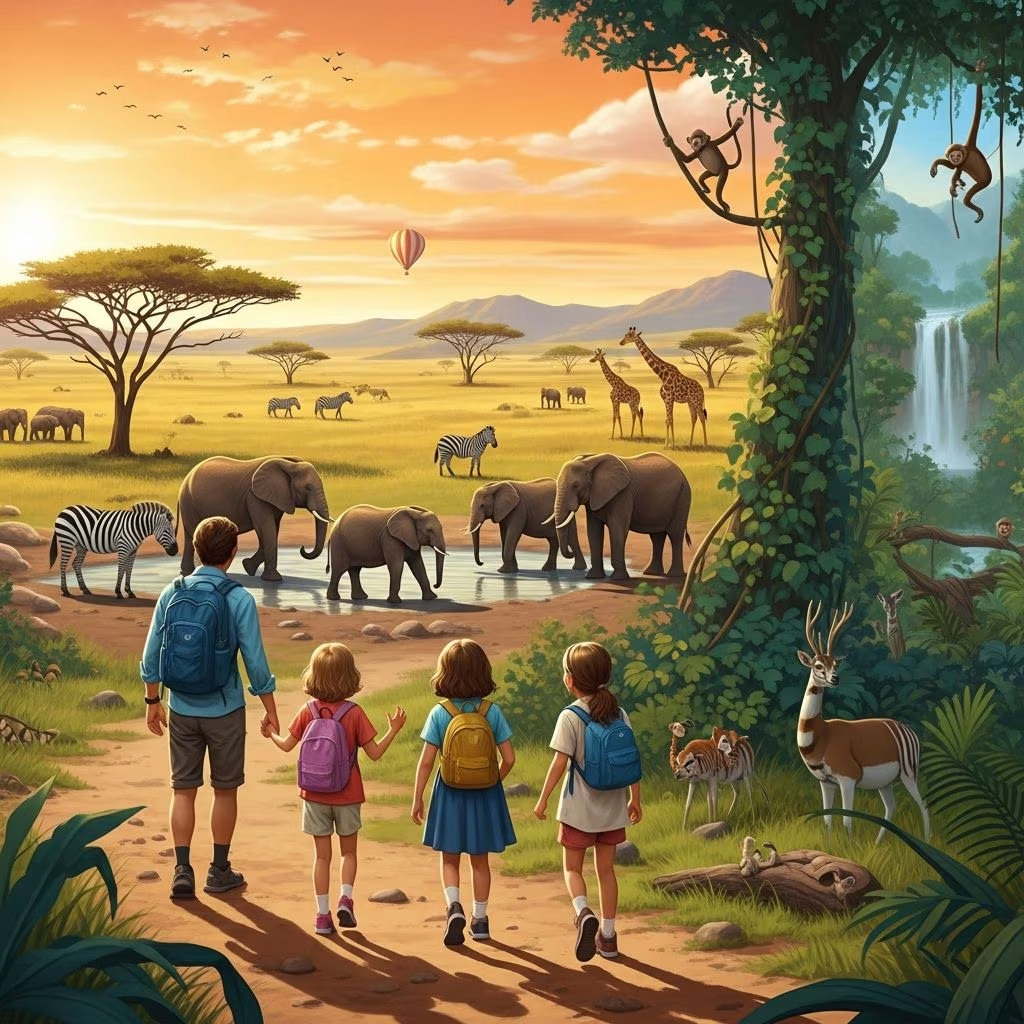
Traveling with children offers a unique opportunity to instill a lifelong appreciation for nature and wildlife. Unlike traditional vacations centered on attractions and entertainment, wildlife-focused family trips create meaningful educational experiences where children witness animals in their natural environments. These journeys combine adventure with learning, allowing families to disconnect from daily routines and reconnect with the natural world together. Whether your children are toddlers or teenagers, numerous destinations worldwide cater specifically to families seeking immersive wildlife experiences.
Family wildlife travel has evolved significantly over the past decade. Tour operators now recognize that traveling with children requires specialized accommodations, appropriate pacing, and educational components that appeal to young minds. Many destinations offer flexible itineraries, allowing families to balance active wildlife observation with relaxation and leisure time. The best family wildlife destinations balance excitement with safety, manageable distances, and varied animal viewing opportunities to maintain children’s interest throughout the journey.
When selecting a wildlife destination, families should consider several factors including climate, disease risks, accessibility, accommodation quality, and the reliability of animal sightings. Age-appropriate activities differ significantly—younger children may enjoy structured guided tours and close-up encounters at sanctuaries, while older children and teenagers often prefer more adventurous experiences like jungle trekking or kayaking expeditions.
Africa remains the premier destination for families seeking comprehensive wildlife viewing experiences. The continent’s vast protected areas and diverse ecosystems provide opportunities to observe some of Earth’s most iconic species in their natural habitats.
Tanzania’s Serengeti and Ngorongoro Crater represent two of Africa’s most spectacular wildlife viewing locations. These protected areas support massive concentrations of herbivores including wildebeest, zebras, and antelopes, alongside their predators. The Serengeti’s seasonal migration represents one of nature’s most dramatic phenomena, with millions of animals moving across landscapes in search of fresh grazing lands. Family safari operators in Tanzania provide vehicles adapted for comfortable viewing from elevated positions, allowing children to safely observe wildlife from close distances.
South Africa offers another compelling option, particularly for families seeking malaria-free regions combined with beach relaxation. Protected reserves such as Kruger National Park and Hluhluwe–iMfolozi Park deliver consistent opportunities to view Africa’s Big Five—lions, elephants, buffalo, leopards, and rhinoceroses—alongside numerous other species. The advantage of South African safaris lies in their accessibility; the country maintains excellent infrastructure, diverse accommodation options, and multiple reserve choices suitable for different family preferences.
Botswana’s Okavango Delta and Chobe National Park present unique wildlife viewing opportunities distinct from traditional savanna landscapes. The Okavango Delta, a vast inland river system, creates complex habitats supporting massive elephant populations and diverse bird species. Houseboat accommodations provide alternative safari experiences, allowing children to observe animals from water-based perspectives while enjoying novel accommodation arrangements that enhance the adventure element.
Victoria Falls, located between Zambia and Zimbabwe, combines wildlife observation with spectacular natural scenery. The falls themselves create an unforgettable backdrop while nearby conservation areas support diverse animal populations. The region’s size and multiple activity options accommodate families with varied interests and energy levels.
India’s tiger reserves offer family-friendly wildlife experiences without minimum age restrictions, making them accessible even for families with younger children. Indian tiger safaris typically cost less than African equivalents while providing educational value through expert naturalists who explain ecological relationships and animal behavior. Beyond tigers, Indian jungles support sloth bears, monkeys, deer, and countless bird species, ensuring rich wildlife observation even when elusive tigers remain hidden.
The experience extends beyond vehicle-based wildlife viewing. Nature walks through jungle ecosystems provide different perspectives on animal habitats, while village visits offer cultural immersion complementing the natural history education. The “Jungle Book” setting fascinates children who recognize the landscape from familiar stories.
Borneo’s rainforests contain some of Earth’s most unique wildlife, particularly orangutans, which exist nowhere else in the wild. Rehabilitation centers in Sarawak and Sabah allow families to observe these remarkable primates in carefully managed settings before potentially viewing wild populations. Borneo’s rivers support proboscis monkeys and crocodiles viewable from boat-based wildlife tours, while treehouse accommodations add adventure elements that appeal to children.
The island’s rainforests harbor pygmy elephants, Sumatran rhinoceroses, and extraordinary biodiversity. Night jungle tours reveal nocturnal species including fireflies, frogs, and nocturnal mammals, providing children with understanding of ecosystem complexity and species adaptation.
Costa Rica exemplifies how compact geography doesn’t limit wildlife diversity. This Central American nation maintains remarkable species richness within manageable travel distances, making it ideal for families with limited vacation time or children who struggle with extensive travel.
Tortuguero’s jungles are accessible exclusively by boat, creating adventure while protecting fragile ecosystems from vehicle damage. Families observe turtles, crocodiles, tiny poison dart frogs, and howler monkeys from water-based perspectives. Canopy tours through cloud forests provide elevated viewpoints allowing observation of species living in forest upper layers, including approximately 400 bird species inhabiting Costa Rican cloud forests.
Caribbean coastal areas offer snorkeling opportunities combining marine wildlife observation with beach activities, appealing to children who enjoy aquatic experiences. The combination of land and sea wildlife, varied habitat types, and compact geography makes Costa Rica exceptionally suitable for multigenerational family groups with different activity preferences.
Namibia’s Etosha National Park offers unique desert wildlife viewing experiences. During dry winter months, animals congregate at remaining waterholes, providing concentrated observation opportunities. Rather than pursuing animals across vast landscapes, families can establish positions near waterholes and observe the resulting wildlife traffic. This passive observation approach suits families with younger children who cannot endure extensive game drives.
Beyond traditional safari activities, Namibia offers adventure elements appealing to older children. Desert camping, sand dune climbing, and seal colony observation along the coast provide varied experiences within single trips. The arid landscape’s stark beauty and unique wildlife adaptations create distinct educational opportunities different from tropical rainforest environments.
The Galapagos Islands present unparalleled opportunities to observe wildlife encountered nowhere else on Earth. Children aged five and above can participate in family expeditions exploring these remarkable islands. The experience combines adventure elements with educational depth; guided hikes and snorkeling activities vary by island and itinerary while maintaining appropriate intensity for family groups.
Encounters with giant tortoises, marine iguanas, sea lions, and various seabird species connect children with evolutionary concepts and conservation principles in tangible ways. Snorkeling with sea lions and viewing dolphins or whales from expedition vessels create memorable experiences reinforcing wildlife appreciation.
Marine wildlife viewing offers distinct advantages for families preferring water-based experiences. The Azores, located in the Atlantic Ocean, rank among the world’s premier whale and dolphin observation destinations. Family-oriented boat tours provide flexible scheduling, allowing families to join multiple trips or single outings depending on comfort levels and vacation duration.
Marine biology education programs aboard expedition vessels teach children species identification techniques, photograph analysis methods, and underwater acoustics through hydrophone monitoring. These interactive learning components transform passive observation into active participation. When not pursuing marine mammals, families explore natural features including hot springs, mudpools, and coastal landscapes. Sea kayaking, paddleboarding, and mountain biking provide activity variety for children with different interests.
Beyond natural wilderness areas, family-focused wildlife sanctuaries provide controlled environments where children observe animals in near-natural settings while maintaining safety and accessibility. These facilities range from rehabilitation centers for rescued animals to breeding programs for endangered species.
Sanctuary advantages include predictable animal sightings, educational interpretation by trained staff, and close-up viewing opportunities impossible in true wilderness. Many facilities offer hands-on experiences such as porcupine encounters, sloth observations, or giraffe interactions that create lasting childhood memories. School group programming and birthday party accommodations demonstrate sanctuary recognition of family needs.
Sanctuaries serve crucial conservation functions, simultaneously providing family experiences and supporting species preservation. Educational programming teaches children about wildlife challenges, rehabilitation processes, and conservation efforts in ways that inspire environmental stewardship.
Destination selection should reflect family composition and individual children’s capabilities. Young children generally tolerate shorter activities and require comfortable accommodations, favoring destinations with reliable infrastructure and nearby medical facilities. Older children and teenagers can endure longer days, appreciate more challenging activities, and benefit from educational depth that younger children might overlook.
Seasonal considerations dramatically affect wildlife visibility and travel comfort. Many destinations feature optimal viewing seasons when animals congregate or migrate predictably. Weather patterns, temperature extremes, and rainfall affect both family comfort and animal behavior observation opportunities.
Tropical and subtropical destinations may require vaccinations or malaria prophylaxis. Families should consult travel medicine specialists well in advance of departure, allowing time for vaccination schedules. Some regions like South African reserves offer malaria-free protected areas providing safety for families unable or unwilling to take antimalarial medications.
Family wildlife travel extends beyond momentary entertainment. These experiences fundamentally shape children’s environmental values and career interests. Scientific research demonstrates that childhood nature experiences correlate strongly with adult environmental careers and conservation support. By exposing children to wildlife in authentic contexts while emphasizing ecological relationships and conservation challenges, families invest in the next generation of environmental stewards.
The memories formed during family wildlife adventures—watching elephants at waterholes, hearing howler monkeys in jungle canopies, or observing giant tortoises—remain vivid decades into adulthood. These experiences create shared family stories and inside jokes while fostering emotional connections to distant ecosystems and wildlife conservation principles that transcend traditional classroom education.
