

 Travel Essentials
 Travel Essentials

Explore top destinations for bear watching, whale spotting, moose sightings, and more in Canada's diverse wilderness areas, with tips for ethical viewing.
 Travel Essentials
Canada’s vast landscapes harbor some of the planet’s most iconic wildlife, offering travelers unparalleled opportunities to observe bears, whales, moose, and arctic mammals in their natural environments. From coastal rainforests to tundra plains, these encounters blend adventure with conservation awareness.
Canada boasts over 700 mammal species, with flagship animals drawing global visitors. Grizzly and black bears dominate forested regions, while humpback and beluga whales patrol coastal waters. Moose and caribou roam boreal forests, and polar bears rule the Arctic. These creatures thrive due to protected habitats in national parks and reserves.
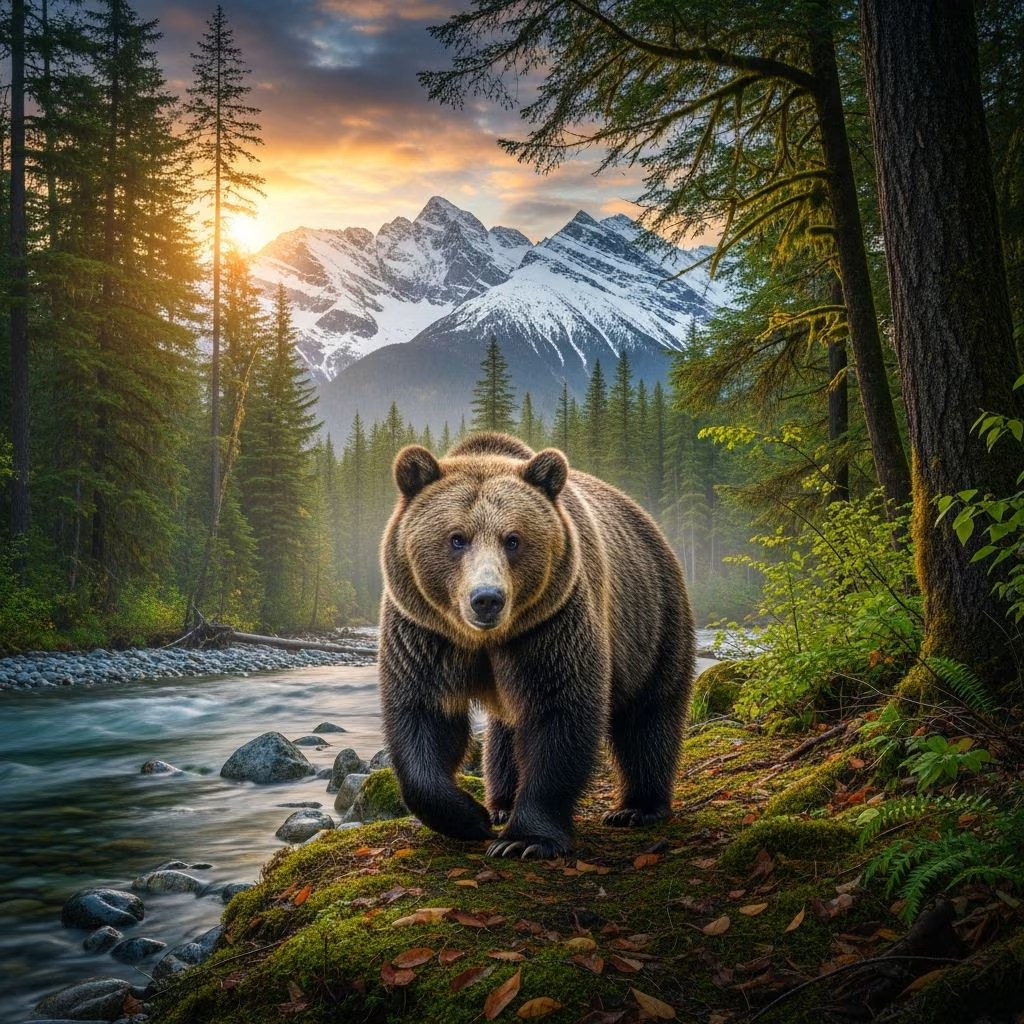
British Columbia’s temperate rainforests host the **Great Bear Rainforest**, a 25,000-square-mile expanse where grizzlies and the rare white spirit bear forage. June to October marks peak viewing, with guided tours from lodges ensuring safe distances.
On Vancouver Island, Tofino’s waters teem with gray and humpback whales from March to October. Zodiac boats provide close-up views of breaches and flukes, often combined with sea otter sightings.
| Location | Best Species | Season | Tour Tips |
|---|---|---|---|
| Great Bear Rainforest | Grizzly, Spirit Bear | June-Oct | Boat or lodge-based |
| Tofino | Humpback Whale | Mar-Oct | Zodiac tours |
Banff and Jasper National Parks in Alberta showcase **grizzlies, moose, elk, and bighorn sheep** against turquoise lakes and peaks. Dawn and dusk hikes along the Icefields Parkway yield roadside sightings of these animals grazing or crossing.
Ethical viewing emphasizes binoculars over approaches, protecting animals habituated to humans. Parks Canada reports over 1,000 grizzlies in the region, sustained by conservation efforts.
Prince Albert National Park in Saskatchewan protects free-roaming **bison herds** along the Sturgeon River, mingling with wolves and elk. Guided walks reveal these 2,000-pound behemoths in grassland-boreal mixes.
In Ontario’s Algonquin Provincial Park, the **Highway 60 corridor** is prime for moose spotting, especially during rutting season. Canoe trips into backcountry offer immersive views of beavers damming streams.
Newfoundland’s Bonavista Peninsula cliffs host nesting **Atlantic puffins** and feeding humpbacks from May to September. Ferry rides and iceberg cruises double as birding platforms.
Gros Morne National Park boasts one of North America’s densest **moose populations**, with fjord hikes revealing caribou too. In Quebec, Tadoussac’s St. Lawrence estuary draws 13 whale species, including blues—the largest animals on Earth. Belugas’ white pods are summer highlights.
Churchill, Manitoba, dubbed the “Polar Bear Capital,” sees bears on Hudson Bay shores from October to November as ice forms. Tundra buggies provide elevated, heated views.
Nunavut’s Northwest Passage and Cunningham Inlet host the Arctic Big Five: polar bears, walruses, musk oxen, belugas, and narwhals. Arctic Watch lodge overlooks 2,000 moulting belugas.
Sustainable tourism prioritizes minimal disturbance. Maintain 100m from bears, 300m from polar bears, per Parks Canada guidelines. Choose operators certified by the International Ecotourism Society.
Climate change threatens habitats; polar bear populations have declined 30% in some areas since 1980, per government monitoring. Visitor fees fund protection.
Book tours 6-12 months ahead for peak seasons. Pack layers, binoculars, and stabilizers for photography. Costs range $200-800 CAD per person/day.
| Experience | Cost (CAD) | Duration |
|---|---|---|
| Polar Bear Tundra Buggy | 500-800 | Half-day |
| Whale Watching Zodiac | 150-300 | 3-4 hours |
| Bear Lodge Stay | 400-600 | Multi-day |
June to October in British Columbia for salmon runs; fall in the Rockies.
Yes, with experienced guides following distance protocols.
Use trails at dawn/dusk; avoid feeding or approaching.
No—mandatory guided tours ensure safety and legality.
Binoculars, waterproof clothing, insect repellent.
