

 Travel Essentials
 Travel Essentials

Explore developed campgrounds, backcountry sites, and essential gear for camping in Big Bend National Park. Learn reservation rules, best times to visit, and safety tips for this remote Texas gem.
 Travel Essentials
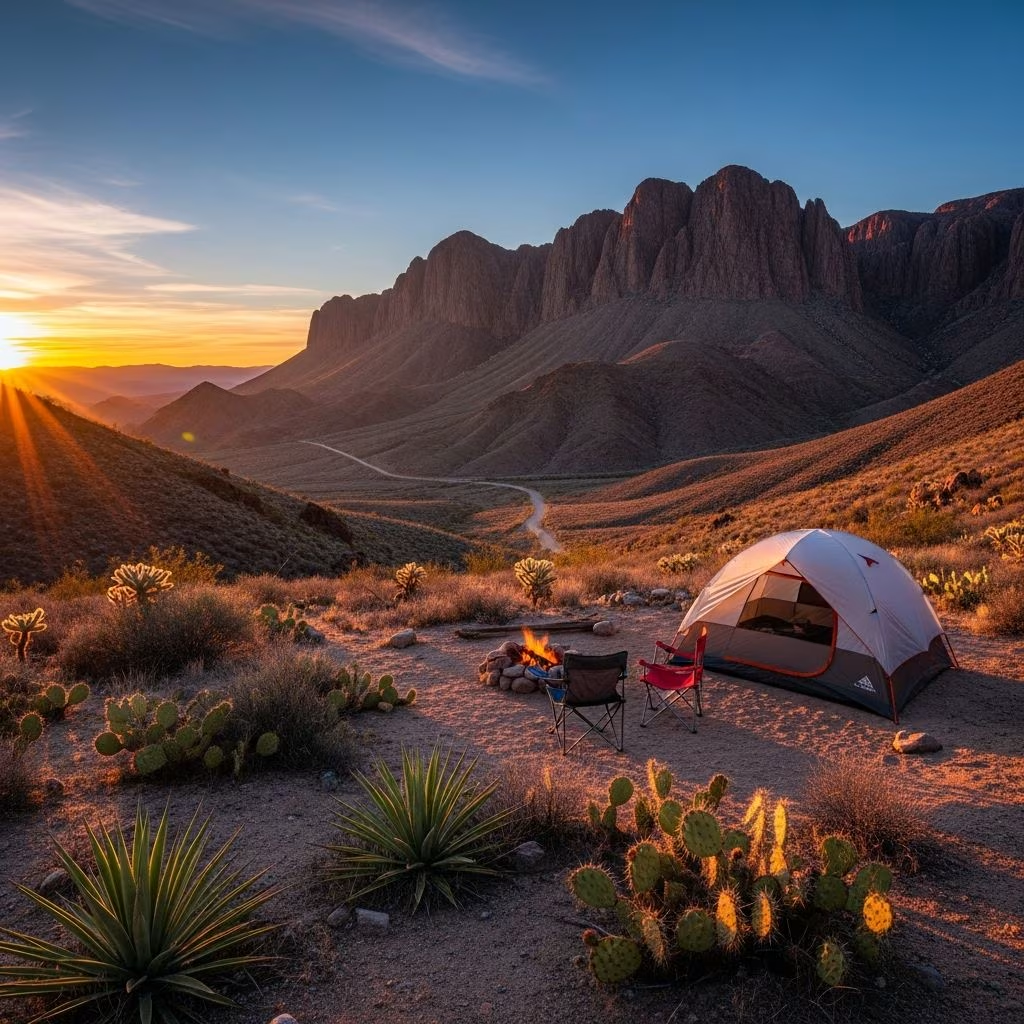
Big Bend National Park, spanning over 800,000 acres in remote West Texas, offers unparalleled opportunities for camping amid Chisos Mountains, Rio Grande riverbanks, and vast desert landscapes. Whether you prefer developed sites with amenities or primitive backcountry experiences, this guide provides everything needed to plan a successful trip.
This park stands out for its isolation and diversity, providing stargazing under some of the darkest skies in the U.S., hiking through varied ecosystems, and solitude rarely found in other national parks. Camping here immerses visitors in a rugged environment where wildlife like javelinas, roadrunners, and black bears roam freely. The park’s vast size means campsites feel worlds apart, enhancing the sense of adventure.
Big Bend features four main developed campgrounds operated by the National Park Service (NPS) and a concessioner. All require advance reservations via Recreation.gov up to six months ahead—no first-come, first-served sites exist. Expect fees around $16-$20 per night, with limits on vehicle sizes and stay durations.
| Campground | Location | Amenities | Vehicle Limits | Notes |
|---|---|---|---|---|
| Chisos Basin | Central, Chisos Mountains | Flush toilets, water, grills, dump station | RVs <24 ft, trailers <20 ft | Most popular; narrow roads |
| Rio Grande Village | East side, near Rio Grande | Flush toilets, water, grills, camp store, showers, laundry | Larger rigs OK | River views, trees |
| Rio Grande Village RV Park | Adjacent to above | Full hookups (electric, water, sewer) | Max 38 ft | Concessioner-operated; phone reservations 855-765-1324 |
| Cottonwood | West side, near Santa Elena Canyon | Pit toilets, water, grills | All sizes | Remote, quiet; no generators |
Wood fires are prohibited park-wide; use charcoal in elevated grills or liquid-fuel stoves only. Pack out ashes.
For a raw experience, Big Bend’s backcountry camping requires permits and offers primitive roadside sites or backpacking zones. No dispersed or boondocking allowed—all in designated spots. Permits via Recreation.gov for most sites; some in-person at visitor centers. Group size max 15 people.
Stay limits: 14 consecutive nights, 28 total per year (14 total Jan-Apr). Follow Leave No Trace principles strictly.
Fall (Sep-Nov) and spring (Feb-Apr) offer mild temps (60-80°F days), wildflowers, and fewer crowds. Summer brings extreme heat (100°F+), suitable for early mornings or river activities but risky without preparation. Winter is cool (40-70°F), ideal for hiking with chilly nights.
The park’s remoteness demands self-sufficiency. Pack for temperature swings (hot days, cold nights), water scarcity, and rough terrain.
| Category | Must-Haves |
|---|---|
| Shelter & Sleep | 4-season tent with rainfly, sleeping bag (20°F rating), pad, hammock or CLIQ chair for lounging |
| Water & Cooking | Filter/purifier, extra containers (1 gal/person/day), portable stove, bear-proof food storage |
| Navigation & Light | Park map, GPS/offline apps, compass, headlamps, lanterns |
| Safety & Misc | First aid kit, multi-tool, sun protection, trash bags, binoculars for wildlife |
Book early—sites fill fast, especially weekends. Use Recreation.gov for NPS sites; call for RV Park. Check status: Chisos and Rio Grande Village often open year-round; Cottonwood seasonal.
Entry fees: $30/vehicle (7 days); America the Beautiful pass accepted.
Remote location means limited services—nearest hospital 2+ hours away. Key risks: heat exhaustion, dehydration, flash floods, scorpions/snakes, bears in Chisos.
Camping positions you for day hikes. Start early to beat heat.
Yes, all developed and most backcountry sites require advance reservations. No walk-ups.
Limited or prohibited (e.g., no at Cottonwood); check site rules.
Yes, but stick to Rio Grande Village RV Park for hookups; others have size limits.
Consider nearby areas outside park or backcountry options.
Yes, leashed in frontcountry; not in backcountry.
Combine camping with paddling the Rio Grande, hot springs soaks, or fossil hunting. Visitor centers at Panther Junction and Chisos provide maps and ranger programs. With preparation, Big Bend delivers transformative outdoor experiences.
