

 Travel Essentials
 Travel Essentials

Explore Big Bend's rugged landscapes, from Chisos Mountains hikes to Rio Grande paddles and dark sky stargazing. Plan your trip with itineraries, lodging, and activity guides.
 Travel Essentials
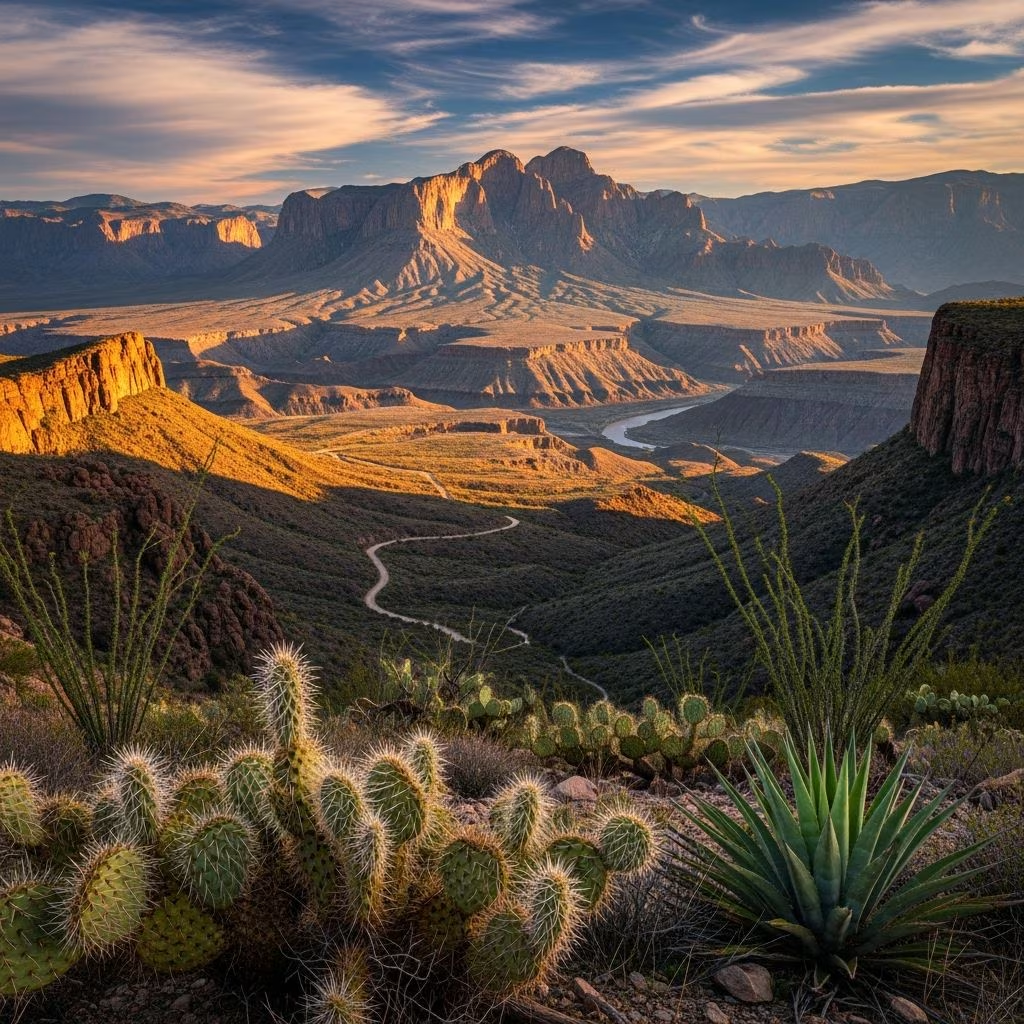
Big Bend stands as one of Texas’ most captivating natural wonders, encompassing vast deserts, towering mountains, and the winding Rio Grande. This remote region in southwest Texas draws adventurers seeking solitude amid dramatic landscapes. Spanning Big Bend National Park and the expansive Big Bend Ranch State Park, the area offers over a million acres of public land for exploration. Whether hiking rugged trails, paddling border rivers, or gazing at star-filled skies, Big Bend promises unforgettable experiences. This guide equips you with everything needed for a seamless trip, from access points to multi-day itineraries.
Reaching Big Bend requires planning due to its isolated location. The nearest major airports are in El Paso (about 4 hours west) or Midland/Odessa (5 hours north). From there, drive via highways like US-90 or US-385. Key gateway towns include Alpine and Marfa to the north, Fort Stockton further out, and Terlingua ghost town near the west entrance. Stock up on supplies in these spots, as park services are limited—no groceries inside Big Bend National Park.
Two main entrances serve Big Bend National Park: Persimmon Gap from the north and Maverick from the west via Terlingua. Big Bend Ranch State Park has east and west entries at Barton Warnock Visitor Center and Fort Leaton Historic Site. High-clearance vehicles are essential for many roads; four-wheel-drive is mandatory for remote dirt paths. Check current road conditions at visitor centers, especially after rain. Entry fees are $30 per vehicle for a 7-day pass to the national park; state park day use is $8 adult.
Big Bend divides into distinct zones: the central Chisos Mountains, western Santa Elena area, and eastern Rio Grande Village. Each offers unique terrain, from forested peaks to arid canyons.
With hundreds of miles of trails, Big Bend caters to all abilities. Desert hikes stay hot year-round, while mountains provide relief in summer. Always carry water (1 gallon per person/day), sun protection, and check for flash flood risks.
| Trail Name | Location | Distance (miles RT) | Difficulty | Highlights |
|---|---|---|---|---|
| Window View Trail | Chisos Basin | 0.3 | Easy | Framed mountain vista; wheelchair accessible. |
| Lost Mine Trail | Chisos Basin | 5 | Moderate | Forest paths, overlooks, wildflowers in spring. |
| Window Trail | Chisos Basin | 6 | Moderate | Pour-off views, basin panoramas at sunset. |
| South Rim Trail Loop | Chisos Basin | 12-14 | Strenuous | Emory Peak summit, 360-degree vistas; bear country. |
| Santa Elena Canyon Trail | West Side | 1.4 | Easy | Rio Grande walls, boulders; paddle upstream first. |
| Grapevine Hills Trail | East | 2 | Easy | Balanced rocks, desert arches. |
| Mule Ears Peaks | West | 3.8 | Moderate | Volcanic formations, solitude. |
Big Bend Ranch adds 238 miles of multi-use trails for hiking, biking, and horseback riding. Obtain backpacking permits at visitor centers.
Paved and dirt roads showcase Big Bend’s geology. Ross Maxwell Scenic Drive (30 miles) from Chisos Basin to Santa Elena Canyon features overlooks at Sam Nail Ranch, Tuff Canyon, and Cerro Castellan. Allow 2-4 hours with stops.
Backcountry options like Old Maverick Road (high-clearance needed) loop back dramatically. In Big Bend Ranch, 70 miles of rough 4WD roads await, including FM 170’s Camino del Rio along the river. River Road and Old Ore Road in the national park lead to Ernst Tinaja’s mysterious pool.
The Rio Grande forms the U.S.-Mexico border, offering calm floats and Class II-III rapids. Half-day trips like Santa Elena Canyon (8 miles) mix paddling with hiking. Multi-day expeditions require permits; independent trips need river use authorization. Big Bend Ranch provides day-use river access for fishing and floating. Rentals and guided tours available in Terlingua. Watch for winds and currents; no swimming advised in canyons.
Designated an International Dark Sky Park, Big Bend Ranch delivers pristine views. The national park also ranks among top dark sky spots. Join ranger-led star parties or use apps for constellations. Best from Chisos Basin or remote campsites; full moons obscure Milky Way.
Chisos Mountains Lodge offers the park’s only hotel with cabins and rooms—book months ahead. Camping includes developed sites at Chisos Basin, Rio Grande Village, and Cottonwood (reservations via recreation.gov). Backcountry permits allow primitive sites; Big Bend Ranch has equestrian and group areas. Nearby, Terlingua offers quirky Airbnbs and glamping. For luxury, try Lajitas Golf Resort.
One Day: Ross Maxwell Drive to Santa Elena Canyon hike, then Chisos Basin Window View Trail and dinner at the lodge.
Two Days: Day 1: Chisos hikes (Lost Mine + Window). Day 2: Santa Elena paddle and west-side explores.
Three Days: Add Rio Grande Village, Boquillas Crossing (passport needed), hot springs soak, and backcountry drive to Ernst Tinaja. Extend for Ranch State Park overnights.
Spot javelinas, roadrunners, 450+ bird species, and rare black bears (30-40 in Chisos). Mountain lions and scorpions lurk—store food properly. Drink 1-2 gallons water daily; avoid midday desert hikes in summer (May-Sep highs 100°F+). Flash floods, heat exhaustion top risks—check weather. No drones; pets restricted to roads.
Winter (Nov-Mar) ideal: mild days (60-80°F), wildflowers Feb-Apr. Summer brutal but monsoon storms dramatic. Spring/fall balance crowds and weather. Park sees 500,000 visitors yearly, busiest Feb-April.
Recommended for backcountry roads; paved routes suffice for main sights.
Yes, via Boquillas boat crossing (passport required); day trips only.
Rare black bears in Chisos; use bear boxes, make noise on trails.
6 months for peaks; backcountry walk-up possible.
Spotty; best in Basin, none in remote areas. Download maps.
Pair with Marfa lights, Fort Davis observatories, or Davis Mountains State Park. Big Bend Ranch’s 300,000 acres double adventure options.
