

 Travel Essentials
 Travel Essentials

Discover the Big Island's diverse landscapes on a full-circle drive, from active volcanoes to black sand beaches and ancient Hawaiian sites, blending adventure with spiritual reverence.
 Travel Essentials
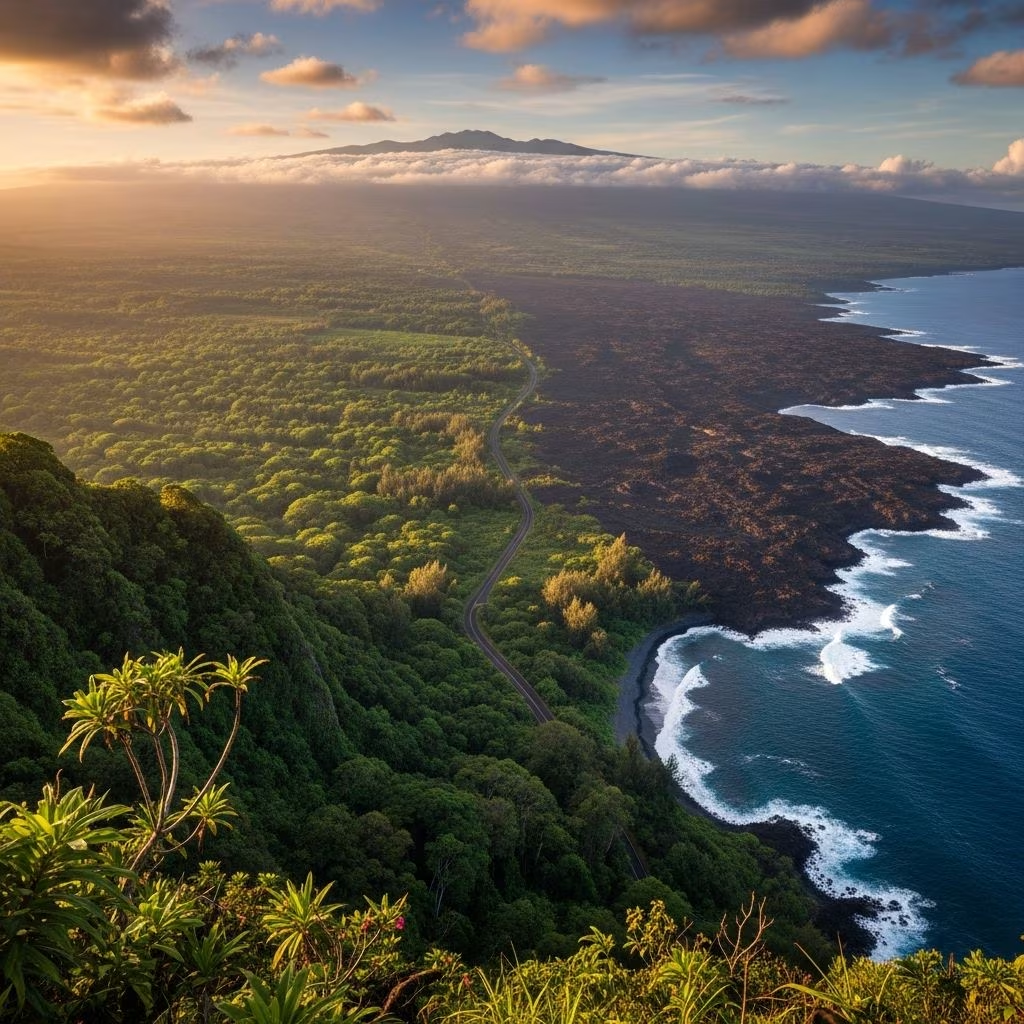
The island of Hawaiʻi, known affectionately as the Big Island, stands as a testament to the earth’s dynamic forces. Spanning over 4,000 square miles, it dwarfs other Hawaiian islands and offers a complete spectrum of ecosystems—from steaming volcanoes to verdant valleys and pristine coastlines. A road trip encircling the island is more than a scenic drive; it’s a profound encounter with Mother Nature’s raw energy and the enduring Polynesian reverence for the land.
This journey allows travelers to witness the island’s microcosmic diversity in one continuous loop via Highways 11, 19, and 200. Clockwise or counterclockwise, the route covers approximately 300 miles, best savored over 4-7 days to immerse in each region’s unique mana—the Polynesian essence of life force and creative potential. Recent studies highlight how indigenous Hawaiian systems, rooted in aloha ʻāina (love of the land), promote regenerative relationships with the environment, mirroring natural cycles like the water flow.
Expect dramatic shifts: arid lava fields give way to tropical rainforests receiving over 200 inches of annual rainfall on the east side. This contrast underscores the island’s geological youth, formed by five overlapping volcanoes, with two still active. The U.S. Forest Service notes the intimate ecological knowledge embedded in Hawaiian cultural practices, enhancing conservation efforts.
Begin your pilgrimage in Kailua-Kona on the west side, where golden sands and historical landmarks set a welcoming tone. Visit the Huliheʻe Palace, a 19th-century royal residence, to grasp Hawaiian monarchy’s legacy. Nearby, snorkel in Kealakekua Bay, a marine sanctuary teeming with colorful fish and dolphins—part of the Captain Cook Monument trail, accessible by kayak or hike.
Drive south along the Kona Coast, stopping at Puʻuhonua o Hōnaunau National Historical Park. This “Place of Refuge” sheltered ancient Hawaiians who broke kapu (sacred laws), showcasing restorative justice intertwined with nature worship. Carved kiʻi (wooden deities) guard the site, evoking ancestral spirits. The park’s coastal trails reveal tide pools rich in limu (seaweed), vital to traditional diets.
| Top Kona Coast Stops | Highlights | Best Time |
|---|---|---|
| Kealakekua Bay | Snorkeling, history | Morning |
| Puʻuhonua o Hōnaunau | Cultural refuge, lava tubes | All day |
| Place of Refuge Beach | Swimming, sea turtles | Afternoon |
South of Kona lies the island’s fiery core. Enter Hawaiʻi Volcanoes National Park, home to Kīlauea and Mauna Loa—Earth’s most active and massive shield volcanoes, respectively. Kīlauea’s summit caldera, Halemaʻumaʻu, often glows with lava lakes, a site sacred to Pele, goddess of fire and creation. Hike the Kīlauea Iki Trail, descending into a cooled lava lake from 1959’s eruption, where steam vents whisper geothermal power.
Mauna Loa Summit Road ascends 13,679 feet, offering alpine vistas above the clouds. The U.S. Geological Survey monitors ongoing activity; as of 2026, recent flows have reshaped landscapes, emphasizing the island’s volatility. Nighttime stargazing here rivals the clearest skies, free from light pollution.
Transitioning eastward, Highway 19 winds through the Hāmākua Heritage Corridor. This verdant belt receives Hilo’s record rainfall, nurturing banyan groves and waterfalls. Stop at Akaka Falls State Park for dual cascades—120-foot Kahuna Falls and 442-foot ʻĀkaka Falls—amid bamboo thickets and wild orchids.
Hilo, the wettest city in the U.S., blends Japanese heritage with Hawaiian roots. The East Hawaiʻi Cultural Center displays local art, while Banyan Drive’s trees, planted by celebrities, shade seaside paths. Venture to Laupāhoehoe Point for poignant history; a 1946 tsunami memorial overlooks rugged black cliffs.
Indigenous philosophy frames this region: aloha ʻāina fosters reciprocity, where humans steward ʻāina (land) as kin. Ancestral economies mimicked water cycles for sustainability, balancing top-down governance with community input.
North from Hilo, discover Waipiʻo Valley, the “Valley of the Kings.” A steep 25% grade road (4WD only) descends to black sand beaches, taro fields, and wild horses. Legends tie it to ancient aliʻi (chiefs); today, it’s a living testament to sustainable farming.
Pololū Valley offers easier access via a short hike to a secluded black sand beach framed by sheer cliffs. Nearby, Kohala’s lush pastures contrast with Punaluʻu Black Sand Beach further south, famed for basking hawksbill sea turtles. Rainbow Falls near Hilo captivates with mist-shrouded drops, especially after rain.
Highway 270 leads to Hawi and Pololū, then Kapaʻau’s King Kamehameha Statue, honoring the unifier of Hawaiʻi. Moʻokini Heiau, a massive stone temple, pulses with history—built in one night by 18,000 workers, per lore. Its alignment with celestial events underscores Hawaiian astronomy.
End in Kohala, birthplace of Kamehameha I. Hike to Poluʻa Point for petroglyph fields etched by ancestors, depicting voyages and daily life. JSTOR scholarship links such sites to Native Hawaiian rights of nature, preserving human-environment bonds amid historical land losses.
Beyond sights, connect via hula performances revealing forest ecology or farm tours of Kona coffee plantations. The ancestral circular economy emphasized resource regeneration; water abundance signified wealth, informing equitable systems. Participate in hoʻokupu (offers) at heiau to honor Papahānaumoku, Earth Mother.
Modern efforts revive kuahu (altars) for conservation, integrating ritual with science per USDA Forest Service research.
Best Time: Year-round, but avoid peak rainy season (Nov-Mar) on east side. Shoulder seasons offer fewer crowds.
Vehicle: Rent a 4WD SUV for unpaved roads; gas up frequently.
Lodging: Mix resorts in Kona, cabins near Volcano, B&Bs in Hilo.
Safety: Heed volcano alerts, flash flood warnings; respect private lands and sacred sites.
A rushed drive is 10-12 hours, but allocate 4-7 days for meaningful exploration.
Yes, at designated sites like Nāmakanapaula in Volcanoes NP; permits required.
Sea turtles, monk seals, nēnē geese (endangered), humpback whales (winter).
Cultural hikes, volcano helicopter flights, and circle island buses available.
Learn basic phrases (aloha, mahalo), ask permission for photos at sacred sites, support Native-led initiatives.
Hawaiʻi’s ecosystems face climate threats, invasive species, overtourism. Travelers contribute by treading lightly, choosing eco-lodges, and advocating for indigenous-led stewardship. This circle isn’t just a trip—it’s a call to reciprocity with the land that birthed it.
