

 Travel Essentials
 Travel Essentials

A comprehensive guide to must-visit attractions, hidden gems, and travel tips for experiencing Highway 1's most spectacular Big Sur segment.
 Travel Essentials
The journey along California’s legendary Highway 1 represents one of North America’s most celebrated automotive adventures. This iconic corridor, stretching over 650 miles along the state’s rugged coastline, captures the imagination of travelers seeking dramatic landscapes and unforgettable experiences. The Big Sur section, extending 224 kilometers between Monterey and Morro Bay, stands as the undisputed crown jewel of this scenic byway, where engineering marvels, natural wonders, and pristine wilderness converge in spectacular fashion.
Planning a traverse of this legendary route requires understanding both its remarkable attractions and practical considerations. The terrain demands respect—narrow roads wind precariously along cliff edges, frequently closing due to weather and geological instability. Cell service proves unreliable across vast stretches, and fuel stations appear sparingly. Yet these challenges only enhance the sense of adventure, rewarding prepared travelers with vistas that defy description and memories that endure lifetimes.
The question of which direction to travel holds unexpected significance for maximizing your experience. Seasoned travelers overwhelmingly recommend beginning your journey from the north and proceeding southward. This orientation positions the most spectacular ocean vistas directly to your right, providing optimal viewing angles for passengers and photographers alike. Alternatively, switching driving duties among companions allows each traveler the opportunity to absorb the landscape from behind the wheel while others capture photographs or simply marvel at passing scenery.
The complete 76-mile segment from the Bixby Bridge to Hearst Castle can theoretically be traversed in approximately two hours of continuous driving. However, completing this journey without stopping represents a missed opportunity. Most travelers benefit from allocating three to seven days for their Big Sur expedition, depending on hiking interests, photography ambitions, and the rhythm at which they prefer to experience the landscape.
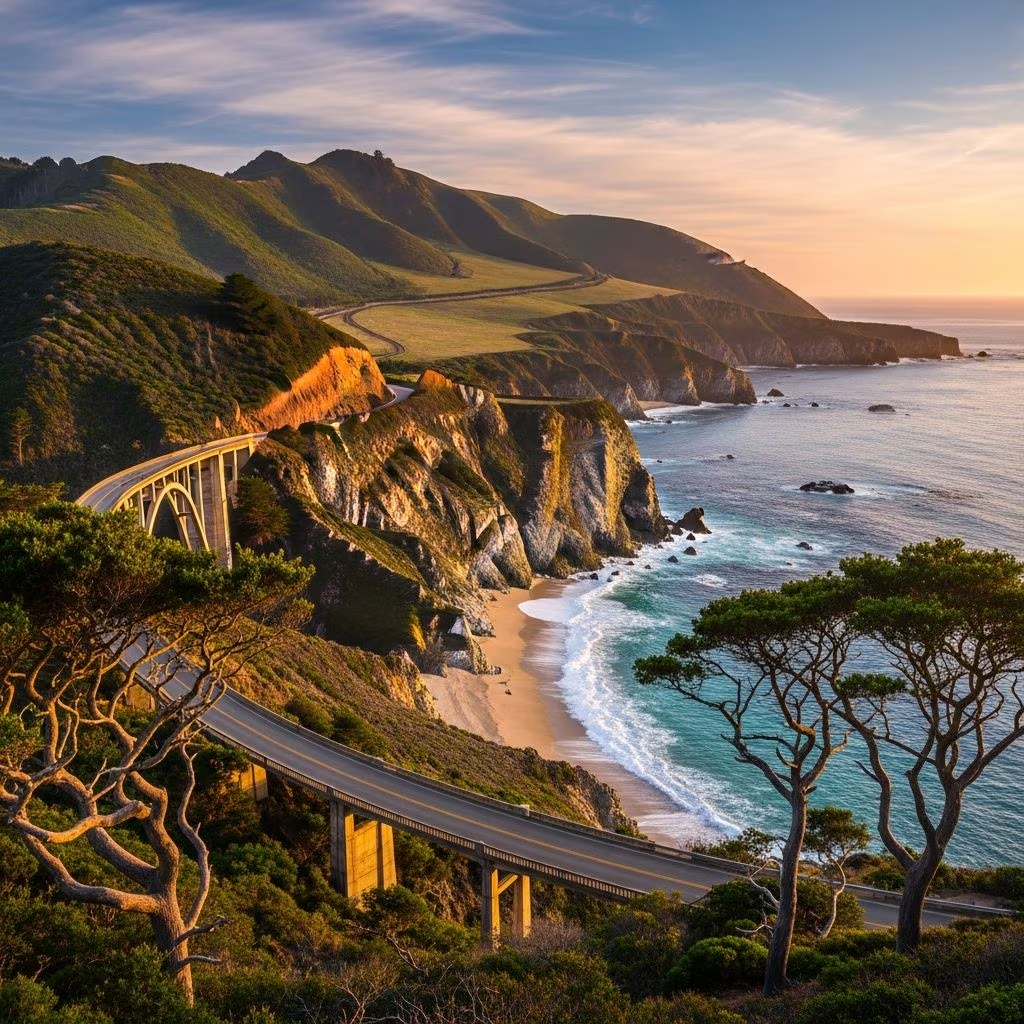
Few structures along Highway 1 command attention quite like the Bixby Bridge, an engineering triumph completed in 1932. This single-span bridge ranks among the world’s highest of its type, soaring dramatically above Bixby Creek Canyon. The bridge has become one of Big Sur’s most recognizable landmarks, drawing photographers and engineers who appreciate the marriage of human ingenuity and natural magnificence.
Photographing this structure requires tactical planning. While the north side offers convenient pullouts, the optimal vantage point requires locating a small unpaved access road on the southern approach and driving slightly inland for elevation. This modest extra effort yields photographs that capture the bridge’s full architectural splendor framed against coastal backdrop. The site deserves significant time, particularly during golden hour when late afternoon light bathes the structure in warm tones.
Before fully immersing yourself in Big Sur’s celebrated attractions, Ragged Point serves as a magnificent introduction. Earning the designation of “the million-dollar view” for compelling reasons, this dramatic promontory marks the southern gateway to Big Sur’s most theatrical scenery. The landscape commands respect—powerful waves assault rocky shores while wind-sculpted vegetation clings to precipitous terrain.
Beyond passive observation, Ragged Point offers actionable experiences. A cliffside hiking trail descends toward a scenic waterfall, providing physical engagement with the landscape. The Ragged Point Inn provides dining options ranging from casual ice cream to elaborate multi-course meals, each served with unobstructed coastal panoramas. This location functions perfectly as an introductory pause, acclimating travelers to the region’s grandeur before proceeding into deeper Big Sur exploration.
Perhaps no single attraction along Highway 1 achieves the iconic status of McWay Falls. This 70-foot waterfall cascades directly onto a pristine crescent beach, creating a tableau that seems almost photographically manipulated in its perfection. The site represents California’s most instantly recognizable coastal waterfall, featured in countless travel publications and social media feeds.
Accessing this wonder requires minimal exertion. The trailhead for the viewing overlook sits directly across from the Julia Pfeiffer Burns State Park parking area. The brief walk yields disproportionate rewards—a short jaunt through coastal vegetation delivers visitors to an elevated vantage point where the waterfall frames itself between towering palms, creating photographic compositions of postcard quality. The park’s inland side offers additional trailhead access for those seeking more ambitious hiking adventures beyond the iconic overlook experience.
The Julia Pfeiffer Burns State Park encompasses more than this singular attraction. A seasonal campground and picnic facilities dot the park’s landscape, allowing visitors to extend their stay and experience the environment across changing light conditions. The park’s network of trails rewards exploration, leading to clifftop vistas and forested passages that reveal Big Sur’s diverse ecological character.
Beyond individual attractions, Big Sur’s series of state parks collectively preserve remarkable geological and biological diversity. Andrew Molera State Park exemplifies this richness, offering hiking trails of varying difficulty suitable for diverse fitness levels. These pathways wind through coastal ecosystems while providing educational opportunities through the Big Sur Discovery Center, where visitors learn about endangered California condors—magnificent raptors experiencing slow but measurable population recovery within this protected region.
Garrapata State Park offers quieter alternatives to more heavily trafficked destinations. Its coastal bluff trails and redwood groves provide peaceful immersion in Big Sur’s natural character without the crowds converging on famous attractions. Such underutilized locations reward explorers who venture beyond the most celebrated stops, revealing aspects of the coastline that maintain authentic wilderness character.
Big Sur’s landscape offers extraordinary photographic opportunities extending beyond waterfalls and bridges. Pfeiffer Beach presents an unusual attraction—purple sand resulting from mineral composition combines with dramatic rock formations, particularly the aptly named Keyhole Rock, which frames sunset images with architectural elegance. This beach attracts photographers seeking distinctive compositions while offering visitors a unique sensory experience unavailable elsewhere along the coast.
Partington Cove demands physical commitment from visitors seeking its rewards. A steep half-mile descent through a dramatic rock tunnel leads to a rocky beach where oceanic power manifests through violent wave action and billowing sea spray. The journey through the tunnel creates an almost otherworldly experience, transitioning from inland forest to coastal drama through a naturally carved passage.
As travelers approach Big Sur’s northern boundary, the landscape gradually transforms toward less dramatic but nonetheless compelling destinations. Carmel-by-the-Sea enchants with carefully preserved architecture, abundant art galleries, and the historically significant Carmel Mission. This artistically-inclined community provides cultural contrast to the wilderness experiences characterizing the Big Sur core.
The famous 17-Mile Drive winds through exclusive Pebble Beach, presenting one of California’s most celebrated coastal scenic routes. Despite requiring a toll for entry, this carefully curated journey showcases the Lone Cypress and other iconic landscape features that have captivated photographers for generations. The drive represents a necessary detour for those seeking comprehensive Pacific Coast Highway experience.
Monterey itself offers substantial attractions beyond Highway 1’s immediate corridor. John Steinbeck’s Cannery Row, Old Fisherman’s Wharf, and the world-renowned Monterey Bay Aquarium provide cultural and educational enrichment. The aquarium particularly merits time allocation, featuring marine exhibits of exceptional quality that illuminate the ecological significance of these coastal waters.
Highway 1’s challenges demand respectful preparation. Frequent road closures result from rockslides, weather events, and fire danger—checking current conditions before departure prevents disappointment. The road’s narrow, winding character necessitates reduced speeds and heightened attention, particularly for travelers unfamiliar with mountain driving. Limited cell service means downloading maps and travel information before departure becomes essential rather than optional.
Fuel availability presents genuine logistical constraints. Ragged Point marks the last location offering reasonably priced gasoline before entering Big Sur’s extended sections without service stations. Strategic fueling decisions prevent stressful situations where fuel anxiety dominates the driving experience rather than landscape appreciation. Similarly, dining options cluster unpredictably, making advance planning for meals beneficial.
Highway 1’s experience varies substantially across seasons. Spring and fall typically offer ideal conditions—mild temperatures, manageable crowds, and minimal closure risk. Summer brings peak tourist traffic, transforming scenic overlooks into congested parking lots where finding solitude becomes challenging. Winter weather, while less predictable, often clears crowds and provides dramatic clouded skies contrasting with coastal vistas.
While the 76-mile central segment can be driven in approximately two hours without stops, most travelers allocate three to seven days, allowing time for hiking, photography, dining experiences, and simple landscape appreciation. This extended timeframe accommodates varied interests while preventing rushed experiences.
Spring and fall generally offer ideal combinations of mild weather, manageable crowd levels, and minimal road closure risk. Winter provides dramatic atmospheric conditions and reduced traffic, though weather unpredictability increases.
Yes—traveling from north to south positions ocean vistas directly to the right side of vehicles, providing superior viewing angles and photographic opportunities compared to the reverse direction.
Respect for narrow roads, reduced speeds on curves, attention to fuel availability, and verification of current road conditions before departure represent essential safety measures. Cell service unreliability requires downloading offline maps.
Absolutely—Highway 1 accommodates diverse driver experience levels. Cautious, attentive driving and realistic timing expectations allow all drivers to safely experience this celebrated route.
Highway 1 through Big Sur ultimately transcends its physical characteristics—the bridge structures, waterfall heights, and mileage statistics. This journey invites travelers to engage with landscape at multiple sensory levels: the visual drama of cliffs meeting ocean, the auditory power of crashing waves, the physical challenge of trail hiking, and the contemplative stillness of sunset observation. Each visitor constructs a personal narrative from these available elements, creating memories reflecting individual priorities and perspectives.
Whether prioritizing photography, hiking, historical appreciation, or simply meditative landscape observation, Highway 1 accommodates diverse travel philosophies. The route’s combination of engineering marvels, natural wonders, and accessible attractions ensures that varied travelers discover authentic meaning within this legendary American journey.
